Artwork
Portrait of a Boy, thought to be Giovanni de' Medici (1543-1562)
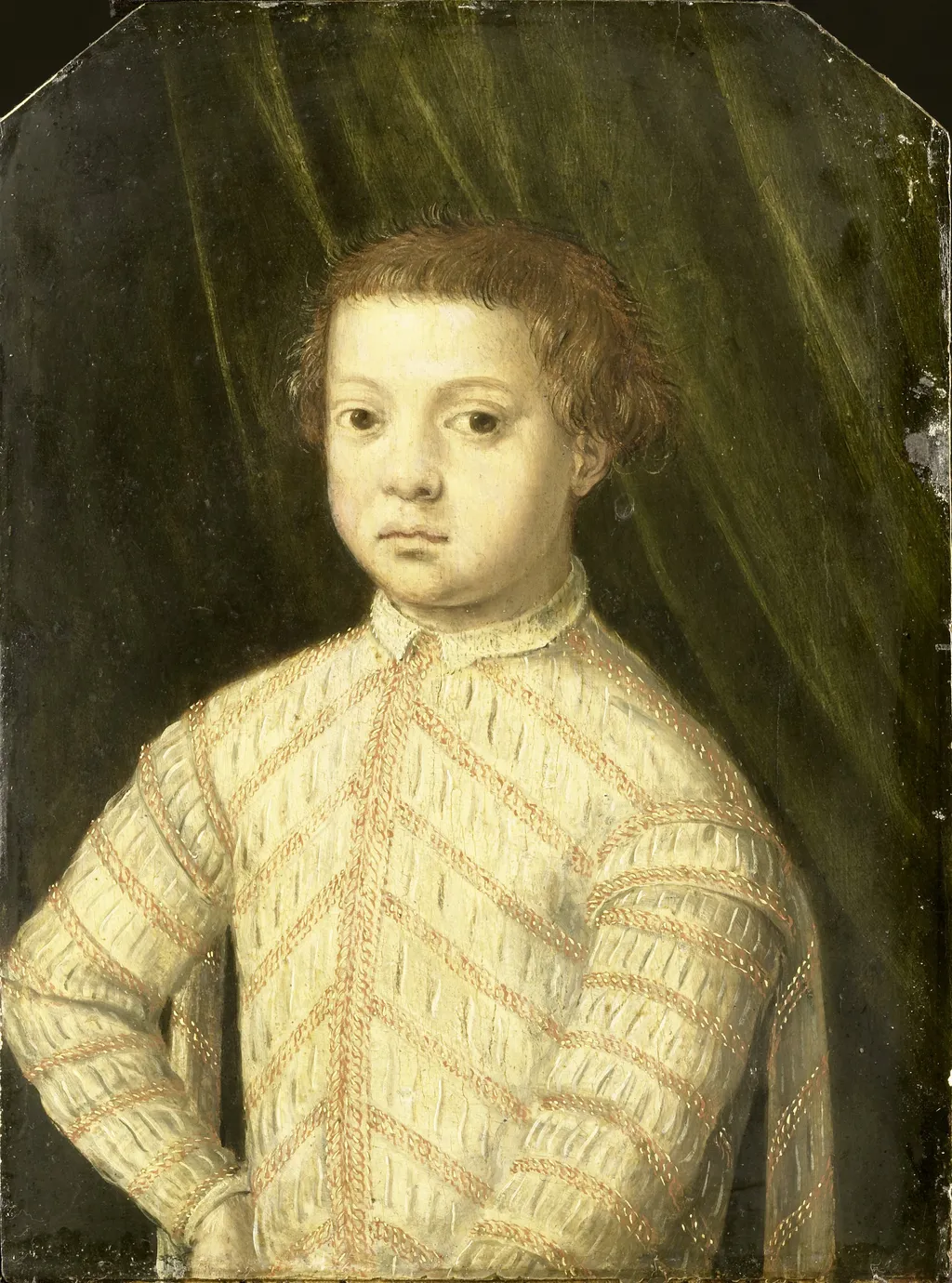
Portrait of a Boy, thought to be Giovanni de' Medici (1543-1562) is an oil painting. It dates from 1550 and is held in the collection of the Rijksmuseum. The work is an oil painting portraying a youthful male figure, identified as Giovanni de' Medici, who lived from 1543 to 1562.
About this work
Subject & Meaning
The background is plain, focusing attention on the sitter and suggesting an idealized representation of youth and virtue within the Medici tradition.
The painting shows Giovanni de' Medici, a young member of the prominent Medici family, in a formal pose that emphasizes his aristocratic status. He wears contemporary 16th-century attire with fine details such as a lace collar and a jeweled pendant, symbols of his noble lineage and wealth. The background is plain, focusing attention on the sitter and suggesting an idealized representation of youth and virtue within the Medici tradition.
The work is attributed to the circle of Bronzino and reflects the Renaissance interest in realistic portraiture that conveys both physical likeness and social standing.
The depiction functions as a visual statement of identity, using clothing and accessories to communicate heritage and moral character. The boy's direct gaze engages the viewer, inviting contemplation of his place in the family narrative. This portrait thus encapsulates themes of lineage, status, and the cultural values of the Florentine elite during the mid-1500s.
Technique & Style
Created in 1550 in Florence, this anonymous portrait is executed in oil paint on a wooden panel support. The work measures 24 cm in height and 18 cm in width. As a small-scale panel painting, it exemplifies the formal qualities of a Renaissance portrait, focusing on the depiction of Giovanni de' Medici. The medium and support are consistent with mid-16th-century Florentine portraiture practices.
History & Provenance
The work is dated to 1550, aligning with the sitter’s known lifespan and the style of mid‑sixteenth‑century Florentine court portraiture.
It is recorded as part of the Rijksmuseum’s holdings, where it remains located in Amsterdam. The painting’s early history is otherwise undocumented, and no archival evidence has been traced to confirm the identity of the commissioner or the original patron within the Medici circle.
Overview
The work is an oil painting portraying a youthful male figure, identified as Giovanni de' Medici, who lived from 1543 to 1562. The sitter is rendered with short, curly brown hair, a white shirt featuring red diagonal stitching, and crossed arms, set before a dark green drapery. The composition presents a neutral expression and a direct gaze.
Context
Created in the mid‑16th century, the portrait reflects the Florentine tradition of courtly representation, where young heirs were depicted with dignified restraint. The use of dark drapery and controlled lighting aligns with contemporary practices among Italian portraitists seeking to convey both realism and idealized poise.
Artist & collection

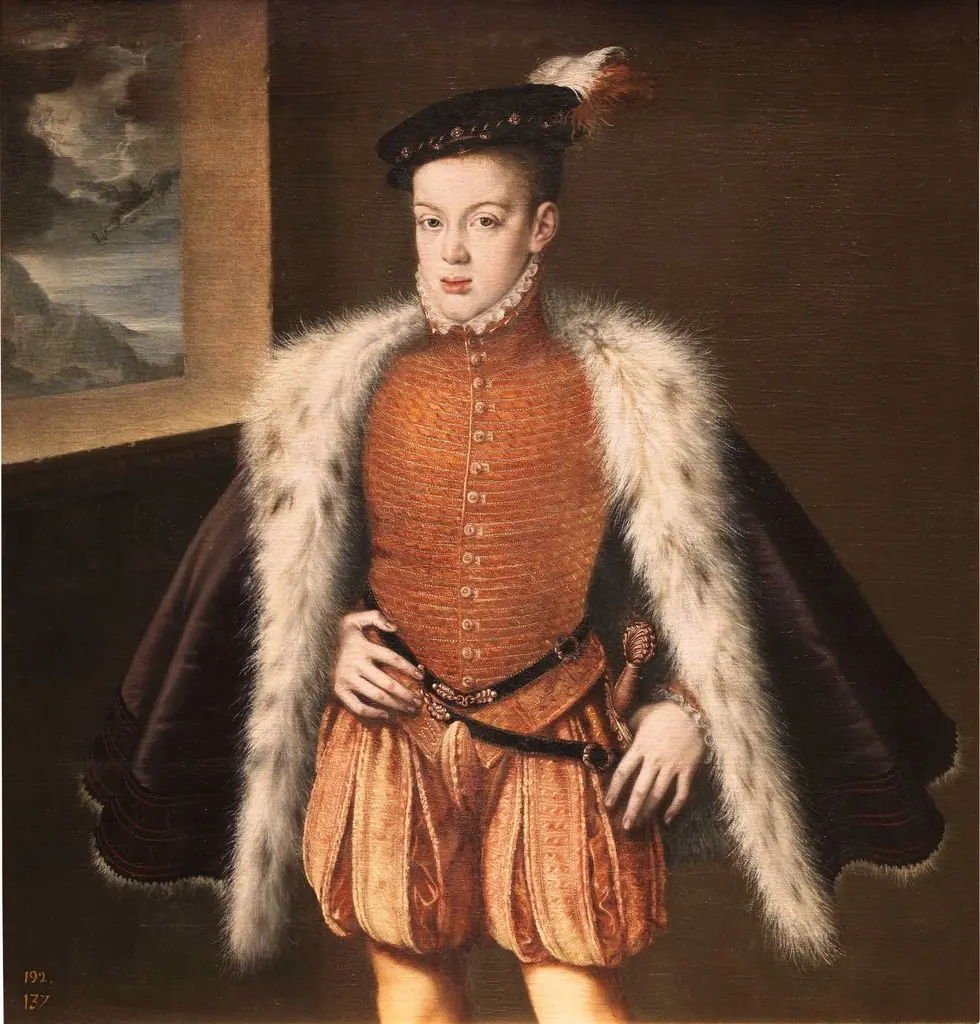 Prince Don Carlos
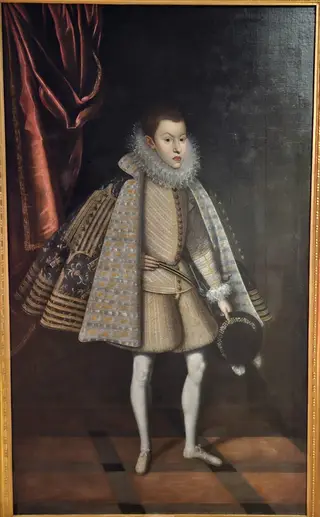 Retrato do Infante Carlos de Áustria
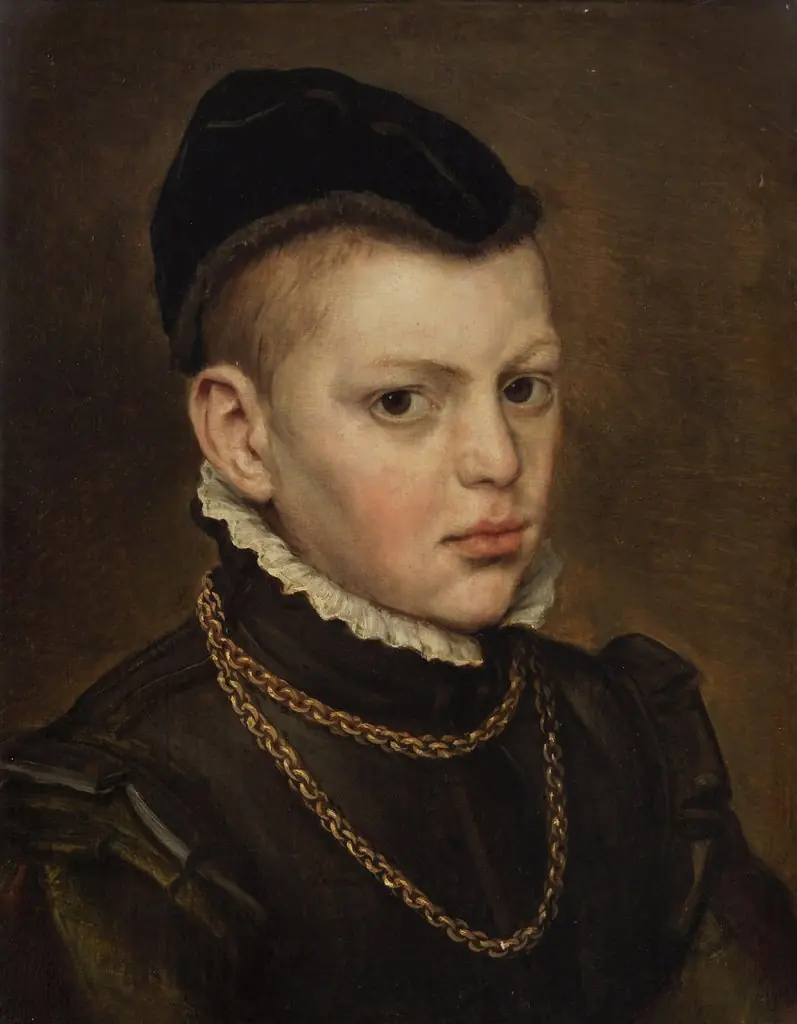 Head of a Boy
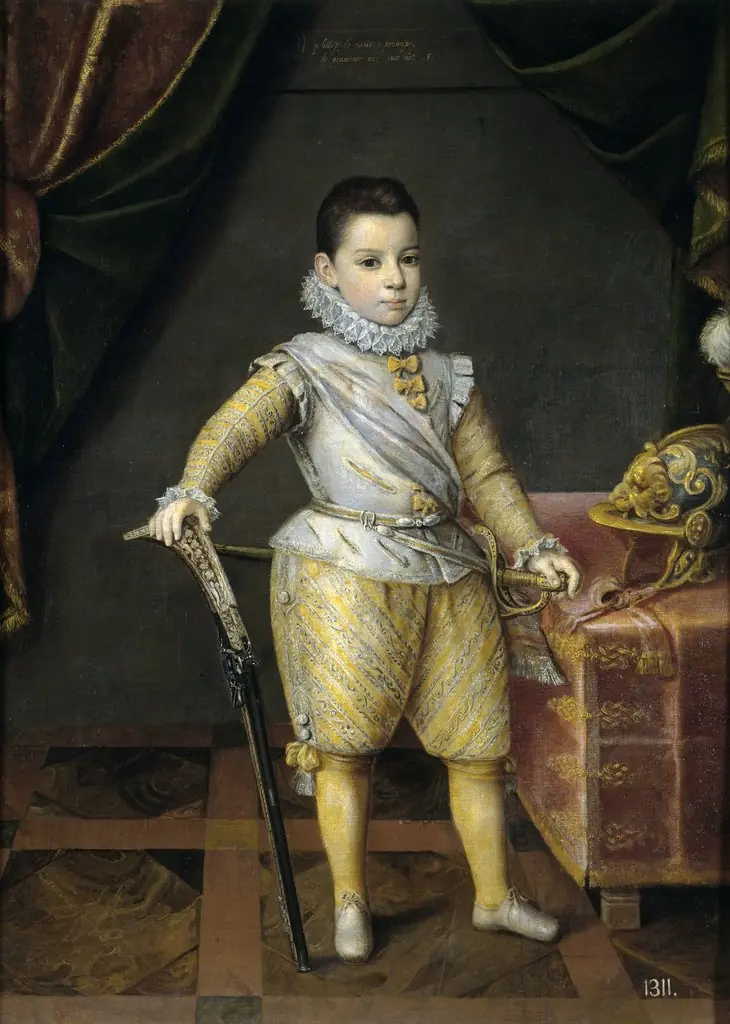 Portrait of Philip Emmanuel of Savoy (1586-1605), age five
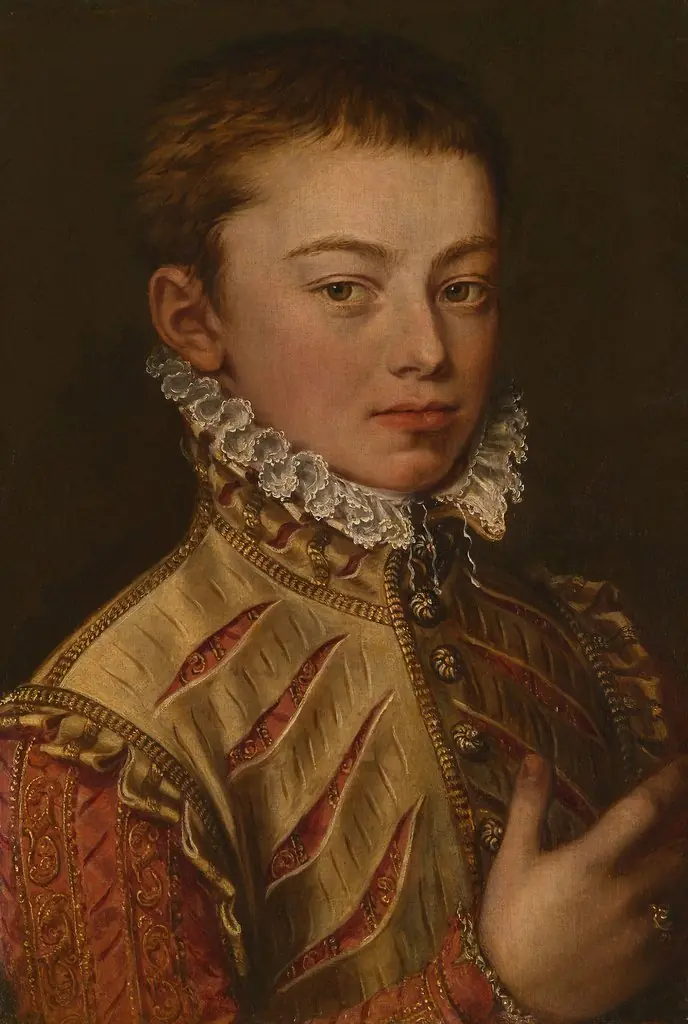 Portrait of Don Juan of Austria
 Portrait of Don Juan of Austria
 Herzog Francois von Alencon und Anjou (1555-1584)
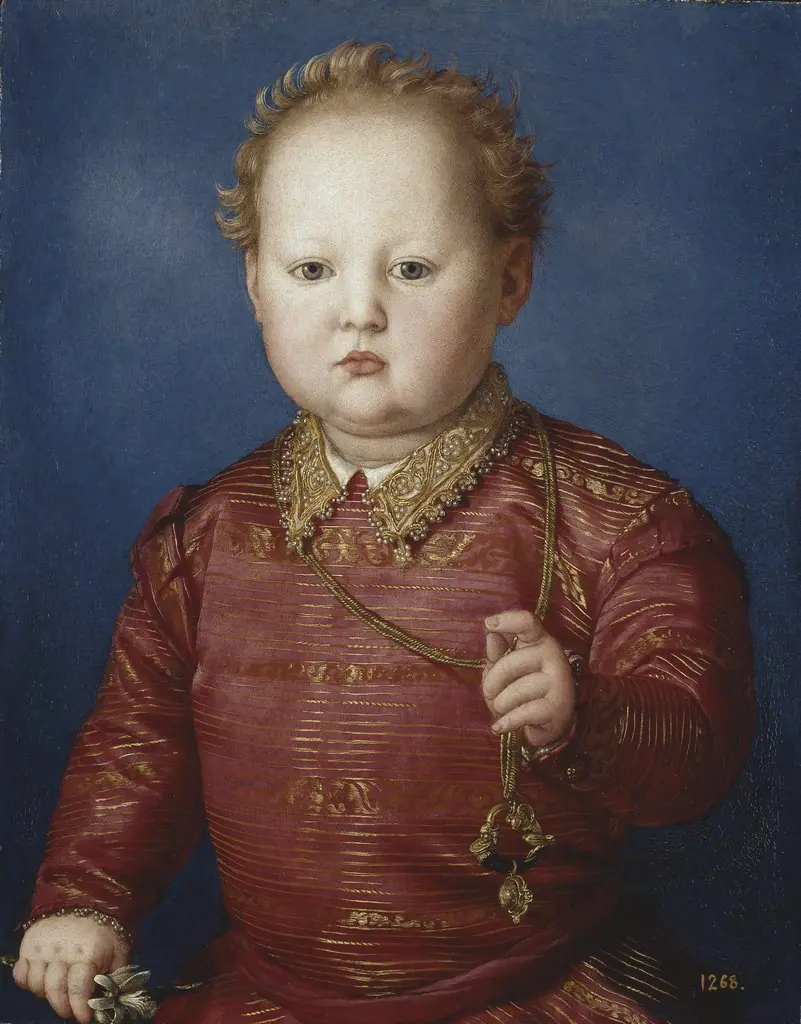 Garzia de' Medici
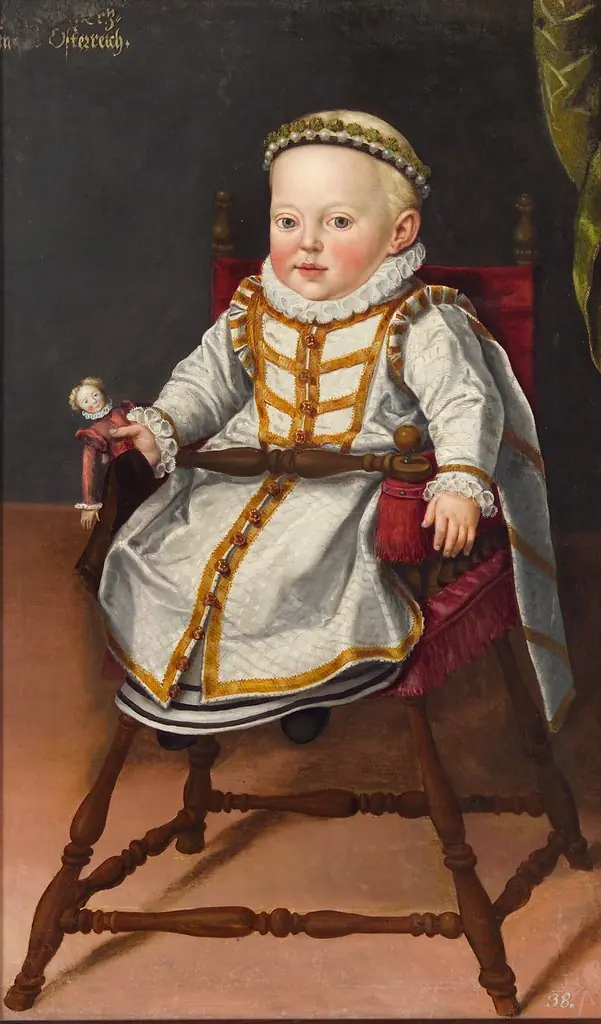 Erzherzogin Katharina Renea (1576-1595) im Alter von einem Jahr in einem Kindersessel sitzend mit einer Puppe
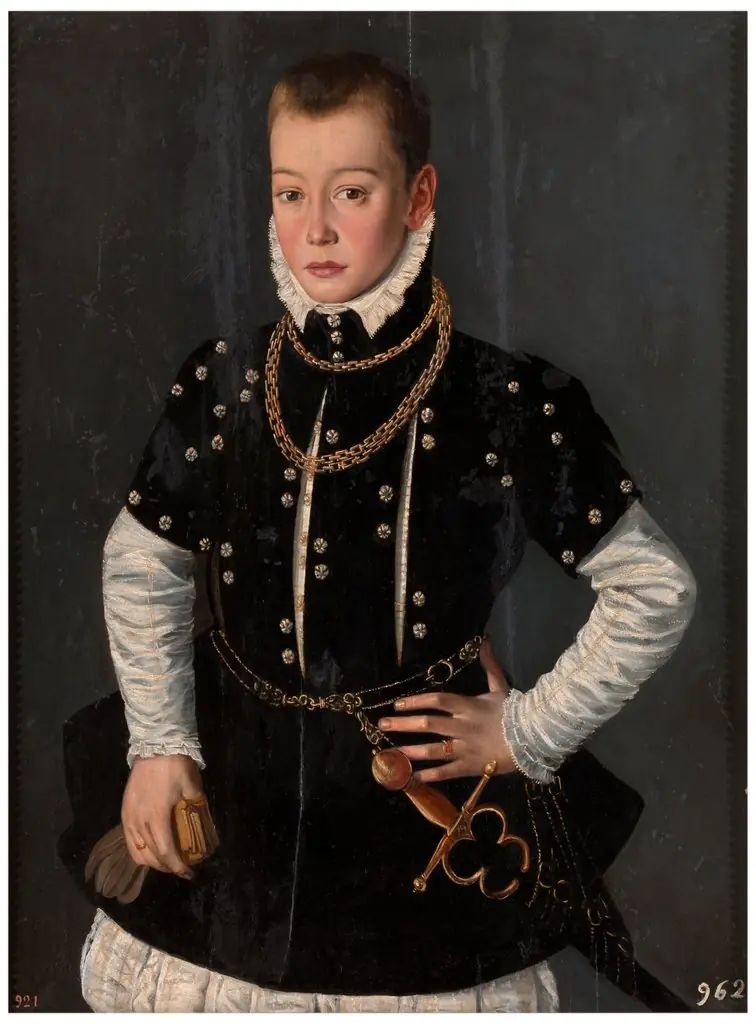 Portrait of an Unidentified Boy