Artwork
Portrait of an Unidentified Boy
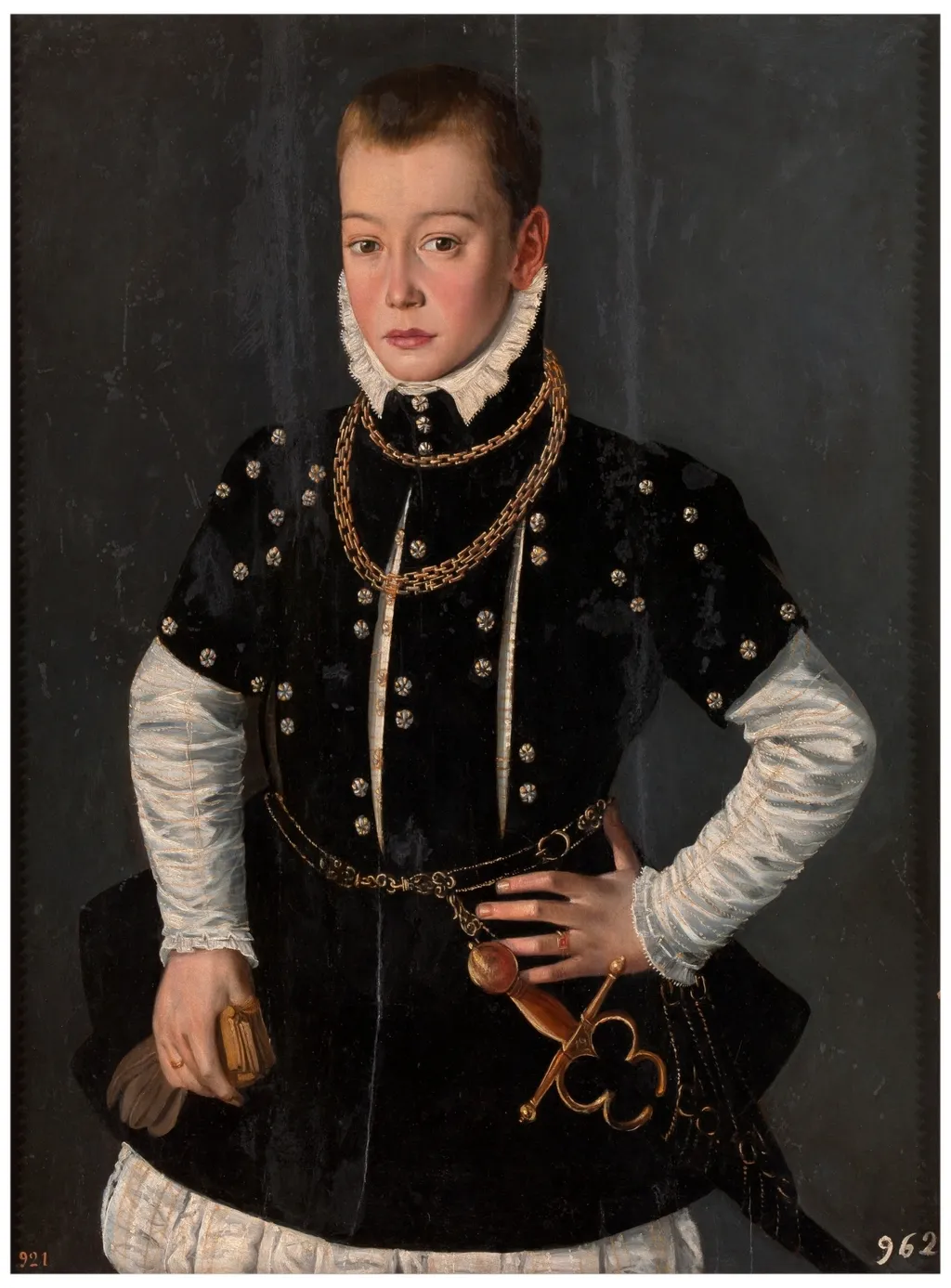
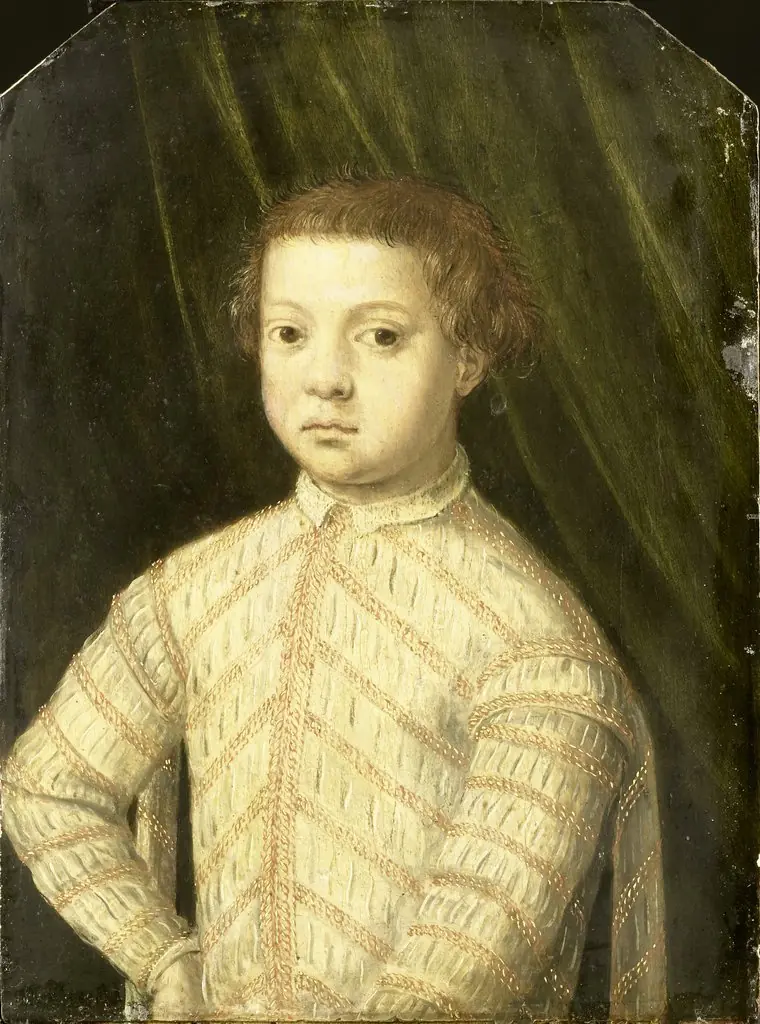
Portrait of an Unidentified Boy is an oil painting. It dates from 1570 and is held in the collection of the Museo del Prado. The work depicts a young male figure positioned before a deep, unlit backdrop.
About this work
Subject & Meaning
It is part of the collection at the Museo del Prado, where it is classified as a portrait from the late Renaissance period.
The painting shows a young boy clothed in contemporary attire with a sword and glove, symbols of aristocratic status in 16th-century Spain, while a gemstone rests on a table suggesting wealth or moral virtue. The work belongs to the portrait genre, capturing an unnamed sitter whose identity remains unknown.
The portrait was created in 1570 using oil on oak panel, measuring 83.9 cm in height and 62.6 cm in width. It is part of the collection at the Museo del Prado, where it is classified as a portrait from the late Renaissance period.
Technique & Style
The work is painted in oil on oak panel, aligning with Northern European practice of the late sixteenth century. The support measures 83.9 cm in height by 62.6 cm in width, a modest yet standard size for a portrait of this period. Handling is restrained and precise, with smooth transitions in modeling that articulate the sitter’s features and costume details such as the sword hilt and glove.
The palette is subdued, dominated by earthy browns and blacks punctuated by accents of gemstone and metallic trim to signal status. Stylistic qualities include a restrained naturalism, a muted chiaroscuro, and a hieratic frontality that emphasize the boy’s social standing rather than emotional expression.
History & Provenance
The painting now in the Museo del Prado is recorded as dating to 1570, with no further precision on day or month.
It entered the Prado’s holdings as part of the national collection; the museum’s records list the work under anonymous Spanish portraiture from the sixteenth century. The oak panel support and the costume details align it with the Spanish court style of the 1570s, suggesting a commission within that milieu rather than a later attribution.
The painting is held by the Museo del Prado in Madrid, where it is recorded under its collection with the accession dimensions 83.9 cm in height and 62.6 cm in width.
No exhibition history has been documented in the provided sources.
Legacy
Portrait of an Unidentified Boy, painted in 1570 on oak panel with oil paint, entered the collection of the Museo del Prado where it remains on display. Its attribution to the workshop of an anonymous artist was confirmed in the early 20th century, and the work has since influenced scholarship on Spanish Renaissance portraiture by serving as a reference point for stylistic analysis of unidentified sitters. The painting’s composition, particularly the inclusion of a sword, glove, and gemstone, has been cited in studies of emblematic symbolism in 16th‑century Spanish portraiture.
Overview
The work depicts a young male figure positioned before a deep, unlit backdrop. He is attired in an elaborate black doublet adorned with gold‑toned buttons and a decorative chain, while his sleeves and ruff are rendered in crisp white, suggesting a heavily starched fabric. One hand grasps a small glove; the other rests on a curved sword whose hilt is gilded. The composition emphasizes the contrast between the illuminated costume and the surrounding darkness.
Context
The attire and accessories correspond to early modern European court dress, where black doublets with gold ornamentation and stiff white ruffs were common among the aristocracy. The inclusion of a sword suggests a rite of passage or preparation for future service, a motif frequently encountered in portraiture of young noblemen during the period.
Artist & collection

- Portrait of Don Juan of Austria
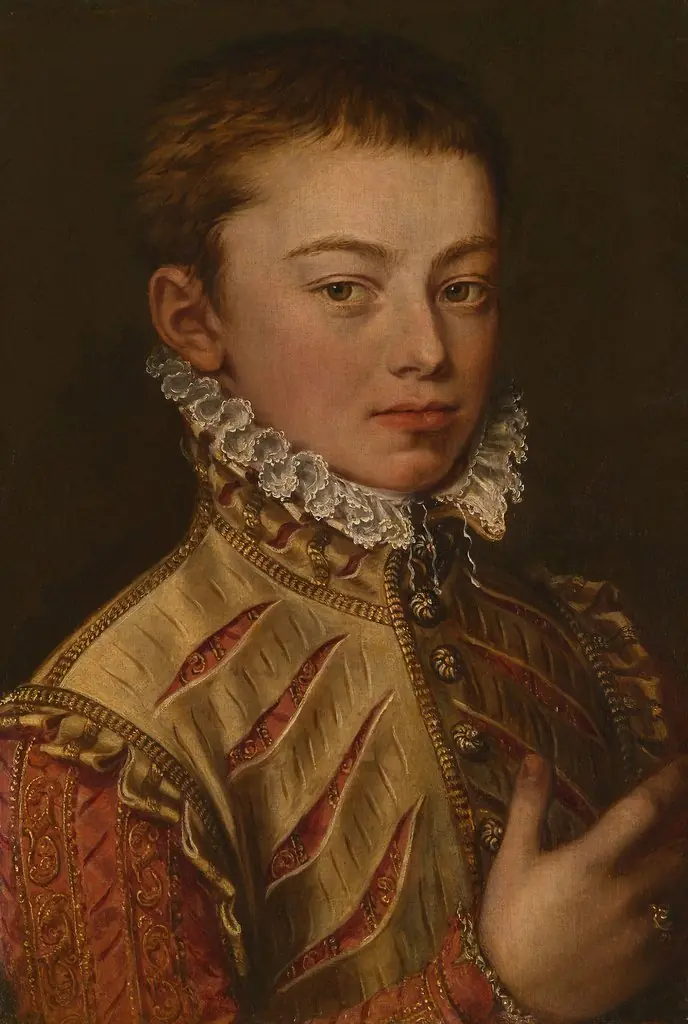 Portrait of Don Juan of Austria
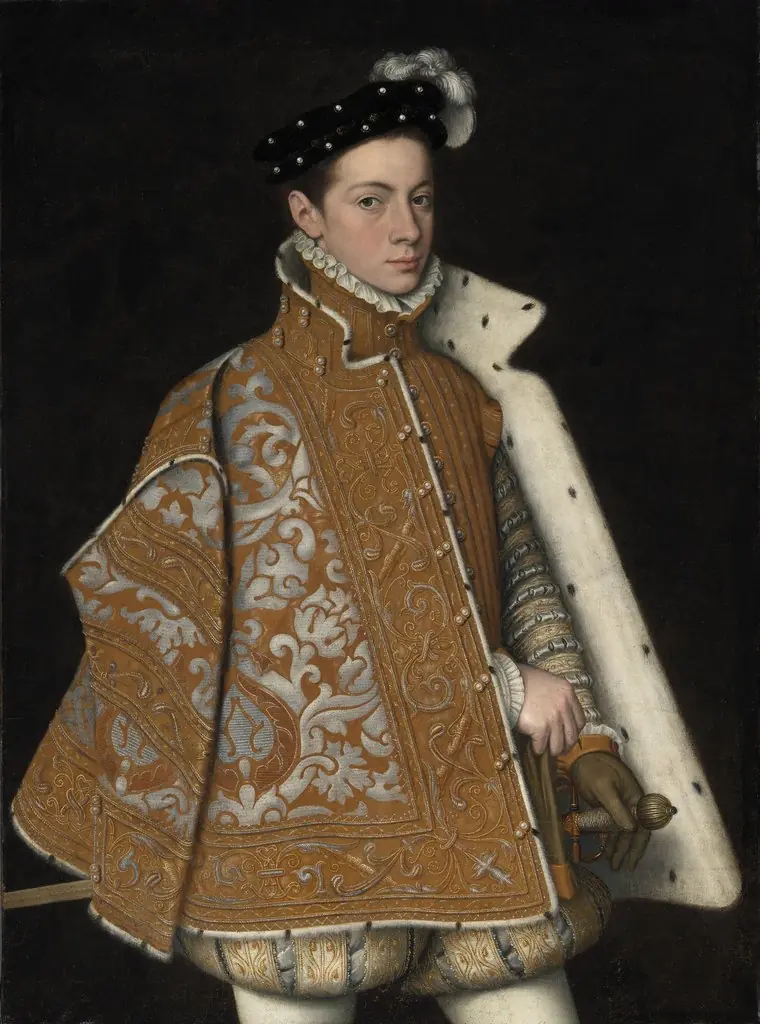 Portrait of Prince Alessandro Farnese
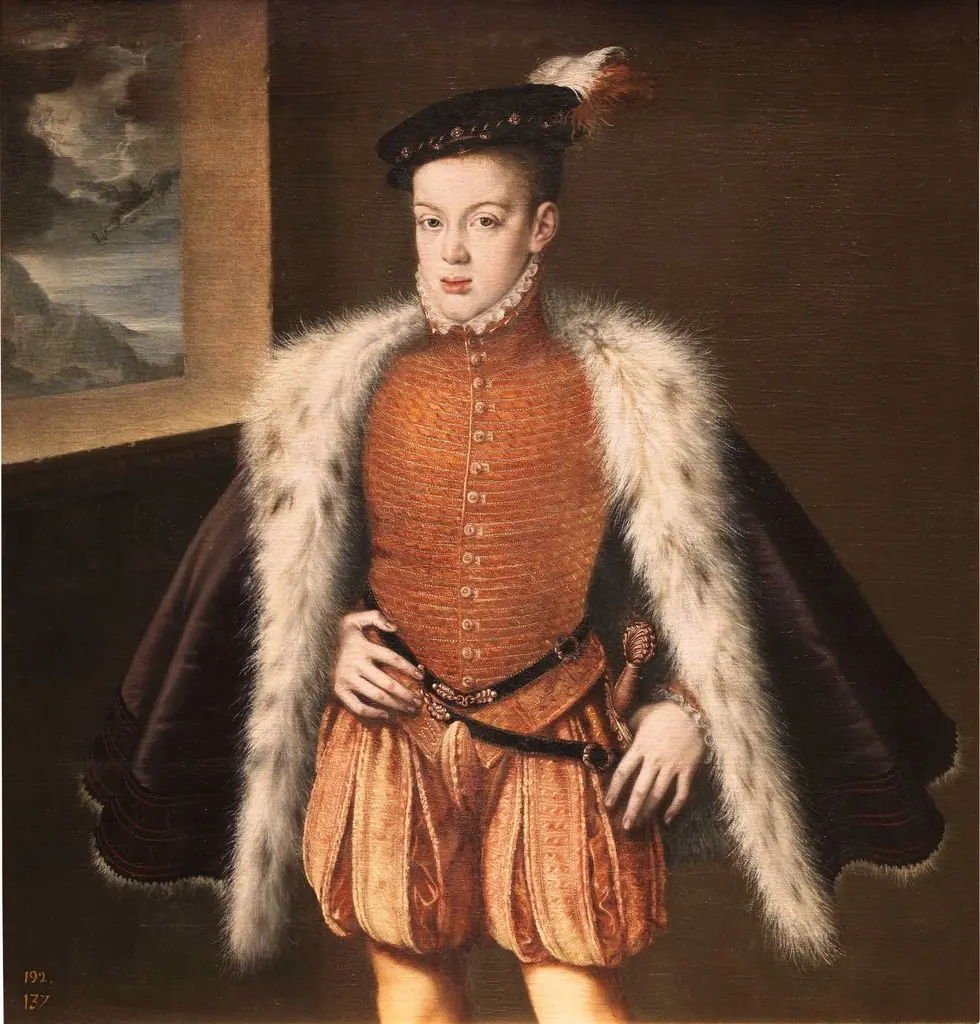 Prince Don Carlos
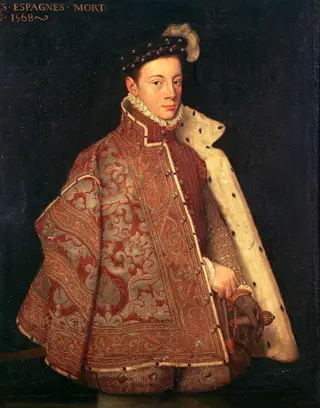 Portrait of Alessandro Farnese
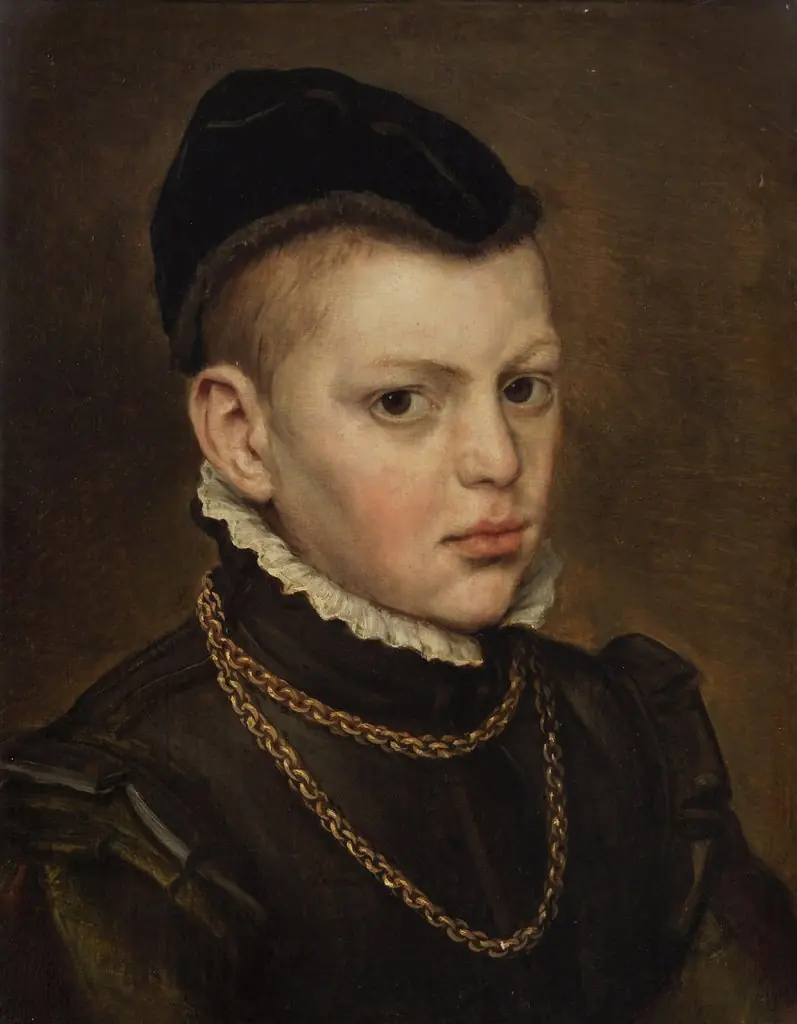 Head of a Boy
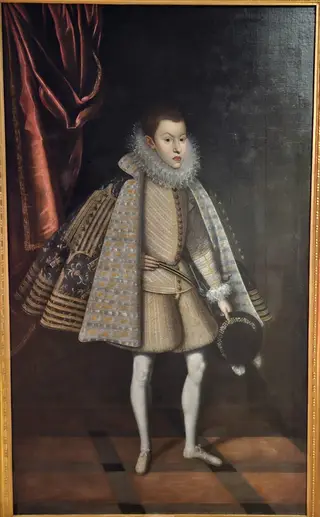 Retrato do Infante Carlos de Áustria
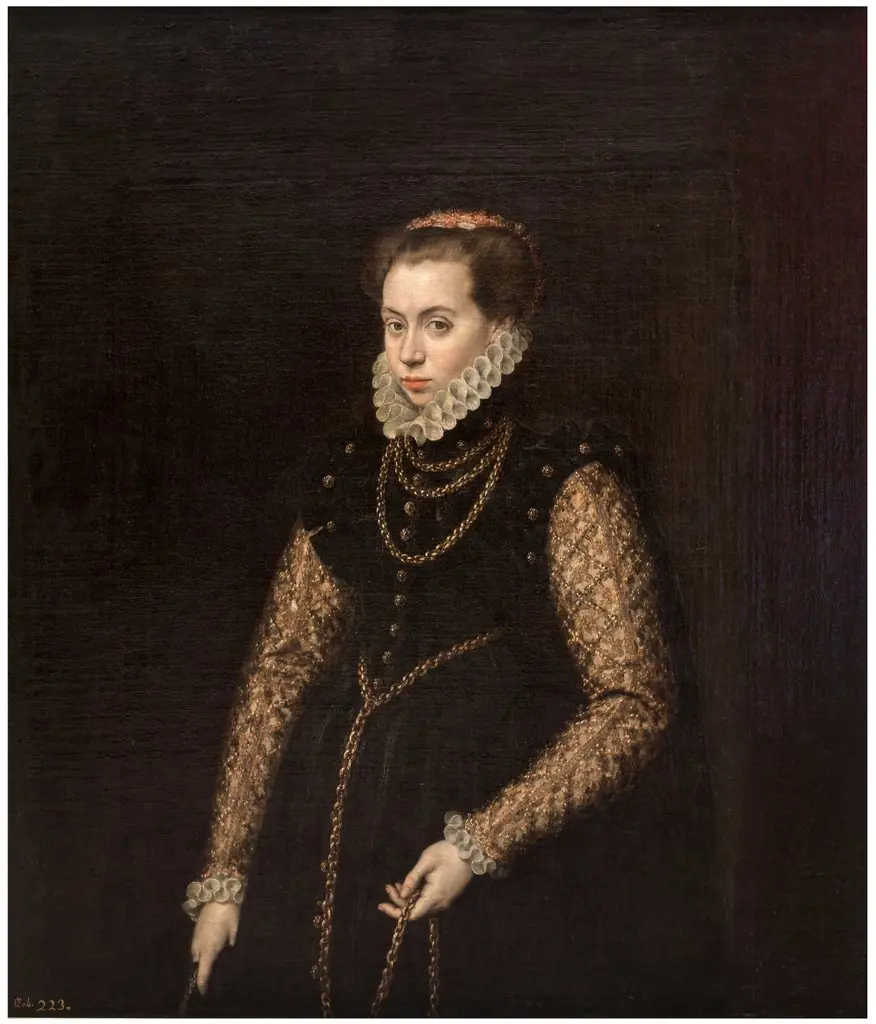 Lady with Gold Chains
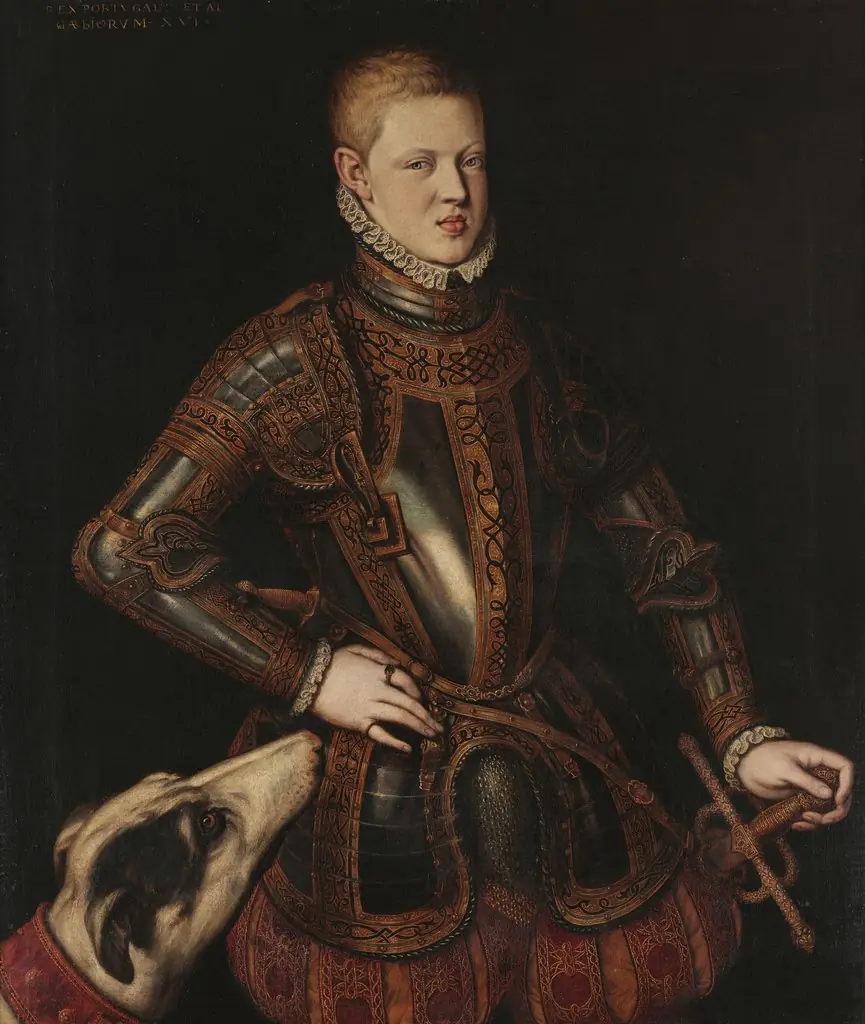 Portrait of King D. Sebastião
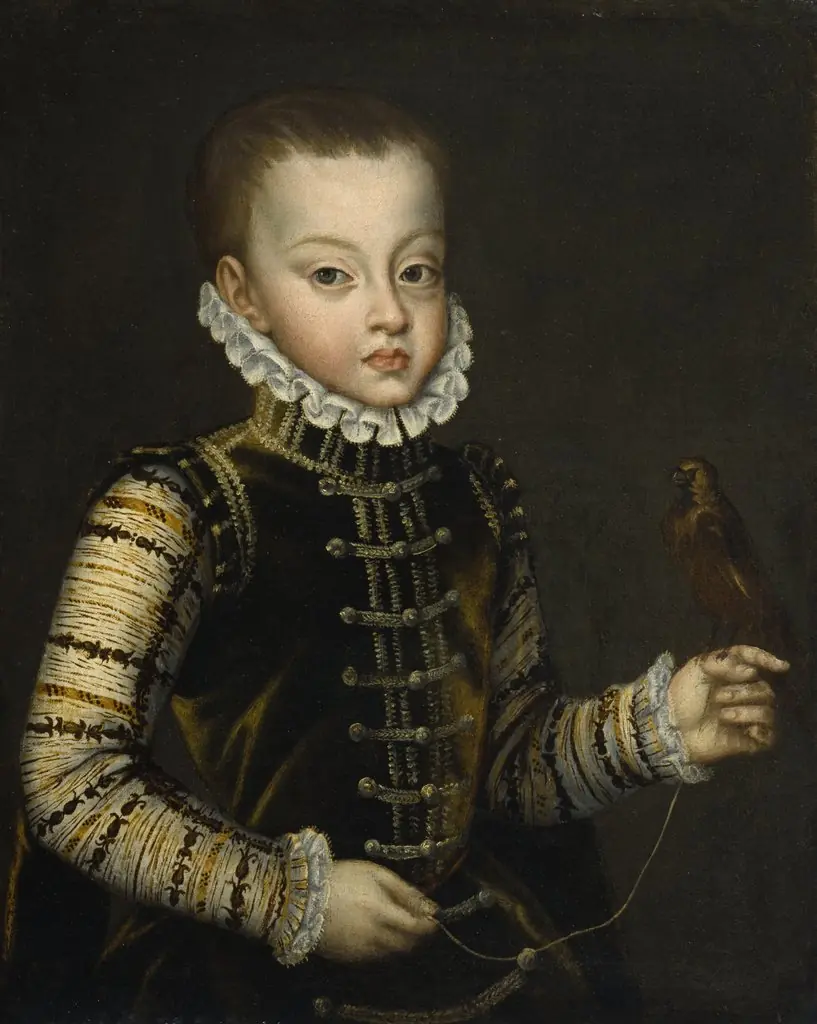 Portrait of Infante Ferdinand of Spain
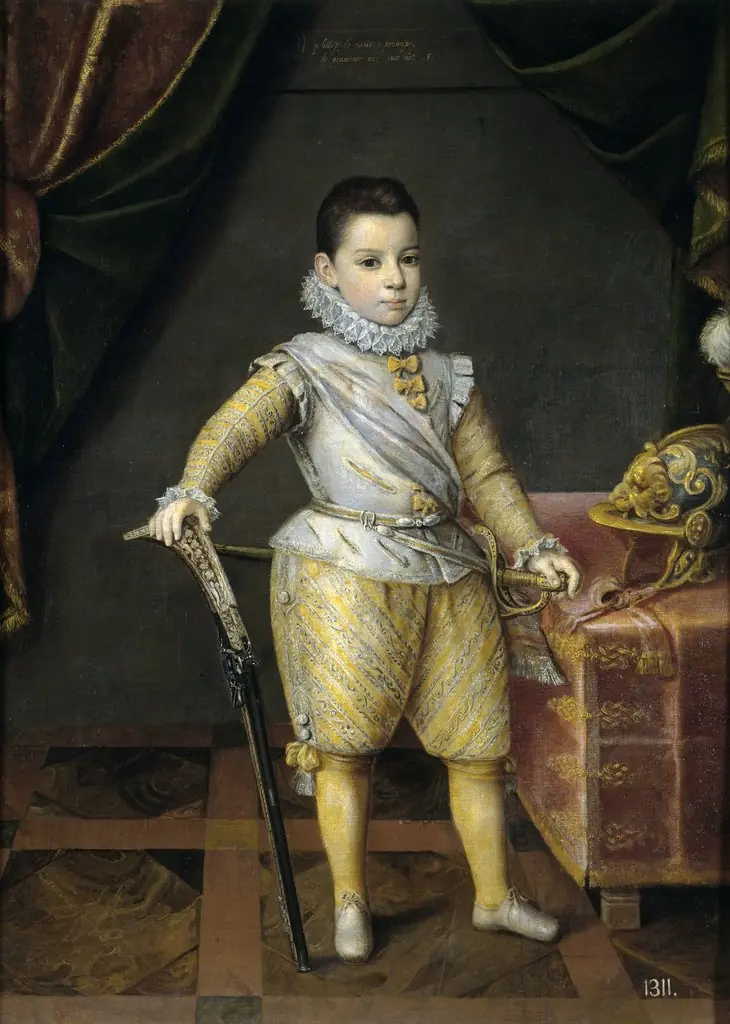 Portrait of Philip Emmanuel of Savoy (1586-1605), age five
 Portrait of a Boy, thought to be Giovanni de' Medici (1543-1562)