Artwork
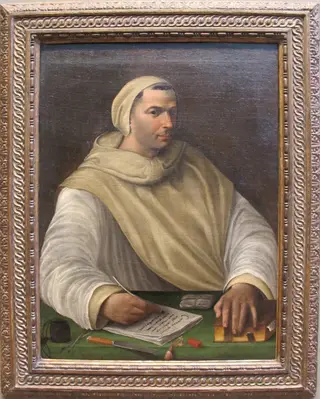
Portrait of an Olivetan Monk
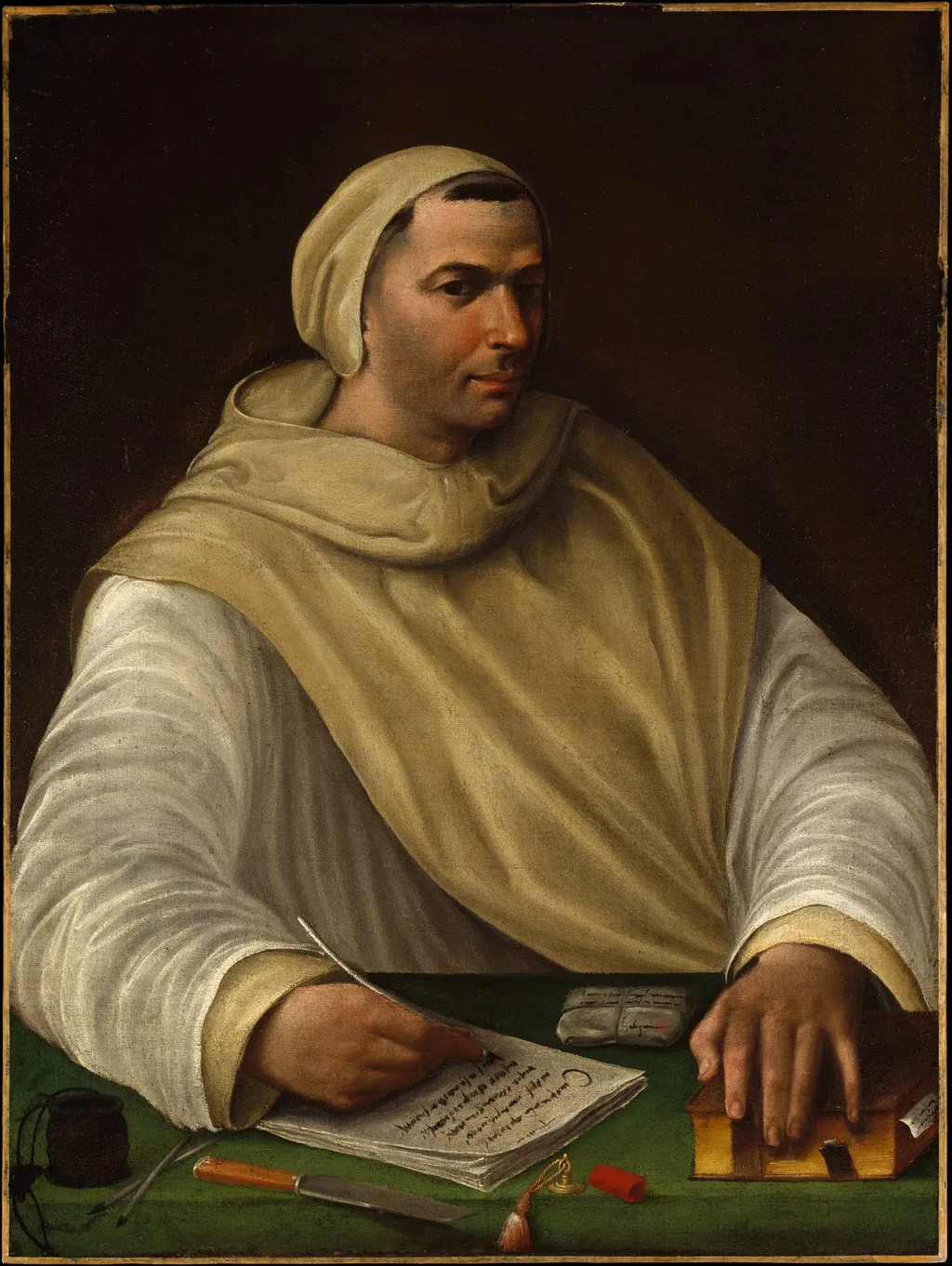
Portrait of an Olivetan Monk is an oil painting. It dates from 1600 and is held in the collection of the Metropolitan Museum of Art.
About this work
An Olivetan monk sits surrounded by the tools of administration: quills, an inkwell, a scraping knife, and a packet of letters sealed with red wax.
An Olivetan monk sits surrounded by the tools of administration: quills, an inkwell, a scraping knife, and a packet of letters sealed with red wax. Attributed variously to the Sienese Baldassare Peruzzi or the Venetian Battista Franco, the sixteenth-century oil entered the Metropolitan Museum in 1986 as a gift from Mrs. Charles Wrightsman. The sitter's identity remains as unresolved as the authorship.
Subject & Meaning
The portrait depicts an Olivetan monk surrounded by objects that signify his scholarly and administrative role: a quill, inkwell, knife, seal, wax, letter, and book. These items, commonly associated with scribes and correspondents, suggest the monk's engagement in writing or copying sacred texts and official documents. The inclusion of a seal and wax further implies responsibilities in monastic correspondence or record-keeping.
Together with the religious habit, these accoutrements highlight the integration of intellectual labor into the monk's spiritual vocation, emphasizing the importance of literacy, communication, and order in the Olivetan tradition.
Technique & Style
The portrait is executed in oil paint on canvas, a common medium and support for formal portraiture in the early 17th century. The canvas dimensions (97.2 × 72.7 cm) indicate a half-length format. The handling is evident in the precise depiction of attributes such as a quill, inkwell, knife, seal, wax, letter, and book, which contextualize the sitter as a monk engaged in literate or administrative work.
These details reflect a descriptive, naturalistic style characteristic of the period. The composition concentrates on the figure and his accoutrements against a dark ground, typical of Baroque portraiture.
History & Provenance
The portrait was created in 1600 and its attribution remains uncertain. Its provenance includes ownership by Mrs. C. Segal, followed by Charles Bierer Wrightsman and Jayne Wrightsman, before entering the collection of the Metropolitan Museum of Art.
Overview
This sixteenth-century oil on canvas portrays an Olivetan monk, a member of a Benedictine order, seated amidst the tools of his administrative duties. The artwork's precise authorship remains a subject of scholarly discussion, with attributions varying between Baldassare Peruzzi and Battista Franco. Similarly, the specific identity of the dignified sitter, likely a high-ranking abbot, has yet to be conclusively determined. The painting, measuring 97.2 by 72.7 centimeters, was gifted to the Metropolitan Museum of Art in 1986.
Artist & collection

 Ritratto di un monaco olivetano
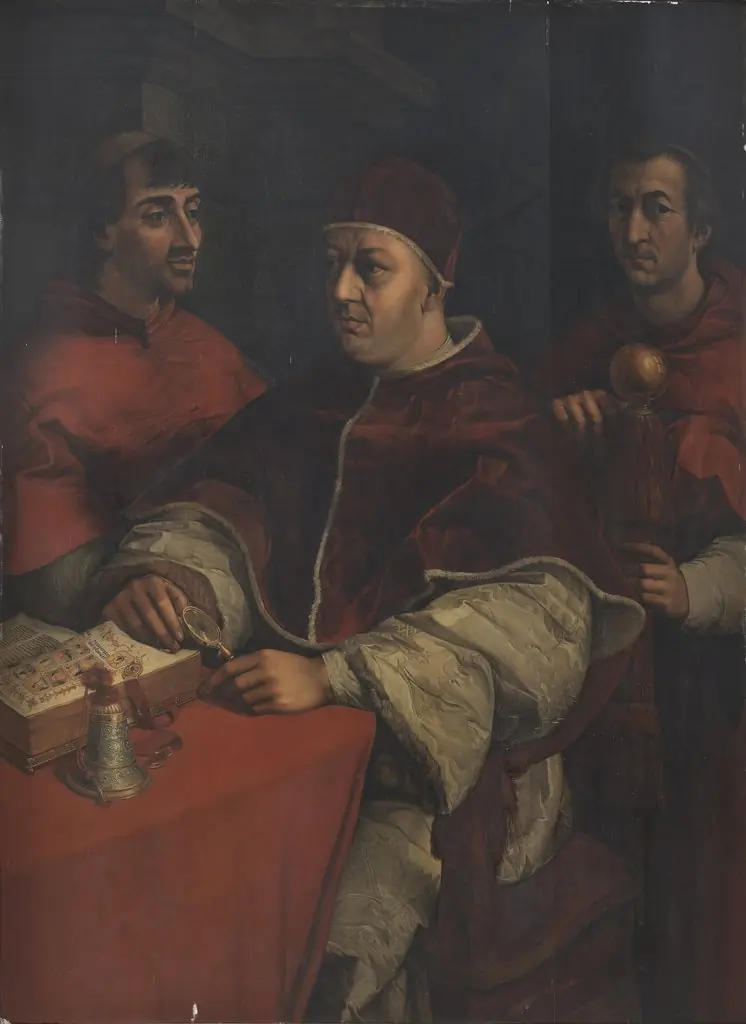 Pave Leo X og kardinalerne Ludovico de' Rossi og Giulio de' Medici. Kopi efter Rafael
 Pave Leo X og kardinalerne Ludovico de' Rossi og Giulio de' Medici. Kopi efter Rafael
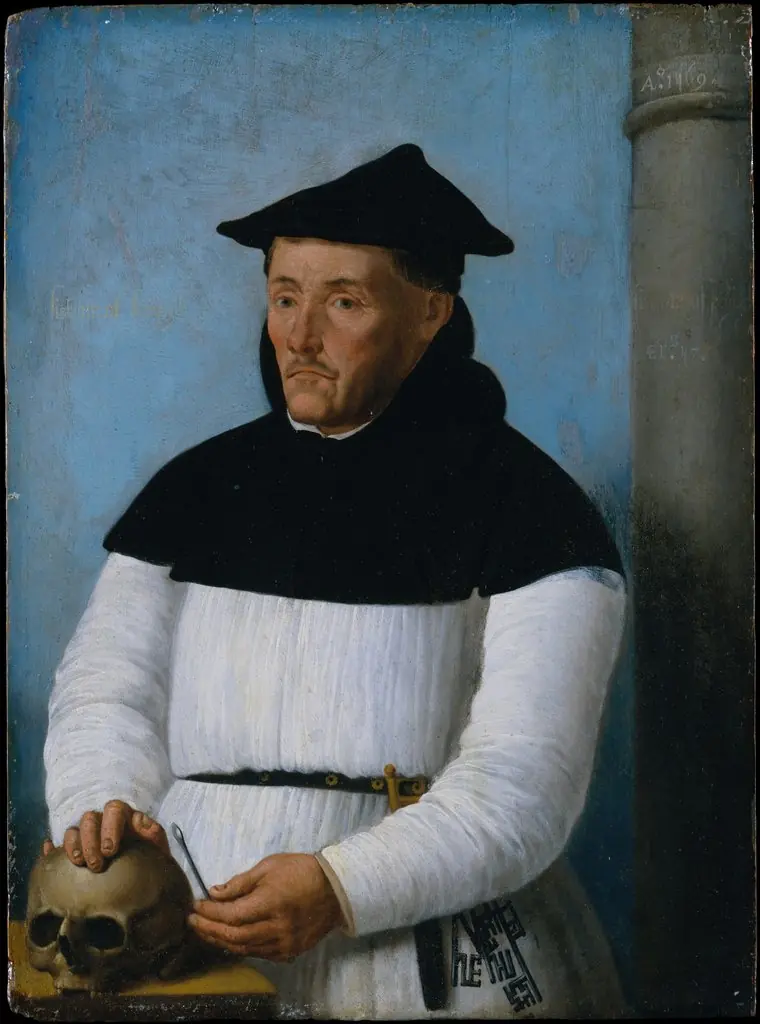 Portrait of a Surgeon
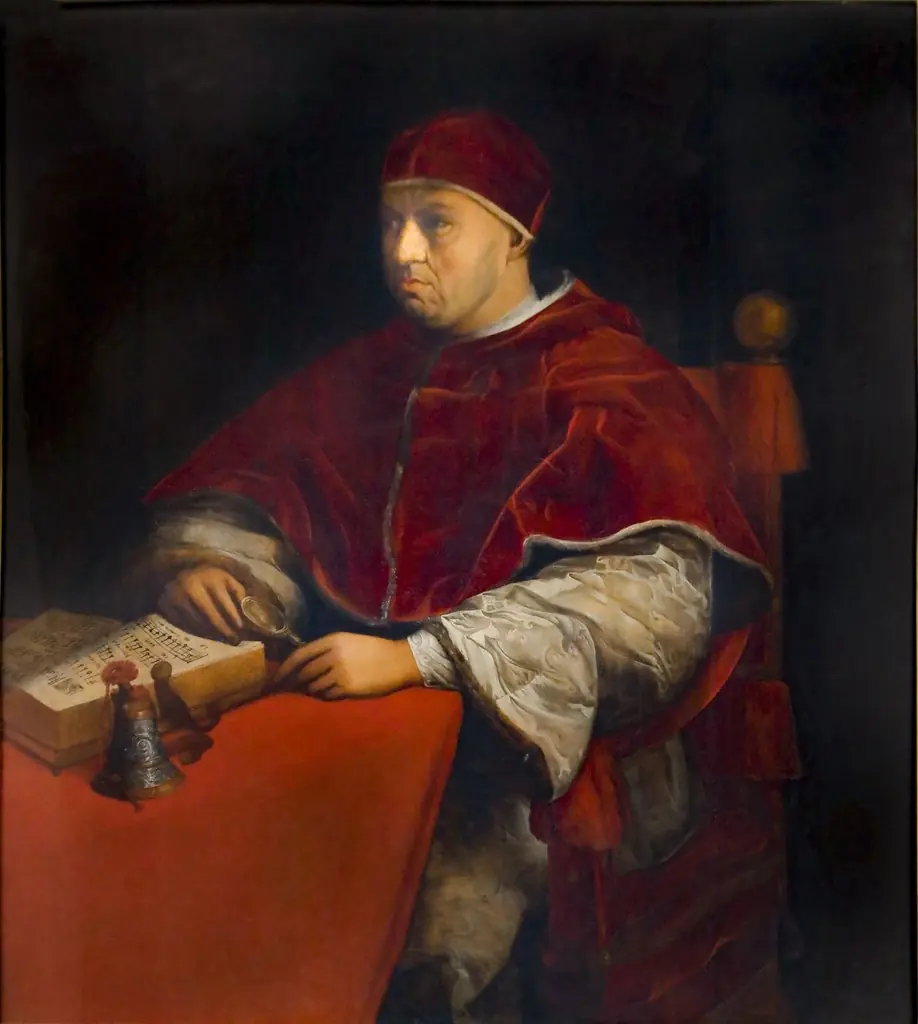 Portrait of Pope Leo X
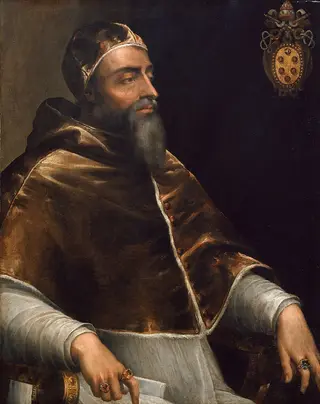 Pope Clement VII (1478-1534)
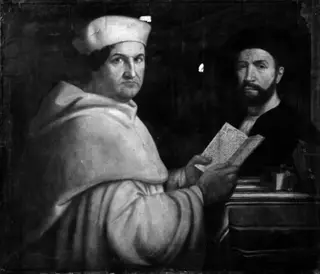 Double Portrait of Two Men, one Dressed in Ecclesiastical Dress
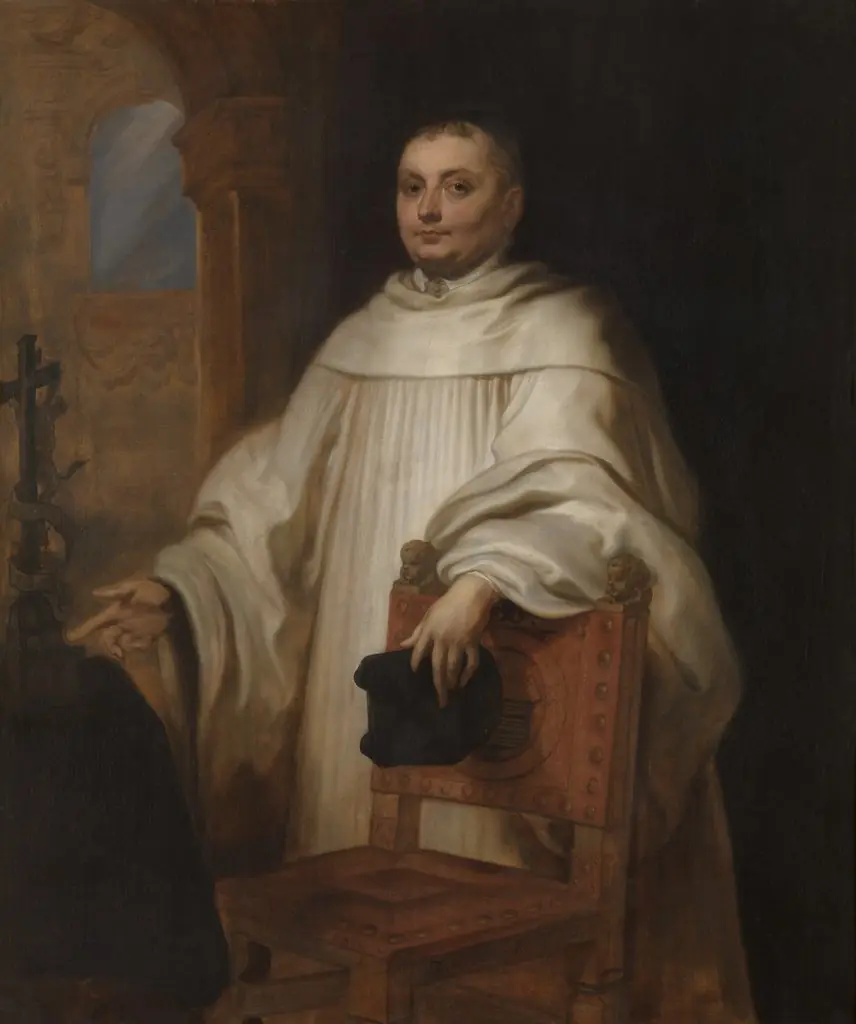 Benedictus van Thulden, prieur de l'abbé de Saint-Bernard
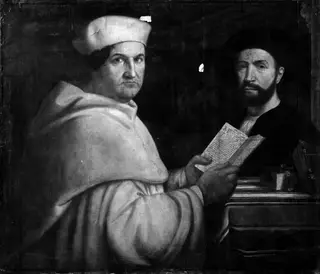 Double Portrait of Two Men, one Dressed in Ecclesiastical Dress