Artwork
Portrait of Empress Elizaveta Alekseevna
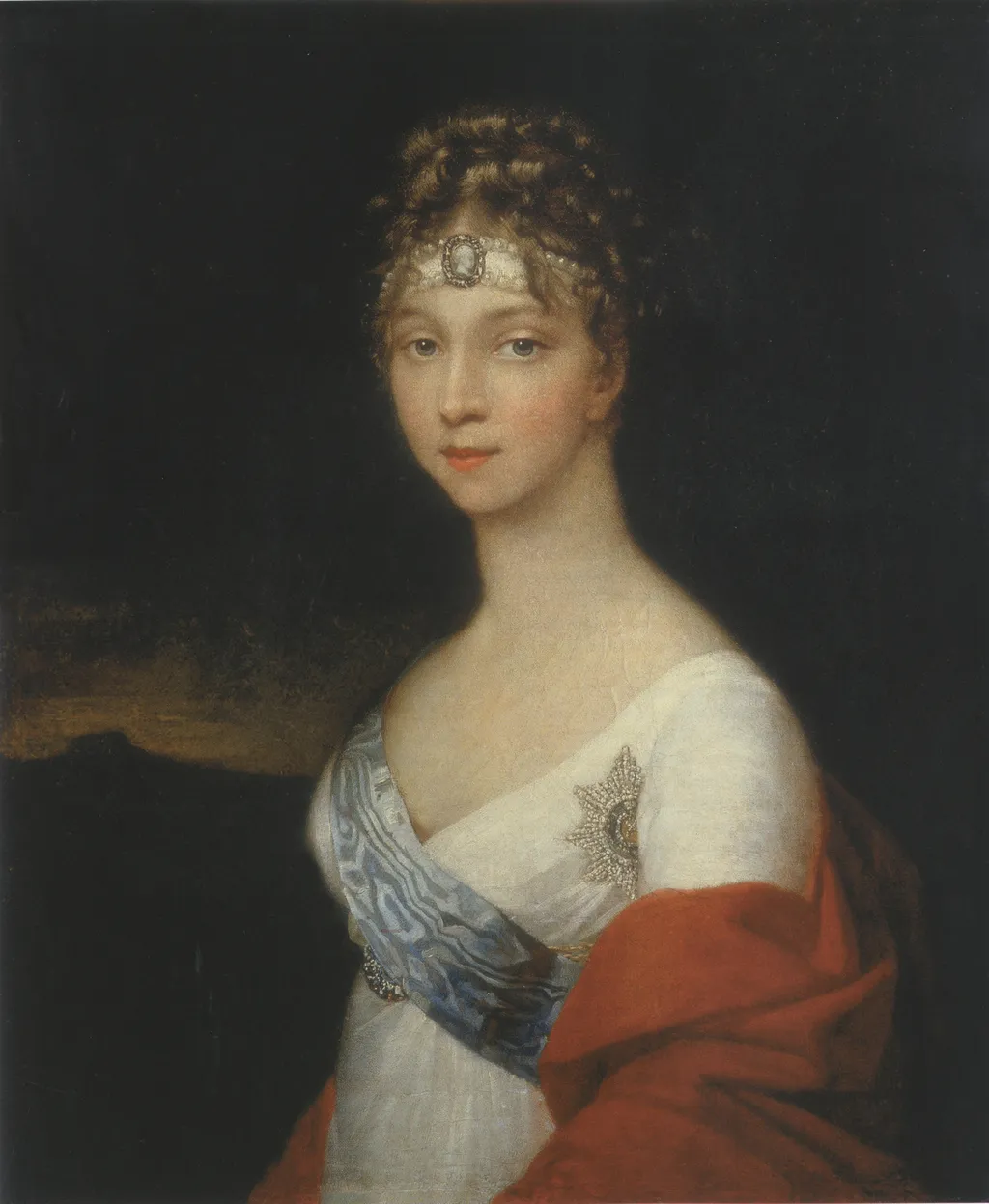
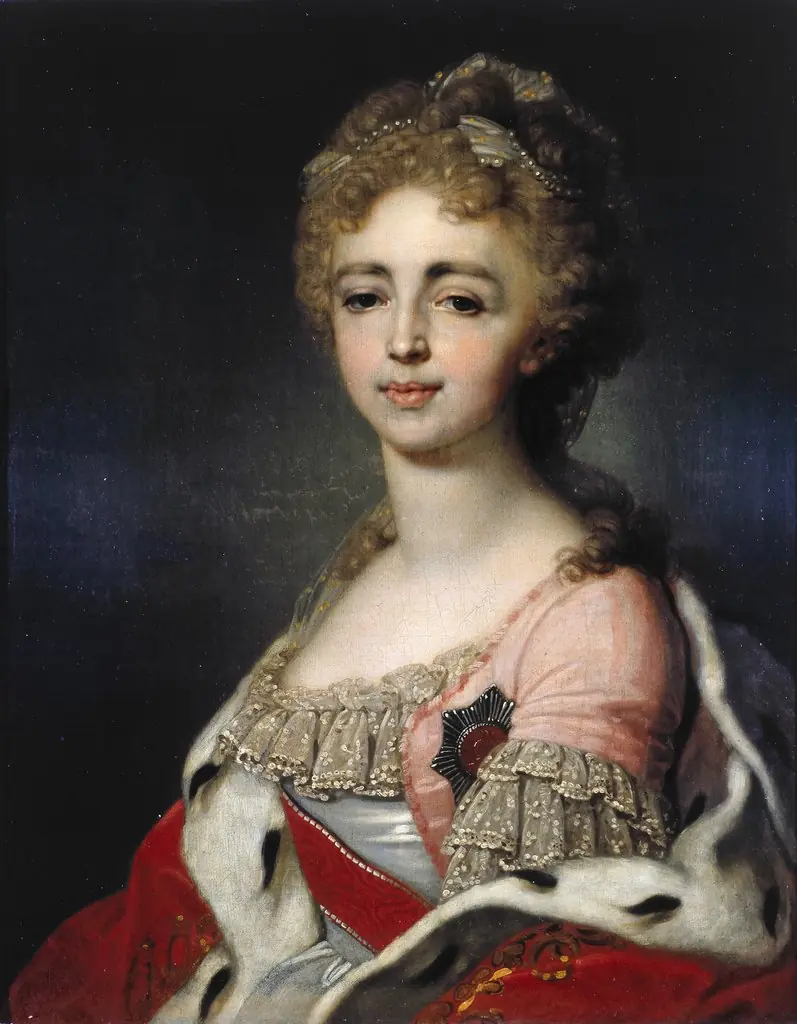
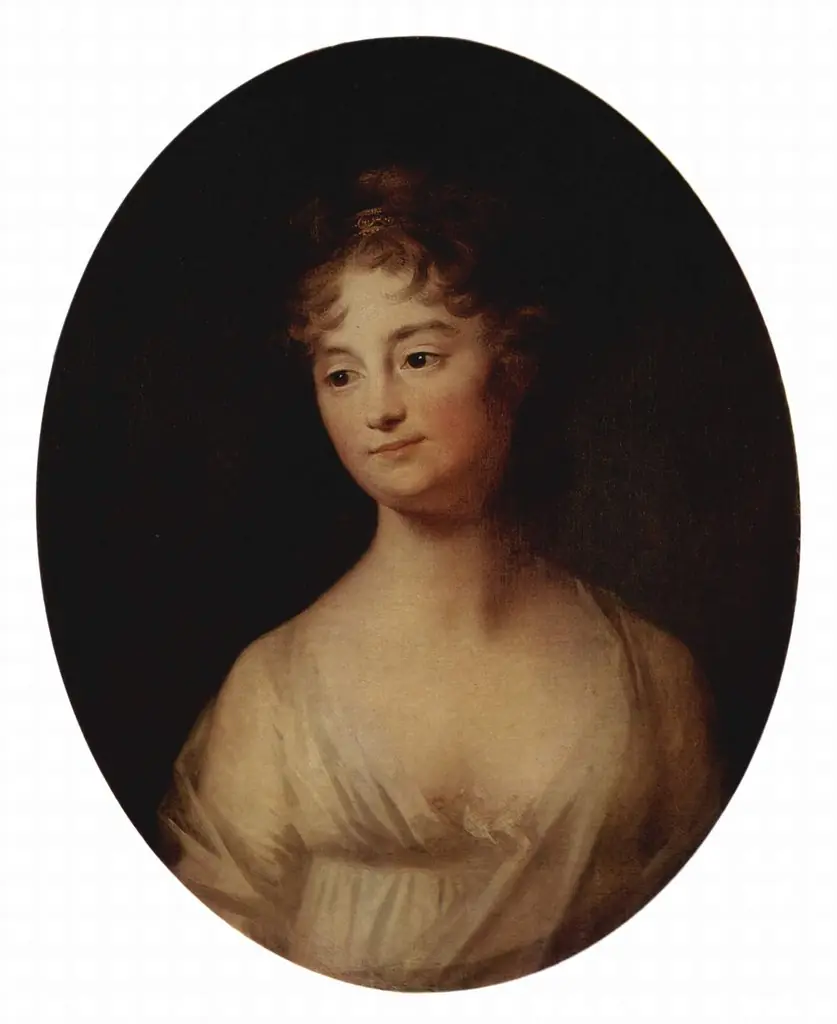
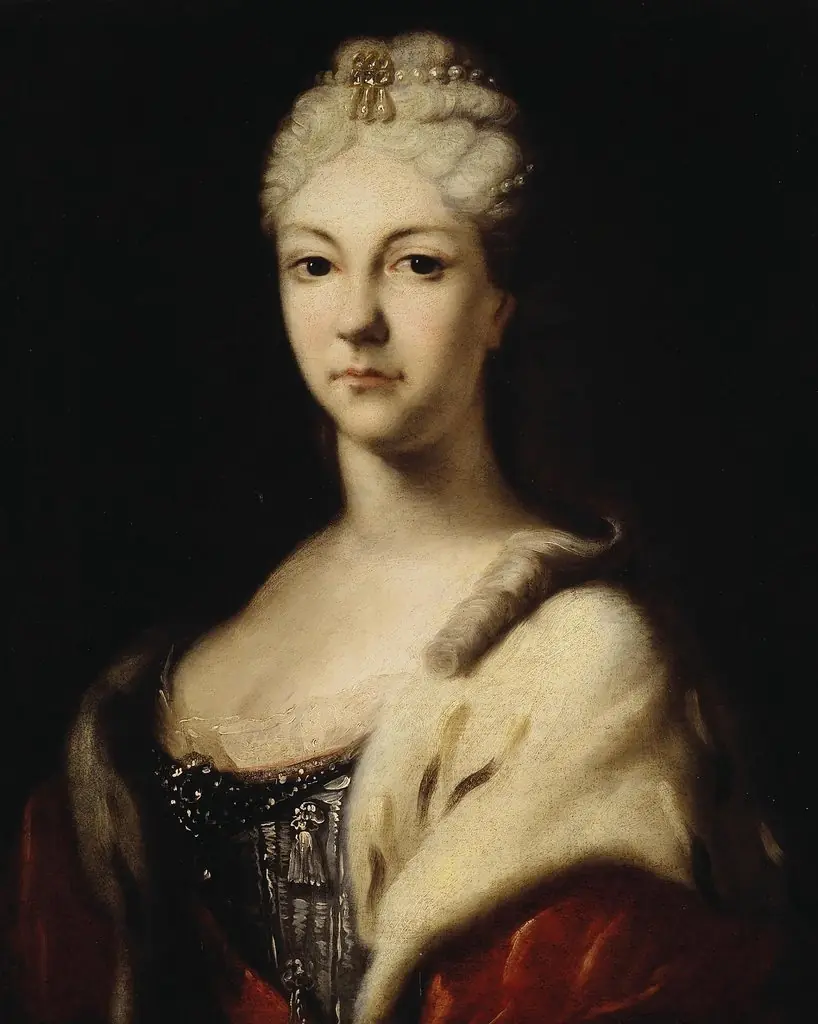
Portrait of Empress Elizaveta Alekseevna is an oil painting. It dates from 1805 and is held in the collection of the Hermitage Museum. The work is an oil painting portraying a woman in elaborate attire.
About this work
Subject & Meaning
She is depicted wearing a headband and is shown with a cameo, personal adornments that frame her as a refined royal sitter.
The painting portrays Empress Elizaveta Alekseevna, the spouse of Tsar Alexander I of Russia, as its principal subject. She is depicted wearing a headband and is shown with a cameo, personal adornments that frame her as a refined royal sitter. Pinned to her attire is the Order of St. Andrew, Russia's highest chivalric honor, which signals her elevated imperial status and ties the portrait to the formal iconographic tradition of representing Russian empresses through their official decorations.
Together, these elements, the classical-style headband, the commemorative cameo, and the prestigious order, combine to present Elizaveta Alekseevna not merely as an individual likeness but as an emblem of dynastic legitimacy and ceremonial dignity, consistent with the portrait conventions of early nineteenth-century Russian imperial imagery.
Technique & Style
The portrait of Empress Elizaveta Alekseevna is executed in oil paint on canvas, a standard medium for formal portraiture of the period. The work measures 75.5 cm in height by 63 cm in width, an upright format suited to a half- or three-quarter-length seated composition. Produced in 1805, the painting is classified as a portrait and is held in the collection of the Hermitage Museum.
Stylistically, the canvas focuses on the empress herself, accented with carefully rendered attributes of rank: a headband, a cameo, and the insignia of the Order of St. Andrew. The inclusion of these specific emblems indicates a formal, state-oriented treatment rather than an informal likeness, with the artist devoting attention to the textures of jewelry and decorative accessories against the figure.
History & Provenance
Commissioned and created in 1805, this oil on canvas portrait depicts Empress Elizabeth Alexeievna. The work was produced in Russia by the artist Friedrich Tischbein. Since its inception, the painting has been held in the collection of the Hermitage Museum, where it remains located.
The Portrait of Empress Elizaveta Alekseevna is held in the collection of the Hermitage Museum in Russia. Created in 1805, the oil on canvas painting remains part of the museum's permanent holdings. The work depicts the Empress adorned with a headband, a cameo, and the Order of St. Andrew.
No specific inventory or accession number is provided in the available records for this entry. Additionally, the sources do not document any exhibition history for this portrait.
Context
Friedrich Tischbein painted this portrait of Empress Elizaveta Alekseevna in 1805 in Russia, depicting her wearing a headband, cameo, and the Order of St. Andrew. The work, rendered in oil on canvas, measures 75.5 centimeters in height and 63 centimeters in width. It is part of the Hermitage Museum's collection in St. Petersburg, where it has been studied as a representative example of Russian imperial portraiture during the early 19th century.
Art historians have examined Tischbein's role in shaping courtly visual culture and the painting's significance within the broader Neoclassical movement in Russian art.
Overview
The work is an oil painting portraying a woman in elaborate attire. She wears a white gown accented with blue and silver motifs, a red shawl draped over her shoulders, and a headband crowned by a sizable brooch. Her expression is calm and her gaze meets the viewer directly, set against a dark background that isolates her figure.
Artist & collection

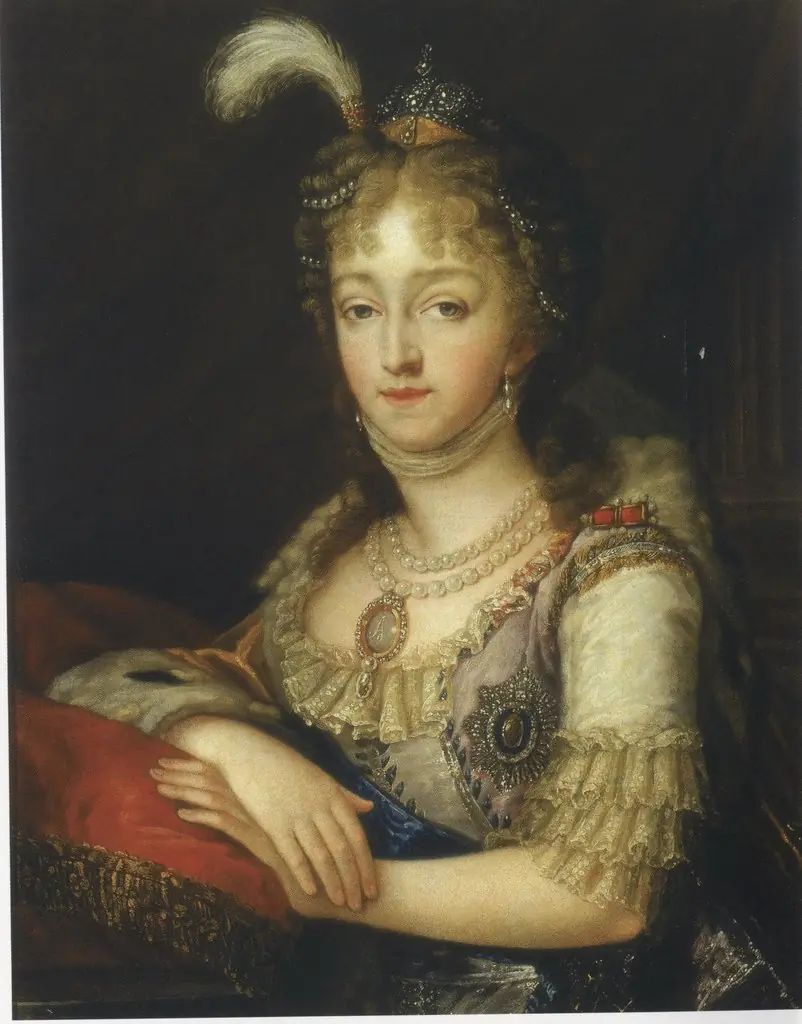
- Portrait of Empress Elizabeth Alexeyevna
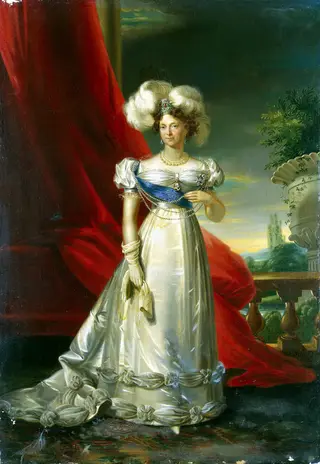 Portrait of Empress Maria Fiodorovna
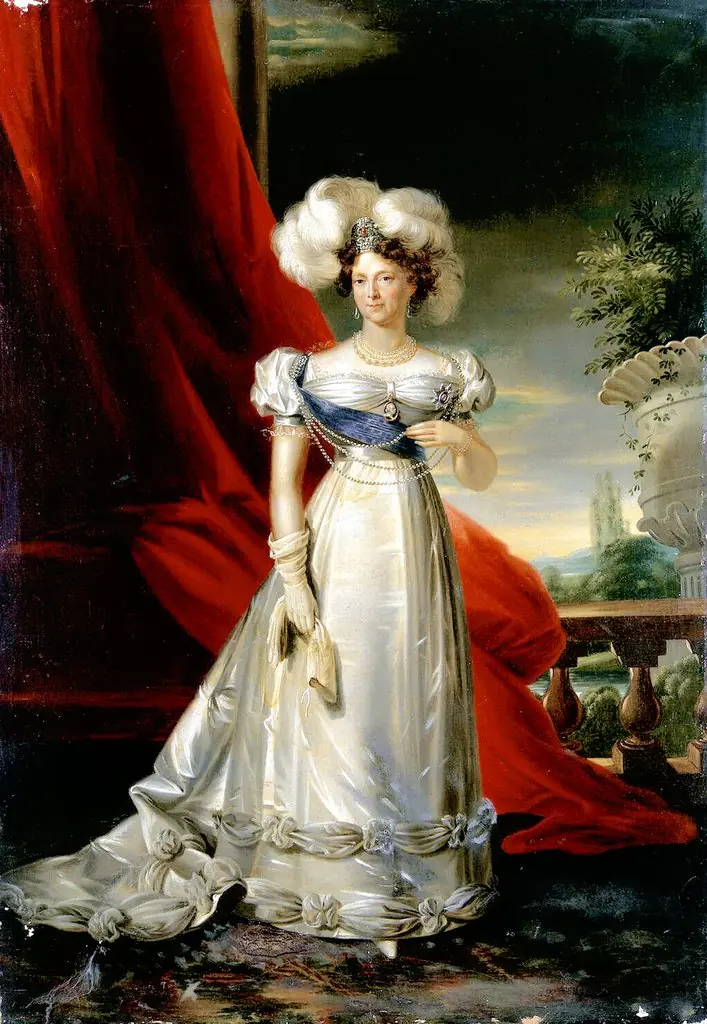 Portrait of the Empress Dowager Maria Feodorovna
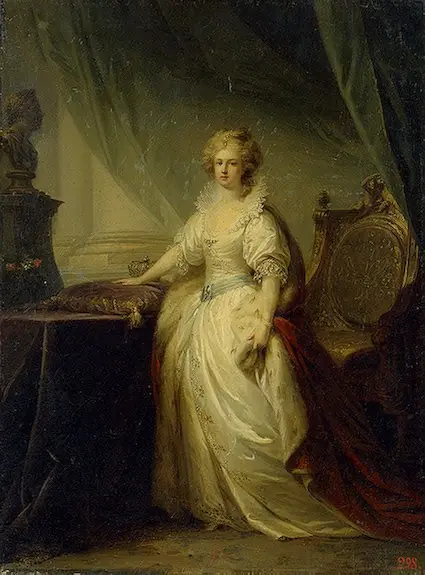 Portrait of Empress Maria Feodorovna (Sketch)
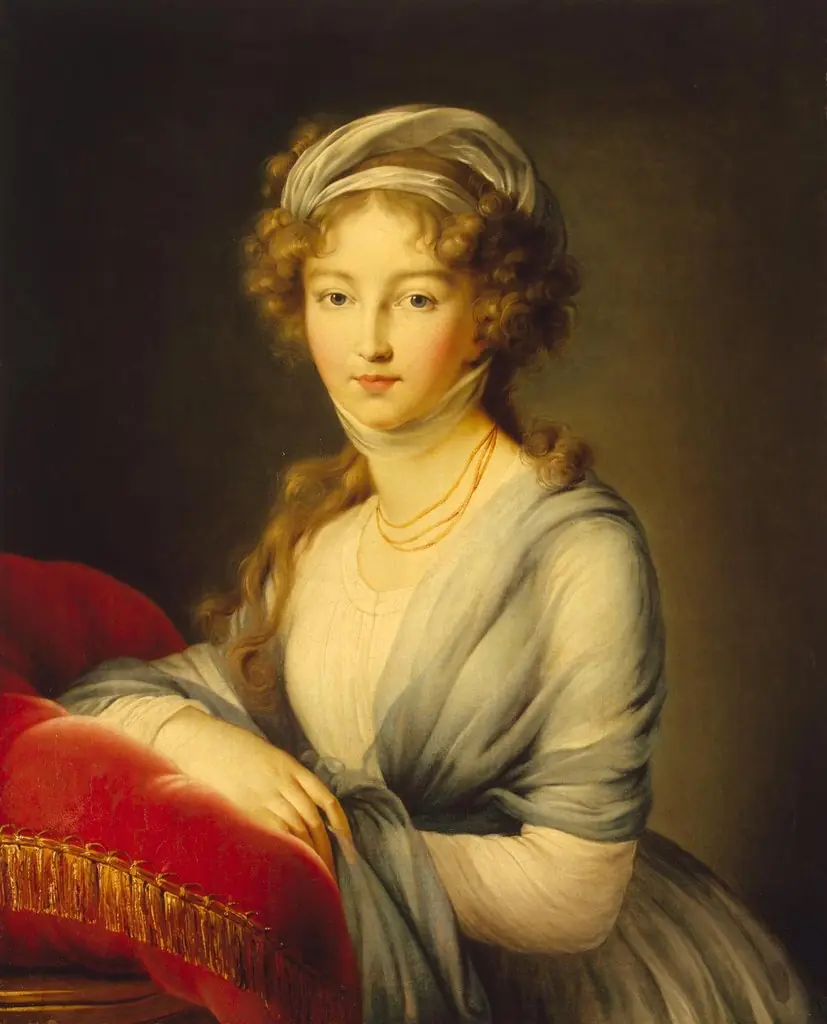 Portrait of Empress Yelizaveta Alekseyevna
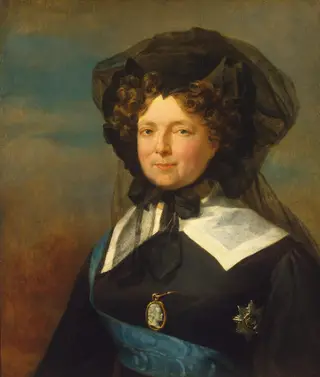 Portrait of Empress Maria Feodorovna in Mourning
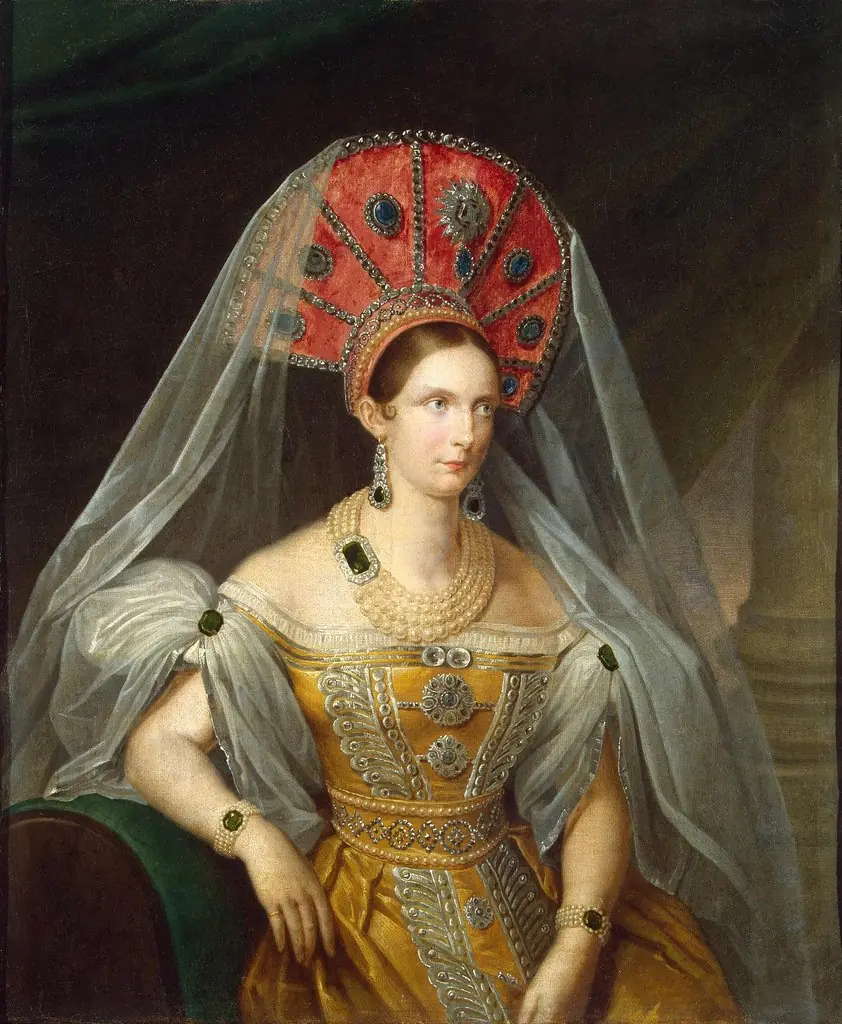 Portrait of Empress Alexandra Feodorovna
 Portrait of Tsarevna Natalia Alexeyevna