Artwork
Portrait of Paulus Cornelisz van Beresteyn (1548-1625)
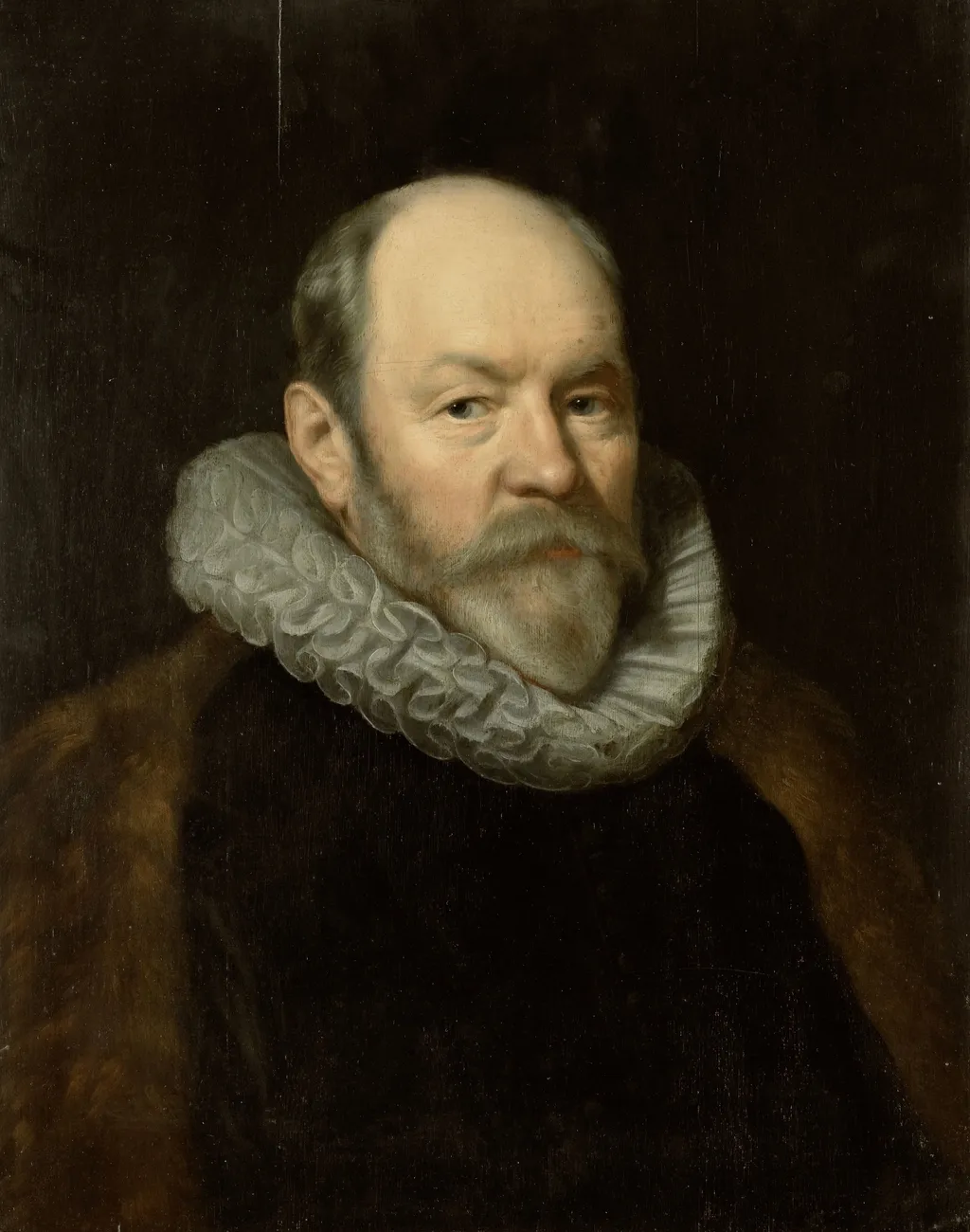
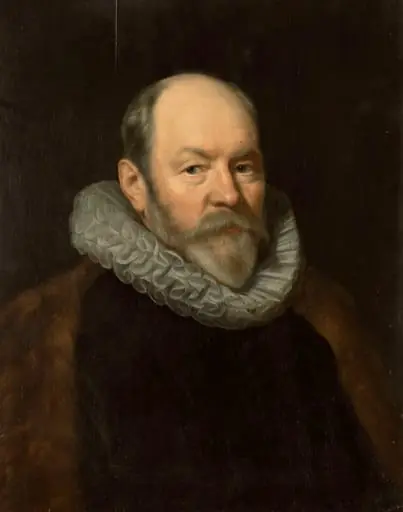
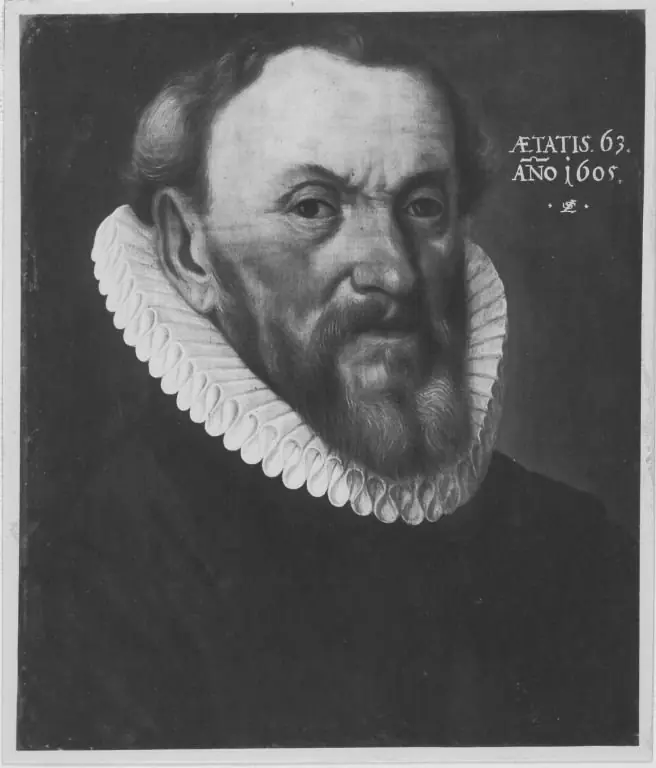
Portrait of Paulus Cornelisz van Beresteyn (1548-1625) is an oil painting. It dates from 1617 and is held in the collection of the Rijksmuseum. The work is an oil painting that presents a close‑up portrait of a middle‑aged man.
About this work
Subject & Meaning
As a formal painted portrait, it functions as a representative image of the man himself, intended to preserve and convey his status and identity.
The painting is a commissioned portrait of Paulus Cornelisz. van Beresteyn (1548–1625), depicting him as its sole and primary subject. Produced in 1617, the work was made at the sitter's own request, framing him as a wealthy Dutch patron commissioning his own likeness rather than as a posthumous memorial. As a formal painted portrait, it functions as a representative image of the man himself, intended to preserve and convey his status and identity.
The iconography is that of a conventional civic portrait of the Dutch Republic: an individualized likeness of the named sitter, rendered in oil on panel, with no allegorical attributes or symbolic accessories indicated in the records. Its meaning is therefore tied directly to the identity of Paulus van Beresteyn, presenting him as a specific, identifiable individual rather than embodying an abstract theme.
Technique & Style
The portrait is executed in oil paint on a wooden panel support, aligning with conventions of early-seventeenth-century Dutch portraiture. Measuring 63.2 × 50.2 cm, the handling emphasizes smooth, refined transitions in facial modeling and costume detailing, consistent with the workshop practices associated with Michiel Jansz. van Mierevelt. Stylistically, the composition centers on a three-quarter view of the sitter, Paulus Cornelisz van Beresteyn, with subdued tonalities and restrained brushwork that prioritize clarity and verisimilitude over painterly bravura.
The condition is reported as stable, with no structural damages indicated for the panel; the surface appears intact, reflecting the panel’s preservation within a museum collection.
History & Provenance
The portrait was commissioned by its sitter, Paulus van Beresteyn, in 1617. It was later owned by Jacob de Witte van Citters before entering the collection of the Rijksmuseum, where it remains. The work is attributed to the workshop of Michiel Jansz. van Mierevelt.
Overview
The work is an oil painting that presents a close‑up portrait of a middle‑aged man. He is shown with a bald head, a thick white beard, and a solemn expression. The figure wears a dark fur‑trimmed collar over a white ruff, set against an unadorned dark background that concentrates attention on his face.
Context
Portraits of this type were common among the Dutch elite in the late Renaissance, serving both as records of lineage and as visual affirmations of social standing. The plain background aligns with contemporary conventions that prioritized the sitter’s likeness over elaborate settings.
Artist & collection

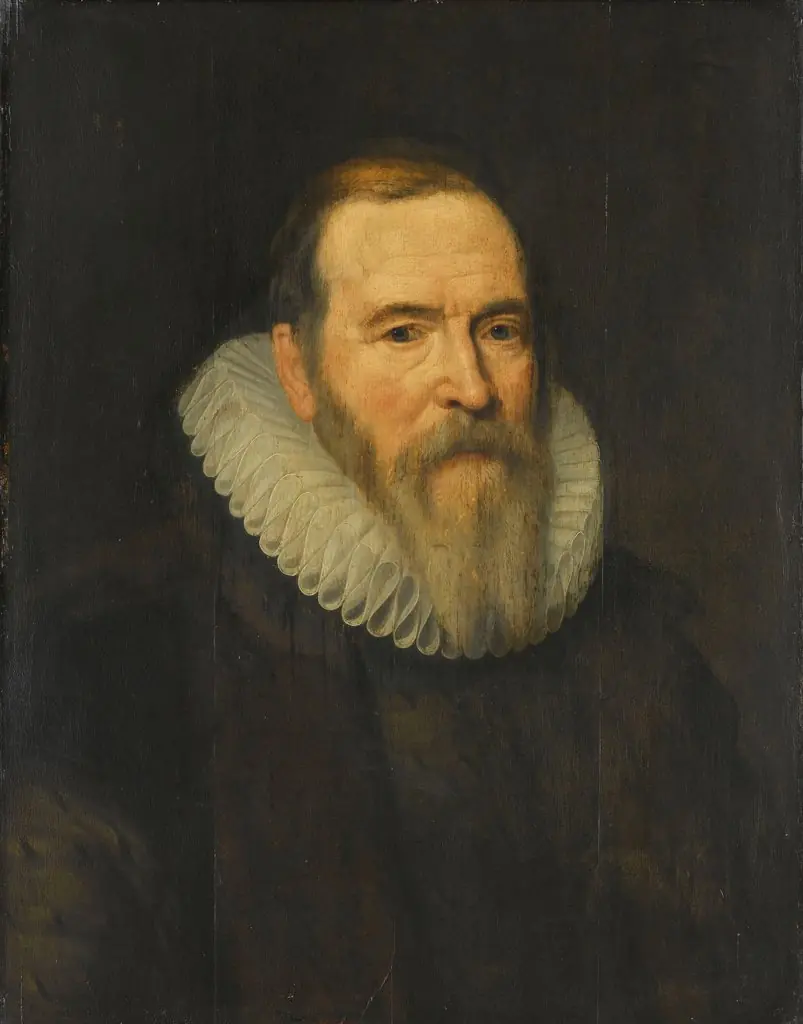 Portrait of Johan van Oldenbarneveldt (1547-1619)
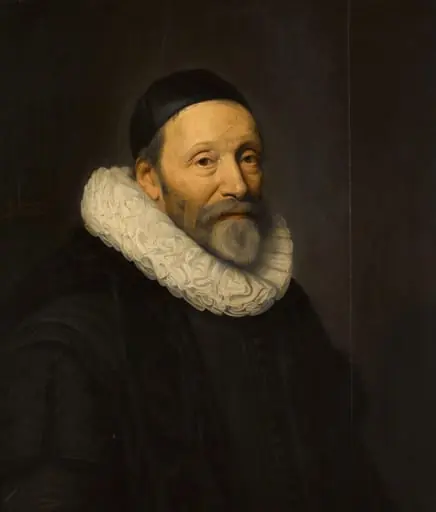 Portrait of Johannes Wttenbogaert (Jan Uytenbogaert), Remonstrant Minister in The Hague, Pastor of the Wallon Church
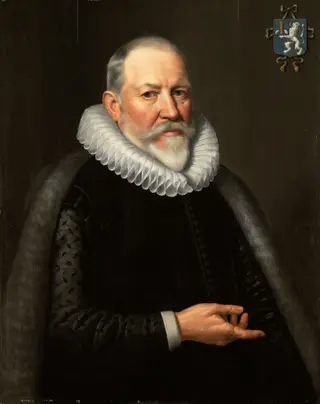 Untitled
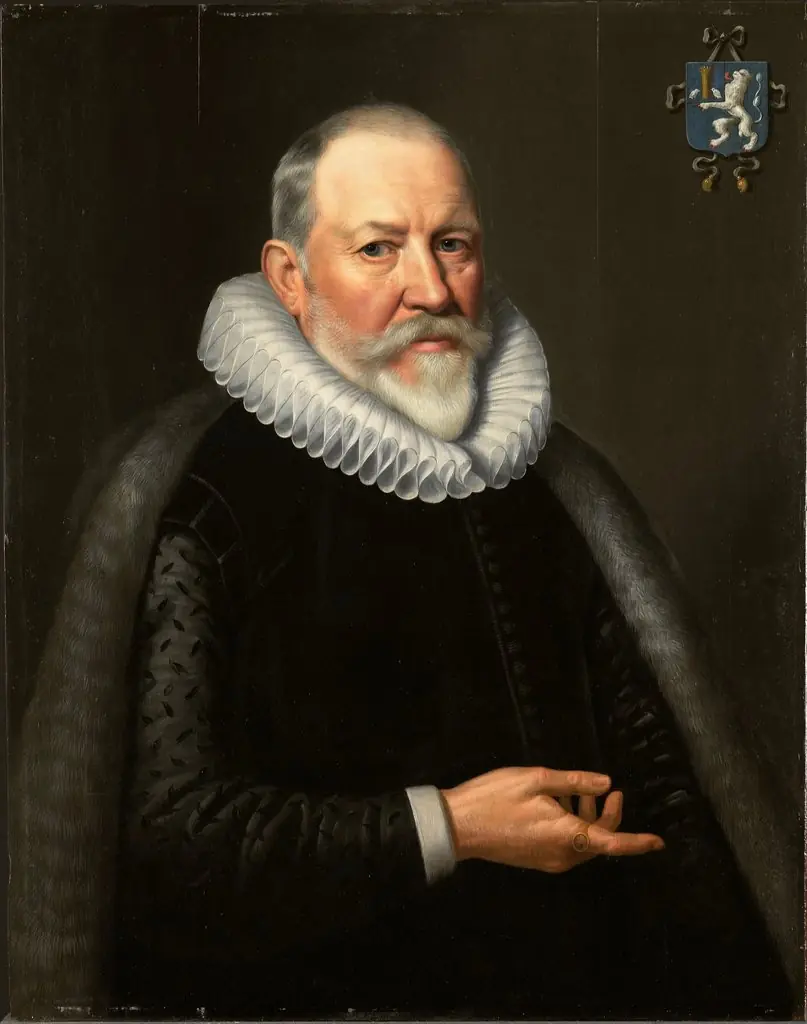 Portrait of Maerten Ruychaver (1545-1626)
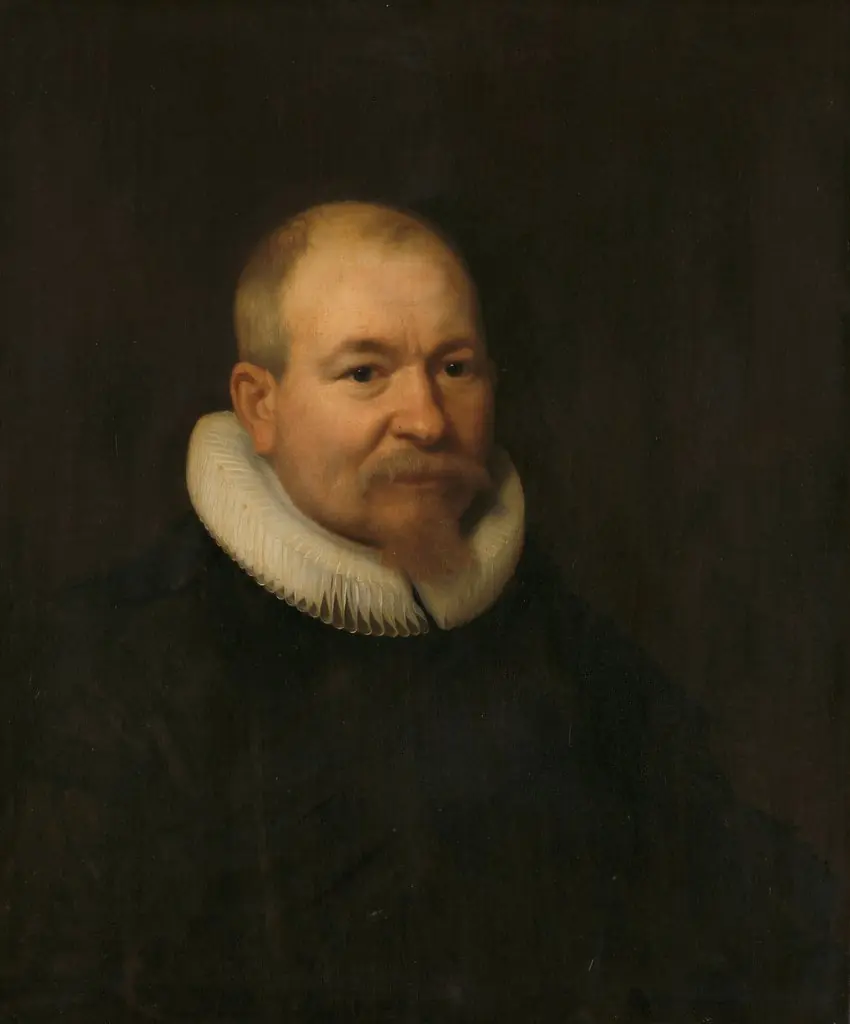 Samuel van Lansbergen (d 1669). Remonstrant minister in Rotterdam
 Portrait of Johan van Oldenbarnevelt
 Portrait of Maerten Ruychaver, Burgomaster of Haarlem
 Bildnis eines bärtigen Mannes