Artwork
Prince Christian, the Heir Apparent, Hunting Ducks at Nykøbing Castle
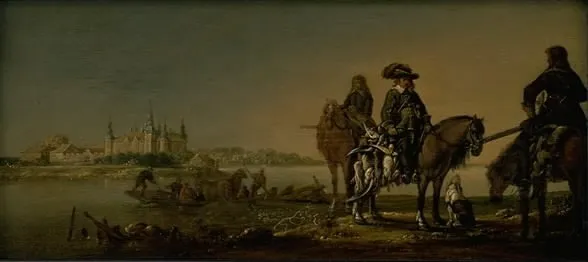
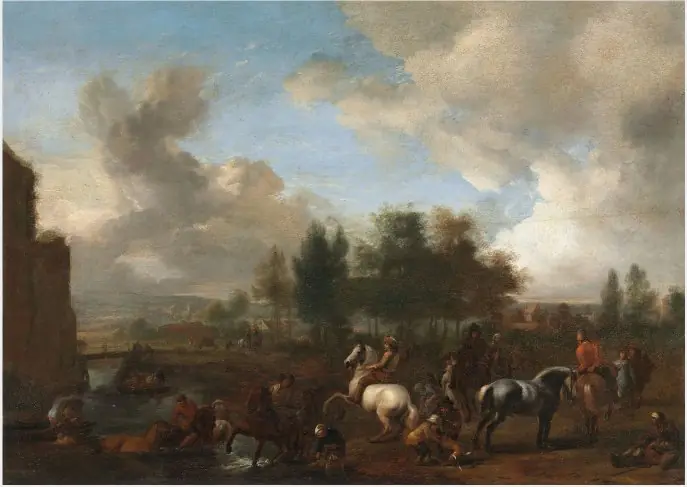
Prince Christian, the Heir Apparent, Hunting Ducks at Nykøbing Castle is an oil painting. It dates from 1639 and is held in the collection of the Statens Museum for Kunst. The canvas portrays a mounted figure in hunting dress, positioned near a waterway with a castle visible in the distance.
About this work
Subject & Meaning
The painting shows Prince Christian IV of Denmark, the designated heir, engaged in a hunt for ducks at Nykøbing Castle.
The painting shows Prince Christian IV of Denmark, the designated heir, engaged in a hunt for ducks at Nykøbing Castle. This scene functions as an equestrian portrait that merges royal authority with martial vigor, emphasizing the heir's role as a capable leader and active participant in state affairs. The depiction of the prince in a hunting context underscores contemporary notions of nobility, skill, and the connection between the monarchic line and the natural world, reinforcing dynastic prestige through symbolic representation of power and lineage.
Technique & Style
The work is an oil painting executed on a wooden panel support, a common combination in 17th-century Northern European practice. Its modest format measures 12.5 cm in height by 27.3 cm in width, giving it a distinctly horizontal orientation suited to its landscape and hunting subject matter. The composition is classified as an equestrian portrait, integrating figural portraiture with an outdoor setting that depicts Nykøbing Castle and a hunting scene involving Christian IV of Denmark.
The narrow, panoramic proportions lend the image a friezelike quality, allowing the hunting activity and architectural backdrop to unfold laterally across the panel.
Legacy
The painting shaped later equestrian portraiture through its dynamic hunting composition and courtly symbolism, influencing royal imagery in 17th‑century Danish art. Its presence in the Statens Museum for Kunst collection has kept it visible in scholarly discussions of Baroque portraiture and courtly sport. The work is frequently cited in studies of Christian IV’s self‑representation and in analyses of hunting scenes as emblems of power.
Overview
The canvas portrays a mounted figure in hunting dress, positioned near a waterway with a castle visible in the distance. The rider, equipped with a hat and firearm, is shown in the act of duck hunting. The composition centers on the horse, rendered with detailed attention, while the surrounding landscape provides contextual depth.
History & Provenance
The piece is part of the collection of Denmark’s National Gallery, Statens Museum for Kunst. Its acquisition history traces back to the museum’s holdings of 19th‑century Danish court portraiture, where it has been displayed as an example of royal patronage and genre painting.
Artist & collection

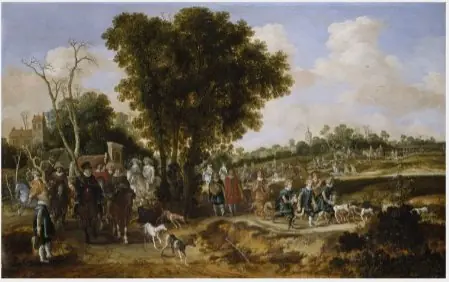 Prince Maurits and Prince Frederik Hendrik Going to the Chase
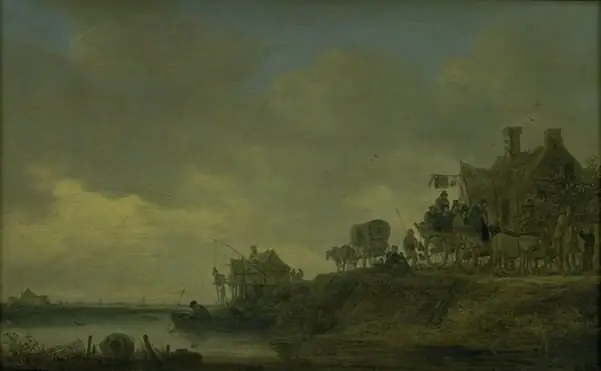 River Scene with the "Swan" Tavern
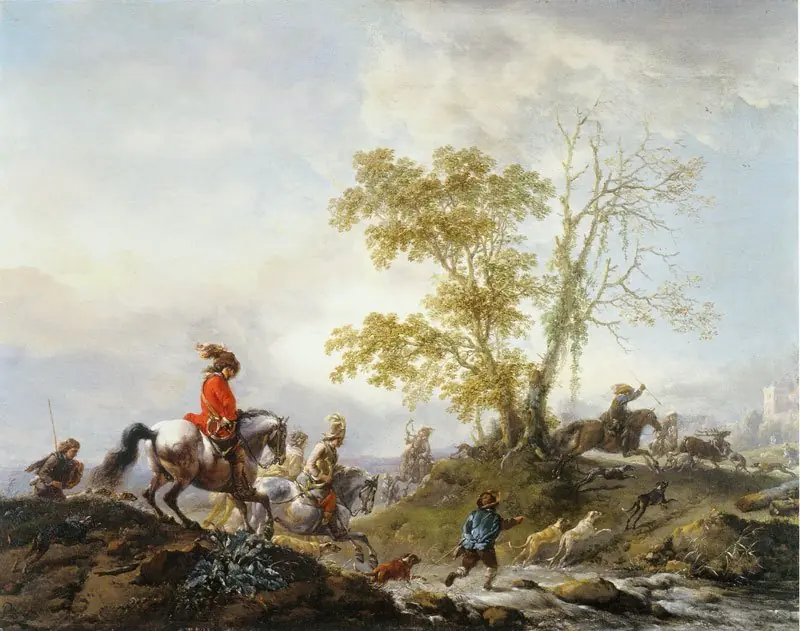 The Stag Hunt (1659)
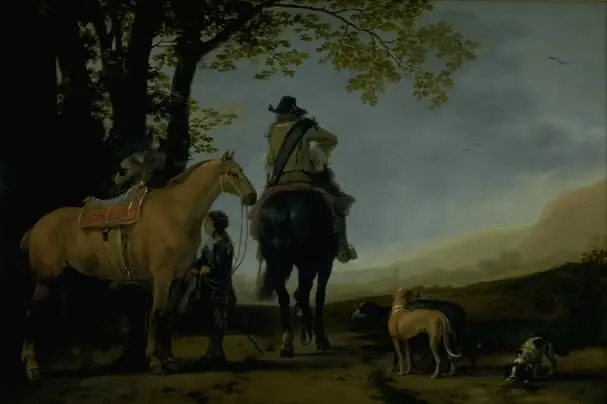 Two Horsemen in a Landscape
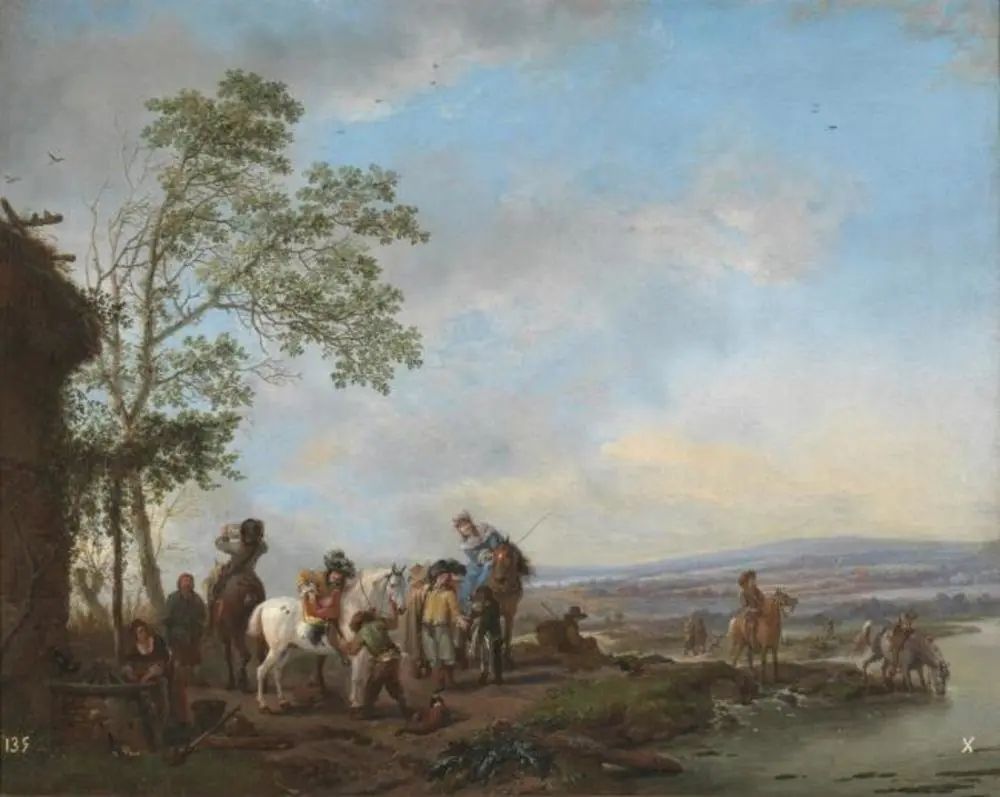 A Stop at an Inn
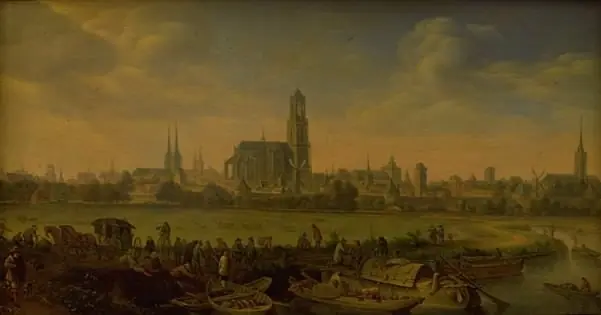 View of Utrecht
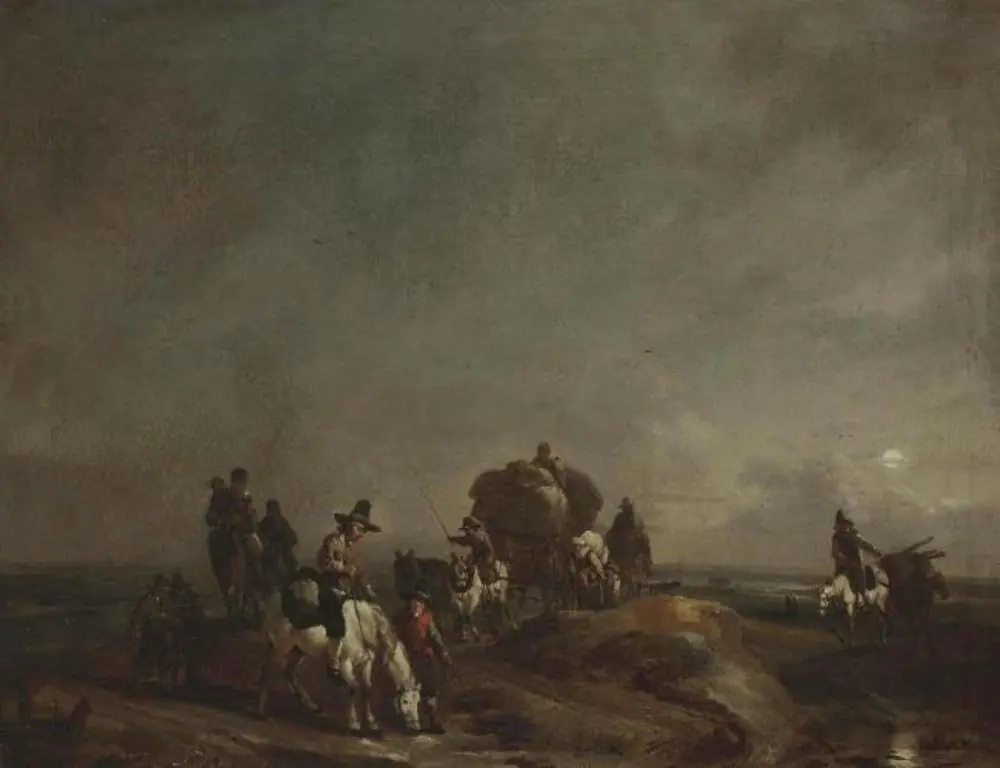 Returning from the Hay Harvest
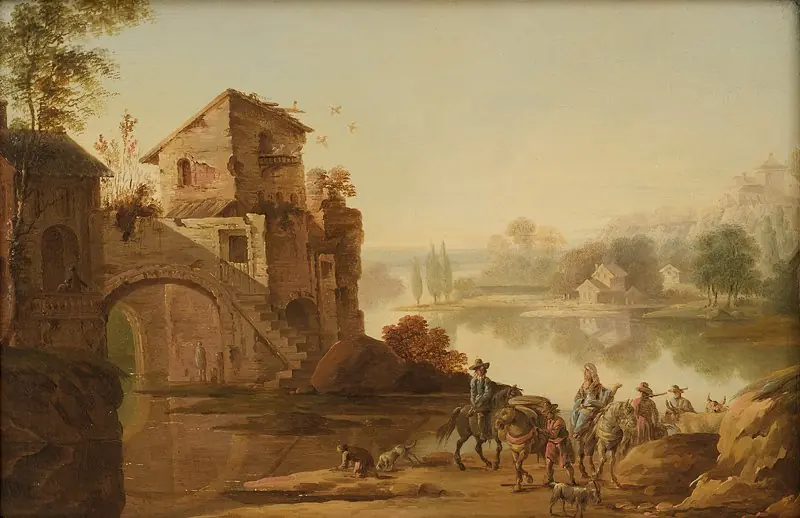 Landskab i italiensk manér
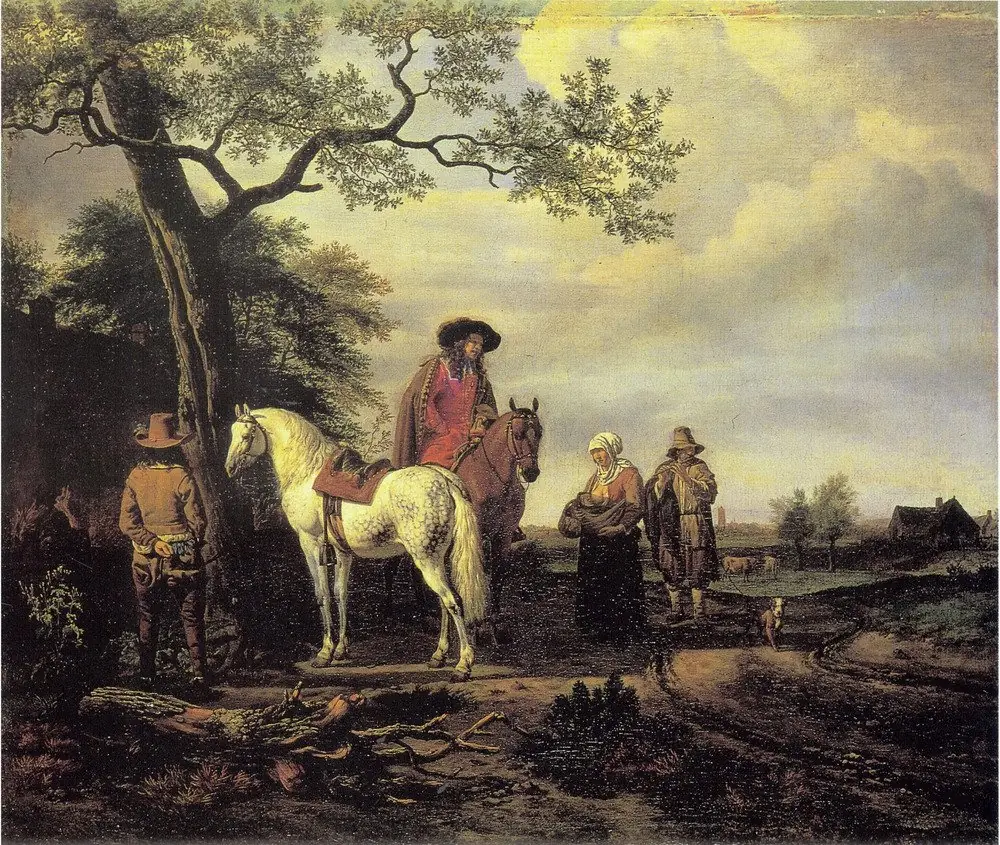 Stop in the Way
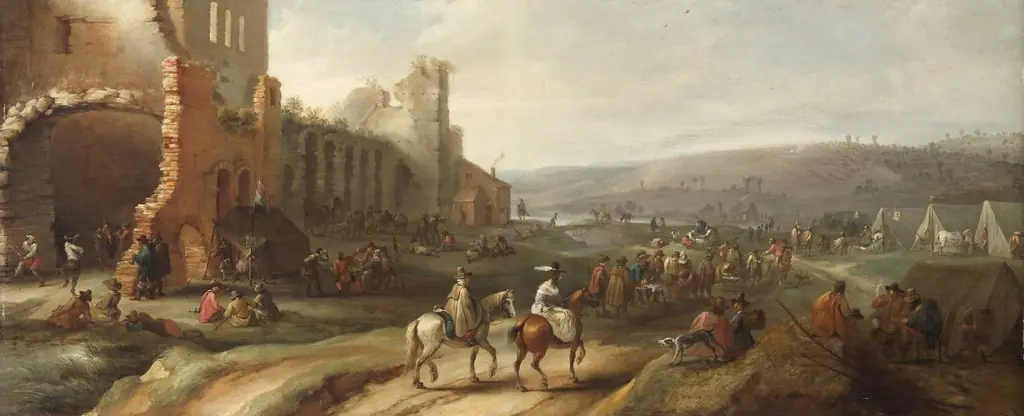 Feldlager mit Ruinen
 Horses Watering: a Landscape
- Prince Christian, the Heir Apparent, Hunting Ducks at Nykøbing Castle