Artwork
Queen Kaikeyi reminds King Dasharatha about the sacrifices of King Bali and King Shivi, folio 39 from the Ayodhya Kanda (Book of Ayodhya) of a Ramayana (Rama's Journey)
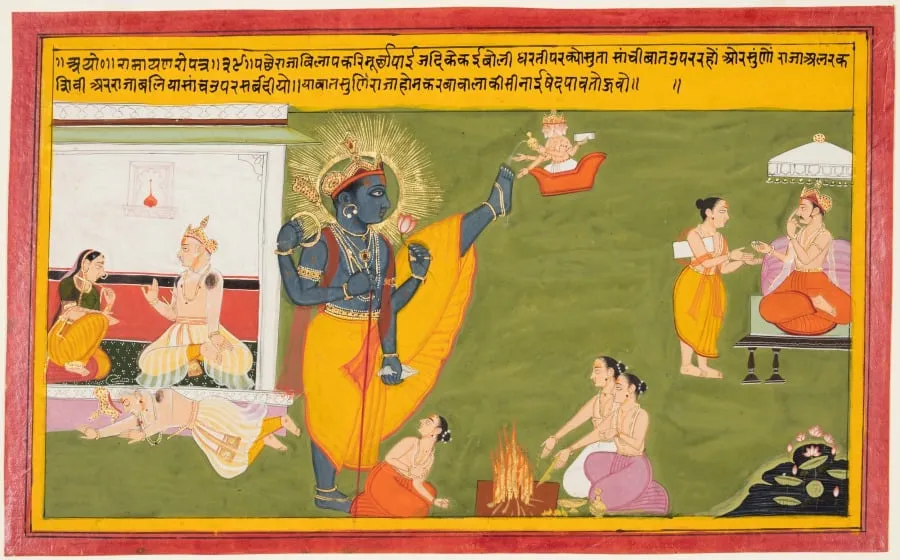
Queen Kaikeyi reminds King Dasharatha about the sacrifices of King Bali and King Shivi, folio 39 from the Ayodhya Kanda (Book of Ayodhya) of a Ramayana (Rama's Journey) is an unspecified painting by the Baroque artist Unknown. It dates from 1710 and is held in the collection of the Cleveland Museum of Art. This folio comes from a illustrated manuscript of the Ayodhya Kanda, the second book of the Ramayana, produced in the Mewar region.
About this work
Overview
This folio comes from a illustrated manuscript of the Ayodhya Kanda, the second book of the Ramayana, produced in the Mewar region.
This folio comes from a illustrated manuscript of the Ayodhya Kanda, the second book of the Ramayana, produced in the Mewar region. It depicts Queen Kaikeyi urging King Dasharatha to honor a past promise by recalling two ancient acts of royal sacrifice. The scene unfolds within a palace interior, where earthly figures and celestial narratives coexist in a layered composition, blending temporal planes to convey moral weight.
Subject & Meaning
Queen Kaikeyi invokes the legends of King Bali and King Shivi to persuade Dasharatha to fulfill his vow. Bali, a generous demon king, surrendered his entire kingdom to Vishnu’s dwarf avatar; Shivi, a righteous monarch, offered his own flesh to save a dove. These stories serve as ethical precedents, framing Kaikeyi’s demand not as betrayal but as adherence to dharma—duty upheld through self-sacrifice.
Technique & Style
The painting employs vibrant mineral pigments and fine brushwork typical of Mewar’s royal atelier. Figures are rendered with stylized elegance, their postures and gestures carefully calibrated to convey hierarchy and emotion. The upper register presents mythic episodes as floating vignettes, separated from the main scene by spatial ambiguity, creating a visual metaphor for memory and divine precedent.
History & Provenance
Produced in the late 16th or early 17th century under Mewar patronage, this folio is part of a larger Ramayana series commissioned by the royal court. Similar manuscripts from this workshop are held in major collections, including the Chester Beatty Library and the National Museum in New Delhi. Its survival reflects the enduring cultural investment in epic illustration among Rajput elites.
Context
In Mewar’s artistic tradition, religious narratives were often interwoven to reinforce political and moral ideals. By embedding older tales within the Ramayana, the artist reinforced the notion that kingship required unwavering commitment to promise and sacrifice. Such visual storytelling served both devotional and didactic purposes, aligning royal authority with divine precedent.
Legacy
The folio exemplifies how Rajput painters synthesized textual tradition with visual innovation, using layered imagery to compress time and meaning. Its influence can be traced in later regional styles that continued to blend mythic episodes into narrative sequences. As a cultural artifact, it preserves a sophisticated mode of ethical storytelling unique to early modern North Indian court art.
Artist & collection

 Domestic Scene
 Giacomo and Cardinal Marco, investing Andrea, Abbot of San Zeno, with his Benefice
 The Nymph of Fontainebleau
 Portrait of a Woman
 Madonna and Child with Saints in the Enclosed Garden
 Venus and Minerva
 Family Group of Four on Sofa
 Wall painting from Room H of the Villa of P. Fannius Synistor at Boscoreale
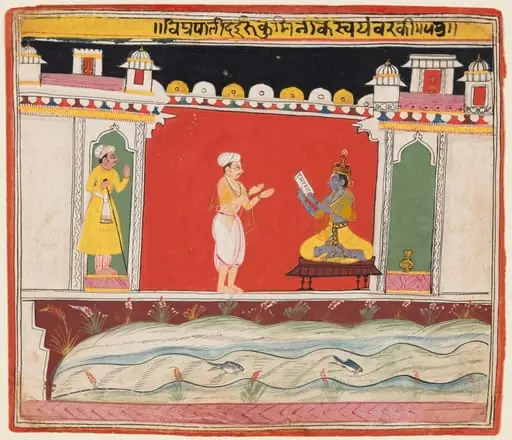 A Brahmin gives Krishna the Message or Invitation for the Competition to Rukmini’s Svayamvara, from a Bhagavata Purana
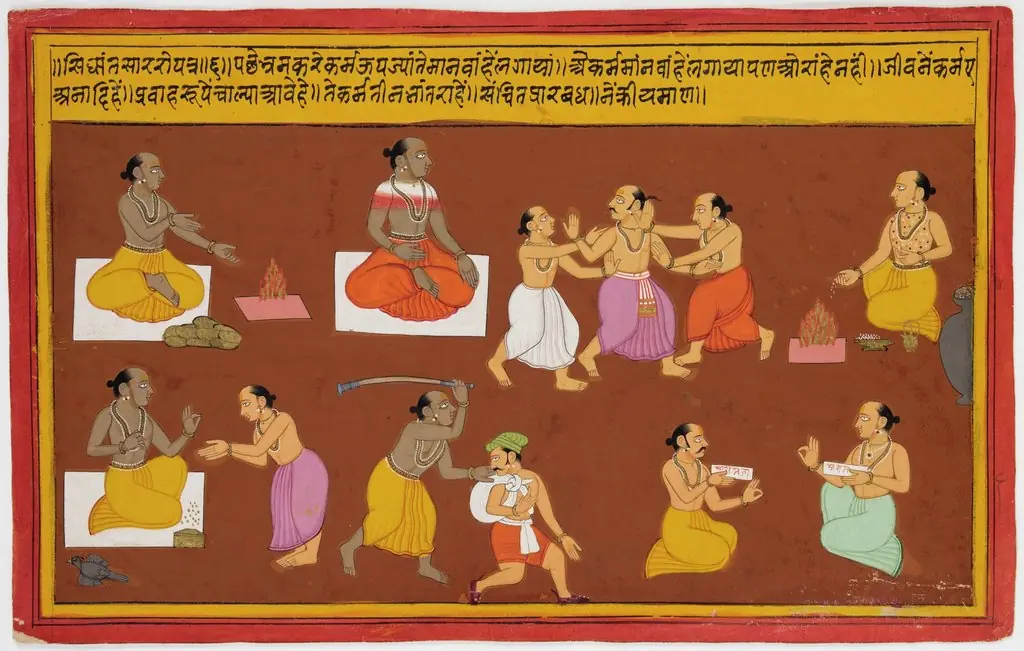 Bhaavata Purana (1 of 4 illustrations)
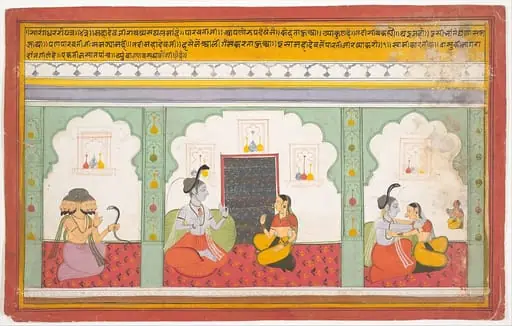 Untitled
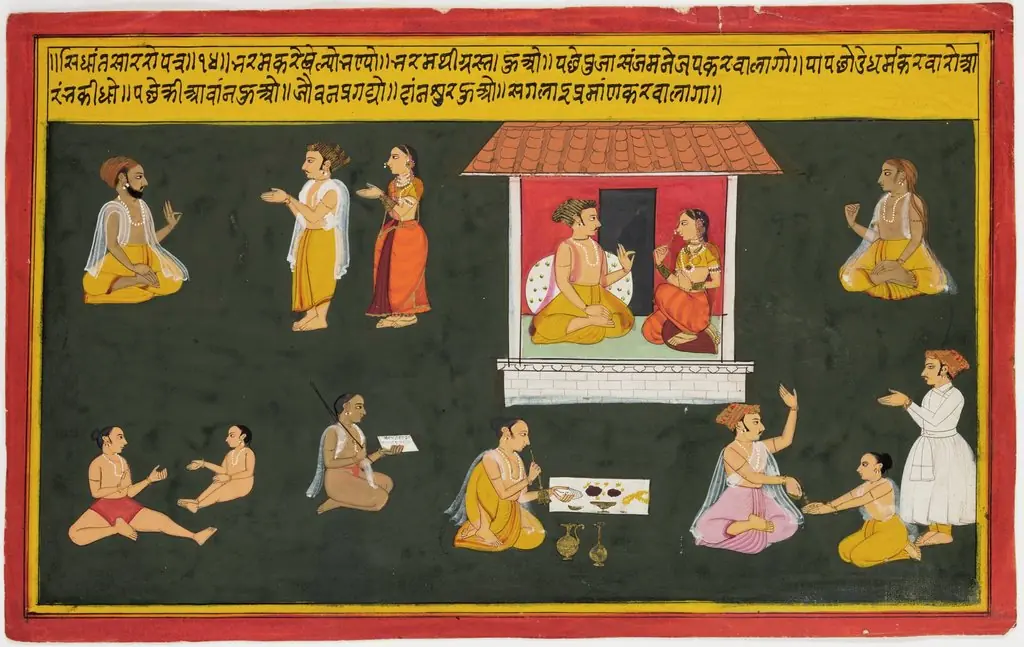 Bhaavata Purana (3 of 4 illustrations)
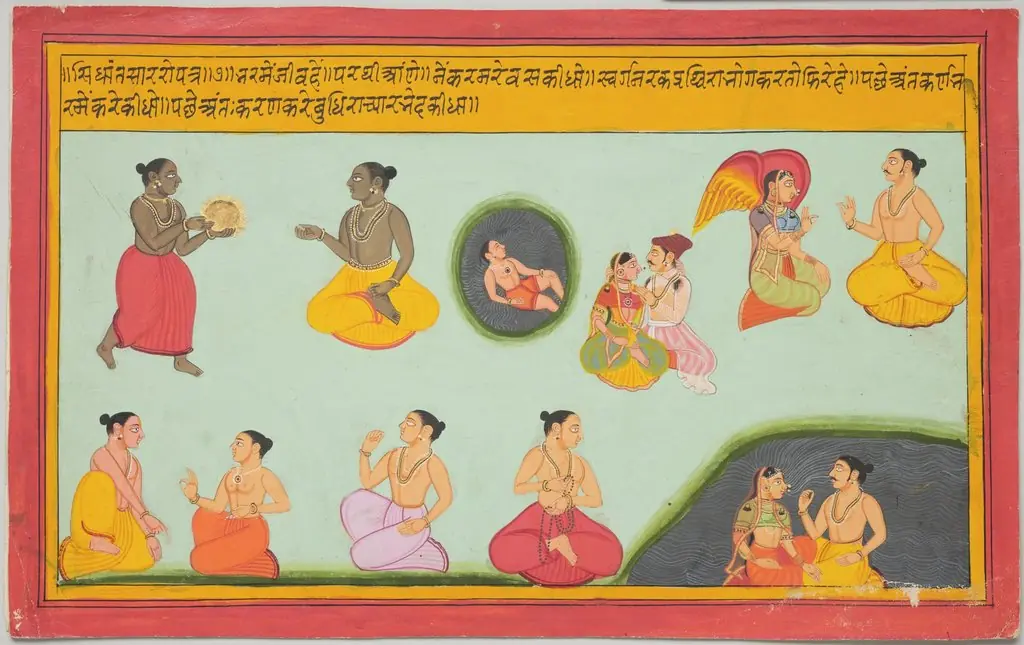 Worship of the Gods (6 of 17)
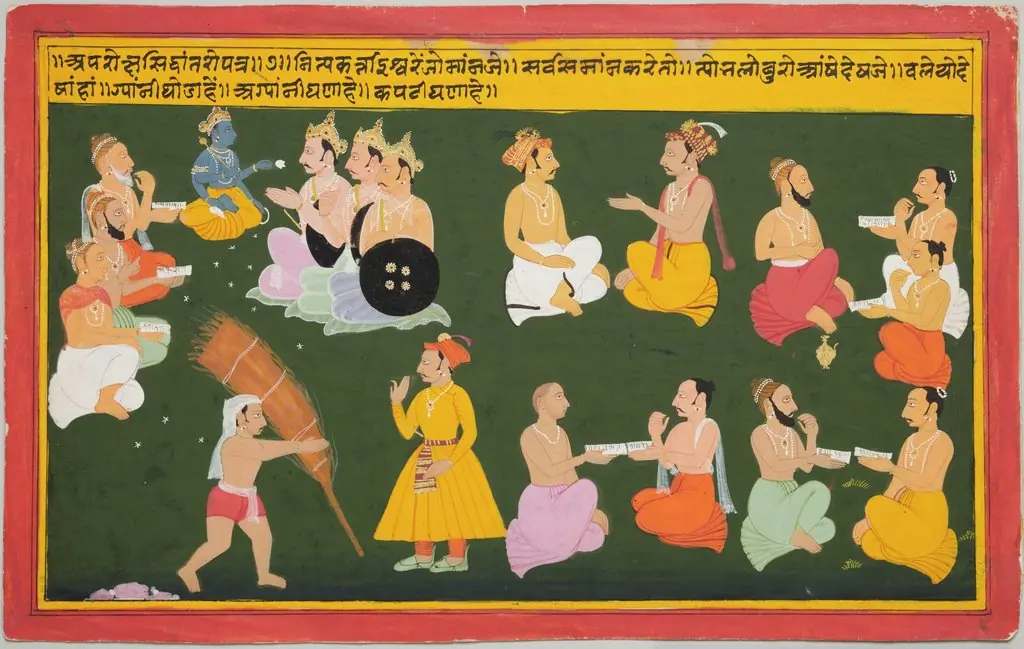 Worship of Hindu Deities (1 of 18)
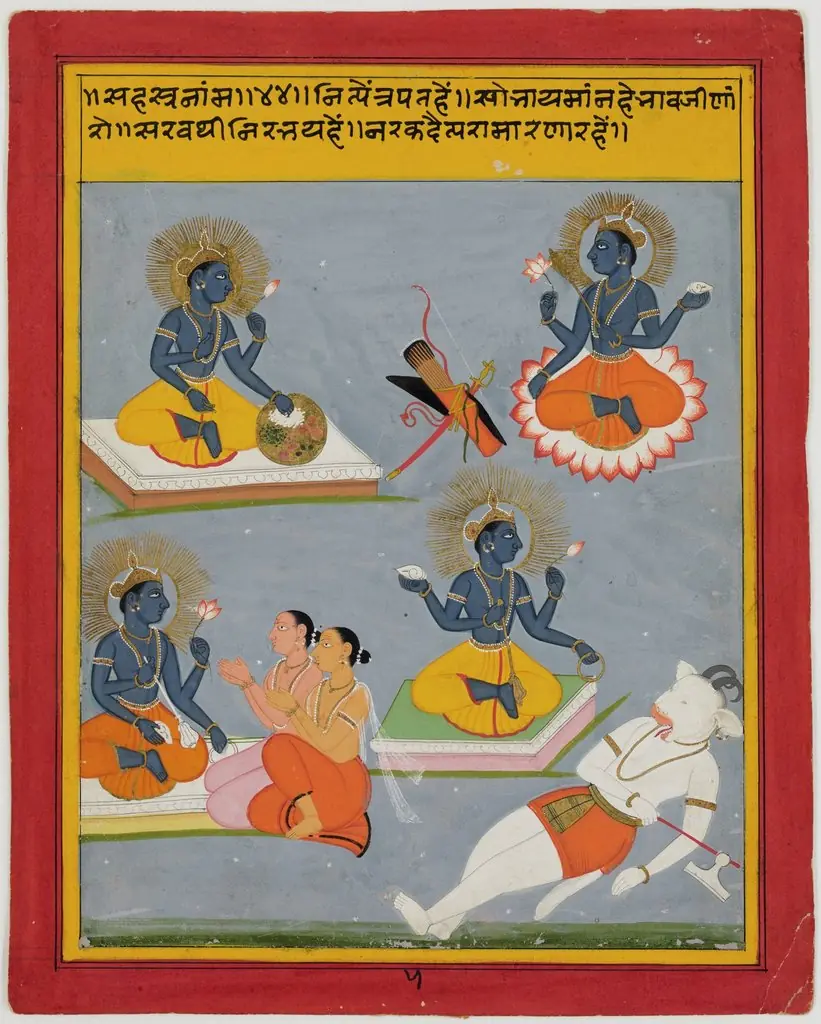 Illustration to "Vishnu Sahasranama"
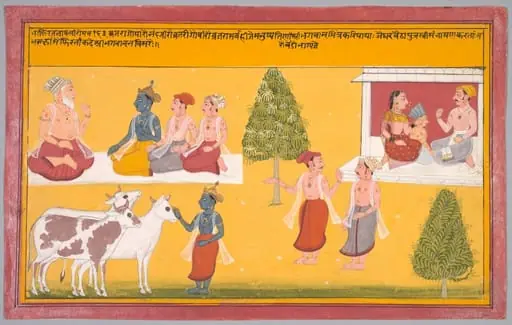 Friends of Krishna, folio 163 from a Bhakti Ratnavali of Vishnu Puri
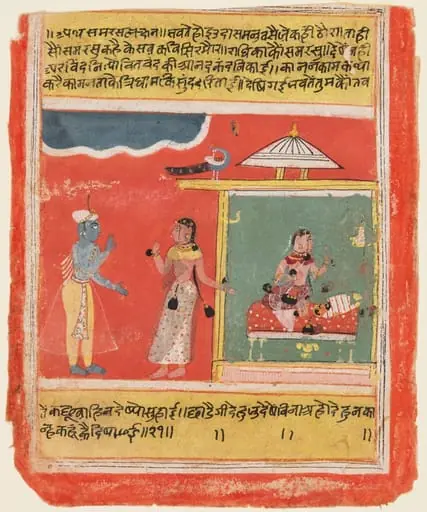 The Sentiment of Peace: Sama Rasa, from a Rasikapriya
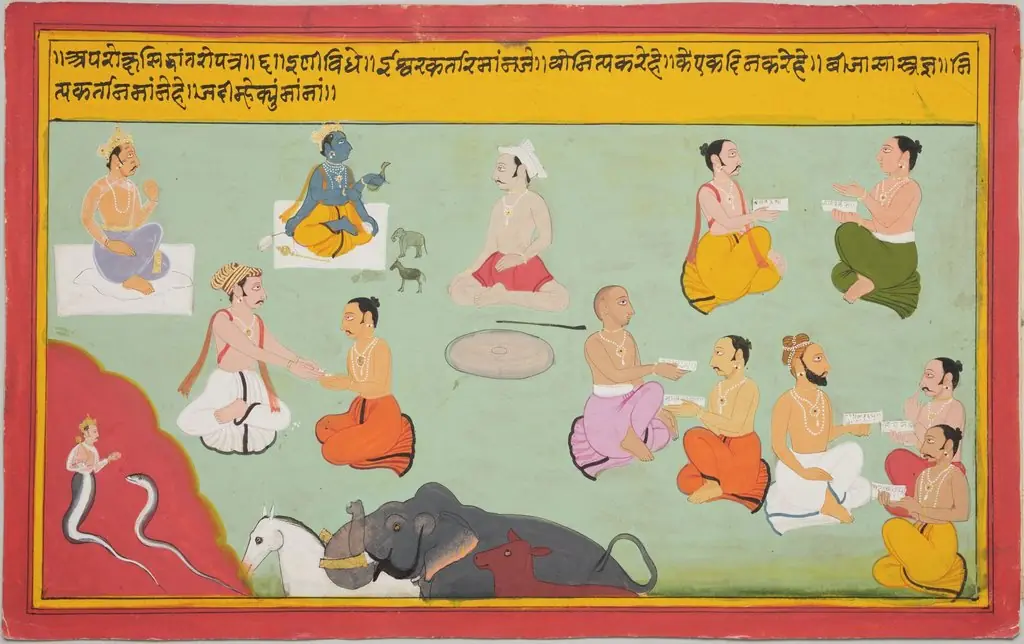 Worship of Hindu Deities (1 of 18)