Artwork
Untitled
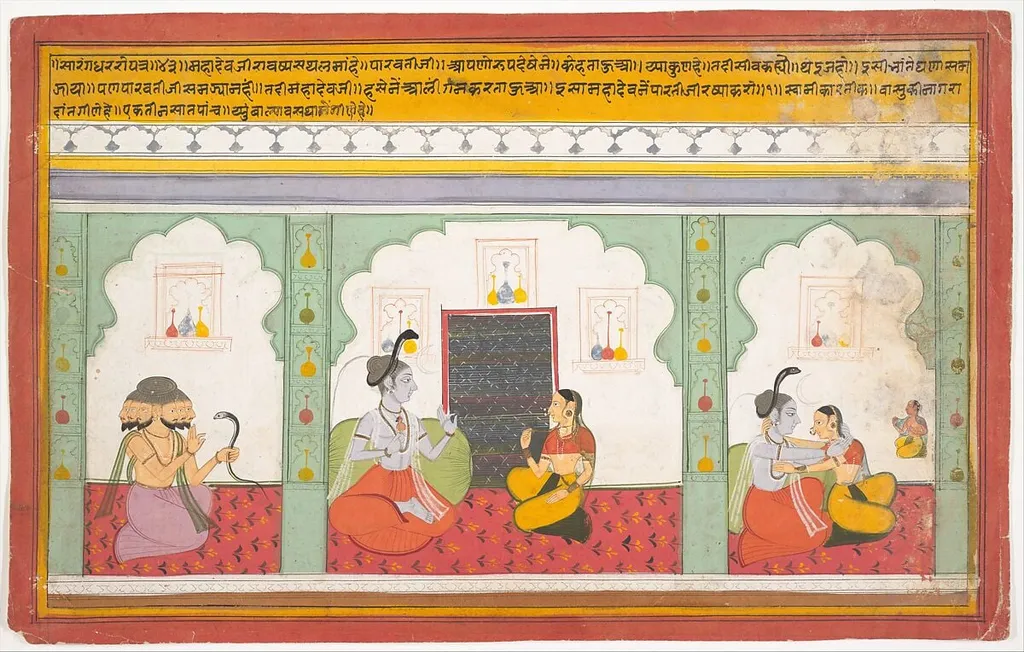
Untitled is a watercolor painting. It dates from 1710 and is held in the collection of the Metropolitan Museum of Art.
About this work
Subject & Meaning
The composition reflects Indian artistic traditions of the early 18th century, where divine subjects were rendered in ink and opaque watercolor on paper.
The painting presents the Hindu deity Shiva together with a coiled serpent and a female figure, elements drawn from mythological narratives. As a work classified under the mythology genre, its iconography combines Shiva's ascetic form with serpentine symbolism and an unidentified woman, suggesting a scene from a sacred story. The composition reflects Indian artistic traditions of the early 18th century, where divine subjects were rendered in ink and opaque watercolor on paper.
The presence of the snake alongside Shiva may allude to his association with kundalini energy, while the woman's role remains ambiguous within the mythic context.
Technique & Style
This painting is executed in ink and opaque watercolor on paper, measuring 26.4 cm × 41.6 cm, created in India around 1710. The work depicts a mythological scene with the Hindu god Shiva accompanied by a snake and a woman, a subject classified under the mythology genre. It is executed on a paper support typical of Indian manuscript paintings of the period and is presently housed in the Metropolitan Museum of Art. The artist remains anonymous.
History & Provenance
The artwork titled Untitled is a painting created in 1710 by an anonymous artist in India. Executed in ink and opaque watercolor on paper, the work depicts mythological figures including Shiva, a snake, and a woman. The piece entered the collection of the Metropolitan Museum of Art, where it is currently held and measures 26.4 cm in height and 41.6 cm in width. No specific commission details or prior ownership records are available.
Legacy
The 1710 ink and opaque watercolor painting attributed to an anonymous Indian artist is held in the Metropolitan Museum of Art collection. Its depiction of Shiva alongside a serpent and a female figure has been cited in scholarly examinations of 18th-century mythological imagery and of anonymous workshop production in Indian painting.
Overview
This untitled painting, rendered in ink and opaque watercolor on paper, depicts a multi-armed female figure seated upon a coiled serpent. The snake's hood forms a dark, halo-like shape behind her head, while tiny supplicants kneel at her feet. Her numerous hands hold a variety of objects, including both flowers and weapons, presenting a complex image of power and grace.
Context
The artist's decision to portray Durga with an expanded number of arms and a unique serpent throne distinguishes this work within the broader tradition of Indian painting. While Durga is a widely depicted goddess, these specific iconographic choices suggest a particular regional interpretation or individual artistic license. Such variations offer insight into the diverse visual language employed by artists across different schools and periods in India.
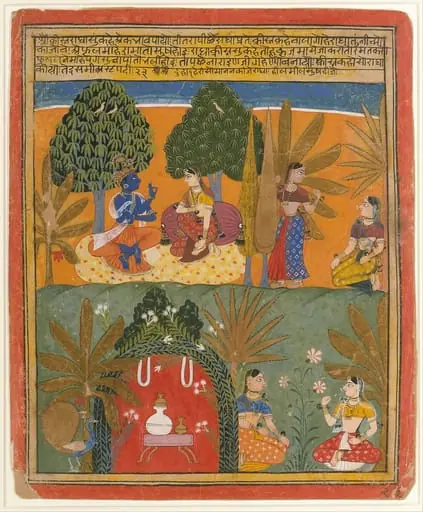
Artist & collection

- Untitled
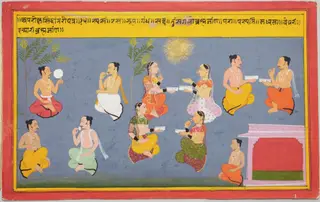 Worship of Hindu Deities (1 of 18)
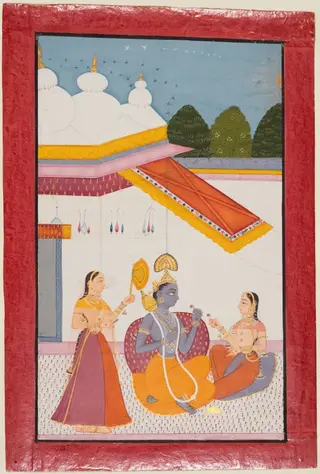 Krishna Under a Canopy
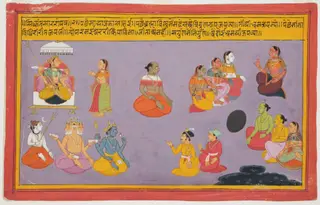 Gods and Brahmins Worshipping Durga, from the Bhagavata Purana (1 of 3)
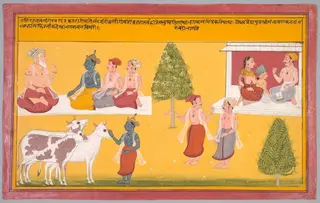 Friends of Krishna, folio 163 from a Bhakti Ratnavali of Vishnu Puri
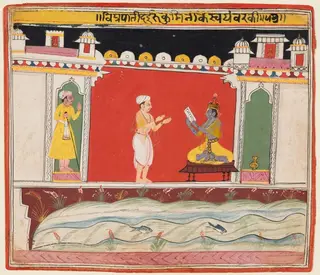 A Brahmin gives Krishna the Message or Invitation for the Competition to Rukmini’s Svayamvara, from a Bhagavata Purana
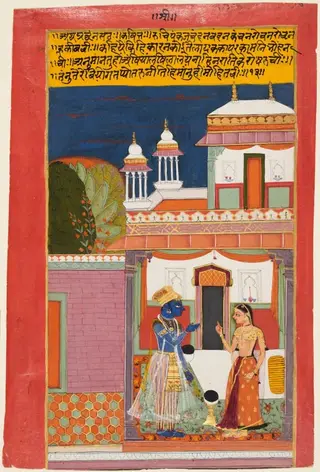 Krishna and Radha Quarreling: Shatha Nayaka, from a Rasikapriya
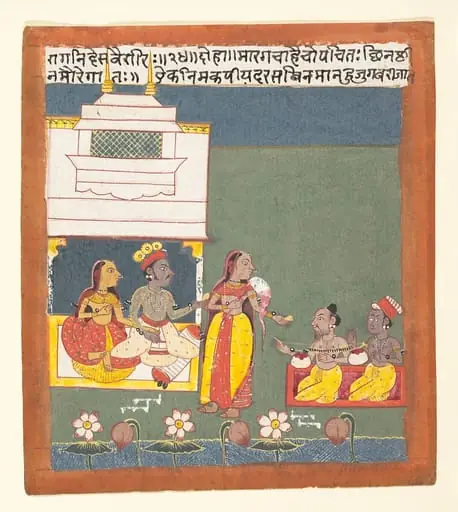 Untitled
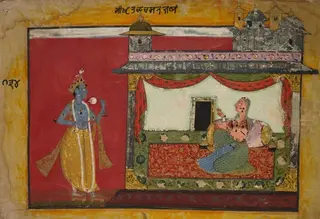 The Approach of Krishna. Page from a Rasamanjari
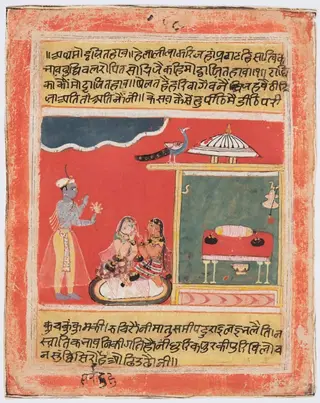 Krishna and Radha Avoid Embarrassment: Mottaita Bhava, from a Rasikapriya
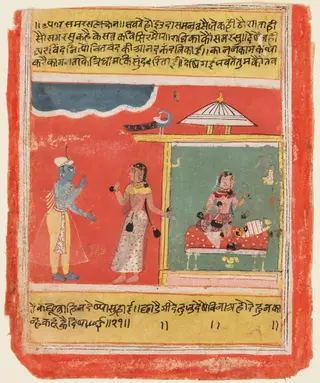 The Sentiment of Peace: Sama Rasa, from a Rasikapriya
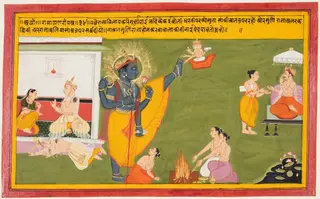 Queen Kaikeyi reminds King Dasharatha about the sacrifices of King Bali and King Shivi, folio 39 from the Ayodhya Kanda (Book of Ayodhya) of a Ramayana (Rama's Journey)