Artwork
Reliquary Bust of a Female Saint
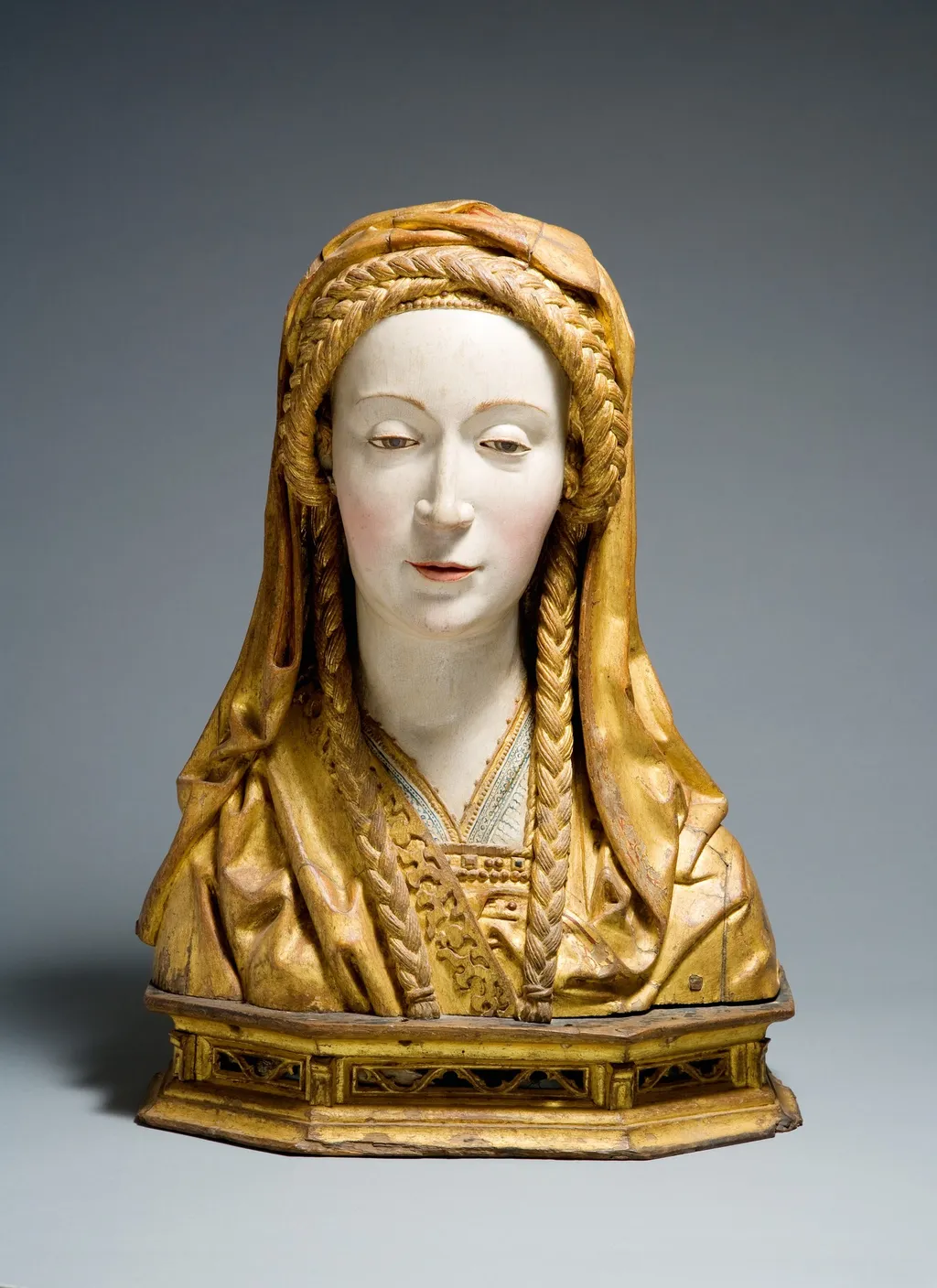
Reliquary Bust of a Female Saint is an unspecified painting. It dates from 1550 and is held in the collection of the Metropolitan Museum of Art.
About this work
Subject & Meaning
Its function as a reliquary indicates its role in liturgical veneration, reflecting the Catholic emphasis on saintly intercession and communal remembrance.
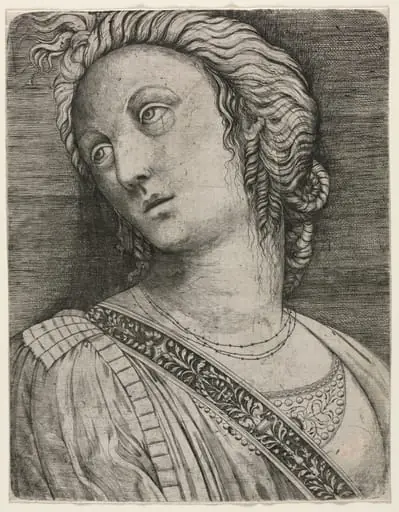
The Reliquary Bust of a Female Saint portrays an unidentified female saint and functions as a devotional object intended to contain sacred relics. Created around 1550, the work is part of the Metropolitan Museum of Art's collection. Its function as a reliquary indicates its role in liturgical veneration, reflecting the Catholic emphasis on saintly intercession and communal remembrance.
The figure is rendered in a solemn pose that underscores reverence, using formal composition to focus contemplative attention. This visual emphasis aligns with the period's use of devotional imagery to reinforce doctrine and personal piety.
History & Provenance
The reliquary bust of a female saint was produced around 1550. The work is attributed to an anonymous creator. Following its creation, the piece entered the collection of the Metropolitan Museum of Art, where it has been housed since at least 1976. No additional ownership records or commissioning details are documented in the available sources.
Overview
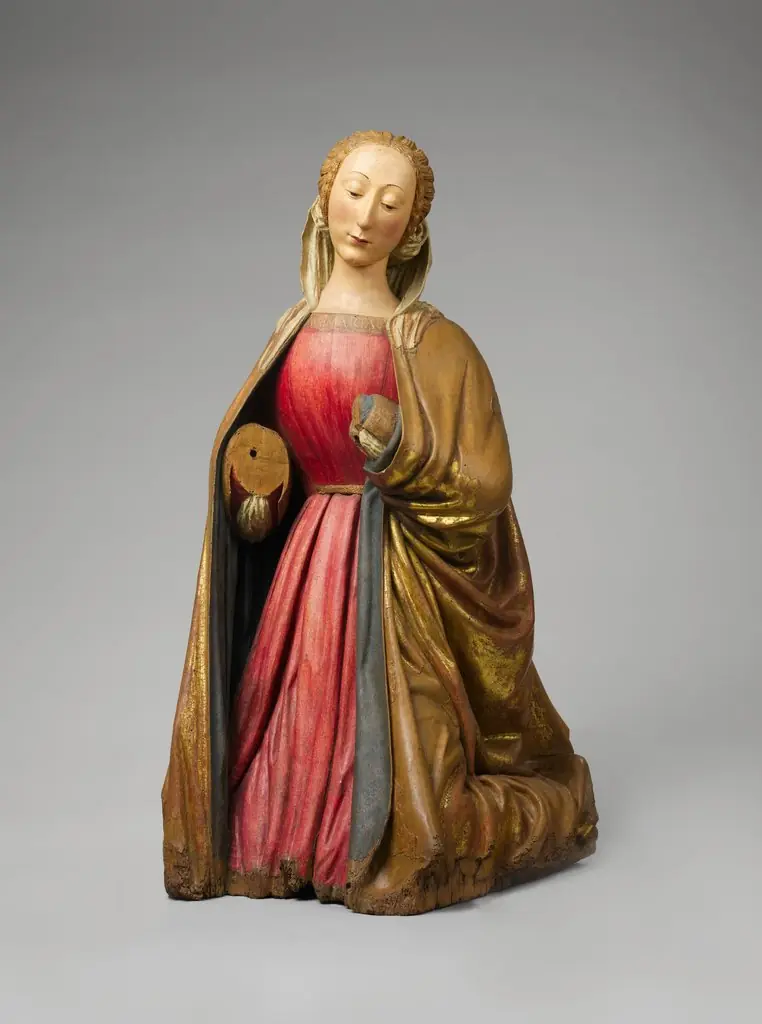
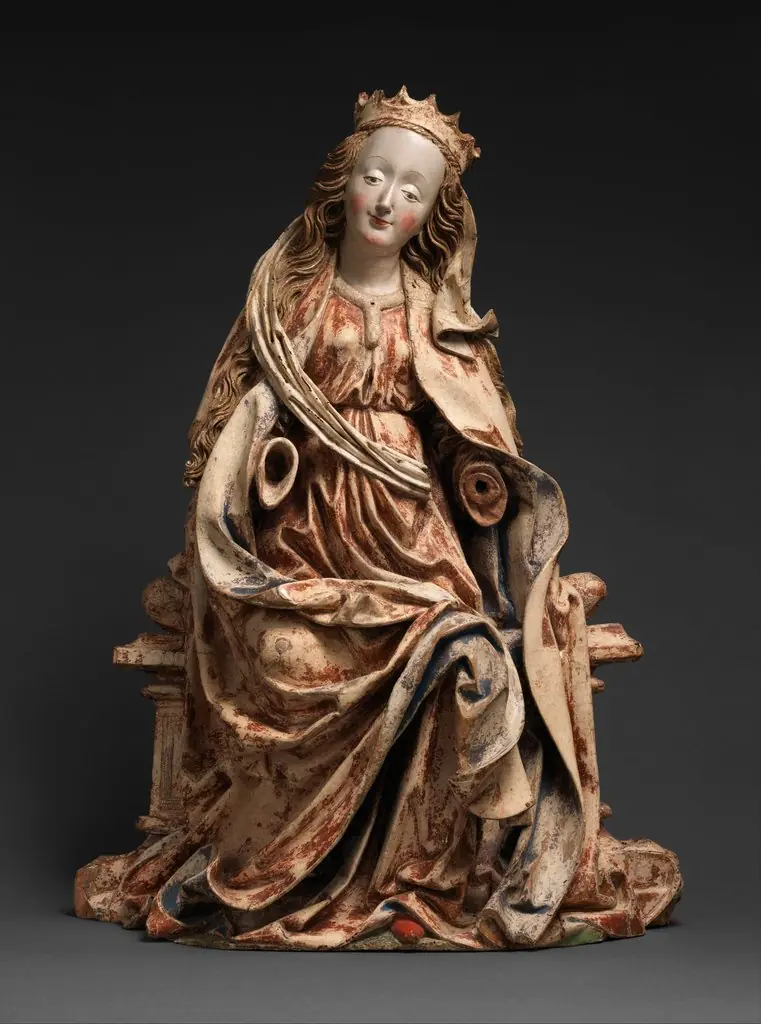
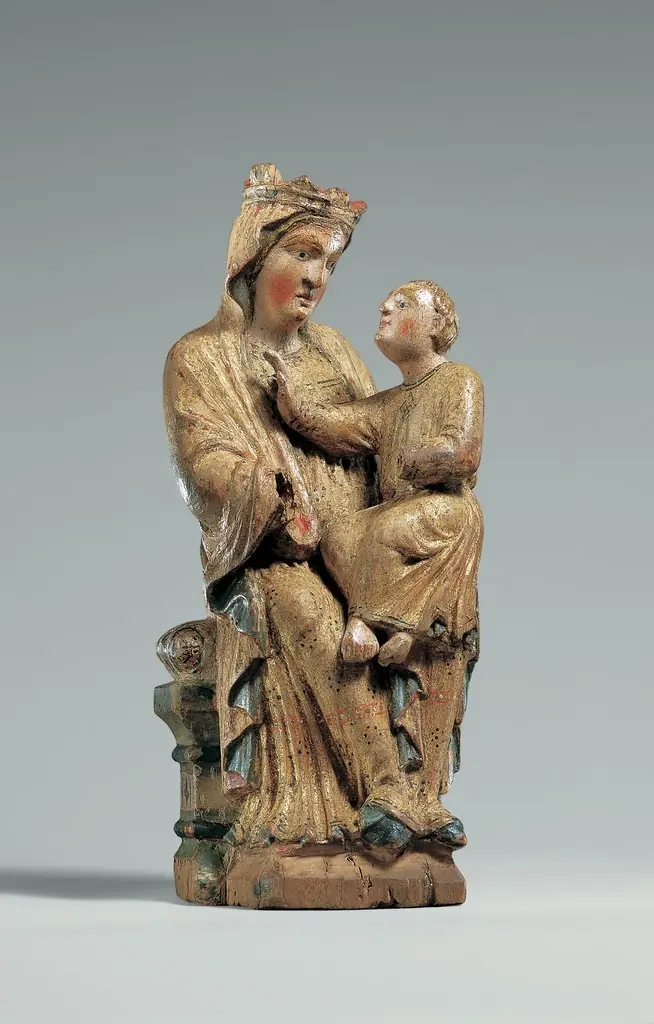
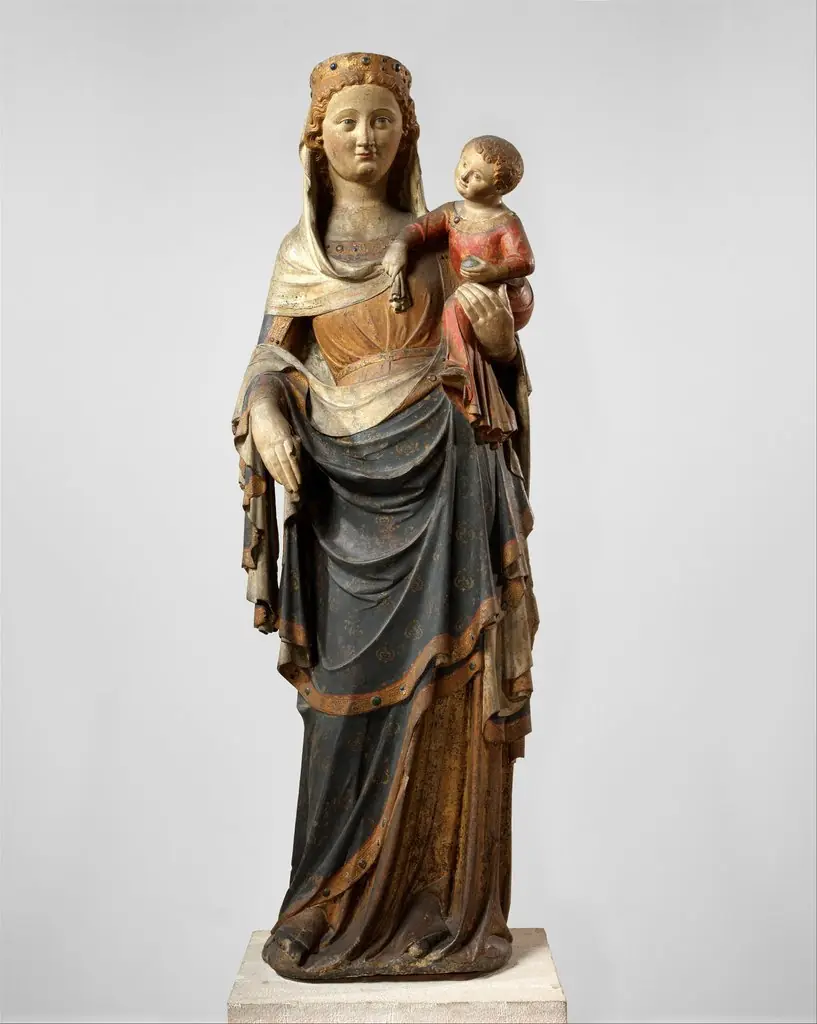
The painting titled Reliquary Bust of a Female Saint presents the upper body of a holy woman. She is depicted with a serene and composed expression, her gaze directed forward. The figure is adorned in elaborate golden garments, which stand out against a simple, unadorned background. This work emphasizes the saint's spiritual presence and the detailed craftsmanship of her sacred vestments.
Technique & Style
The artist employs a focused approach, rendering the saint's pale face with clarity against a plain gray backdrop. Her braided hair and the intricate designs on her gold robe and headscarf are meticulously detailed, suggesting richness and sanctity. The strong contrast between the illuminated figure and the dark background, along with the modeling of forms, indicates an artistic interest in creating depth and dramatic effect, aligning with principles found in techniques such as chiaroscuro.
Artist & collection