Artwork
Saint Barbara
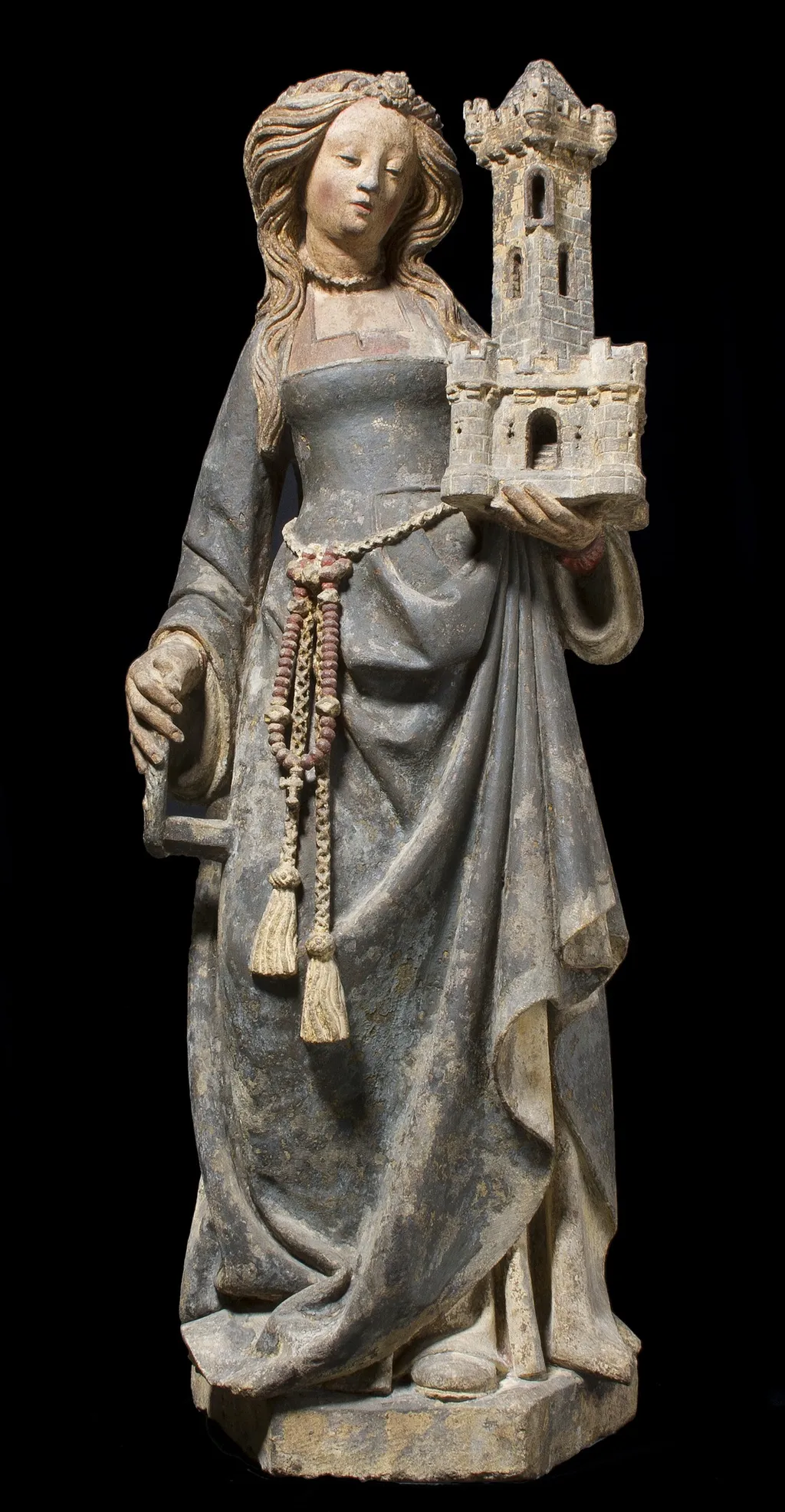
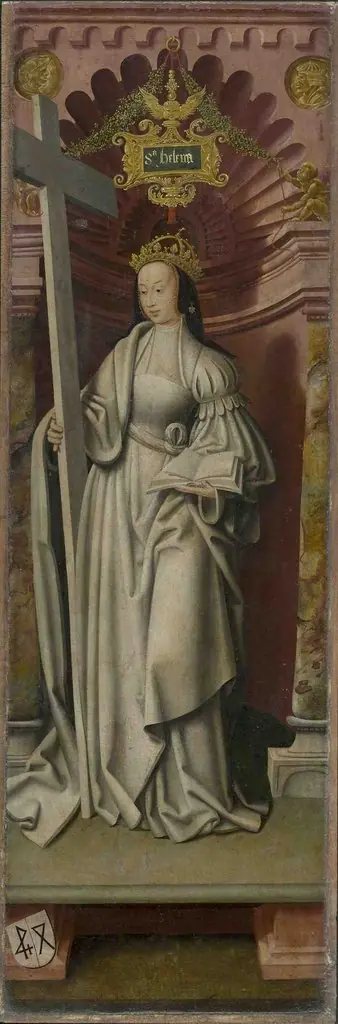
Saint Barbara is an unspecified painting. It dates from 1500 and is held in the collection of the Metropolitan Museum of Art.
About this work
History & Provenance
The painting titled Saint Barbara, dated to approximately 1500, is currently held in the collection of the Metropolitan Museum of Art in New York.
Created circa 1500, this religious painting depicts Saint Barbara and is currently attributed to an anonymous artist. The work, identified by the inventory number 50.102.2, forms part of the collection at the Metropolitan Museum of Art, where it is also located. While the specific circumstances of its original commission and the identity of its creator remain unrecorded in the available data, the piece has been formally classified as a painting within the museum's holdings.
The inception date is firmly established around the turn of the sixteenth century, marking it as an early modern work of religious art focused on the female saint.
The painting titled Saint Barbara, dated to approximately 1500, is currently held in the collection of the Metropolitan Museum of Art in New York. The work is cataloged under the accession number 50.102.2. Attributed to an anonymous artist, the religious artwork depicts the titular saint and remains part of the museum's permanent holdings.
The provided sources confirm the institution's location and the specific inventory identifier associated with this 16th-century panel, though no specific exhibition history or past loan records are detailed in the available documentation.
Overview
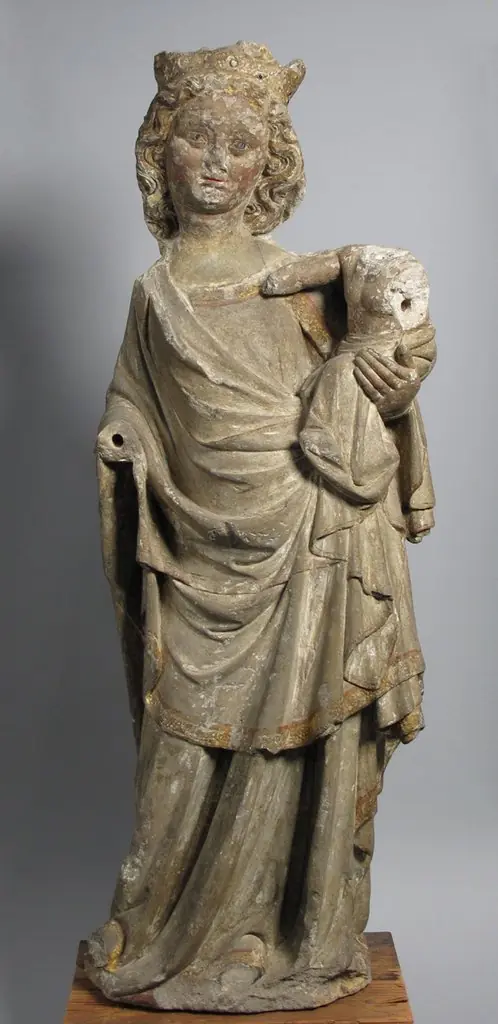
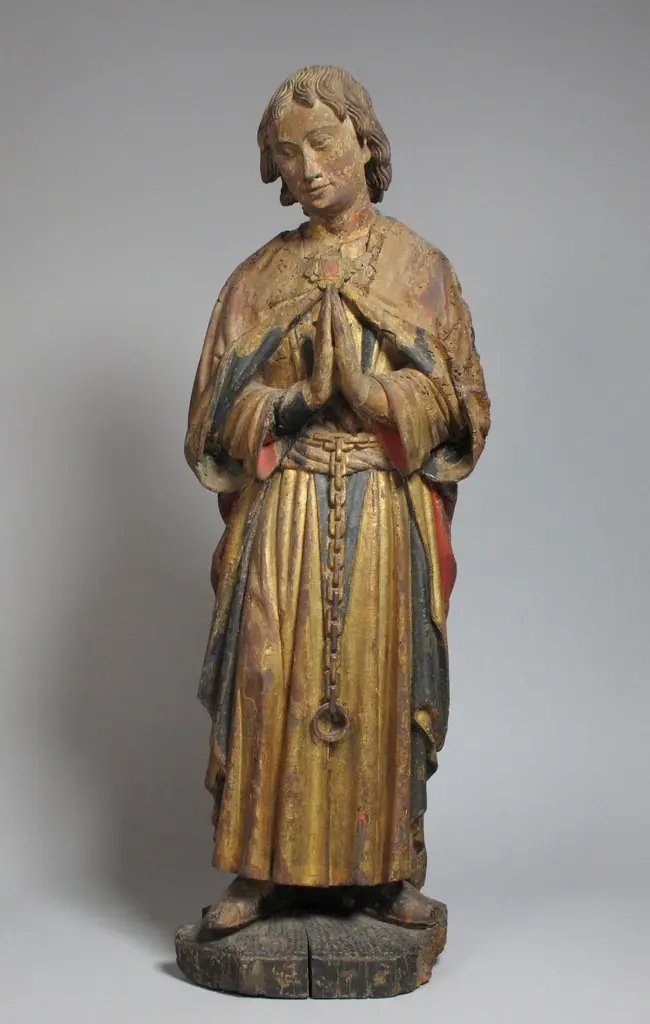
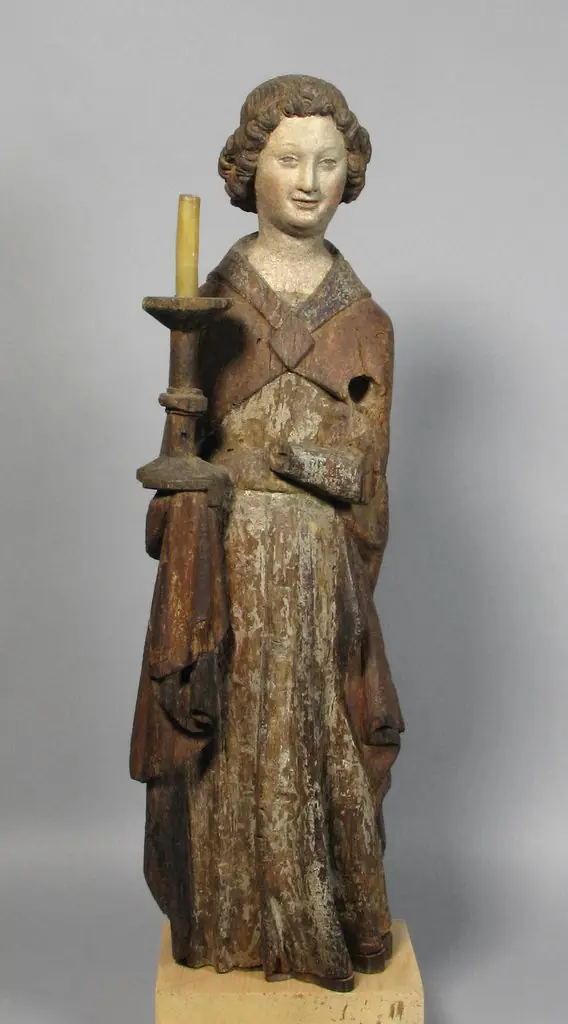
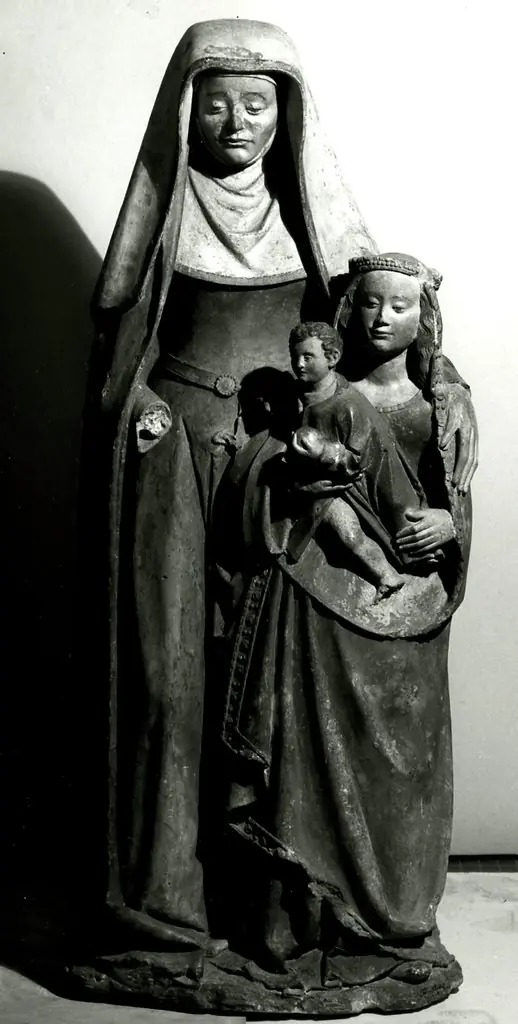
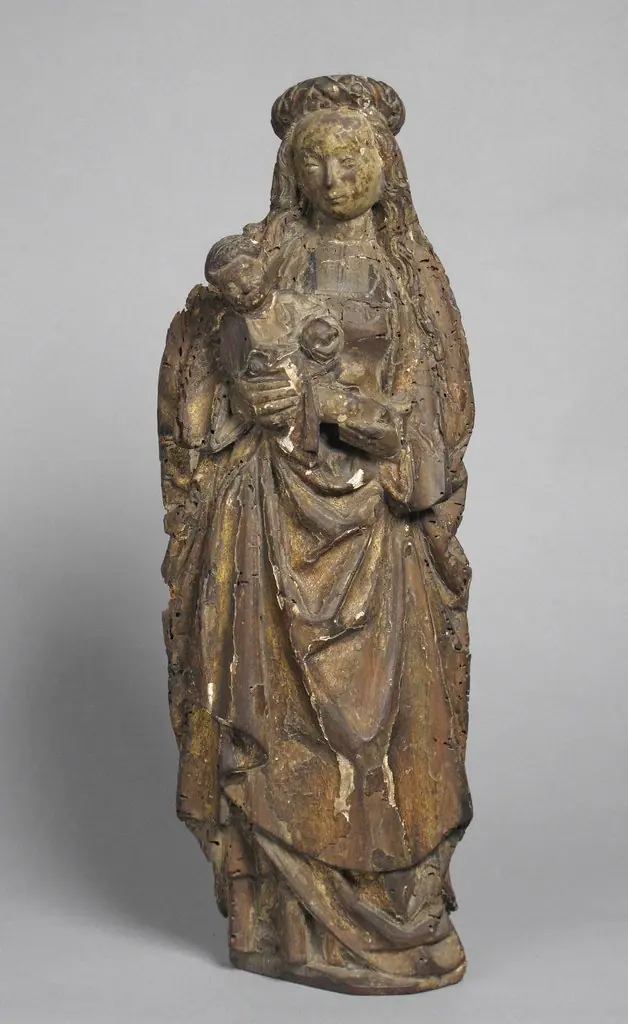
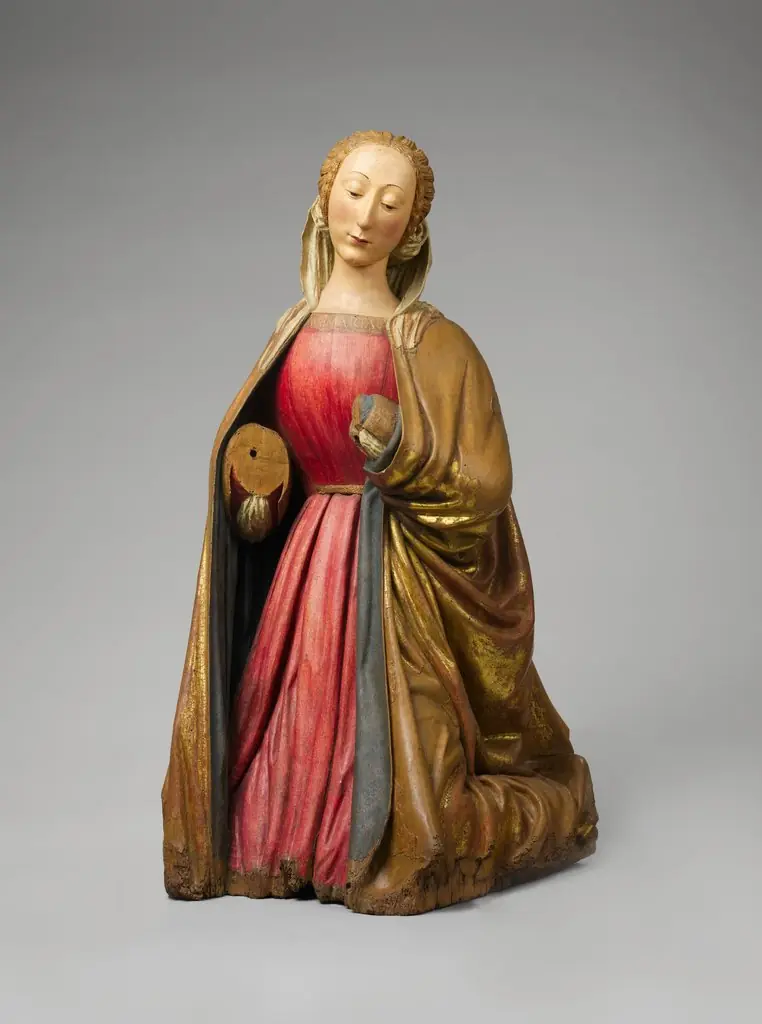
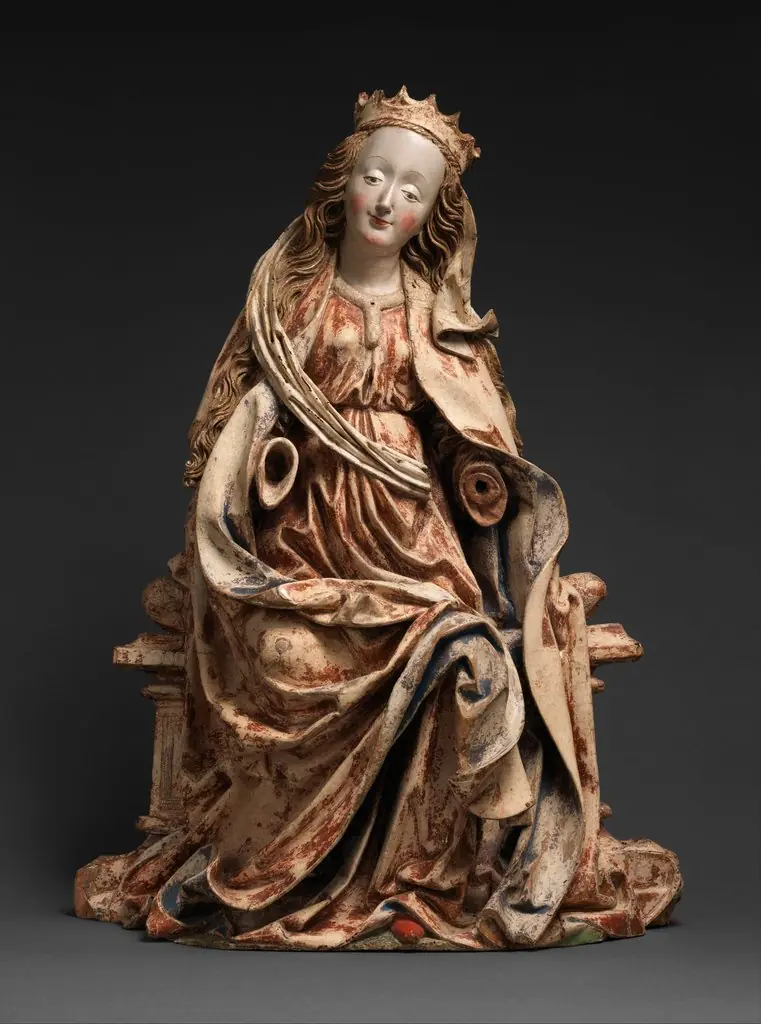
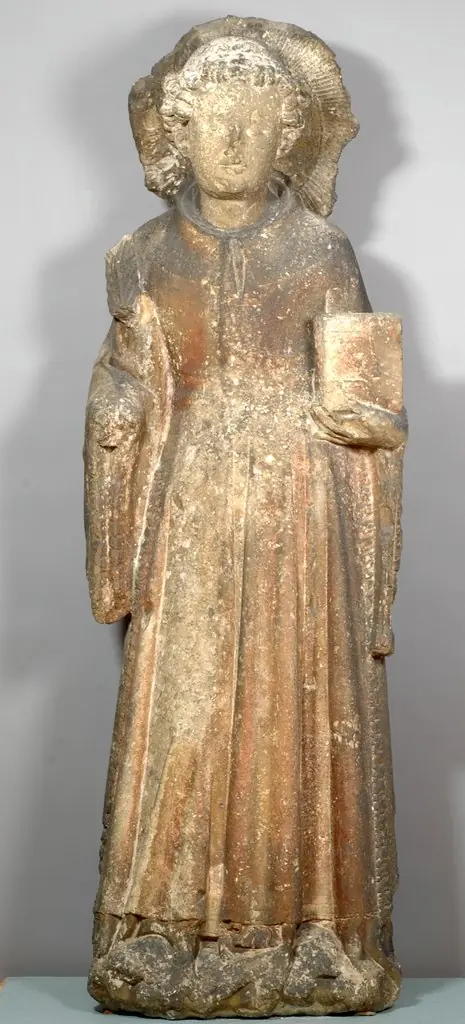
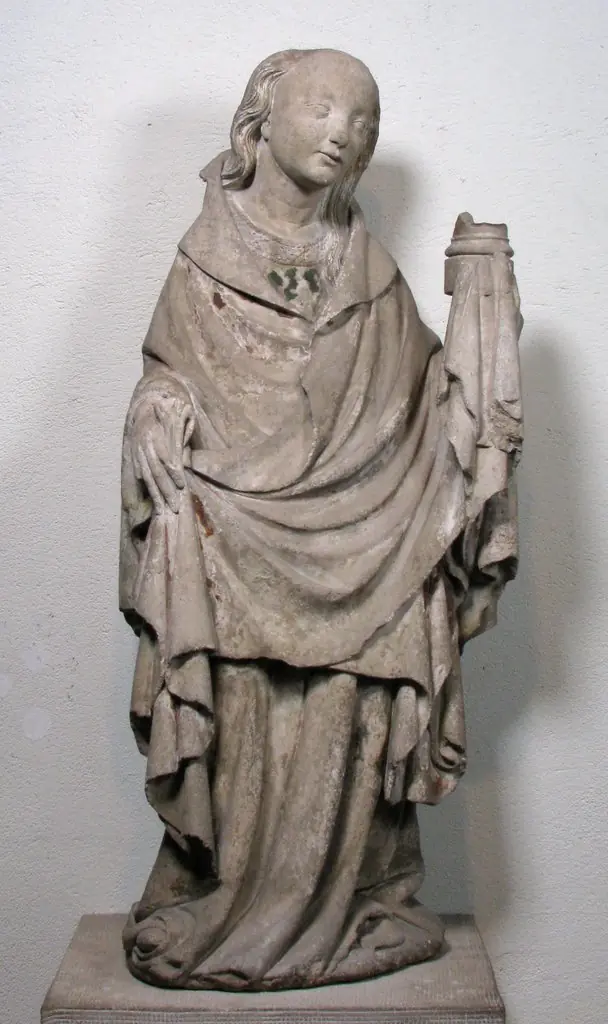
This carved wooden figure depicts Saint Barbara, identifiable by specific attributes she holds. The sculpture presents a serene female figure, clad in traditional attire, whose form exhibits the effects of time while retaining its original carved details. Its overall aesthetic suggests an older artistic tradition.
Subject & Meaning
The saint is portrayed holding a miniature castle with two towers and a window, a key symbol associated with Saint Barbara's legend. Her attire includes a long robe secured by a rope belt and a veil covering her head. These elements serve as visual cues, allowing viewers to recognize the specific martyr and her narrative.
Technique & Style
The sculpture's aesthetic is characterized by its age, evident in the worn texture of the wood. Despite this, the original carving maintains its integrity, showcasing smooth, flowing lines and simplified forms. This approach to rendering the figure aligns with stylistic conventions found in earlier periods of sculptural art.
Artist & collection