Artwork
Kneeling Virgin
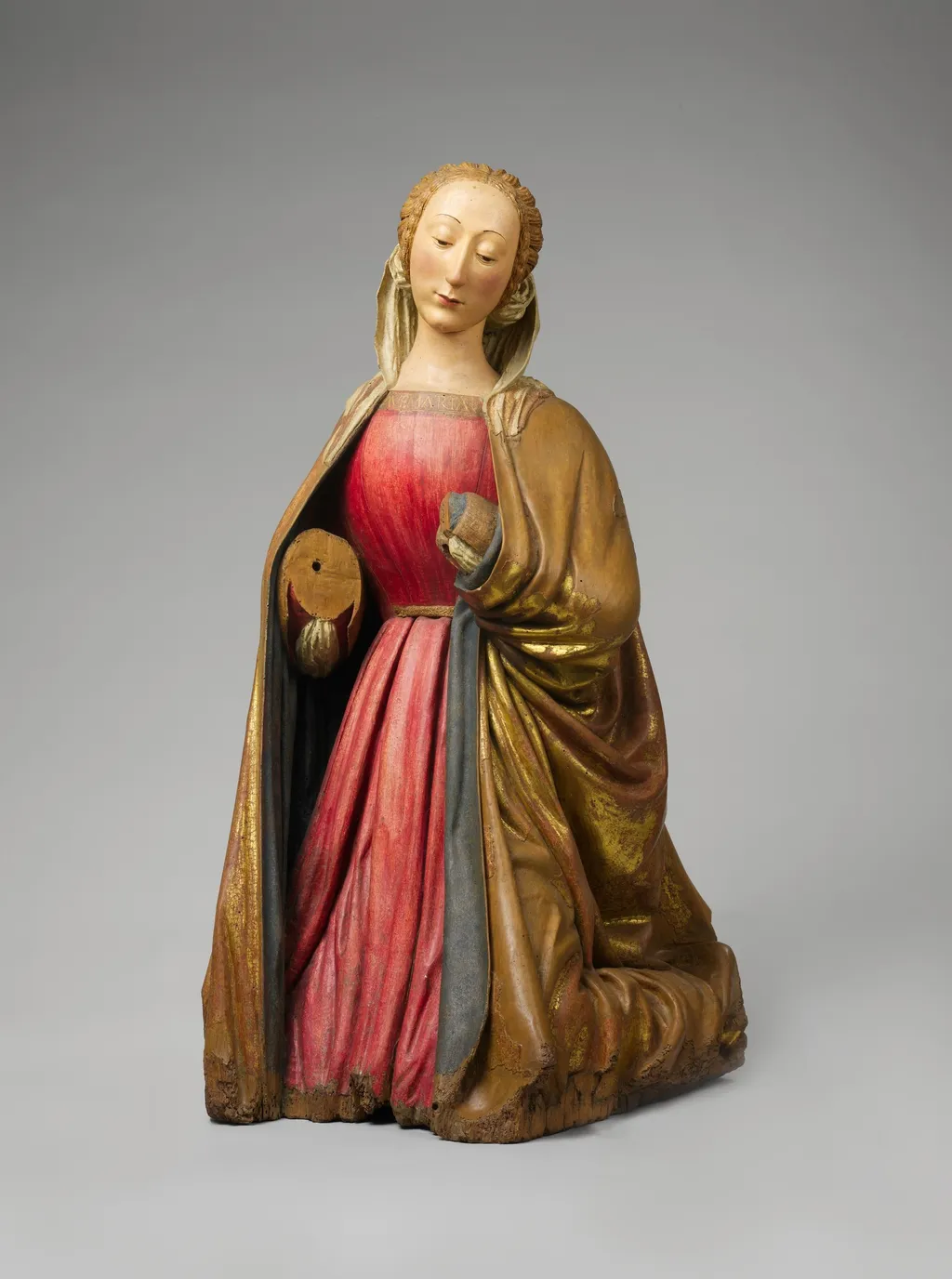
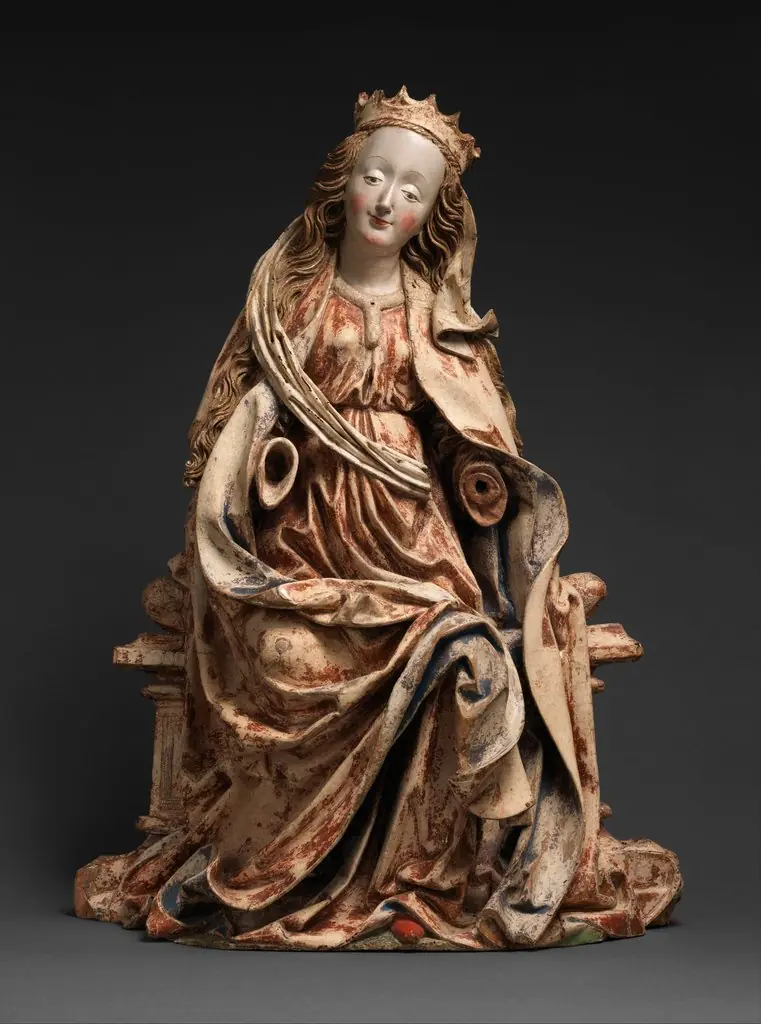
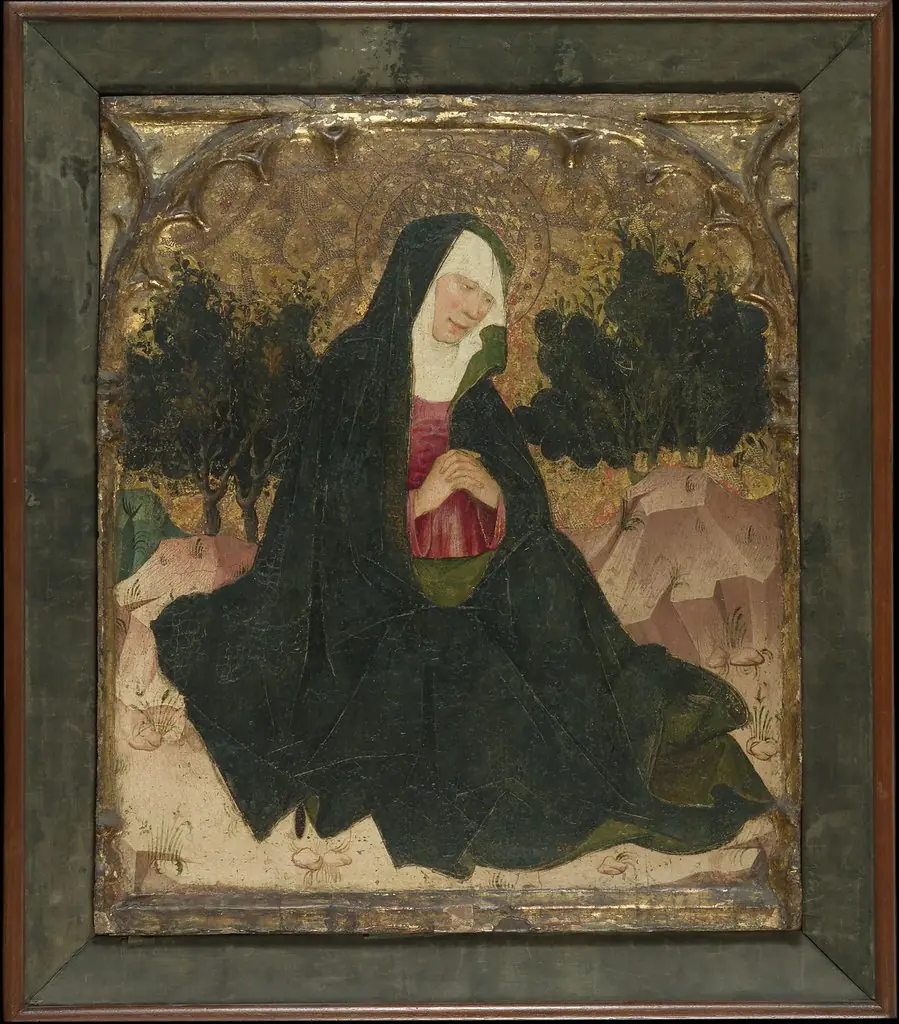
Kneeling Virgin is an unspecified painting. It dates from 1474 and is held in the collection of the Metropolitan Museum of Art. This artwork presents a carved and painted representation of a woman in a kneeling posture.
About this work
Subject & Meaning
As a religious painting from 1474, the work belongs to the genre of religious art and represents the Virgin Mary, a central figure in Christian iconography.
The Kneeling Virgin depicts Mary, the mother of Jesus, shown in a kneeling posture. As a religious painting from 1474, the work belongs to the genre of religious art and represents the Virgin Mary, a central figure in Christian iconography. The kneeling position typically signifies humility, devotion, and prayer, common attributes in depictions of Mary during the late 15th century. The work is attributed to Paolo Aquilano.
History & Provenance
The work titled "Kneeling Virgin" was painted in 1474 and is attributed to Paolo Aquilano; it is classified as a religious painting. The piece depicts Mary, a woman, in a kneeling pose. Its creation history places its execution in the mid‑15th century, and it entered the collection of the Metropolitan Museum of Art, where it is presently held.
The provenance recorded by the museum traces the work from its original commission and execution through to its acquisition and display, as documented in the institution’s collection data.
The Kneeling Virgin, dated 1474 and attributed to Paolo Aquilano, is held in the collection of the Metropolitan Museum of Art, where it is permanently located. The work is classified as a religious painting and depicts the Virgin Mary as a female figure. No specific accession number, acquisition date, or prior provenance details are recorded in the available documentation.
Likewise, the sources do not document any exhibition history, loans, or public display records beyond its current institutional placement at the Metropolitan Museum of Art.
Overview
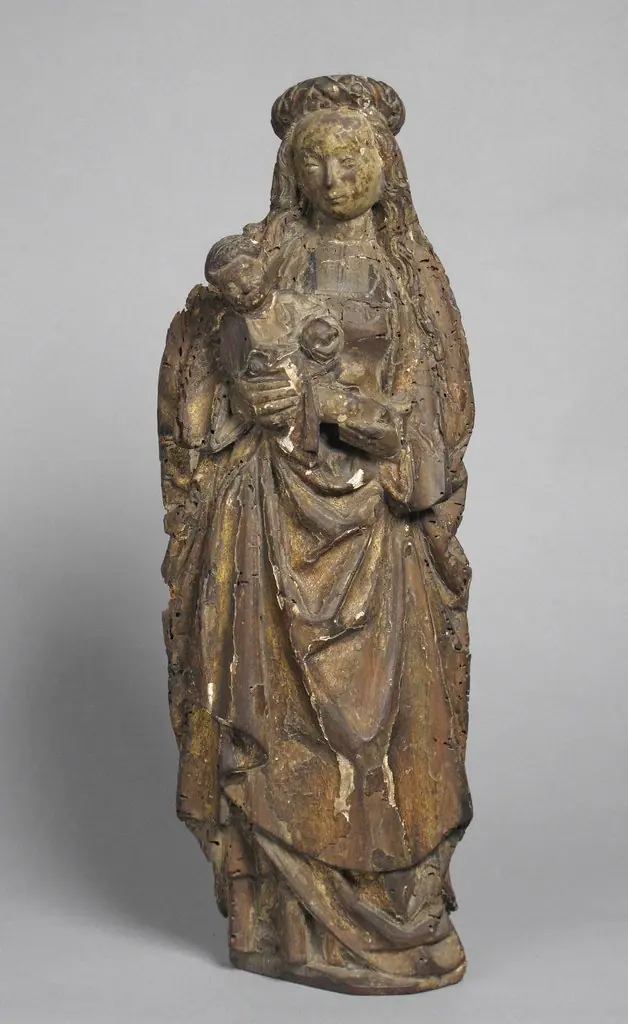
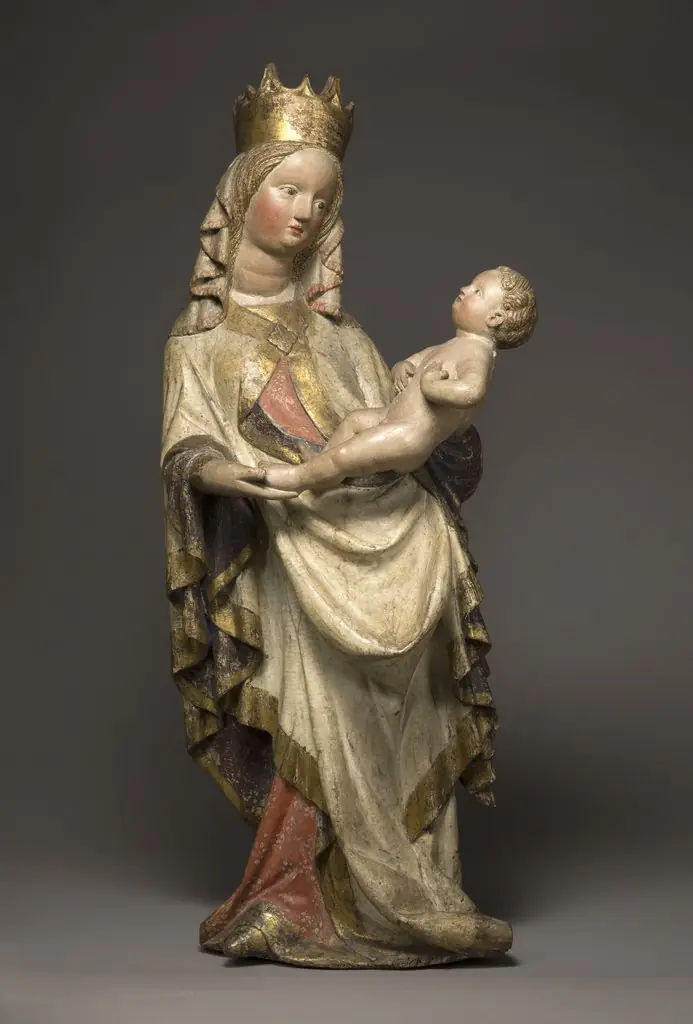
This artwork presents a carved and painted representation of a woman in a kneeling posture. She is depicted resting on one knee, adorned in a long robe highlighted with red and gold tones, and a dark cloak edged in gold. Her left hand gently holds a small spherical object, while her right hand rests against her chest.
The figure's face conveys a calm and serene demeanor, though the piece exhibits signs of age and material degradation.
Technique & Style
The artist rendered this figure through carving, subsequently applying paint to define its features and attire. The drapery of the robe and cloak is characterized by detailed yet somewhat rigid folds, contributing to the sculpture's overall form. The color palette includes reds, golds, and dark tones for the garments, accented by gold edges. The figure's hair is neatly arranged, framing a face sculpted to express tranquility.
Context
Over time, the sculpture has acquired a worn appearance, indicating its age and history. Notable areas of material loss include sections where the original paint has chipped away, particularly visible along the hem of the figure's robe. Despite these signs of wear, the underlying carved form and the remnants of its painted surface continue to convey the artist's original intent and the figure's expressive qualities.
Artist & collection