Artwork
Roundel with Saint Francis Receiving the Stigmata
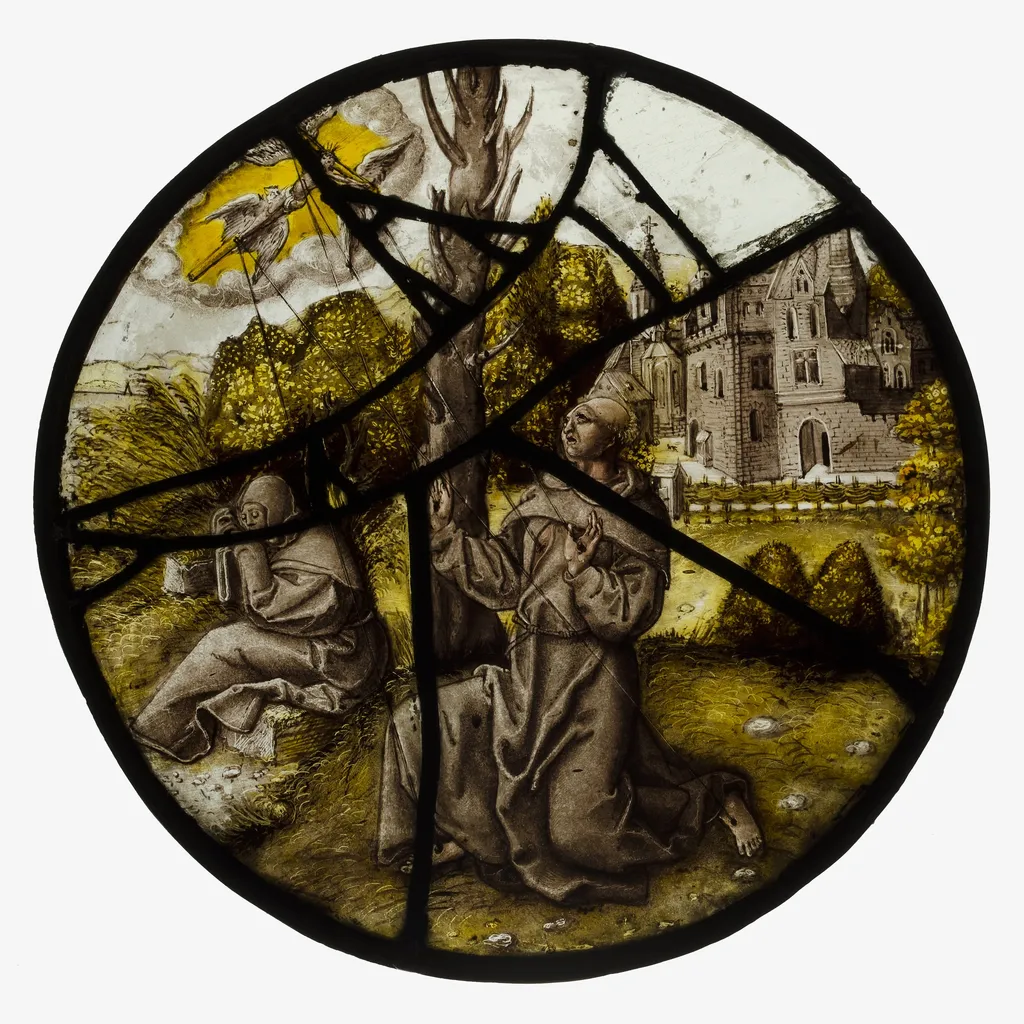
Roundel with Saint Francis Receiving the Stigmata is an unspecified painting. It dates from 1505 and is held in the collection of the Metropolitan Museum of Art. This circular painting presents two robed figures in an outdoor environment, framed by a stone building and trees beneath a luminous sky.
About this work
Subject & Meaning
The roundel depicts Saint Francis of Assisi at the moment he receives the stigmata, the wounds that mark the saint's mystical union with Christ's suffering.
The roundel depicts Saint Francis of Assisi at the moment he receives the stigmata, the wounds that mark the saint's mystical union with Christ's suffering. In Franciscan iconography these marks convey divine love, penitential humility, and the promise of redemption, motifs that dominated early sixteenth-century devotional painting. The composition, attributed to an anonymous follower of Albrecht Dürer and dated to 1505, reflects the influence of Northern Renaissance naturalism while retaining a focus on spiritual narrative.
The work was originally created for private contemplation and is now housed in the Metropolitan Museum of Art, where it continues to be studied as an example of religious art from the period.
History & Provenance
Created in 1505, this roundel depicts Saint Francis of Assisi receiving the stigmata. The work is attributed to a follower of Albrecht Dürer rather than the master himself. It currently resides in the collection of the Metropolitan Museum of Art, where it is classified as a religious painting.
No specific details regarding its original commission, early ownership history, or the circumstances of its creation beyond the attributed date and artist are provided in the available records. No exhibition history is documented in the available sources for this piece.
Overview
This circular painting presents two robed figures in an outdoor environment, framed by a stone building and trees beneath a luminous sky. One man kneels with his arms uplifted in a gesture of prayer, while his seated companion holds a book, eyes closed in contemplation. The round format suggests its original function might have been as a decorative window insert or a panel.
Technique & Style
The composition is contained within a roundel, focusing the viewer's attention on the devotional scene. The artist employs a restrained color palette, primarily utilizing earthy browns and yellows for the landscape and figures, which contributes to a solemn atmosphere. Touches of white are used for the sky and the figures' robes, providing visual contrast and highlighting key elements within the outdoor setting.
Artist & collection

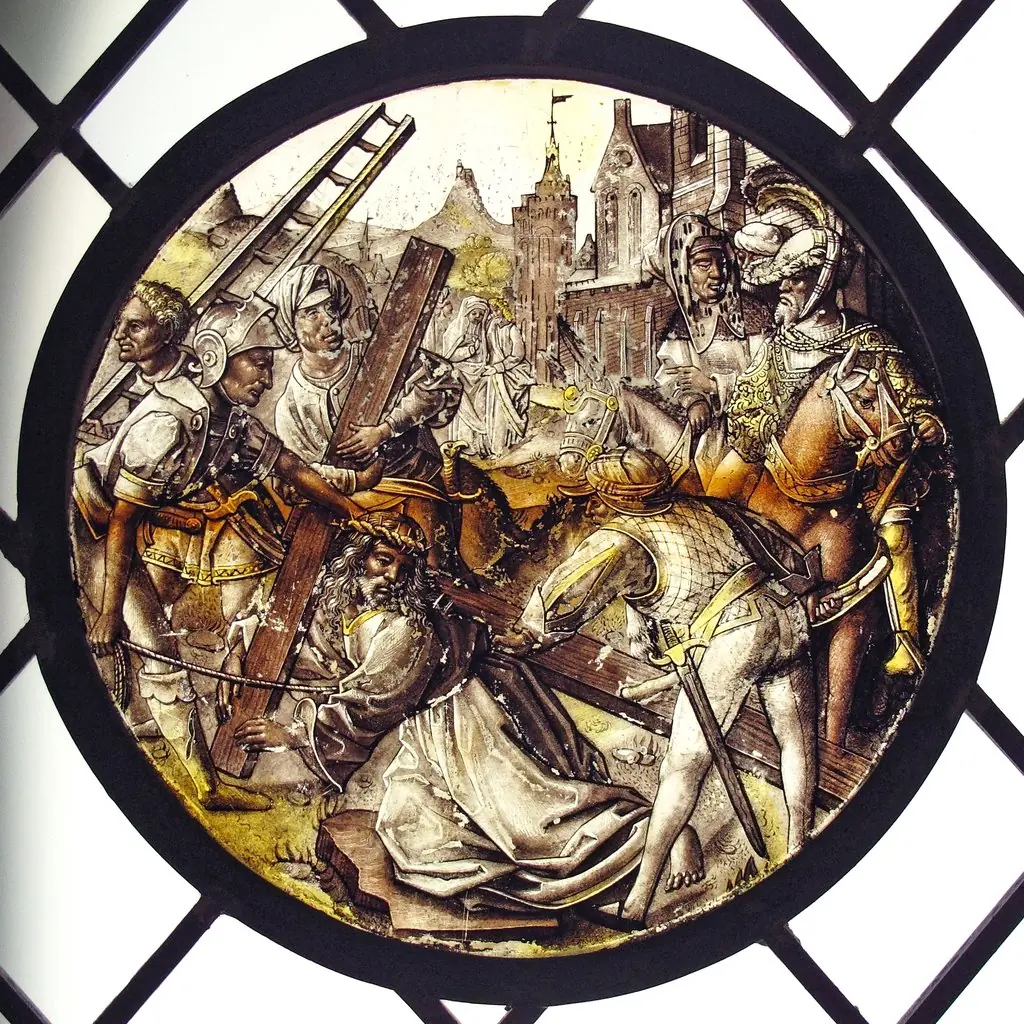 Roundel with Christ Bearing the Cross
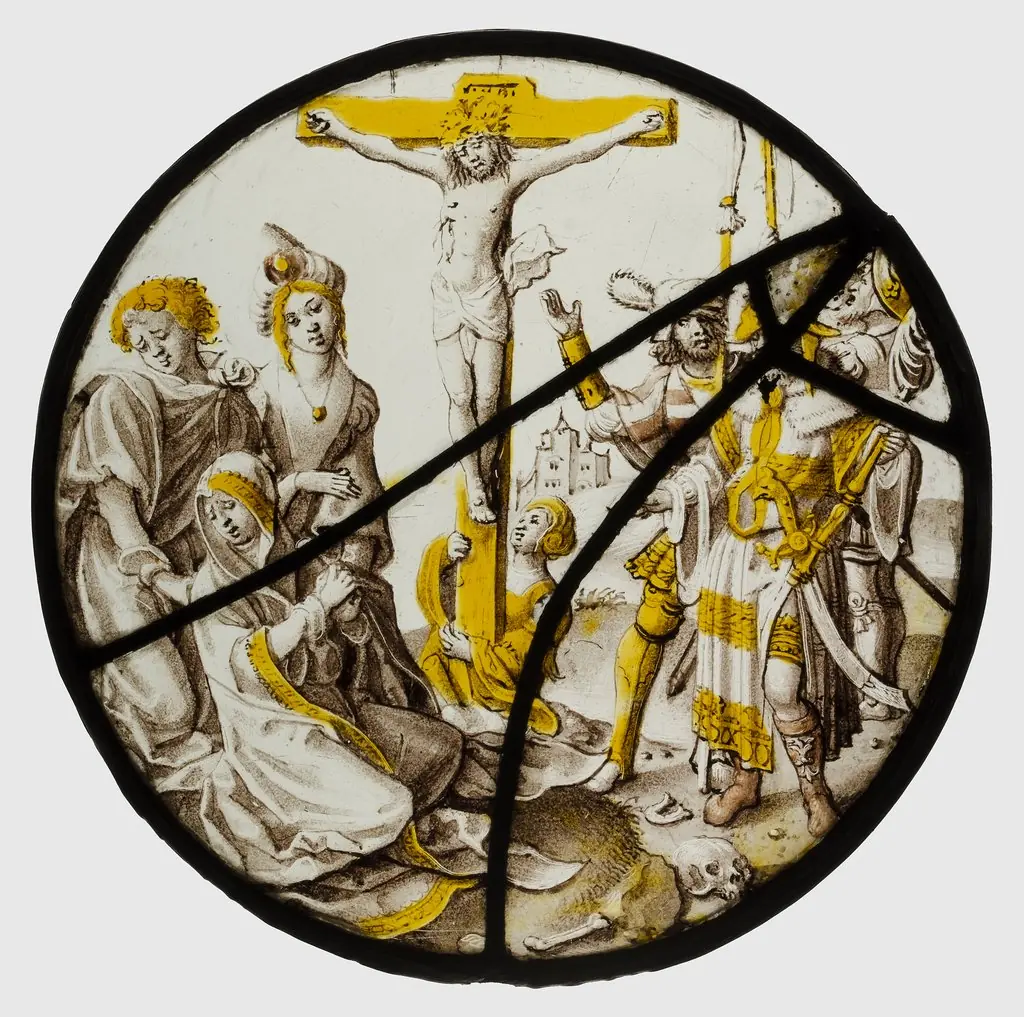 Roundel with the Crucifixion
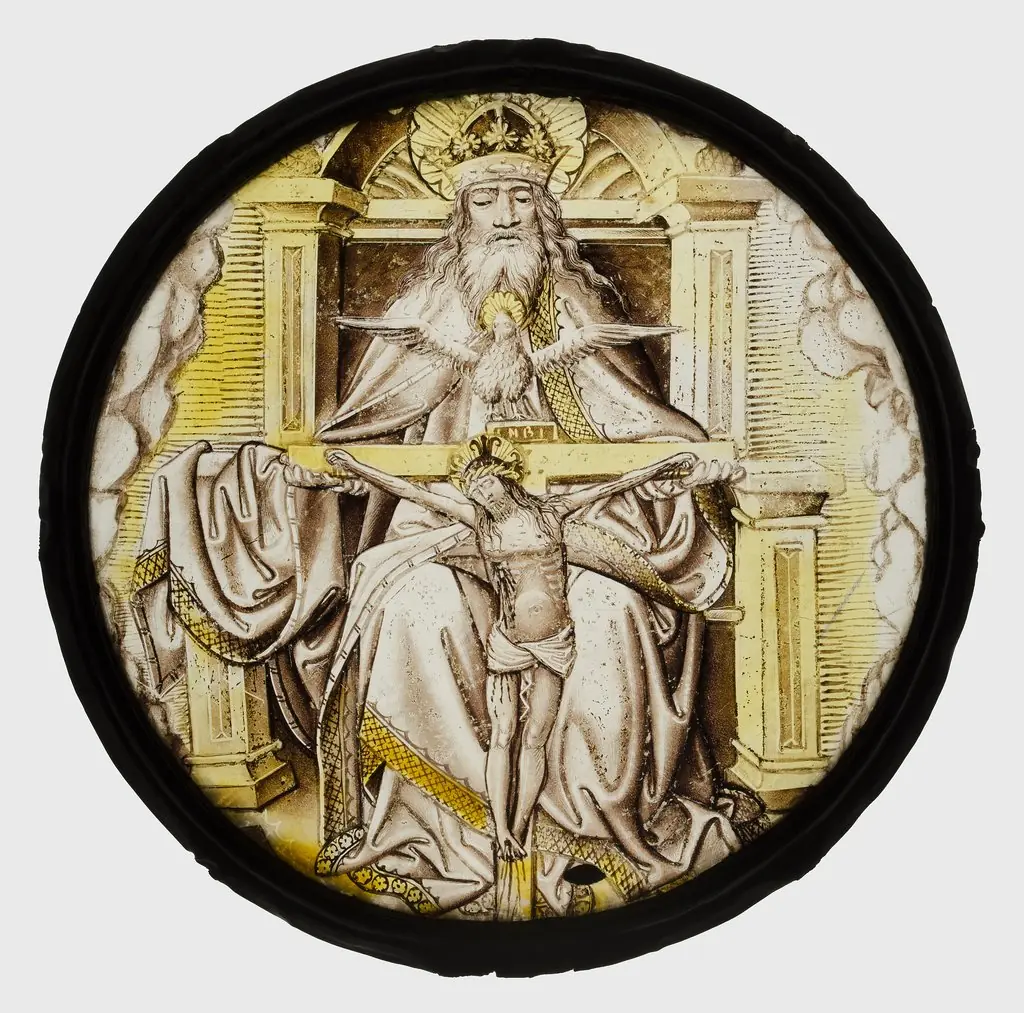 Roundel with the Holy Trinity
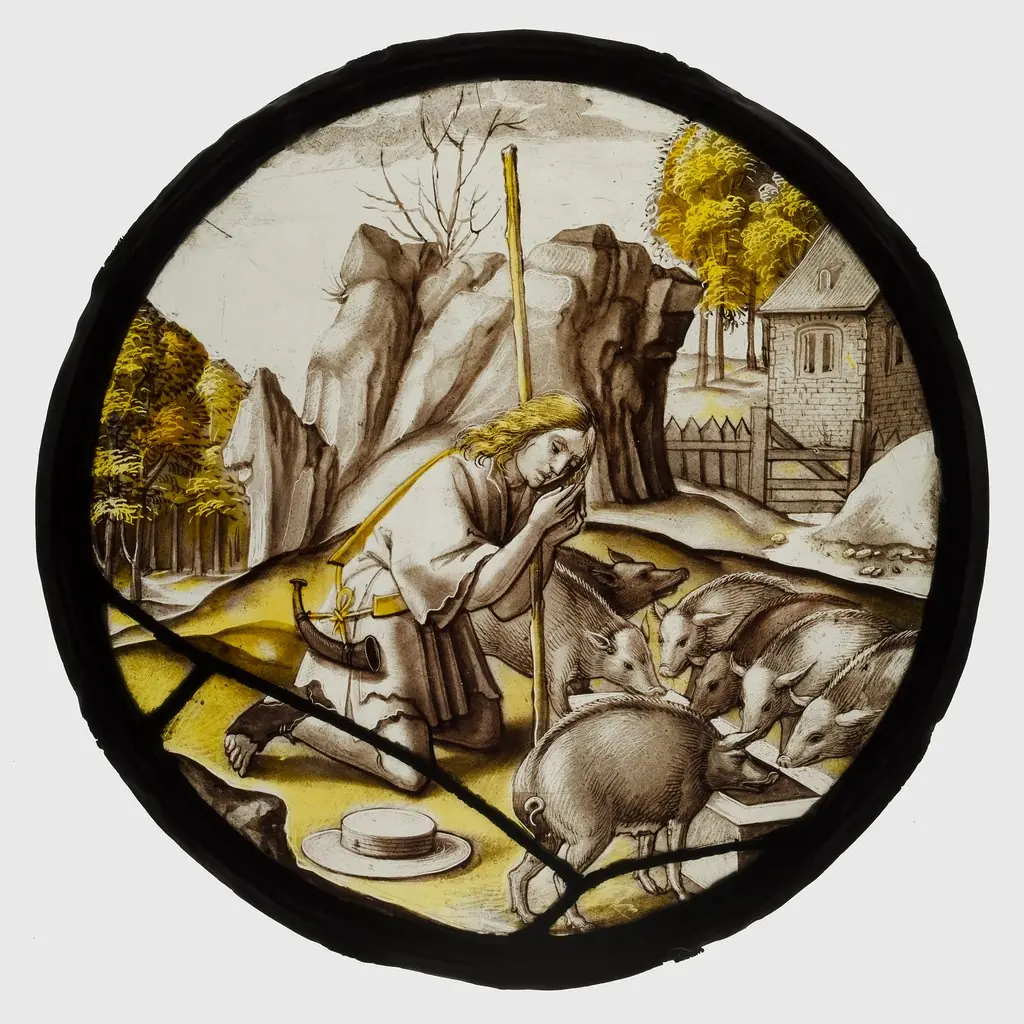 Roundel with the Prodigal Son among the Swine
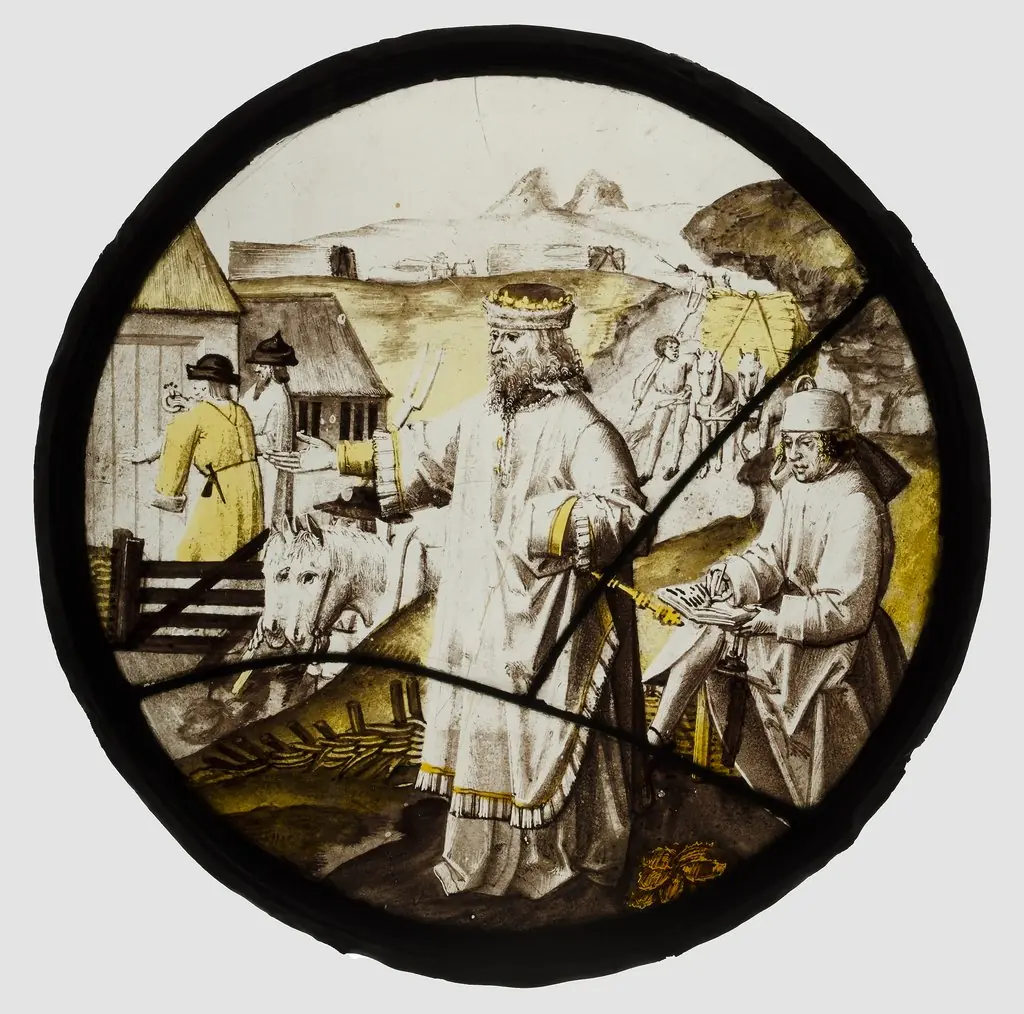 Roundel with Joseph Buying Corn in Egypt
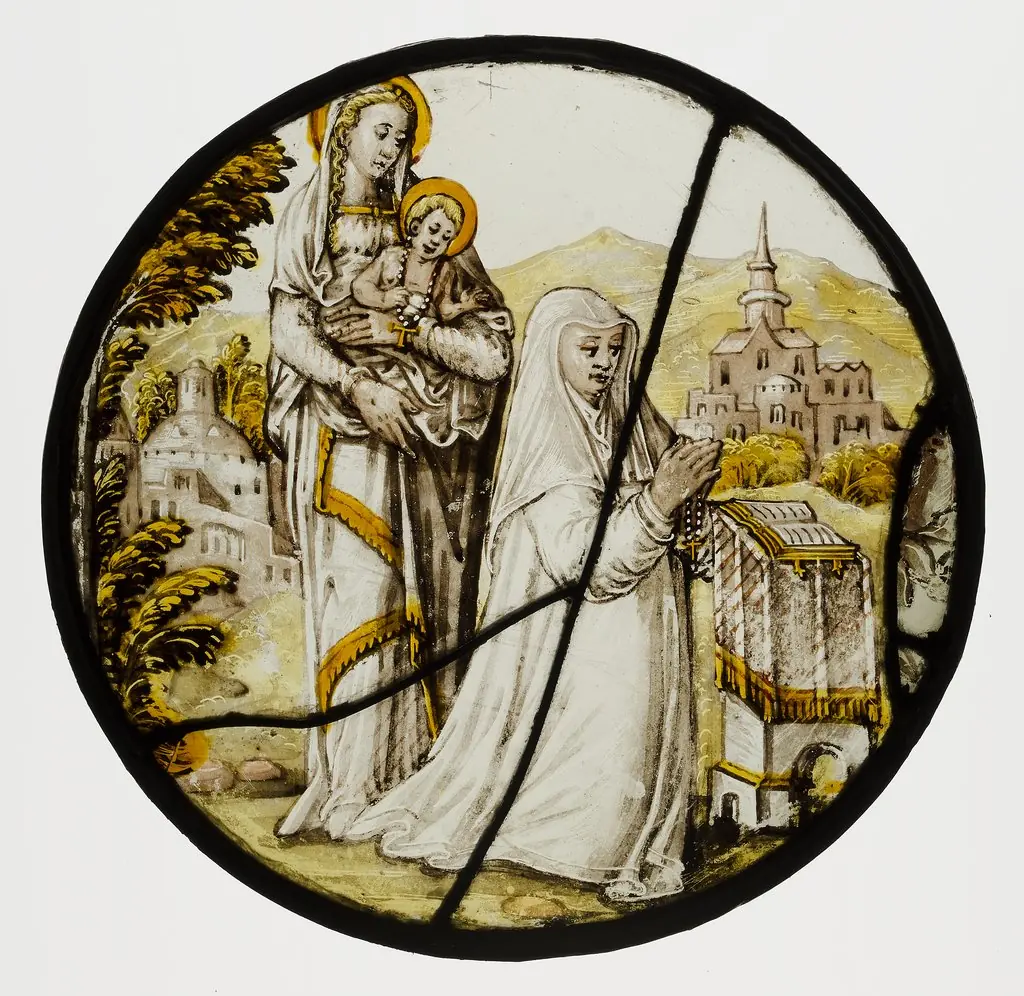 Roundel with Virgin and Child and a Carmelite Donatrix
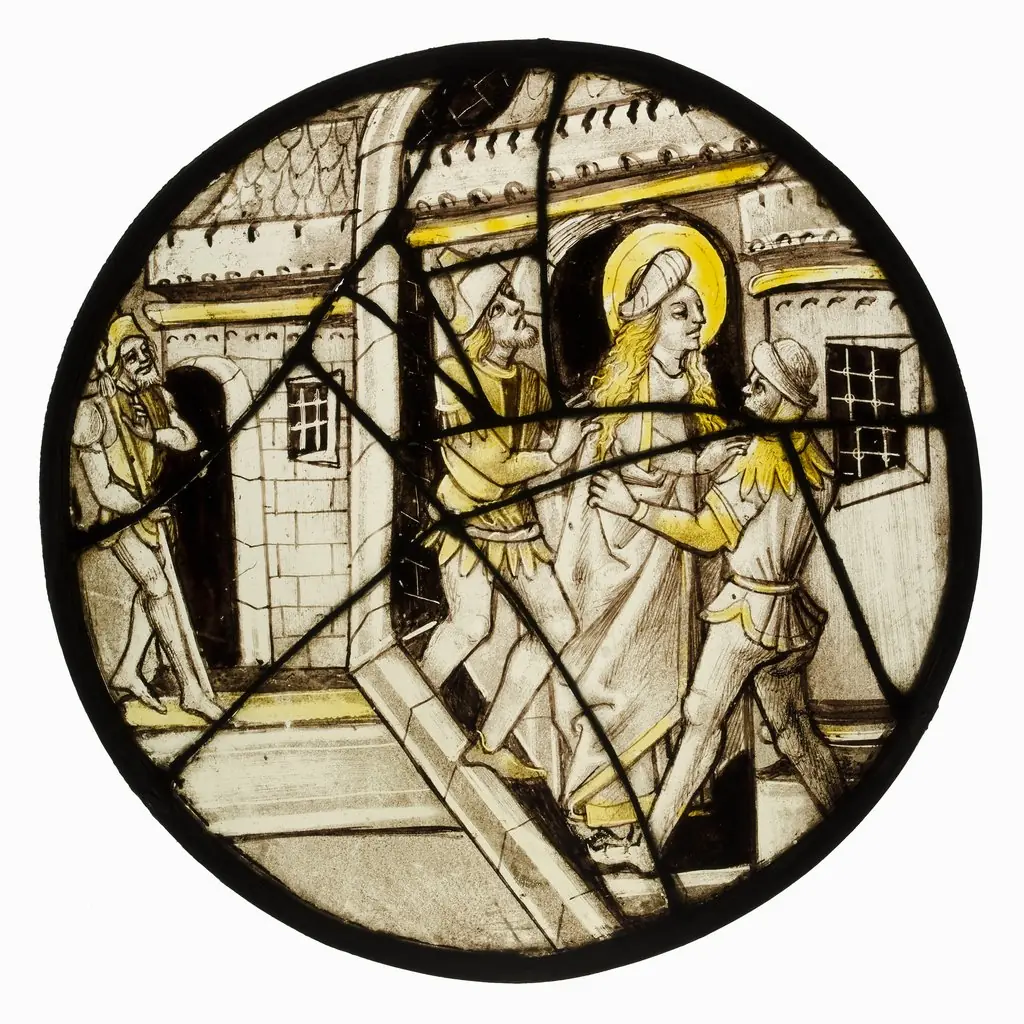 Roundel with Saint Barbara or Saint Catherine Thrown into Prison
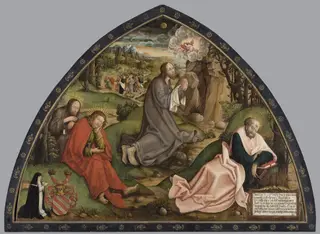 Christ on Mount Olive with donor Agnes von Burgau