Artwork
Roundel with Saint Barbara or Saint Catherine Thrown into Prison
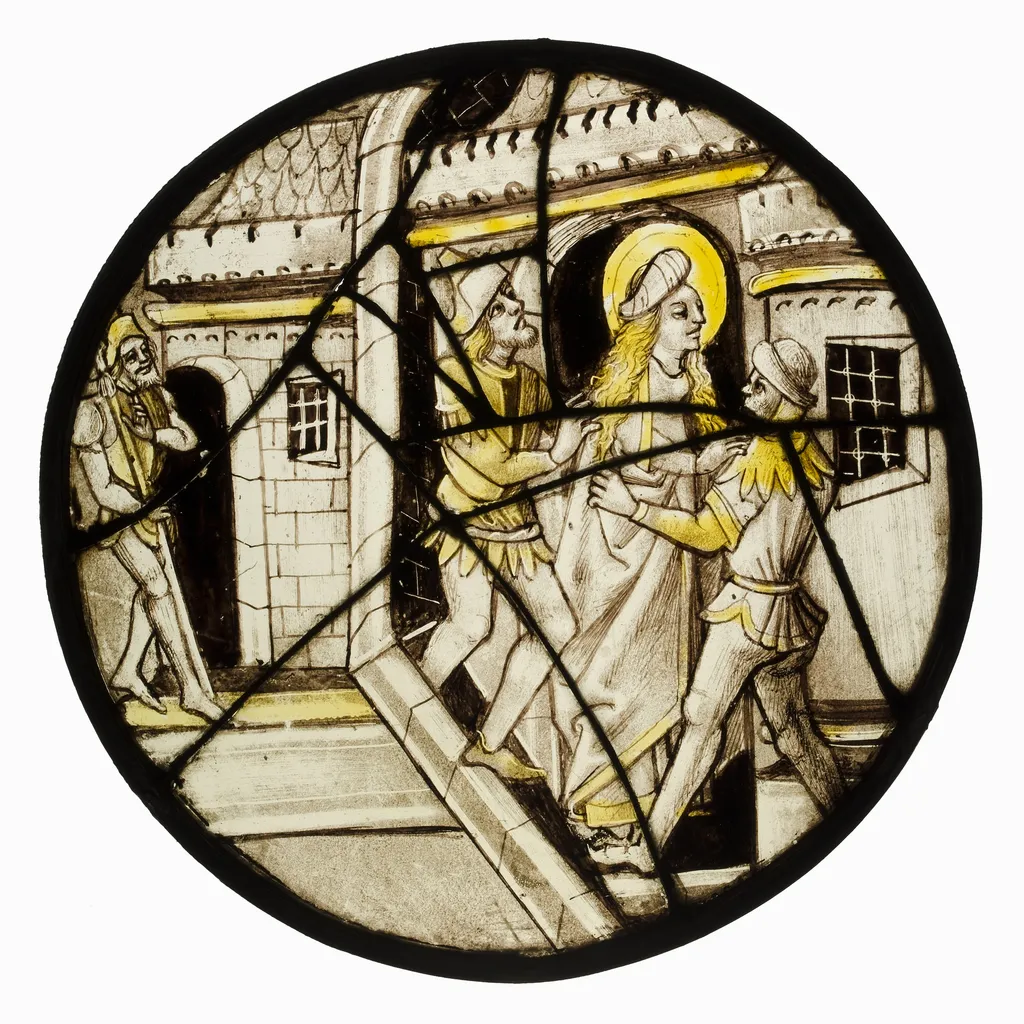
Roundel with Saint Barbara or Saint Catherine Thrown into Prison is an unspecified painting. It dates from 1500 and is held in the collection of the Metropolitan Museum of Art. This circular painting depicts a scene of confinement, likely portraying a Christian saint facing persecution.
About this work
Subject & Meaning
Iconographically the figures embody Christian witness to persecution, with the saint's confinement symbolising faith tested and ultimately vindicated.
The roundel illustrates the moment of Saint Barbara or Saint Catherine being cast into a prison cell, a scene identified in the work's title and confirmed by the Metropolitan Museum of Art's catalogue. The composition includes a soldier and a woman, underscoring the narrative of imprisonment and martyrdom. Iconographically the figures embody Christian witness to persecution, with the saint's confinement symbolising faith tested and ultimately vindicated.
By presenting this episode, the painting conveys theological themes of steadfastness and divine protection, reflecting the broader devotional focus of early sixteenth‑century religious art.
History & Provenance
The roundel is dated to about 1500 on the basis of its stylistic placement and the Metropolitan Museum's cataloguing, which situates the work in the late fifteenth or early sixteenth century. It entered the Metropolitan Museum of Art as an anonymous work of Netherlandish or German origin. No archival evidence survives to identify the original commissioner or the precise sequence of private or institutional owners prior to its acquisition by the Museum.
Context
The roundel dated to 1500, classified as a religious painting, depicts Saint Barbara or Saint Catherine thrown into prison and is housed in the Metropolitan Museum of Art; its authorship remains anonymous, as noted in the work's catalog entry. Scholars treat the piece as an exemplar of early sixteenth‑century devotional roundels, emphasizing its role within the broader tradition of private worship imagery. The attribution to an unidentified painter reflects the limited documentation of individual masters active in this niche genre, situating the roundel among other anonymous works that circulated in devotional contexts.
Overview
This circular painting depicts a scene of confinement, likely portraying a Christian saint facing persecution. Within an austere stone structure, a haloed woman stands centrally, holding a book, while three men surround her. Their varied expressions and gestures suggest a moment of judgment or interrogation.
The limited palette of gold, white, and gray, punctuated by deep shadows, emphasizes the somber atmosphere of the ancient setting.
Technique & Style
Rendered as a roundel, a circular format often used for stained glass or decorative panels, the painting employs a restricted color scheme. Dominant tones of gold, white, and gray are contrasted with dark shadows, creating a sense of depth and solemnity. The artist's attention to the architectural details of the prison, such as the rough-hewn stone walls and small, high windows, contributes to the stark and confined atmosphere of the scene.
Artist & collection

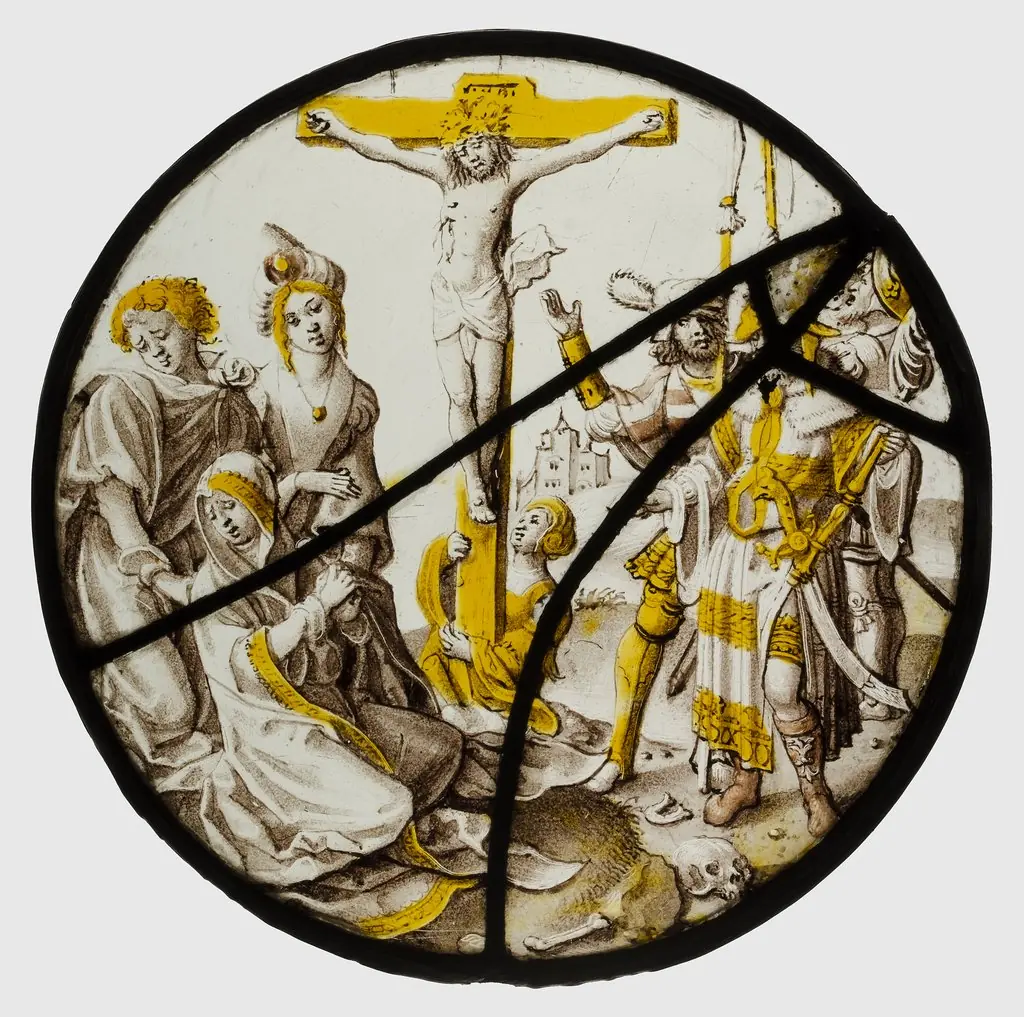
- Roundel with the Crucifixion
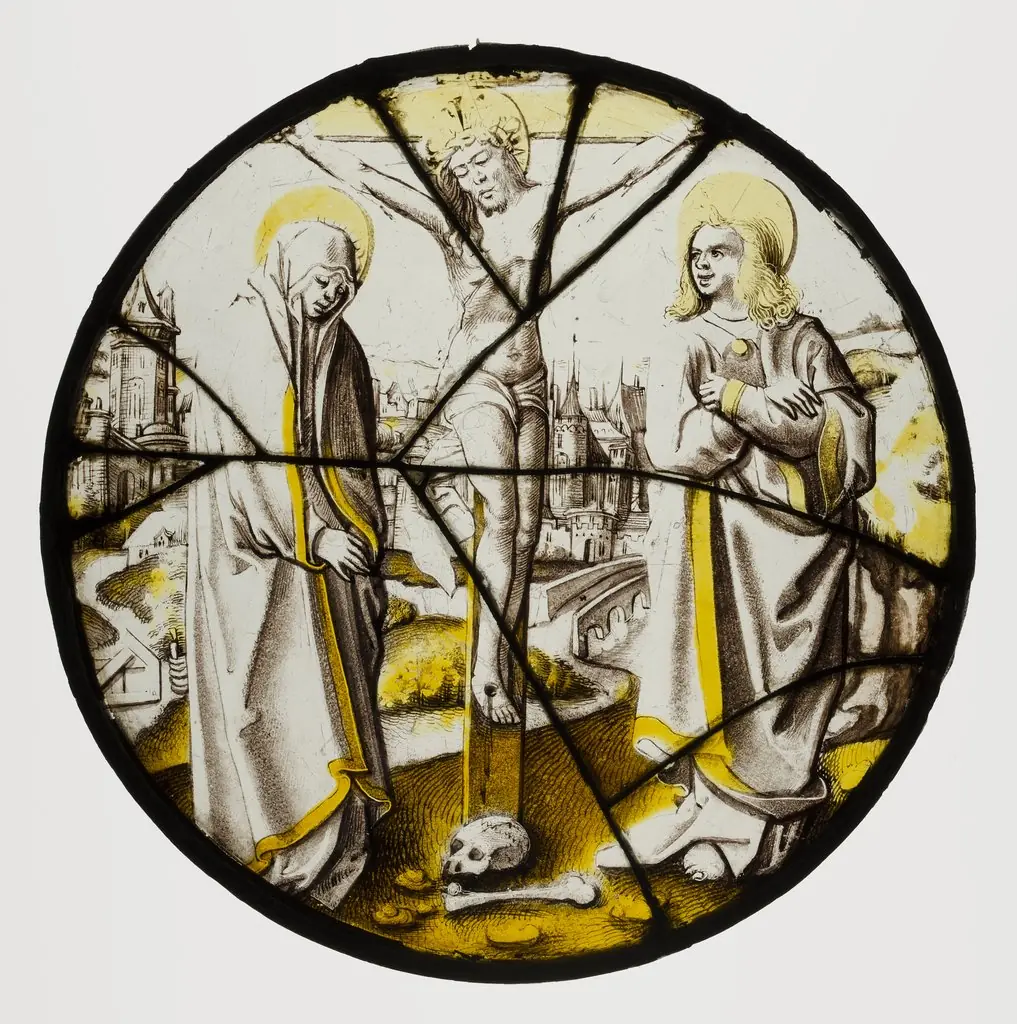 Roundel with the Crucifixion, the Virgin, and Saint John
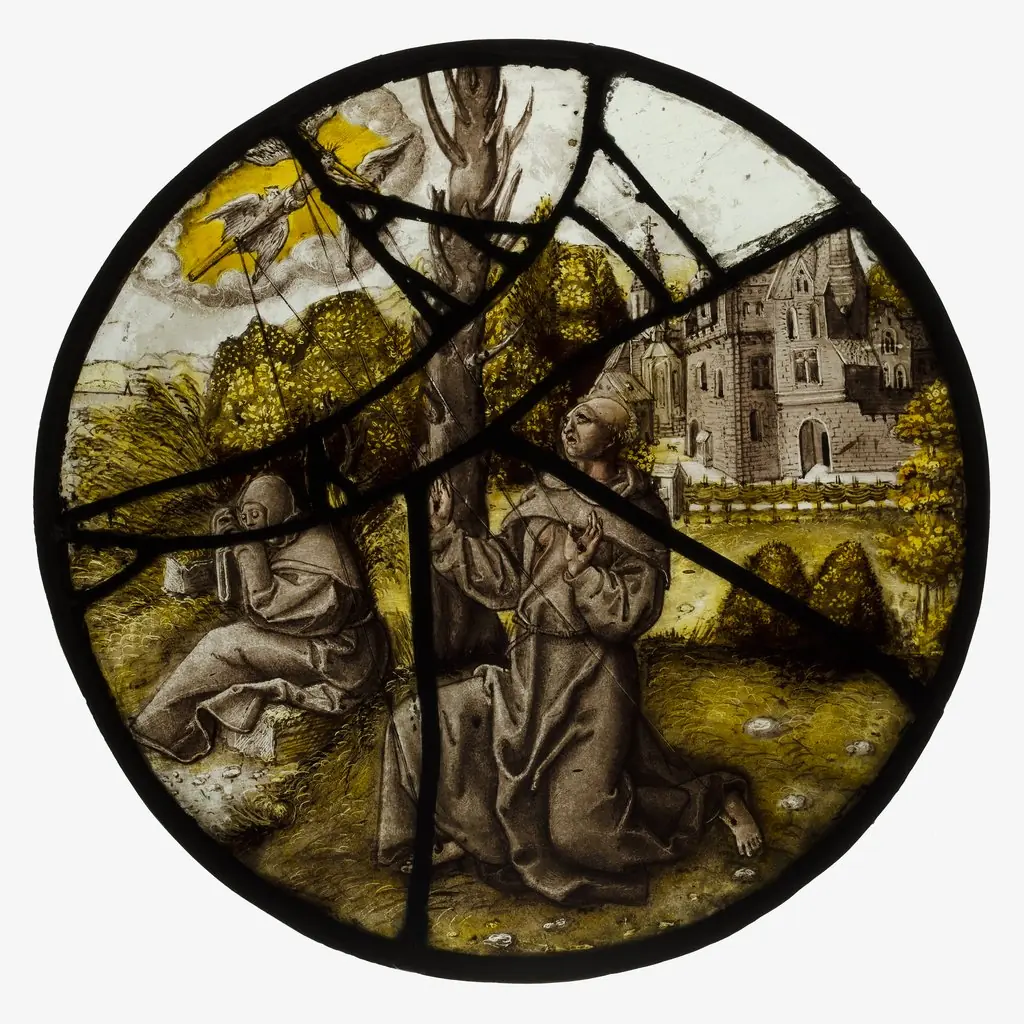 Roundel with Saint Francis Receiving the Stigmata
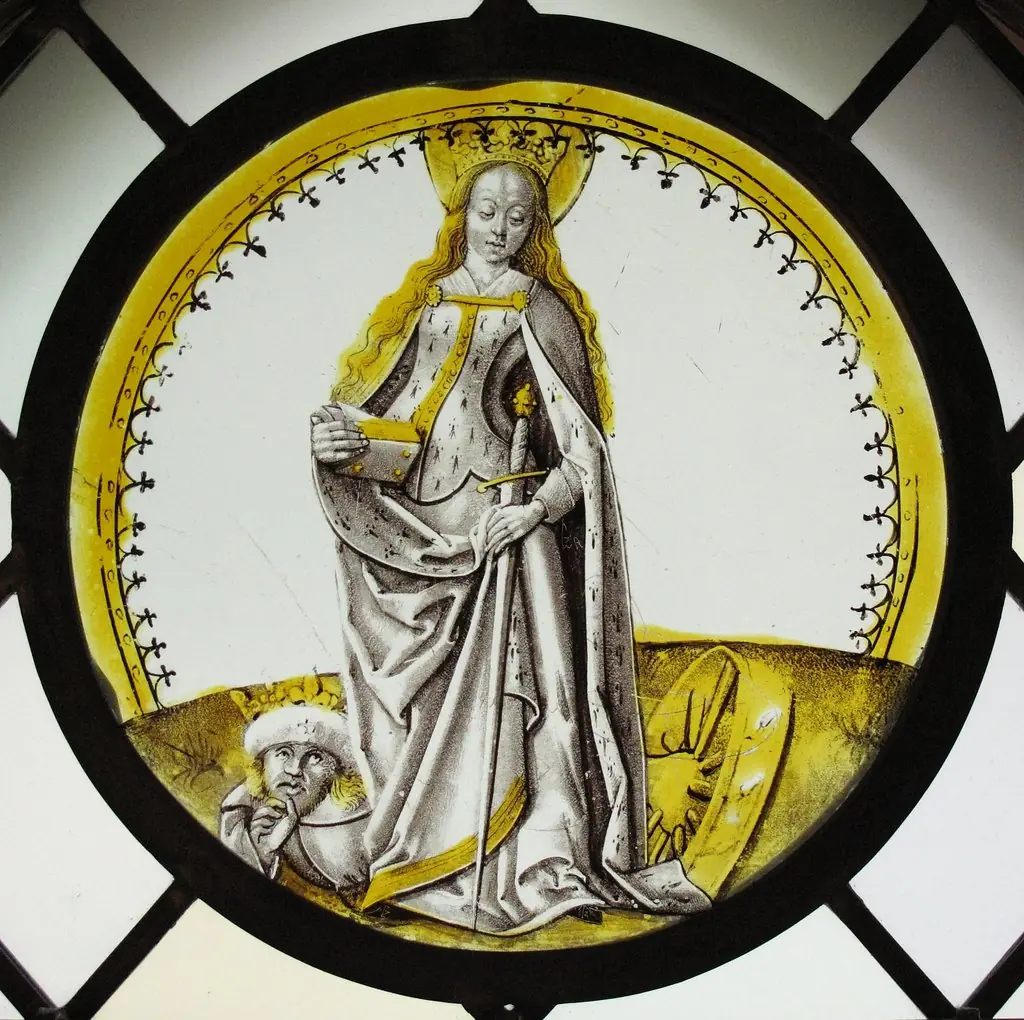 Roundel with Saint Catherine of Alexandria
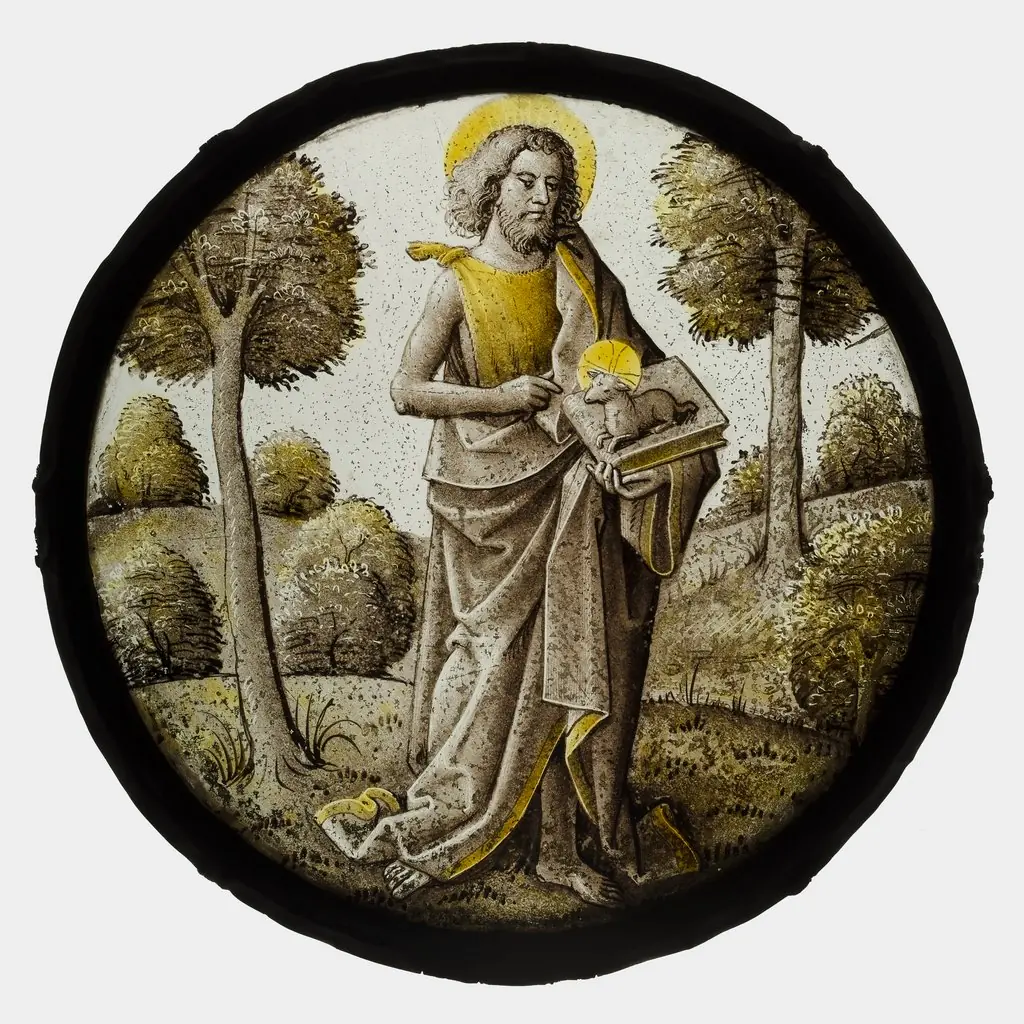 Roundel with Saint John the Baptist
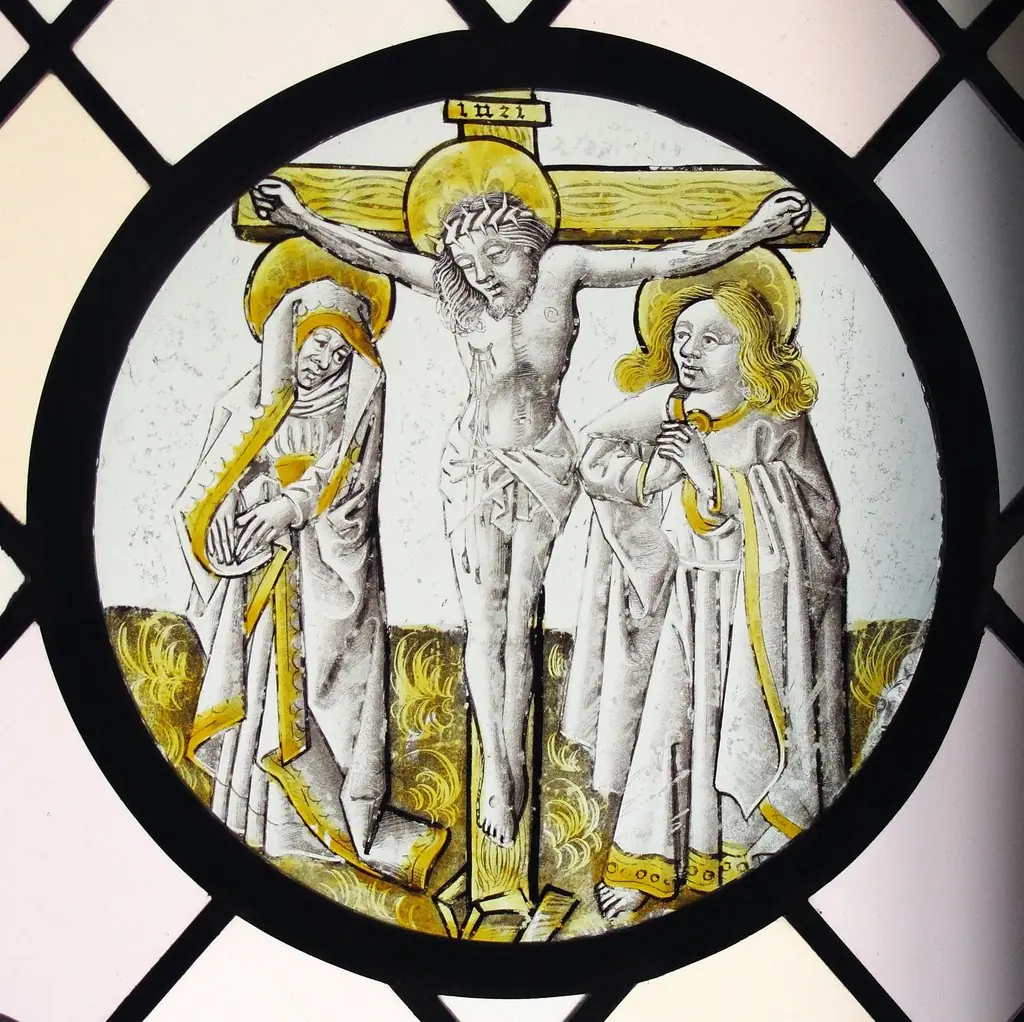 Roundel with Crucifixion, the Virgin and Saint John
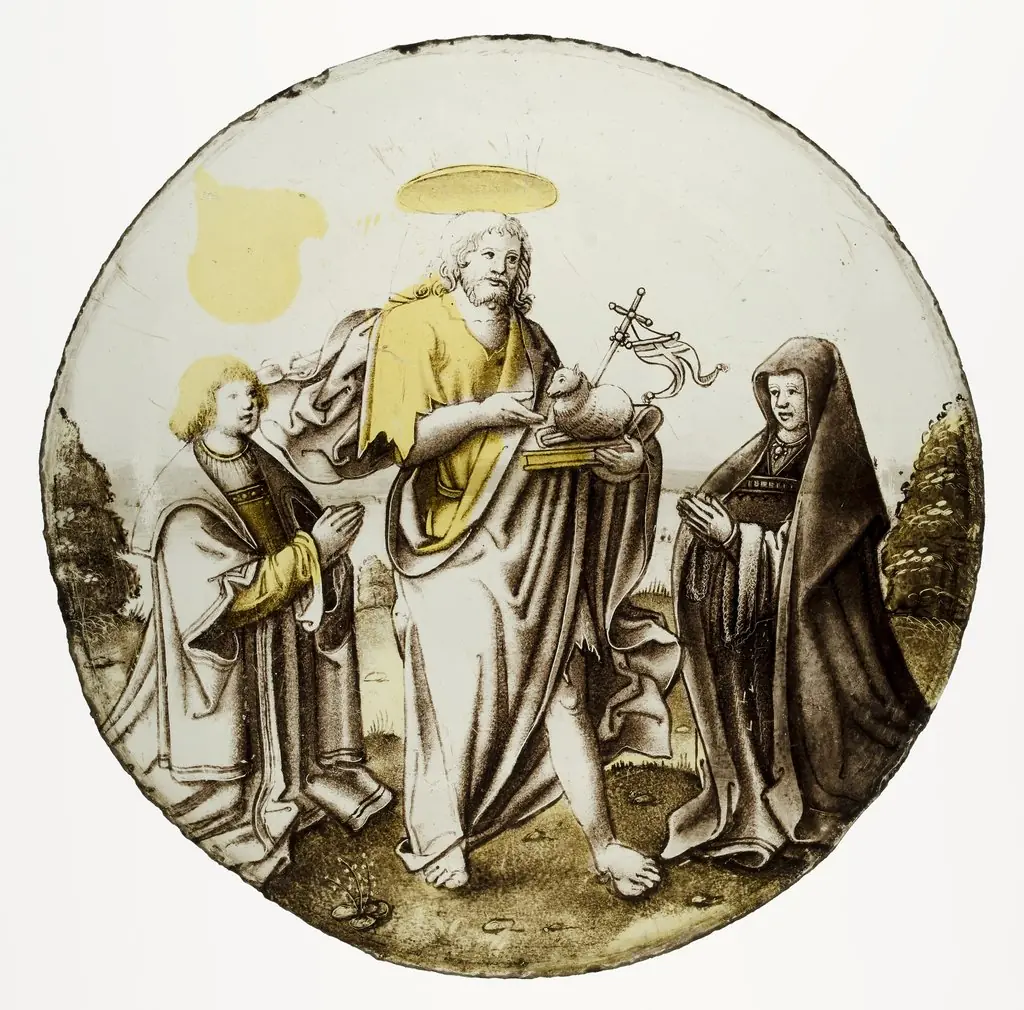 Roundel with Saint John the Baptist and Donors
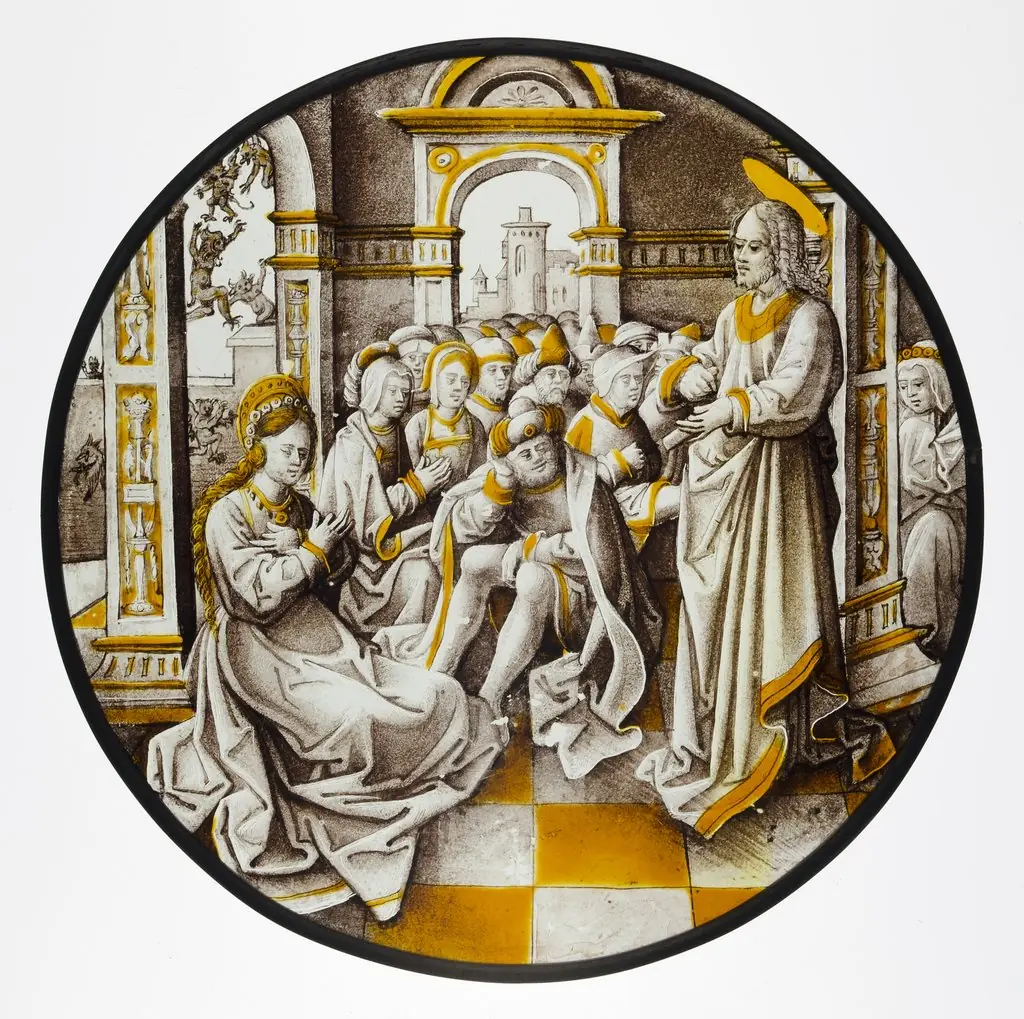 Roundel with Christ and the Adulterous Woman
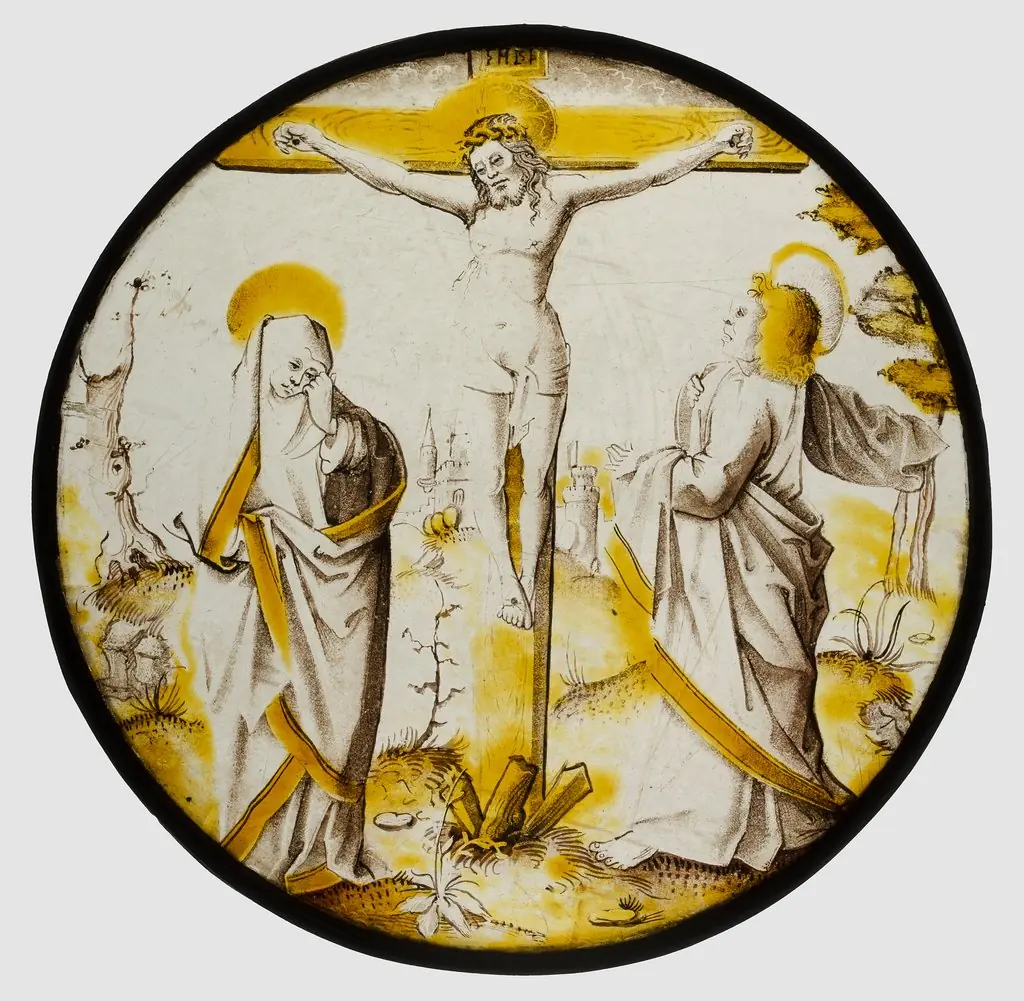 Roundel with the Crucifixion, the Virgin, and Saint John
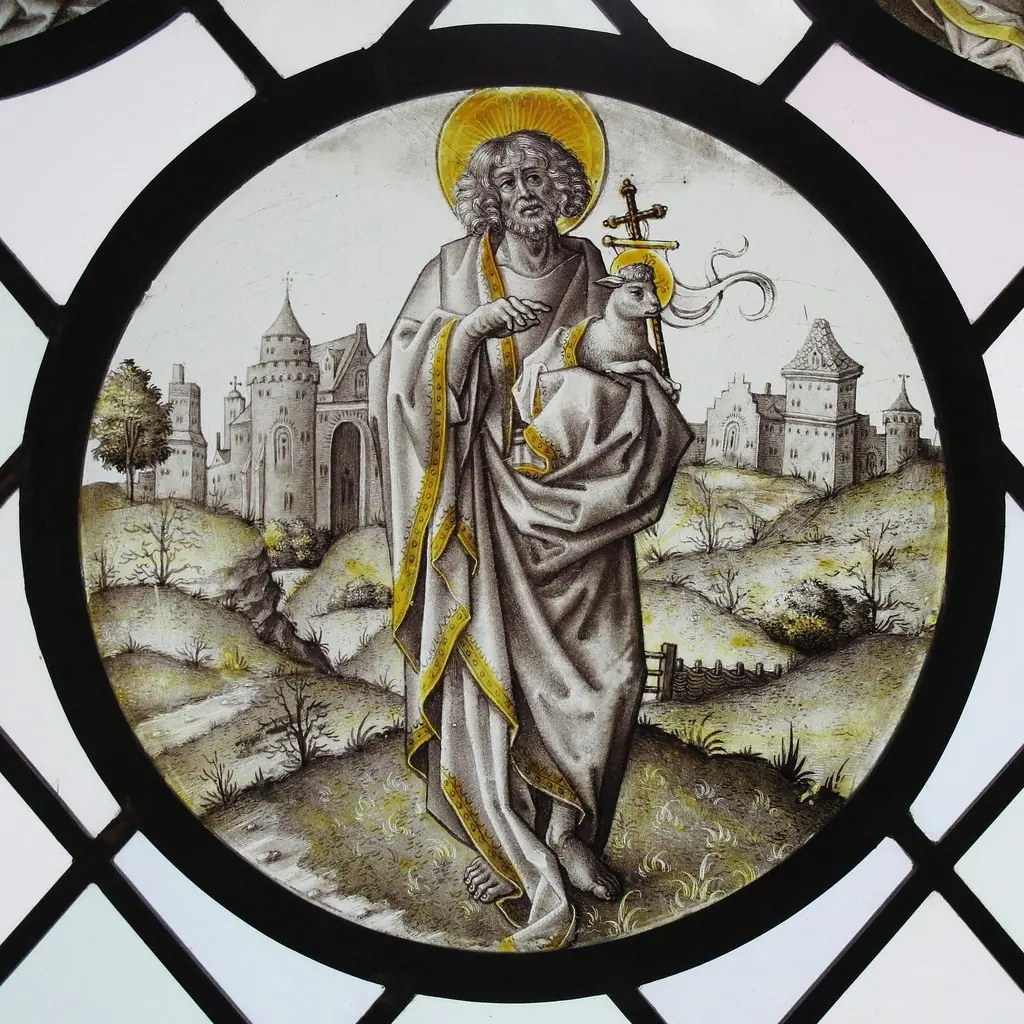 Roundel with Saint John The Baptist
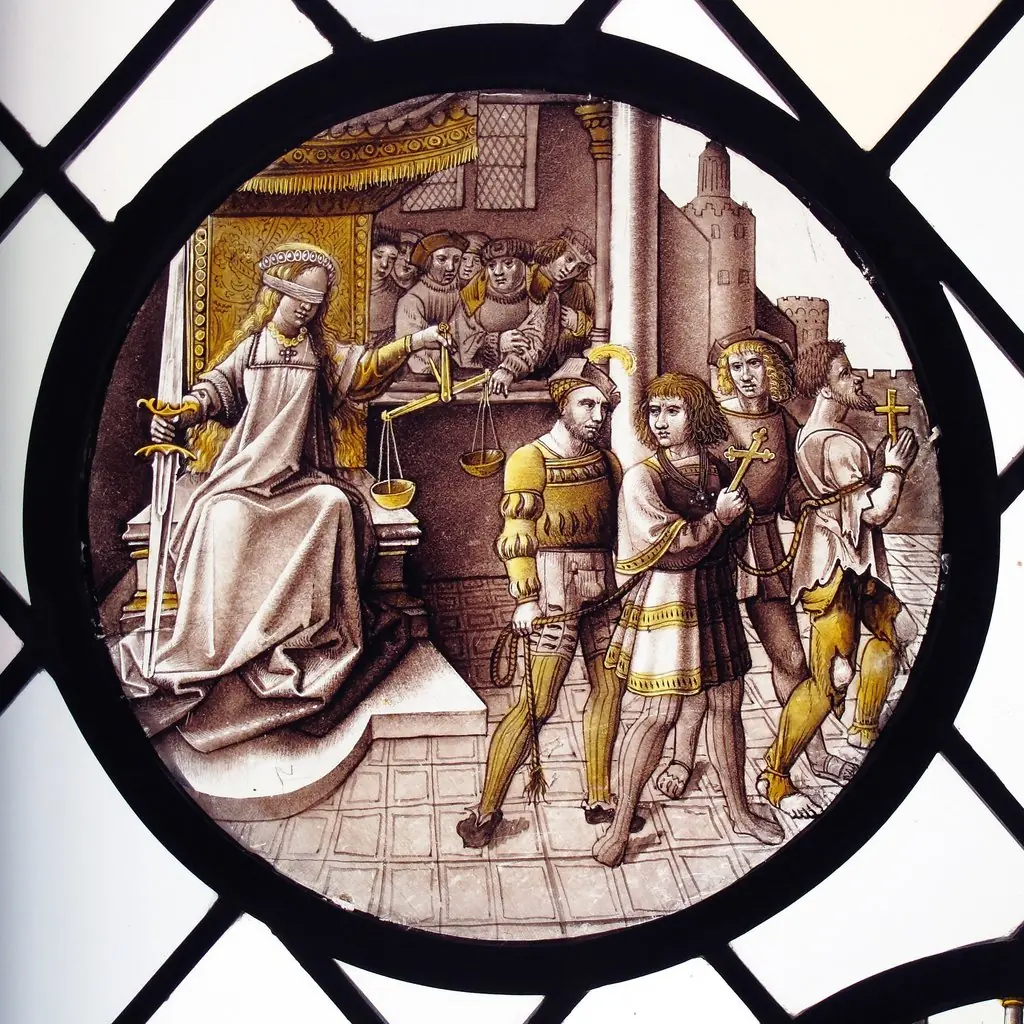 Roundel with Justice
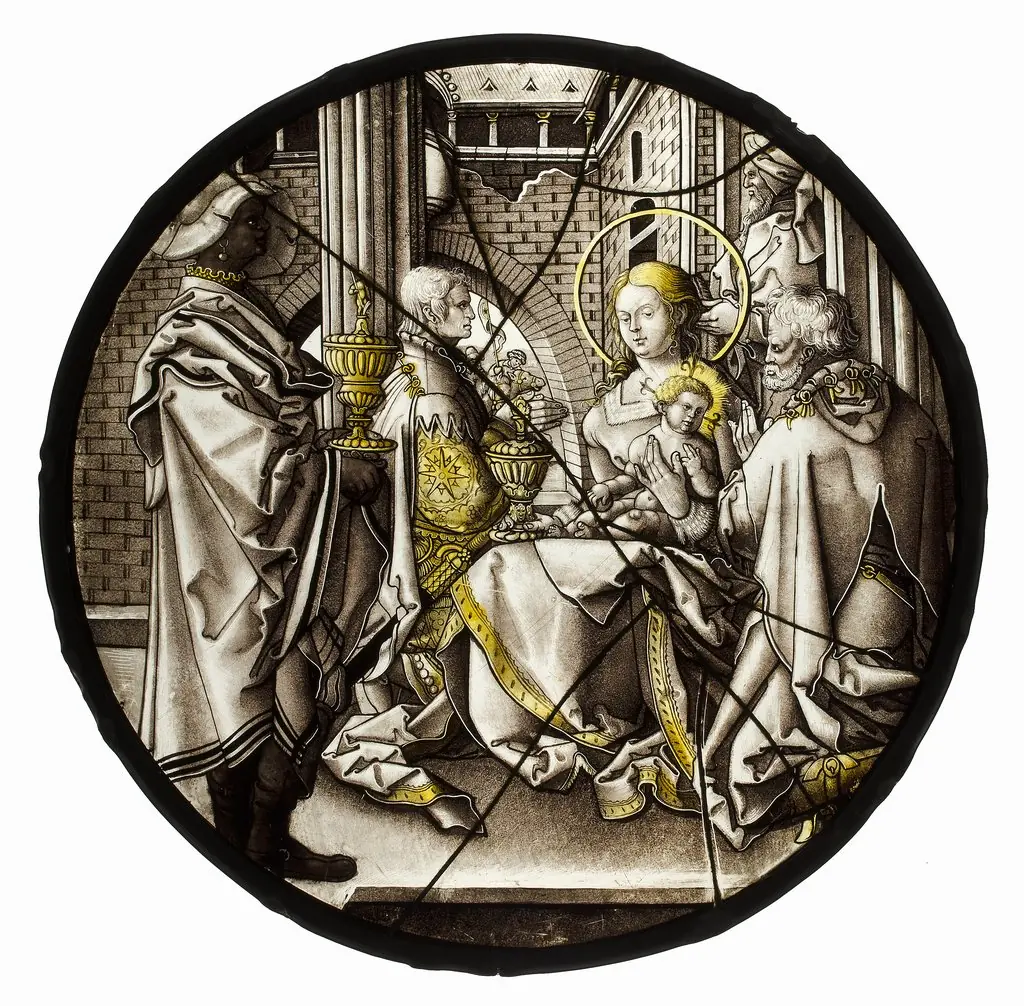 Roundel with Adoration of the Magi
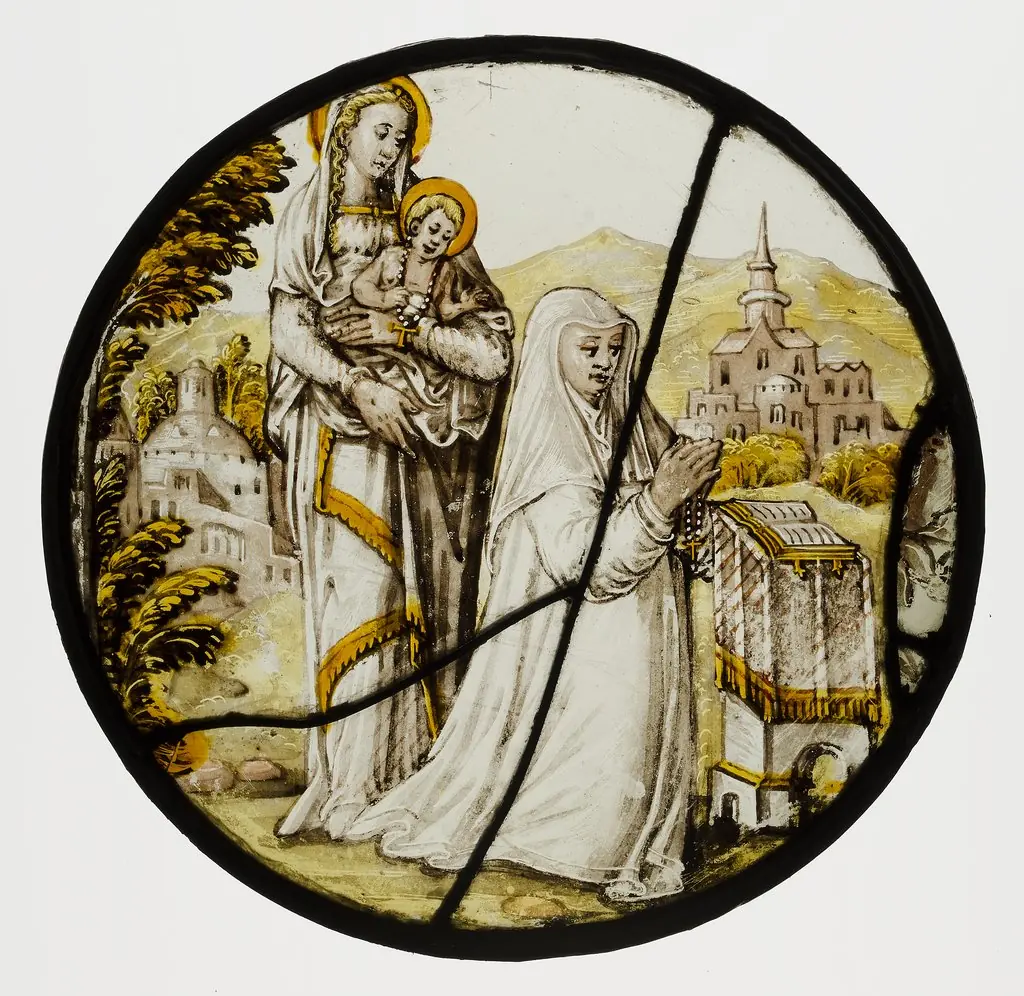 Roundel with Virgin and Child and a Carmelite Donatrix
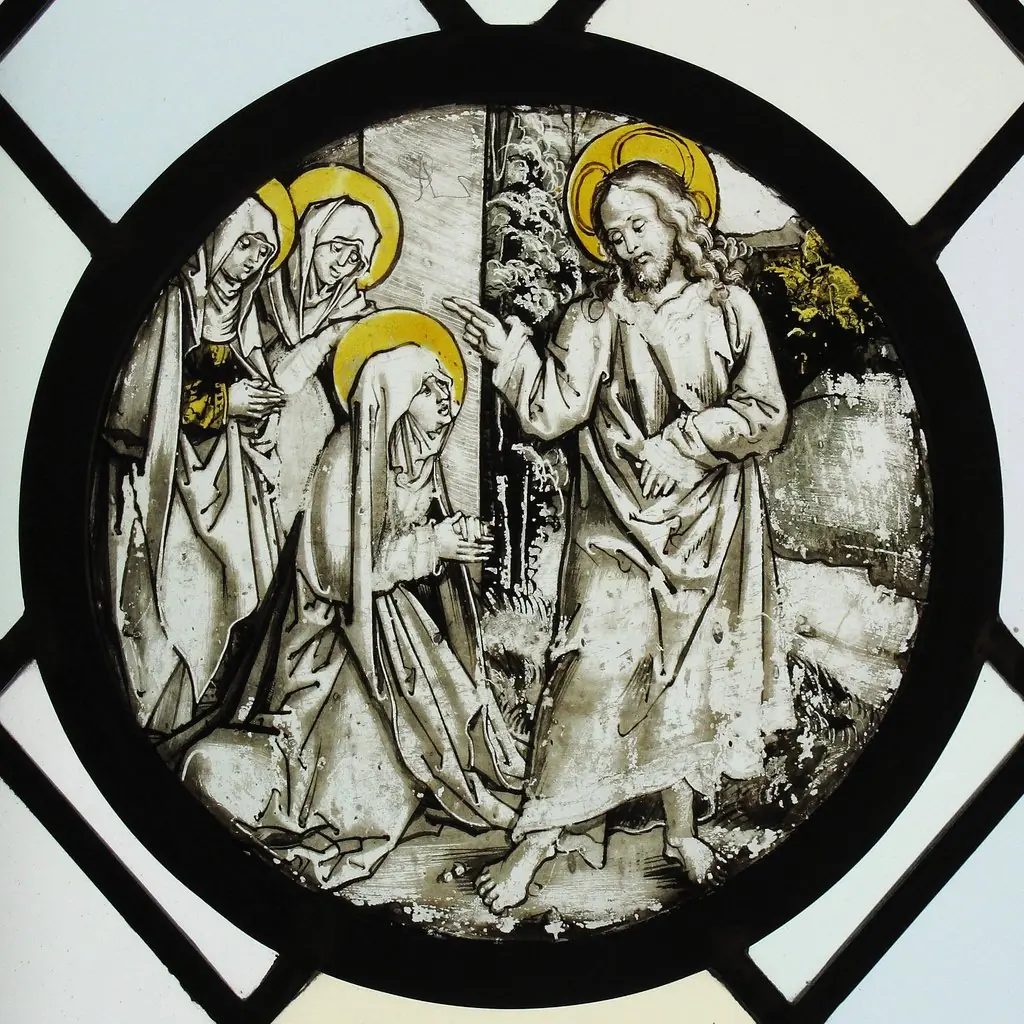 Roundel with Christ Taking Leave of His Mother
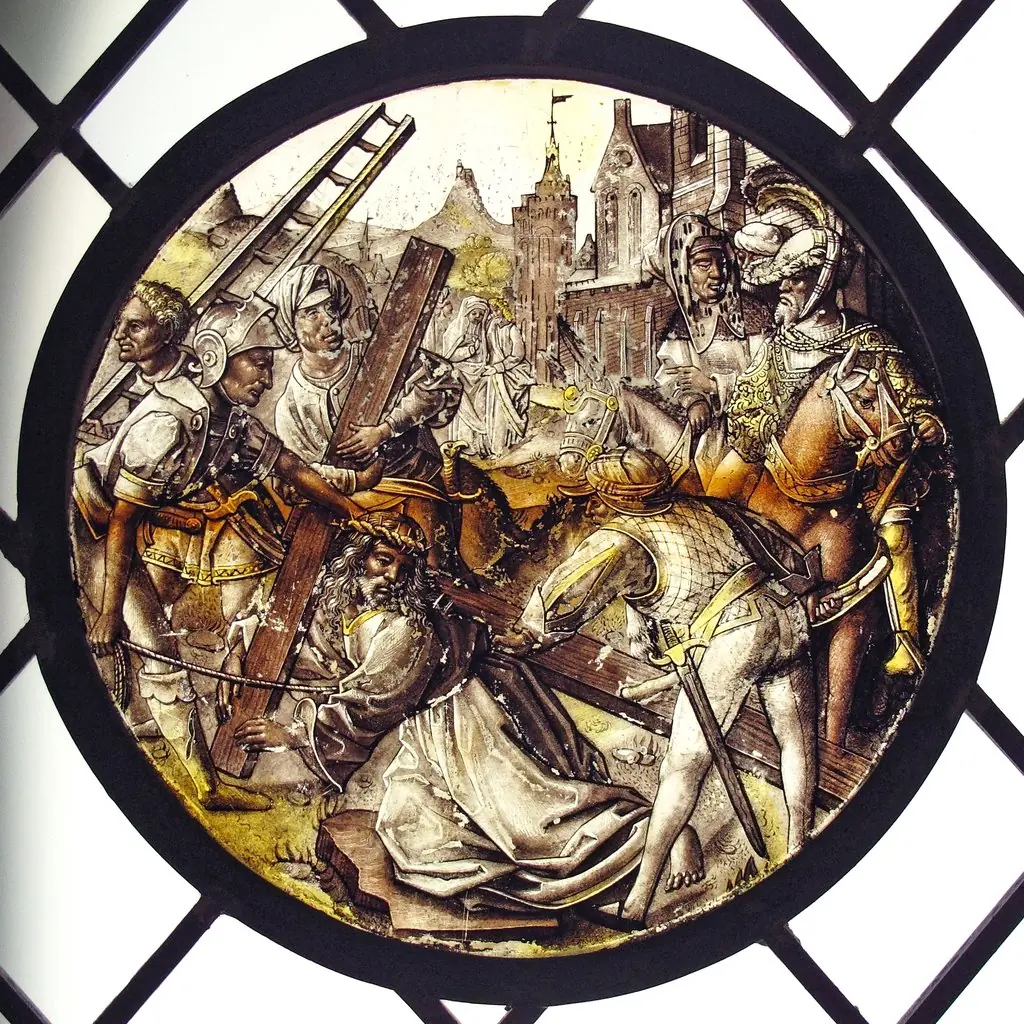 Roundel with Christ Bearing the Cross
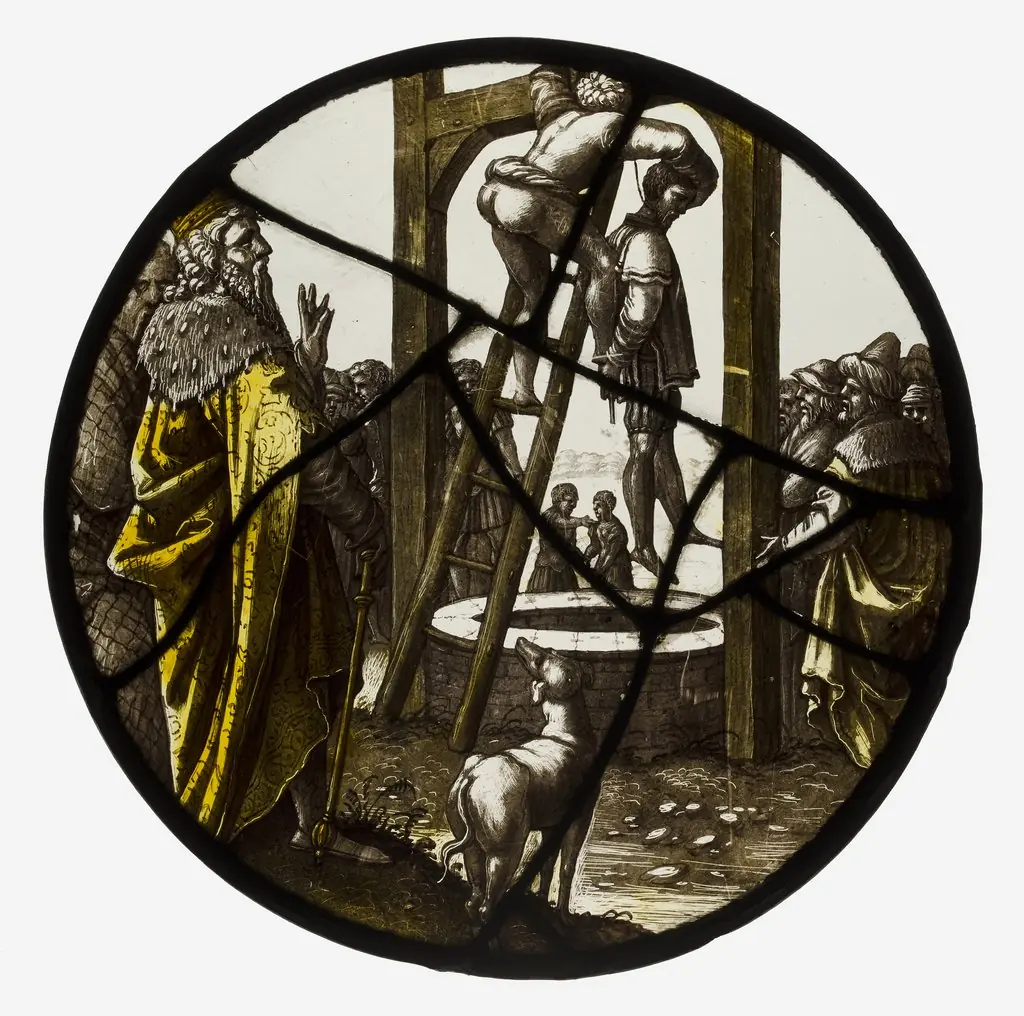 Roundel with the Hanging of Haman
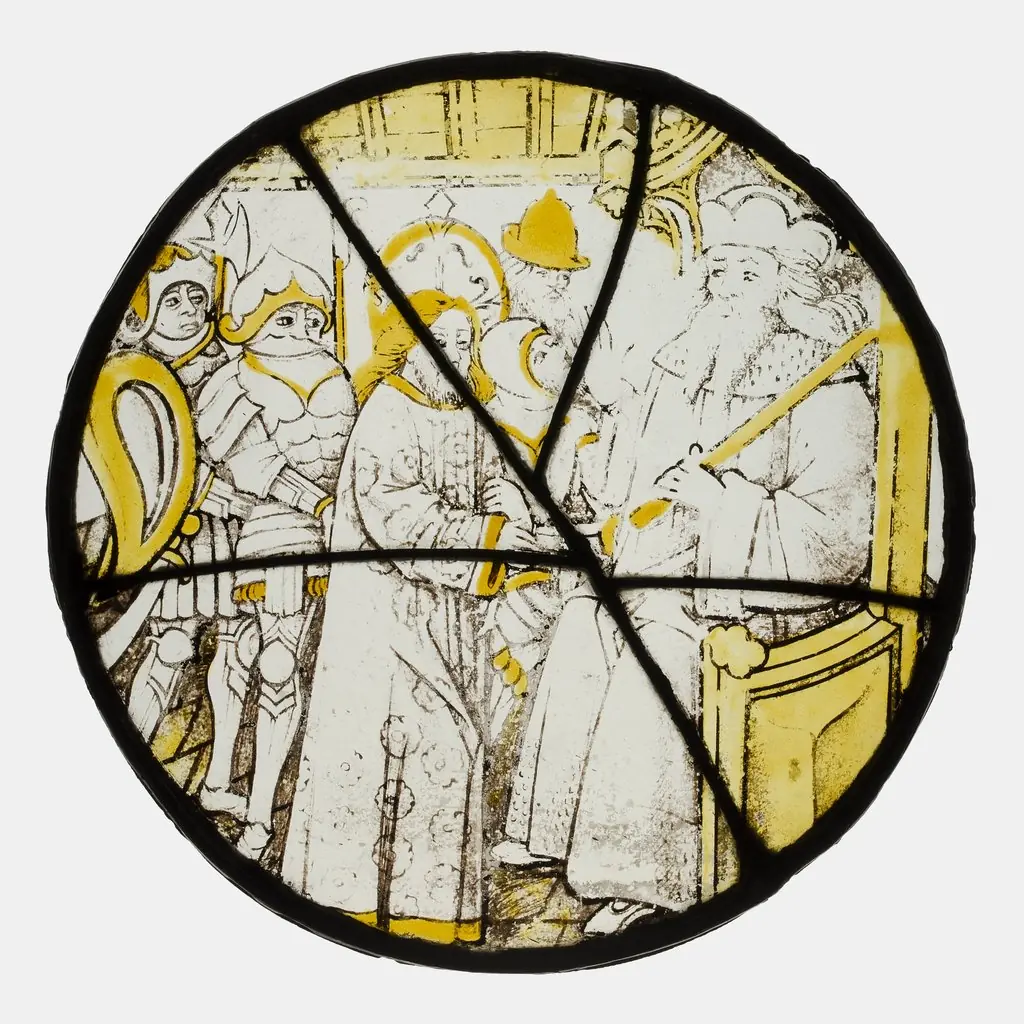 Roundel with Christ before Pilate
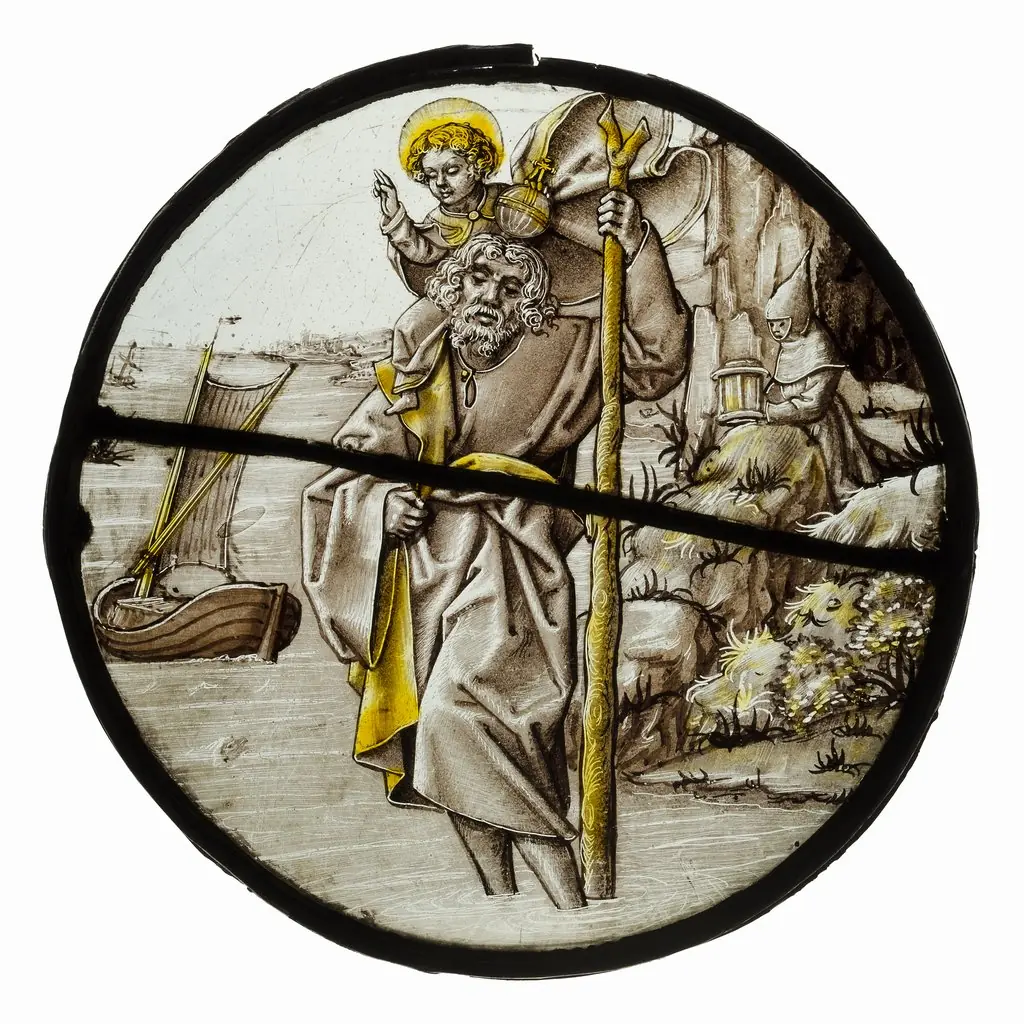 Roundel with Saint Christopher
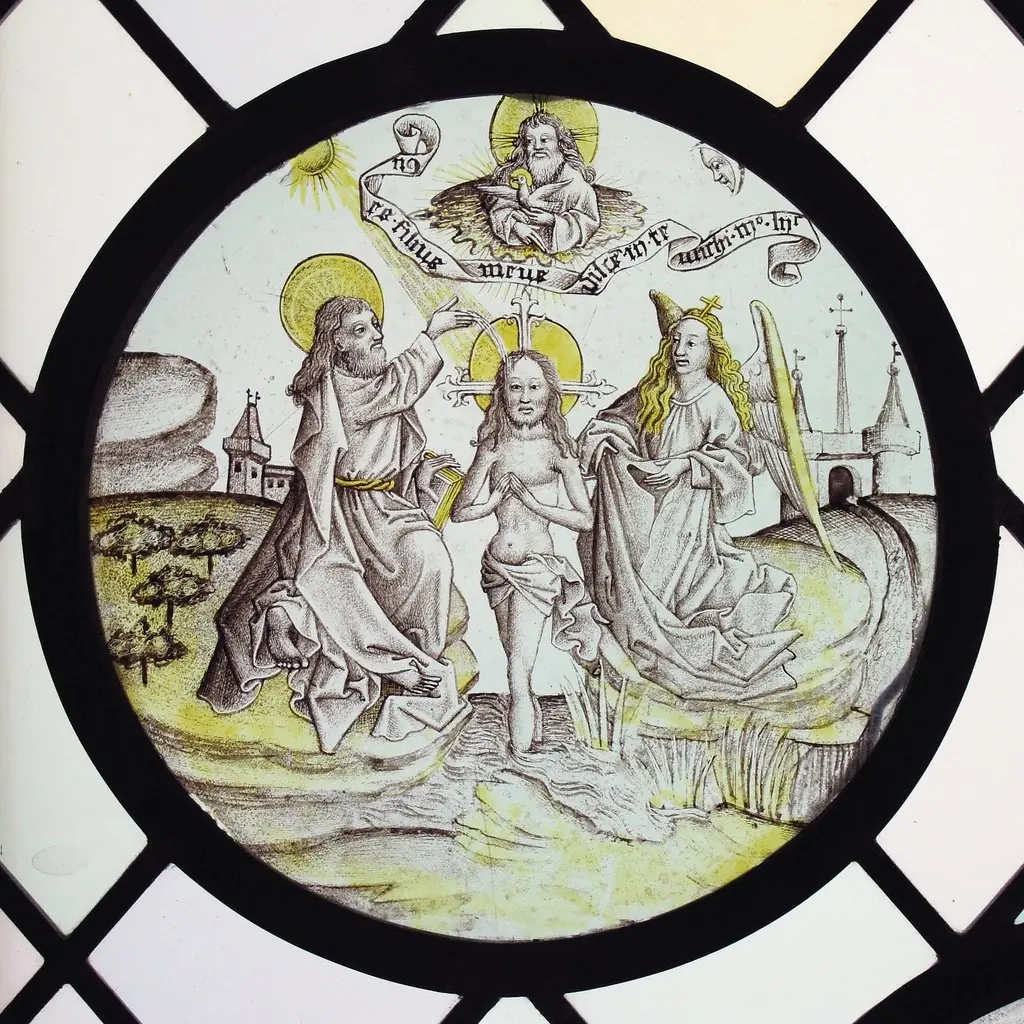 Roundel with the Baptism of Christ
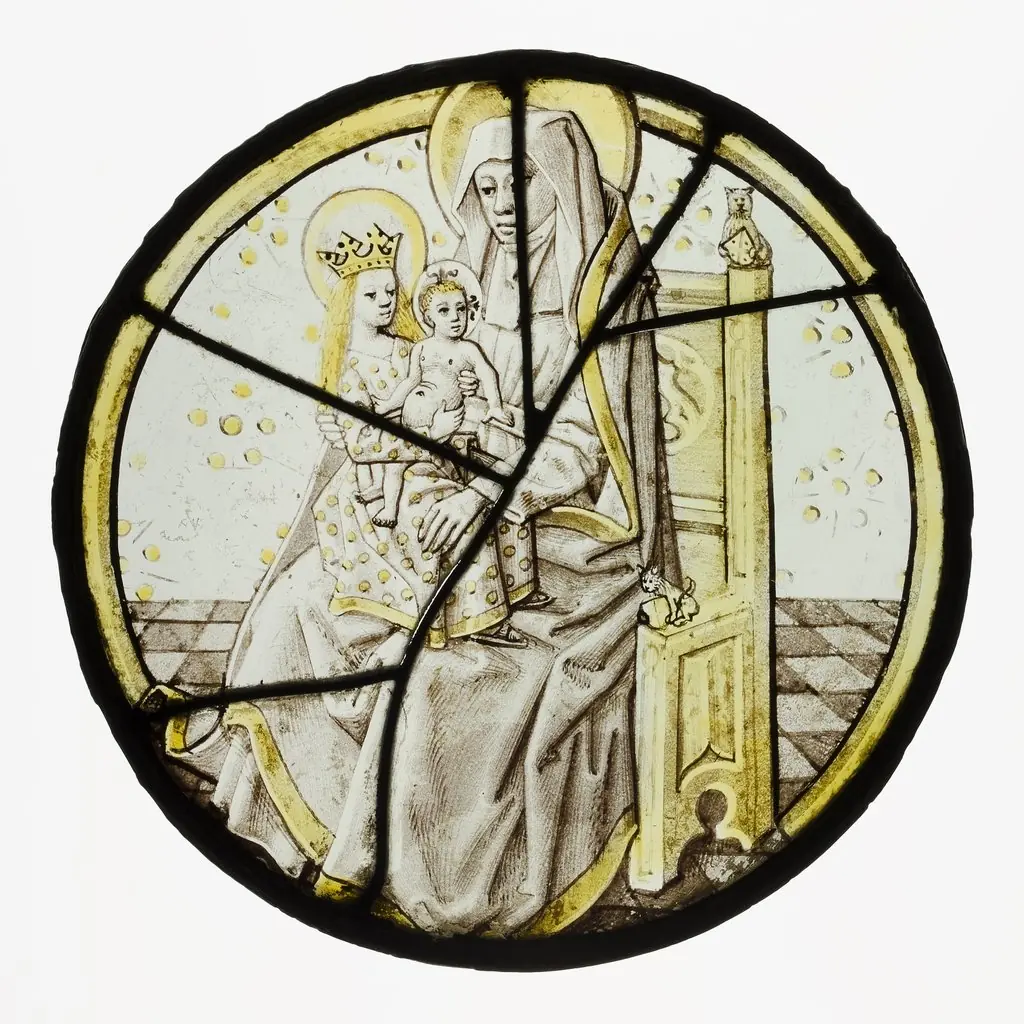 Roundel with Saint Anne with the Virgin and Child