Artwork
Roundel with the Holy Trinity
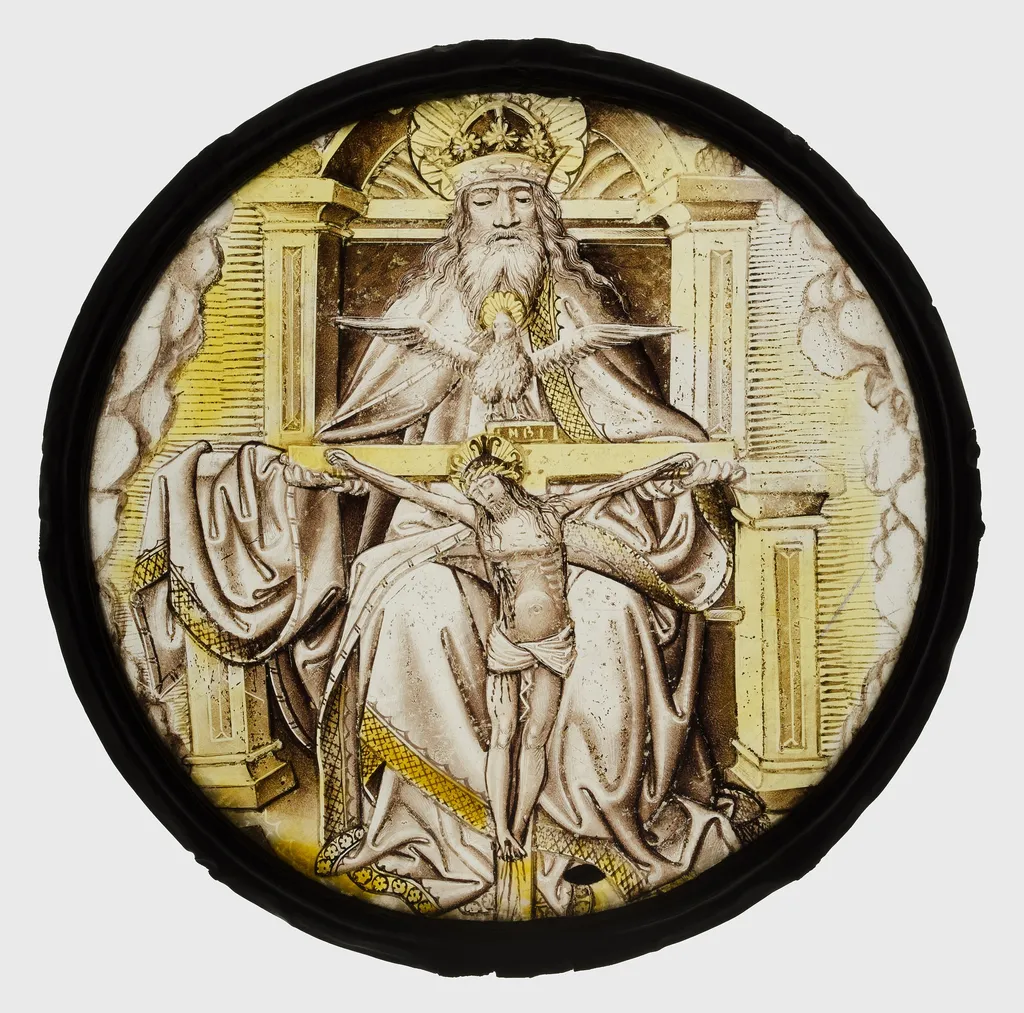
Roundel with the Holy Trinity is an unspecified painting. It dates from 1515 and is held in the collection of the Metropolitan Museum of Art.
About this work
Subject & Meaning
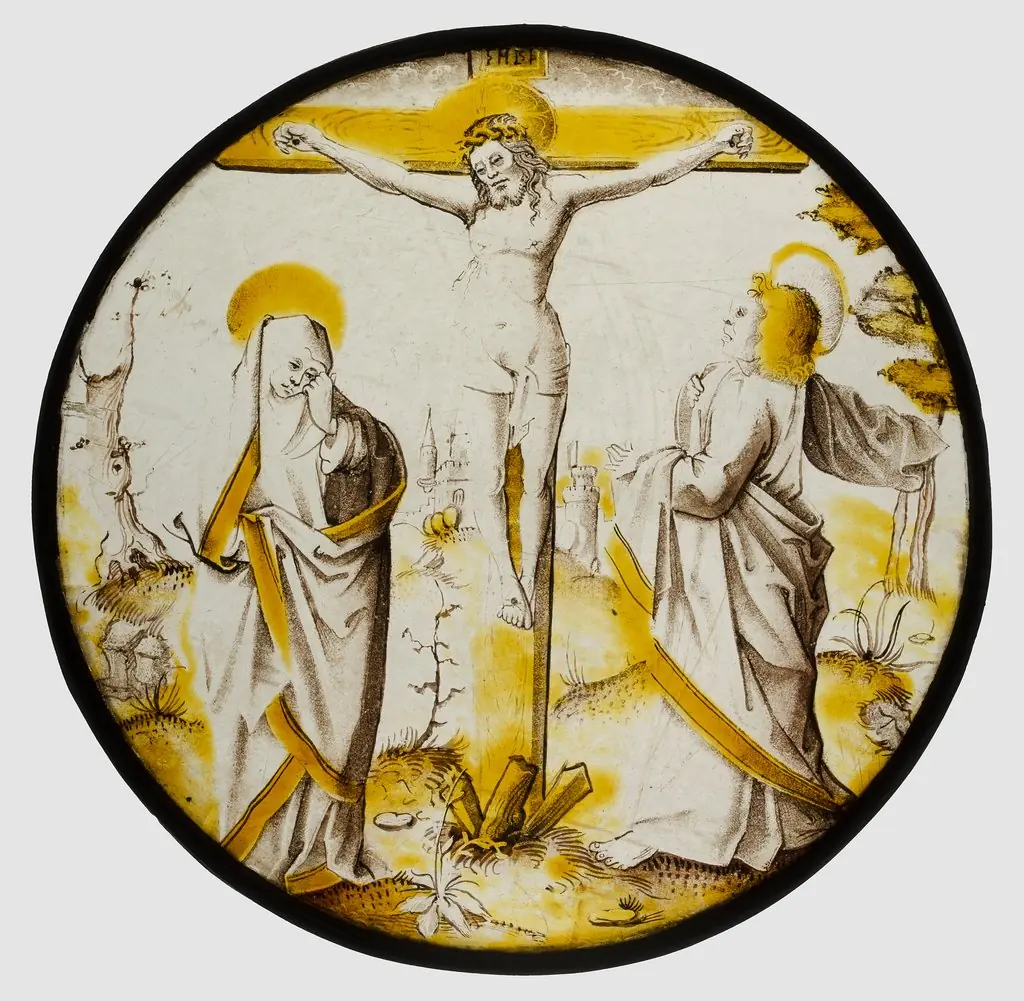
Created in 1515, this religious roundel depicts the Holy Trinity through a specific iconographic arrangement centered on the Crucifixion.
Created in 1515, this religious roundel depicts the Holy Trinity through a specific iconographic arrangement centered on the Crucifixion. The composition features Christ on the cross, serving as the primary focal point of the divine narrative. Uniquely, the artwork incorporates the image of a bird alongside the central figure of Christ and the cross.
While the specific theological implication of the avian figure is not explicitly detailed in the available records, its inclusion within a work titled 'Roundel with the Holy Trinity' suggests it functions as a symbolic element representing the third person of the Trinity or a related spiritual concept. The piece stands as an anonymous example of early sixteenth-century religious art, utilizing these combined visual elements to convey the complex doctrine of the Triune God.
Technique & Style
The work is recorded as a 1515 painting in a roundel format, indicating a small, circular support intended for devotional display. As an anonymous piece housed in the Metropolitan Museum of Art, it was likely executed in tempera or oil on wood panel, a common medium for early‑16th‑century religious imagery, though the precise technique is not specified in the documentation. The composition centers on the Holy Trinity, incorporating traditional symbols such as the crucifix, a dove, and a bird, which convey theological meaning through balanced, symmetrical arrangement.
Its formal qualities reflect Renaissance emphasis on clarity of line and devotional focus, while the current condition is reported as stable within the museum’s collection.
Context
The roundel Roundel with the Holy Trinity, recorded as dating to 1515, is an anonymous example of early sixteenth‑century religious painting. Its iconography includes the crucifixion, a cross, a bird and the figure of Christ, motifs documented in the Metropolitan Museum of Art’s catalogue. The work is housed in the museum’s collection, underscoring its significance within the institution’s holdings of devotional art.
Because the creator remains unidentified, scholarship focuses on stylistic analysis and the roundel’s role in the evolution of Holy Trinity imagery in Netherlandish art, positioning it as a representative piece for studying anonymous workshop production during the period.
Overview
This circular painting, titled Roundel with the Holy Trinity, presents a solemn depiction of the Christian doctrine. Within a luminous, golden atmosphere, three divine figures are arranged. The composition centers on the crucified Christ, flanked by God the Father above and the Holy Spirit below, creating a unified sacred scene. The overall impression is one of reverence and spiritual depth, characteristic of devotional art.
Artist & collection

- Roundel with the Crucifixion
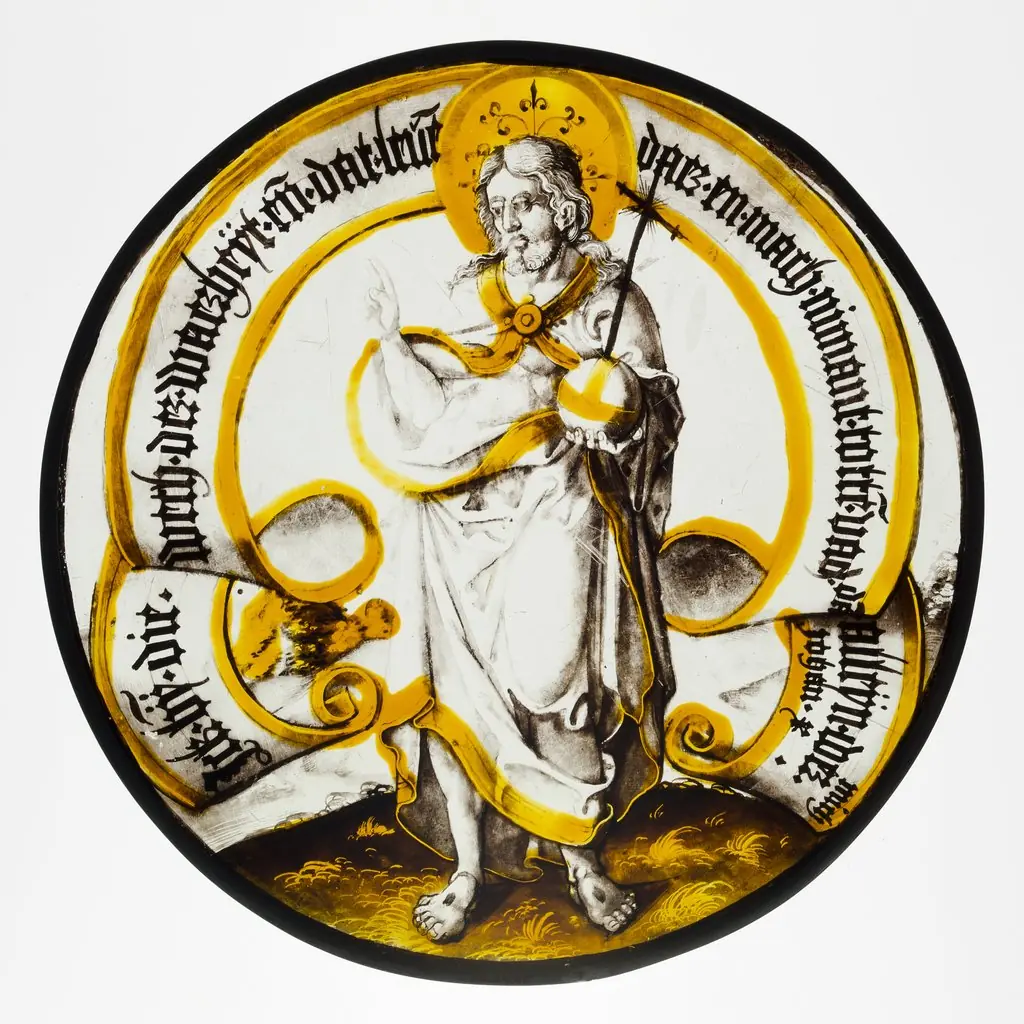 Roundel with Christ as Savior of the World
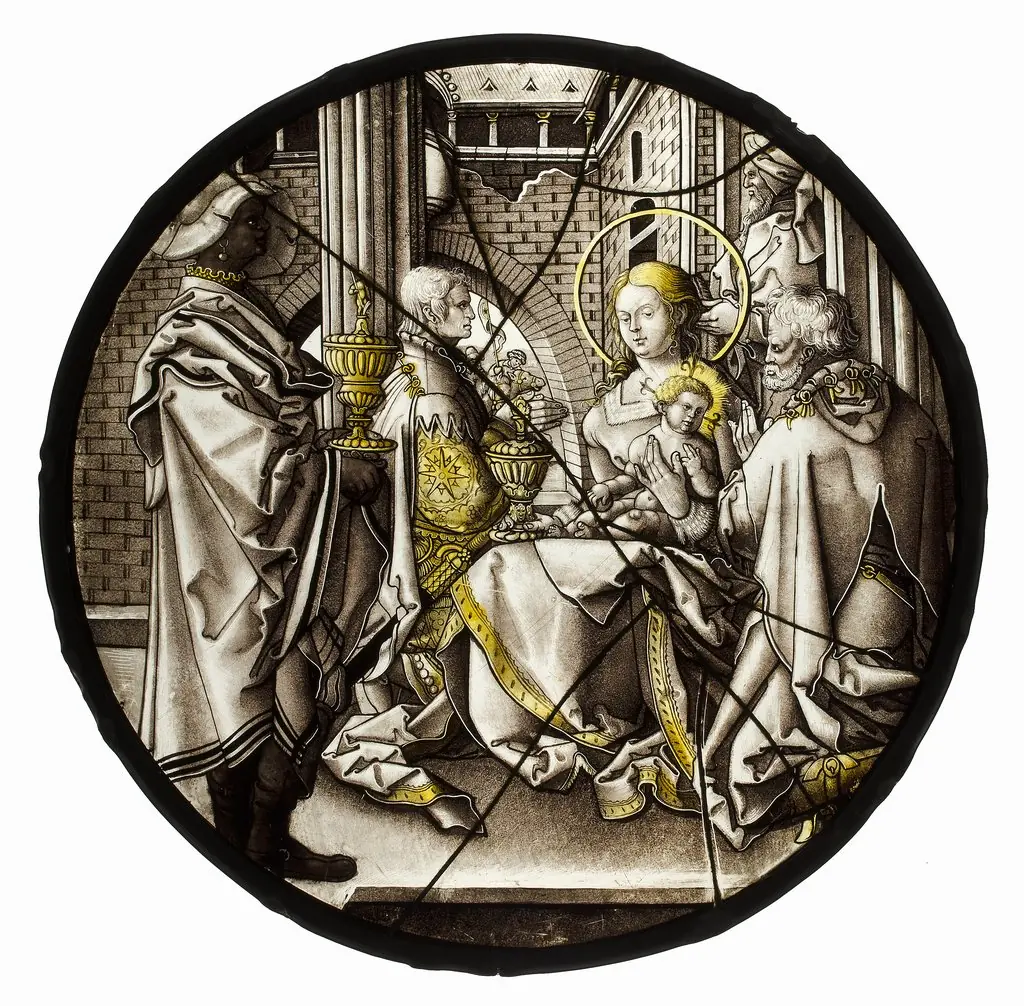 Roundel with Adoration of the Magi
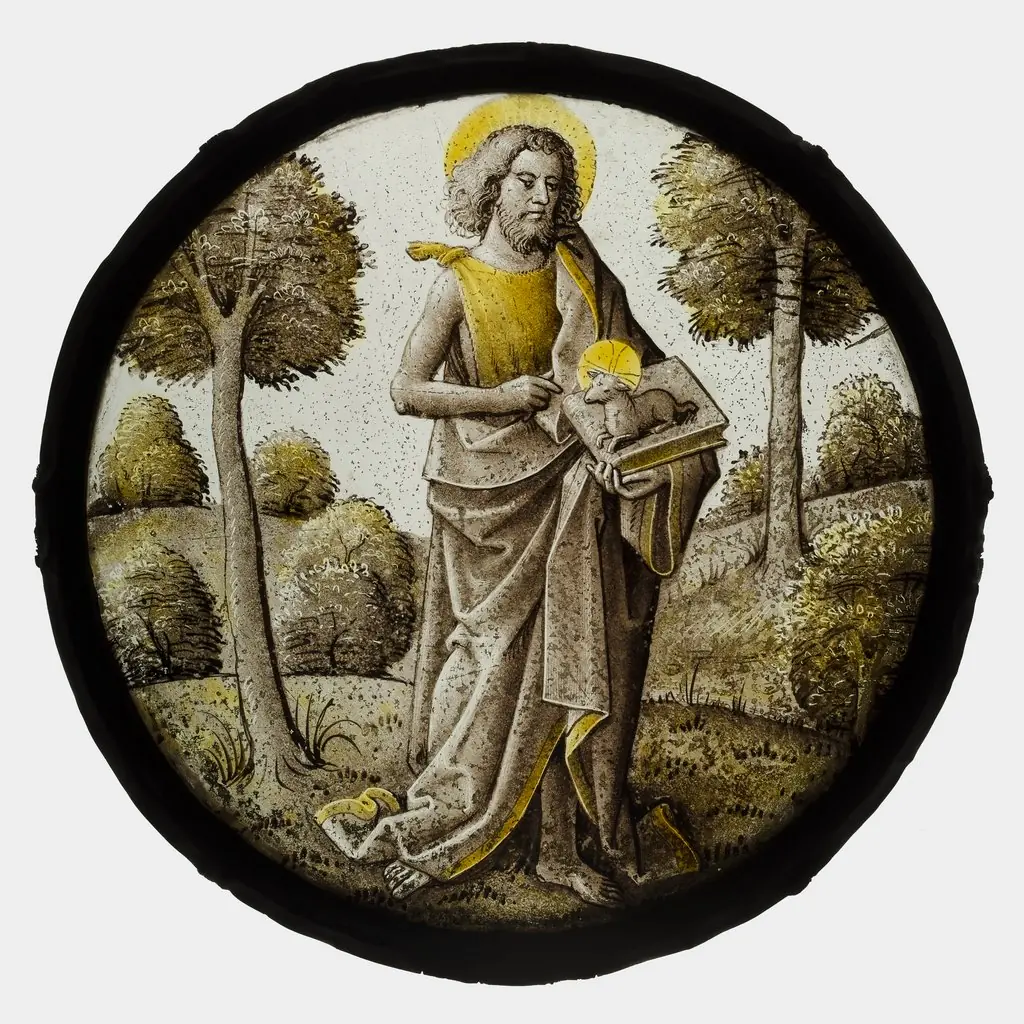 Roundel with Saint John the Baptist
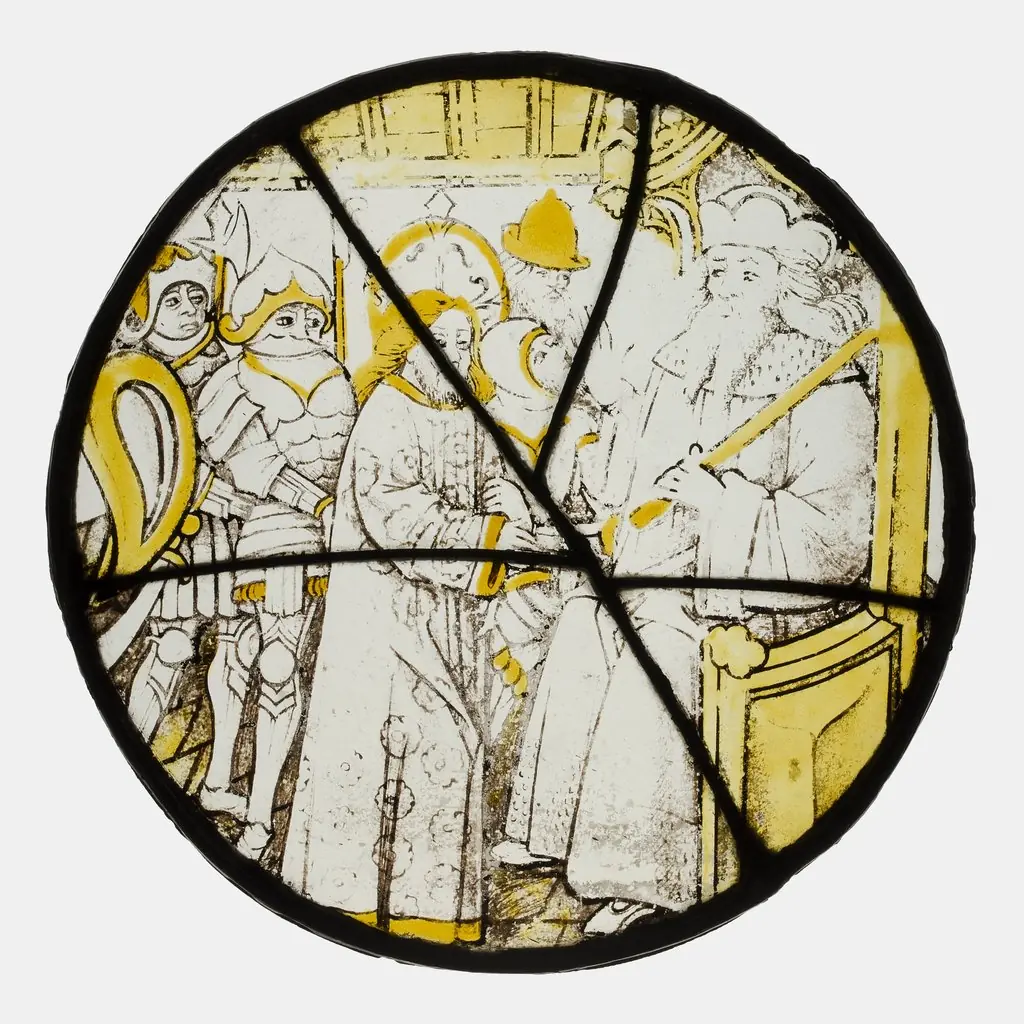 Roundel with Christ before Pilate
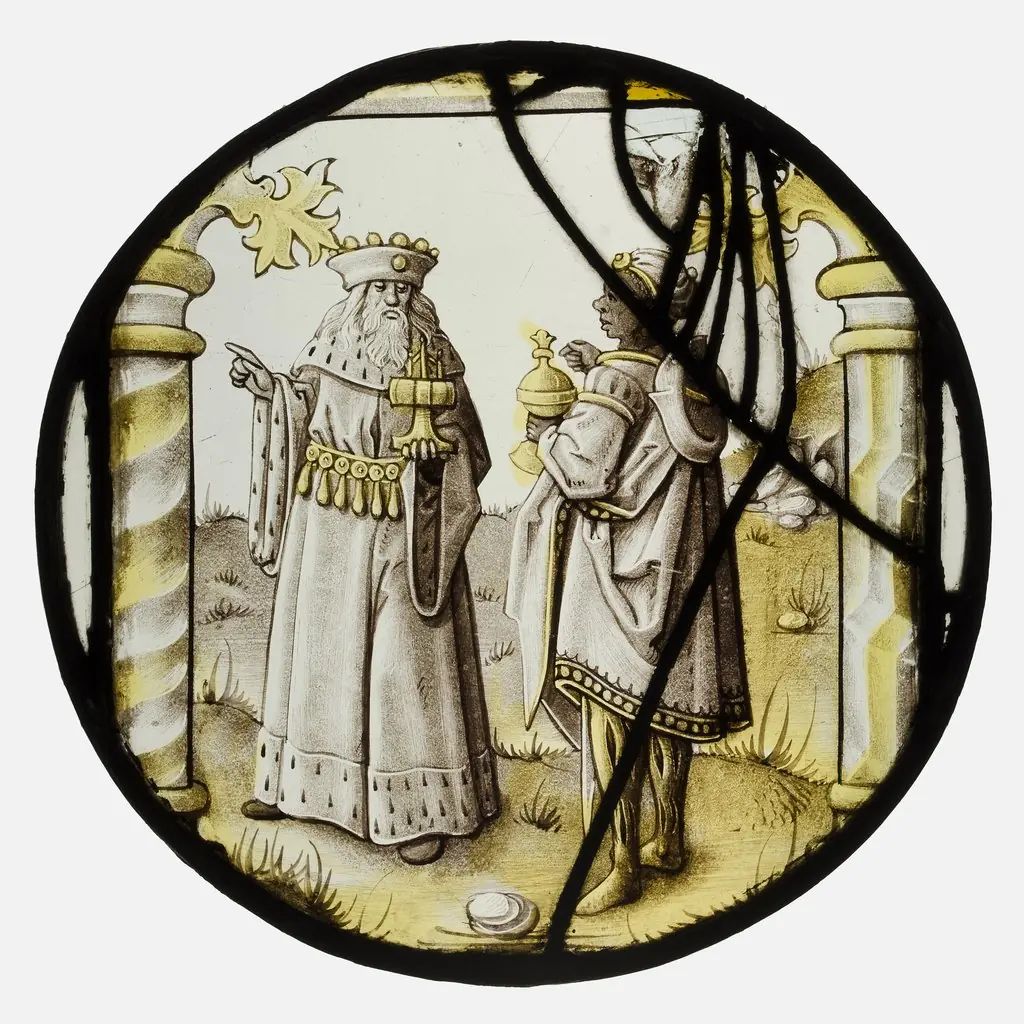 Roundel with two Kings from an Adoration Group
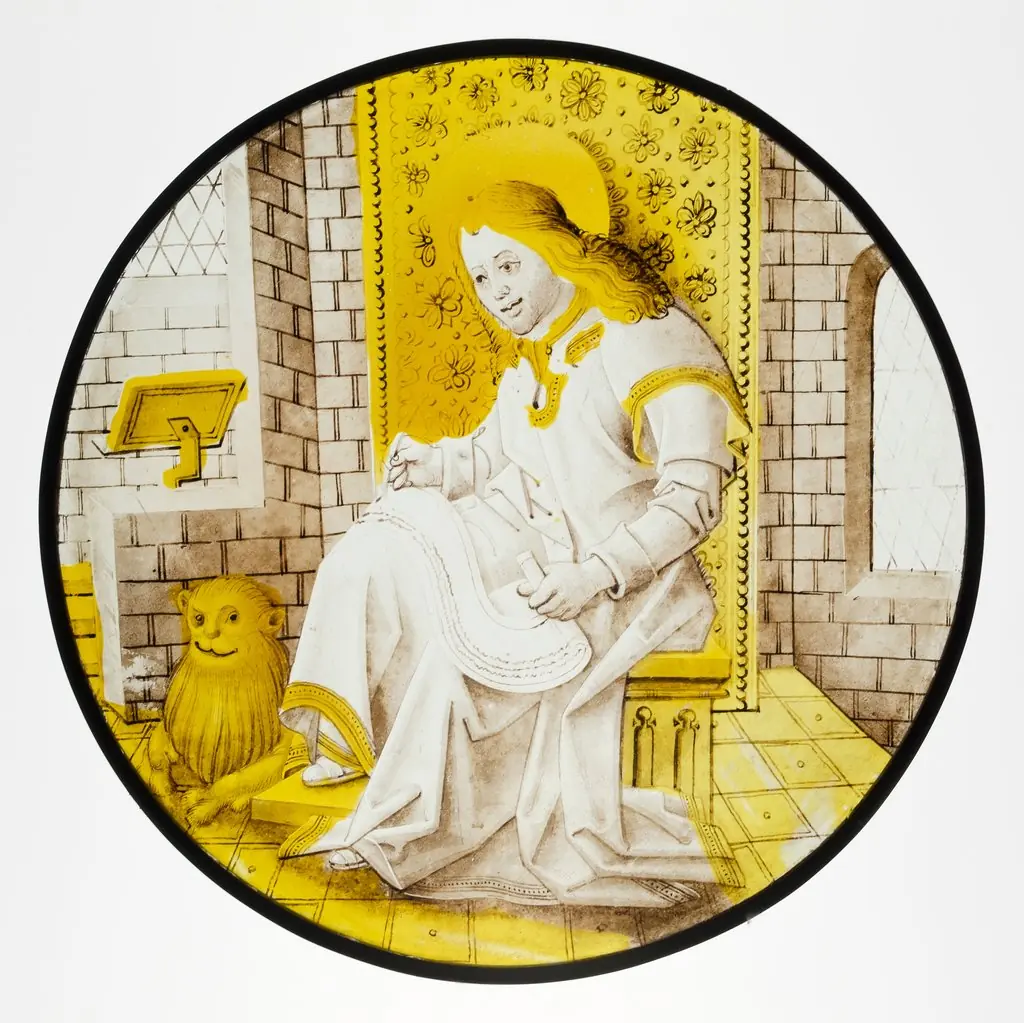 Roundel with Saint Mark
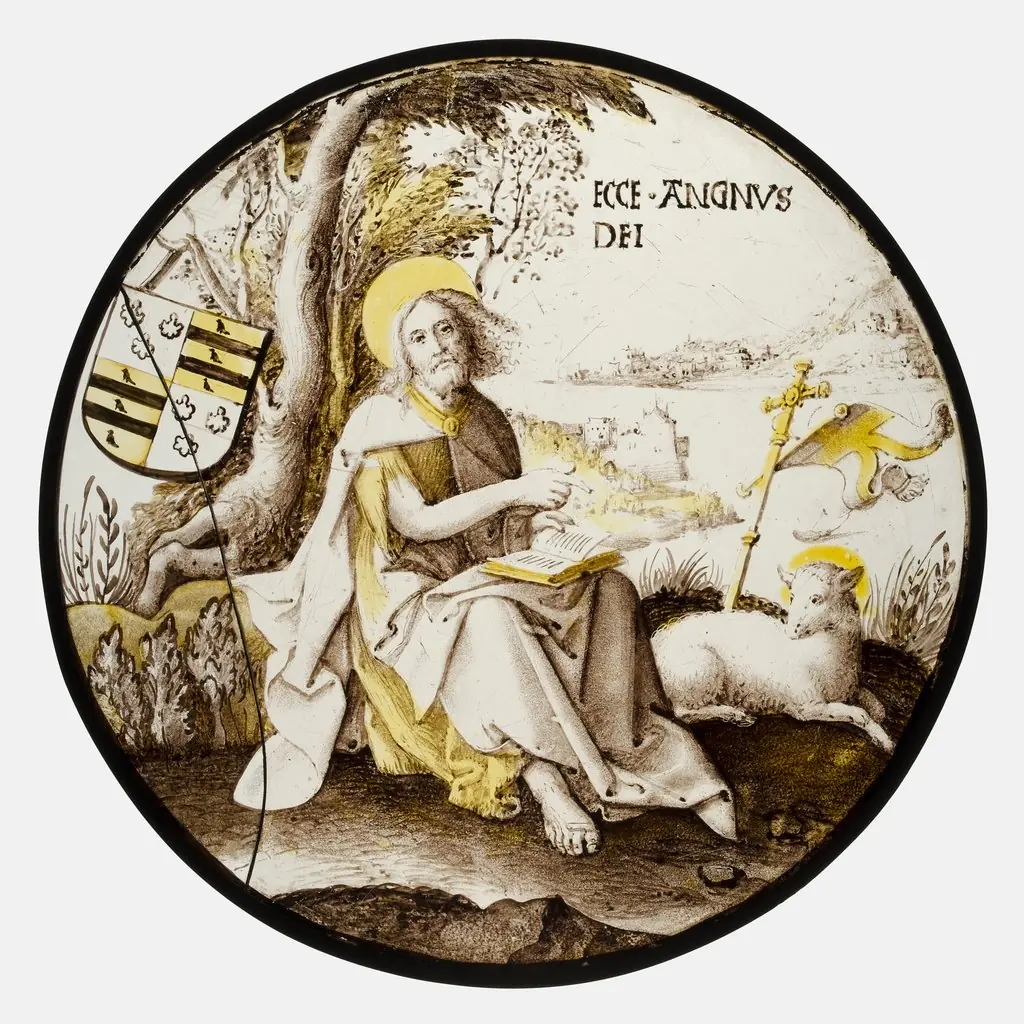 Roundel with Saint John the Baptist
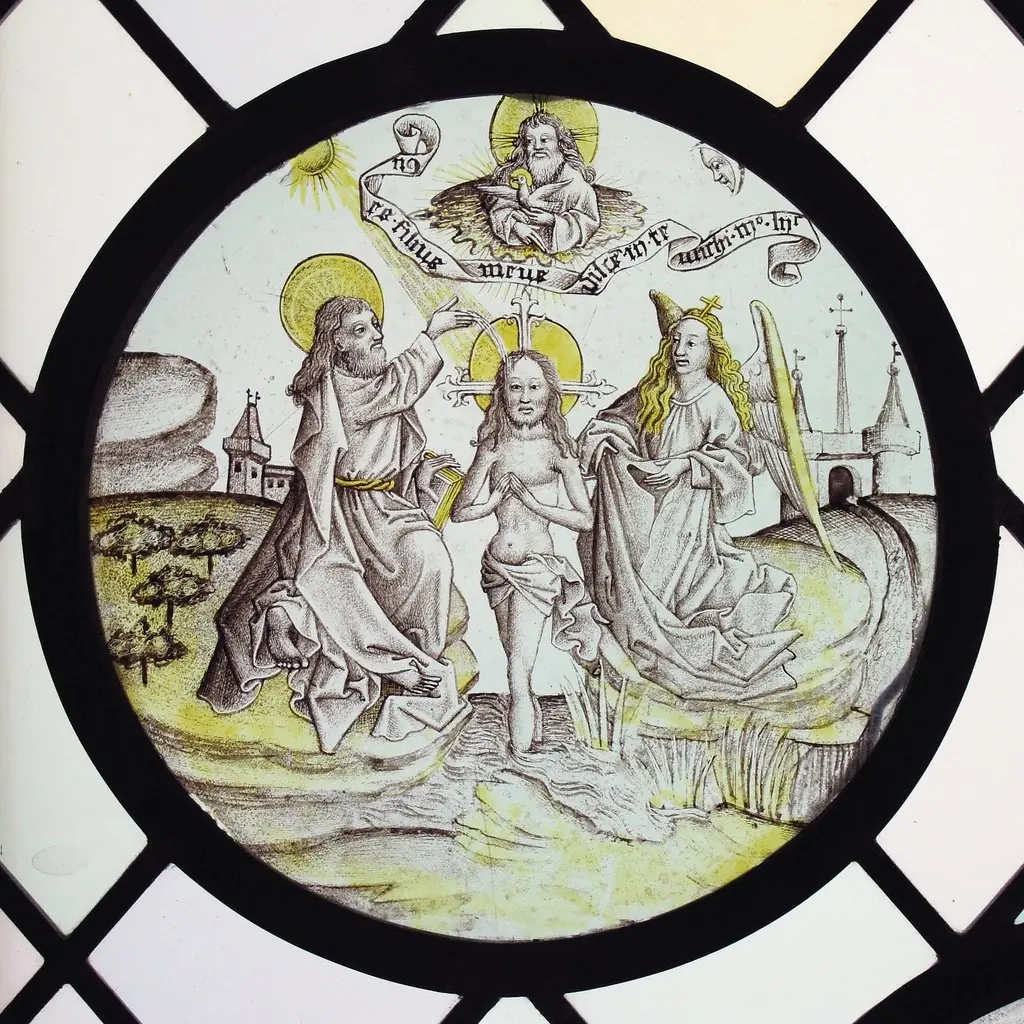 Roundel with the Baptism of Christ
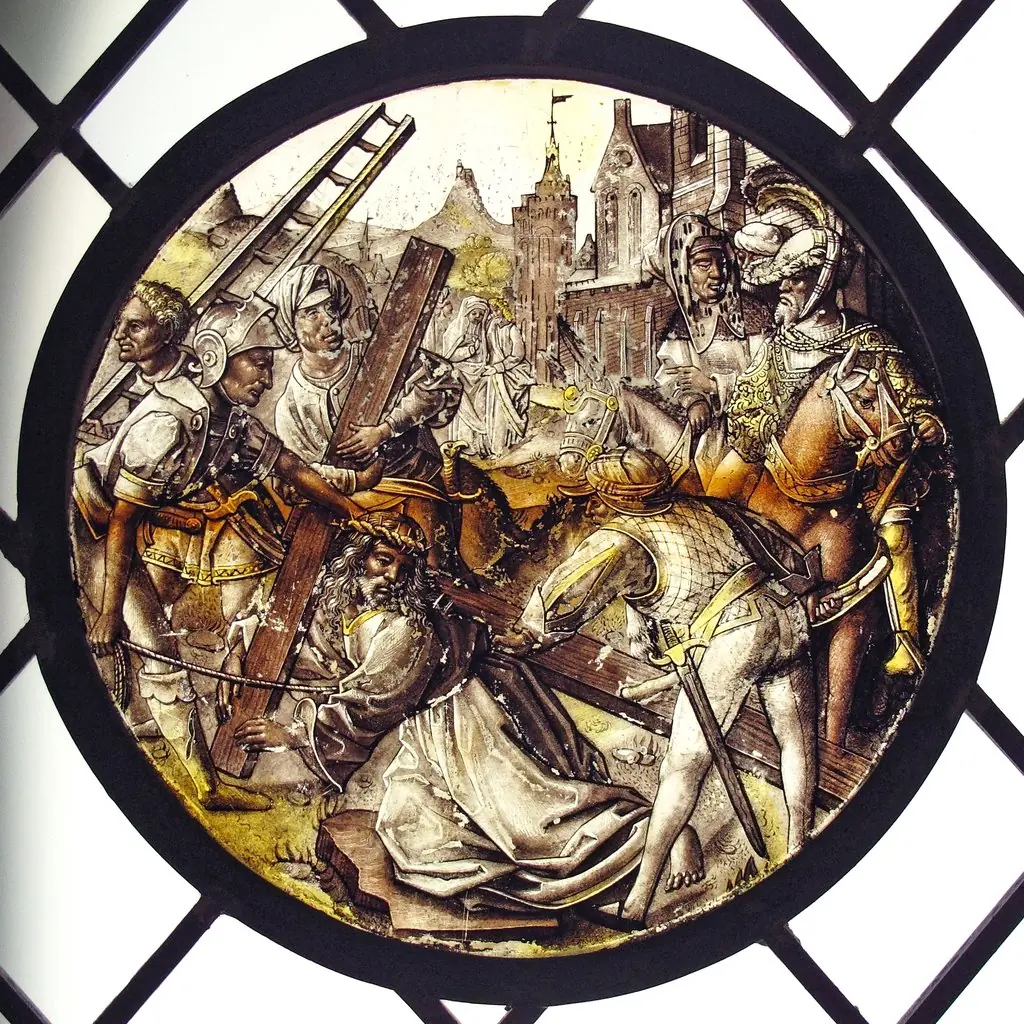 Roundel with Christ Bearing the Cross