Artwork
Roundel with Saint John on Patmos with Apocalyptic Vision
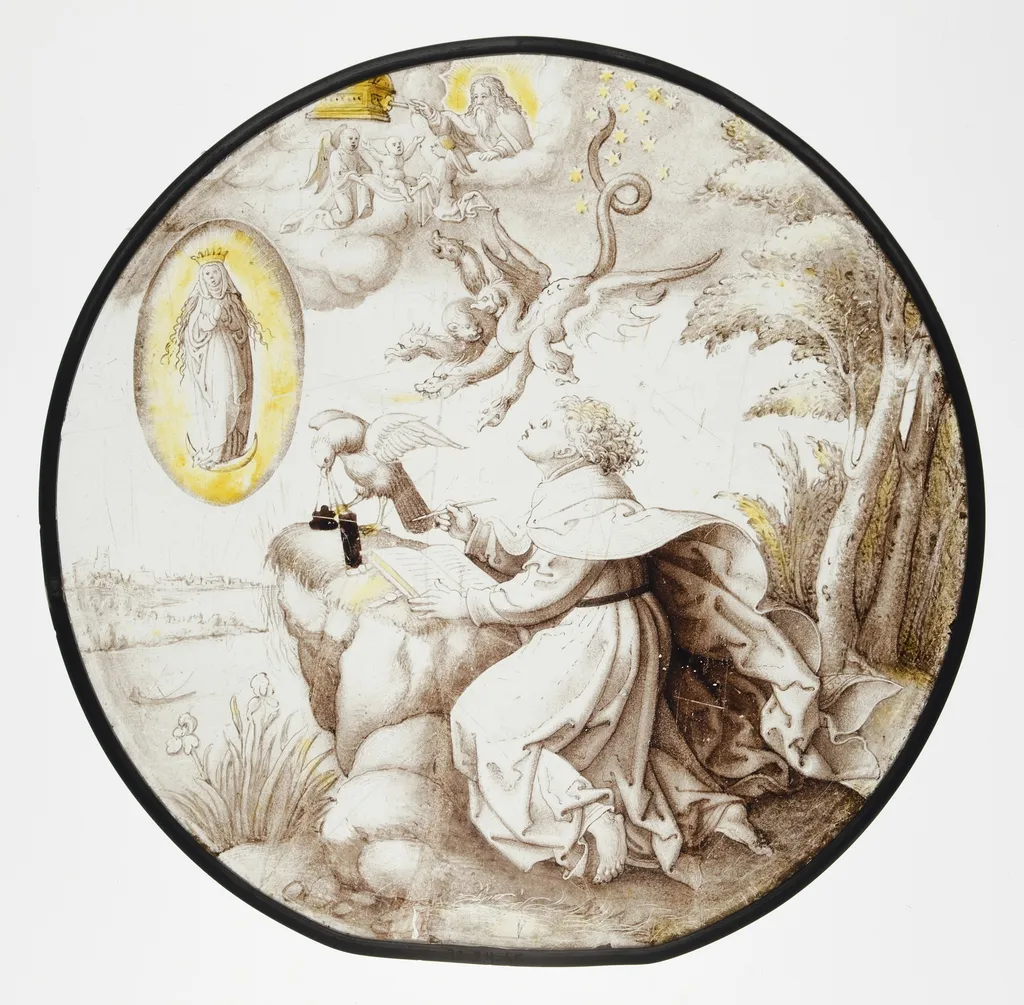
Roundel with Saint John on Patmos with Apocalyptic Vision is an unspecified painting. It dates from 1525 and is held in the collection of the Metropolitan Museum of Art. The work is a circular panel depicting a seated figure in a long robe, pen in hand, engaged in writing.
About this work
Subject & Meaning
The roundel portrays John of Patmos, the author of the Book of Revelation, receiving the apocalyptic vision on the island of Patmos.
The roundel portrays John of Patmos, the author of the Book of Revelation, receiving the apocalyptic vision on the island of Patmos. This subject draws on Christian iconography of the prophetic visionary, with the surrounding symbolic elements of the revelation underscoring themes of divine revelation and eschatological warning. The work’s meaning is rooted in the late medieval tradition of visualizing prophetic texts, using the saint’s contemplative pose and the surrounding apocalyptic imagery to convey spiritual revelation and moral admonition.
History & Provenance
The roundel was created around 1525, aligning with the early sixteenth century when Dirck Vellert and his circle produced religious panels in Antwerp.
The work entered the collection of the Metropolitan Museum of Art, where it remains held today. Its attribution to the Style of Dirck Vellert reflects the workshop practices of the period, in which multiple hands often collaborated on devotional roundels for private or civic contexts.
The roundel is held by the Metropolitan Museum of Art, which is listed as both its collection and its location. Dated to 1525, the work is catalogued as a painting attributed to the style of Dirck Vellert and depicts John of Patmos. No specific inventory or accession number, nor any exhibition history, is documented in the available sources.
Overview
The work is a circular panel depicting a seated figure in a long robe, pen in hand, engaged in writing. Above him swirl a variety of mythic beasts, including a dragon and a griffin, while a luminous female figure surrounded by a halo hovers in the upper space. The composition presents a visionary scene linked to the biblical Apocalypse.
Technique & Style
Executed in the Northern Renaissance idiom, the roundel employs detailed linear drawing and careful attention to surface texture, hallmarks of the period’s emphasis on observation and symbolic richness. The use of a circular format reinforces the meditative focus of the scene, while the intricate rendering of fantastical animals reflects the era’s fascination with naturalistic yet allegorical representation.
Context
Circular devotional images were often used in private chapels or as portable objects for personal contemplation during the late medieval to early modern transition. By integrating scriptural narrative with elaborate iconography, the piece aligns with the Northern Renaissance’s blend of theological instruction and visual complexity.
Artist & collection

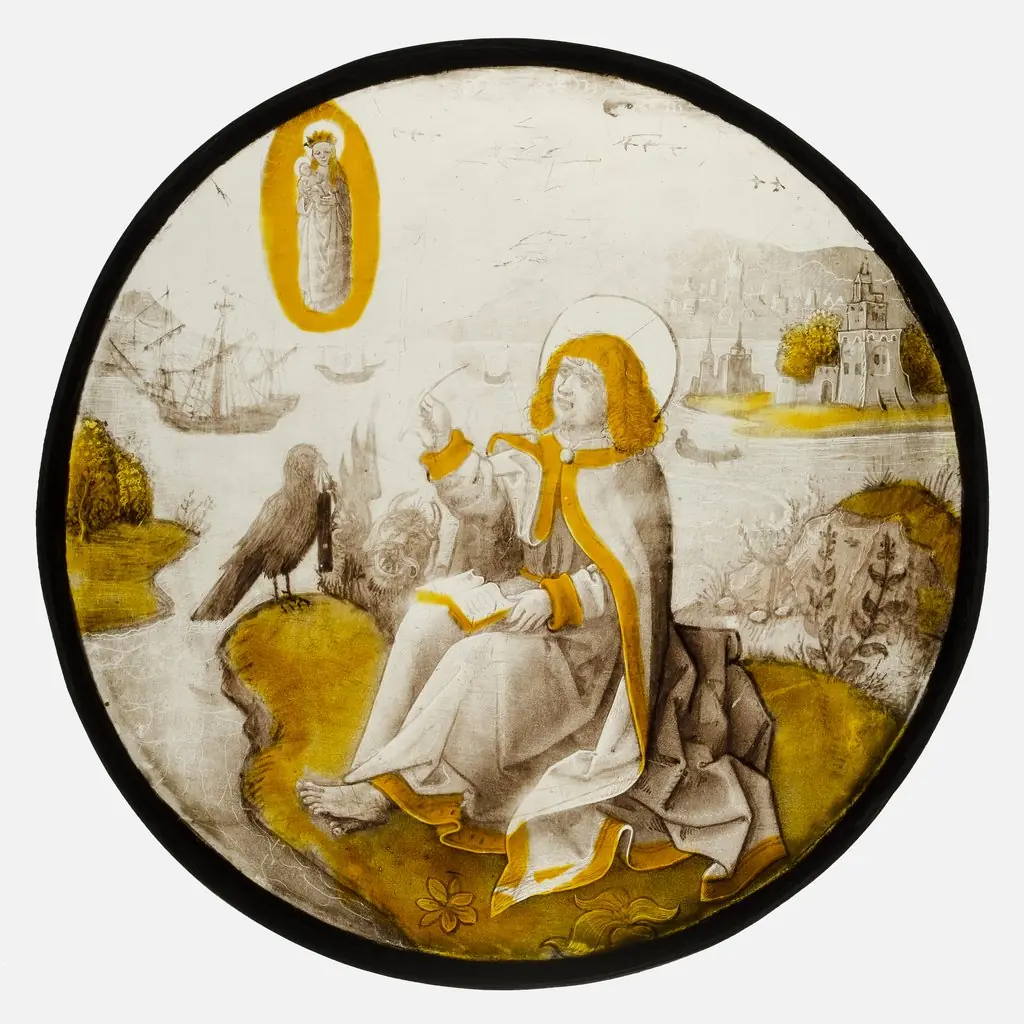
- Roundel with Saint John on Patmos
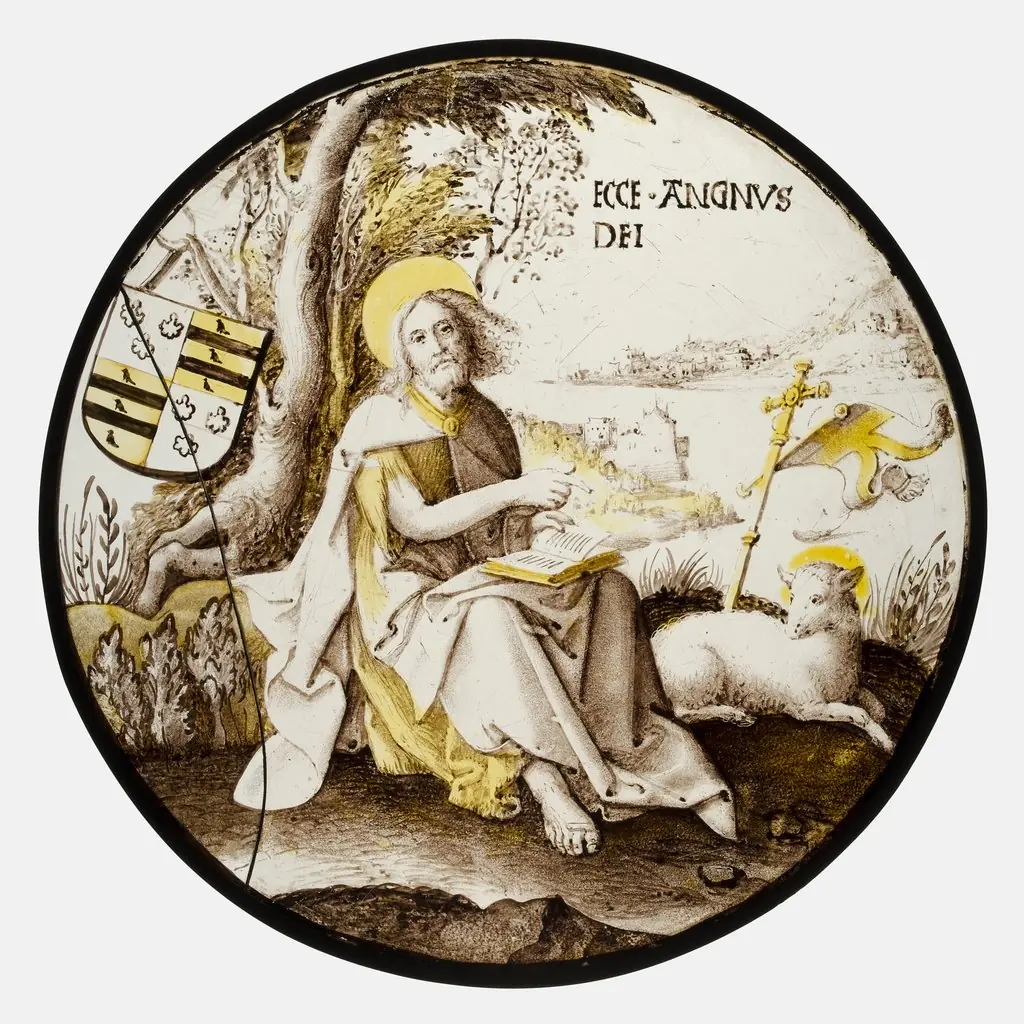 Roundel with Saint John the Baptist
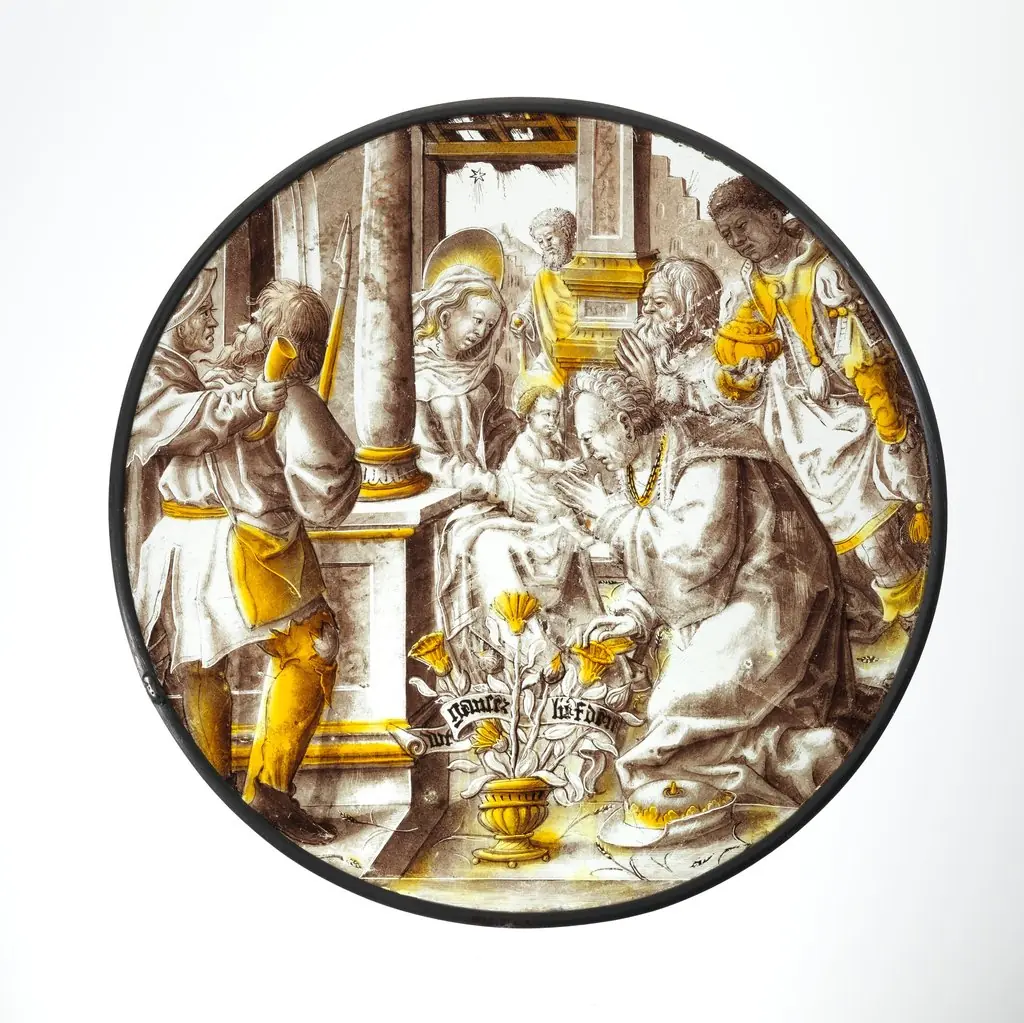 Roundel with Adoration of the Kings
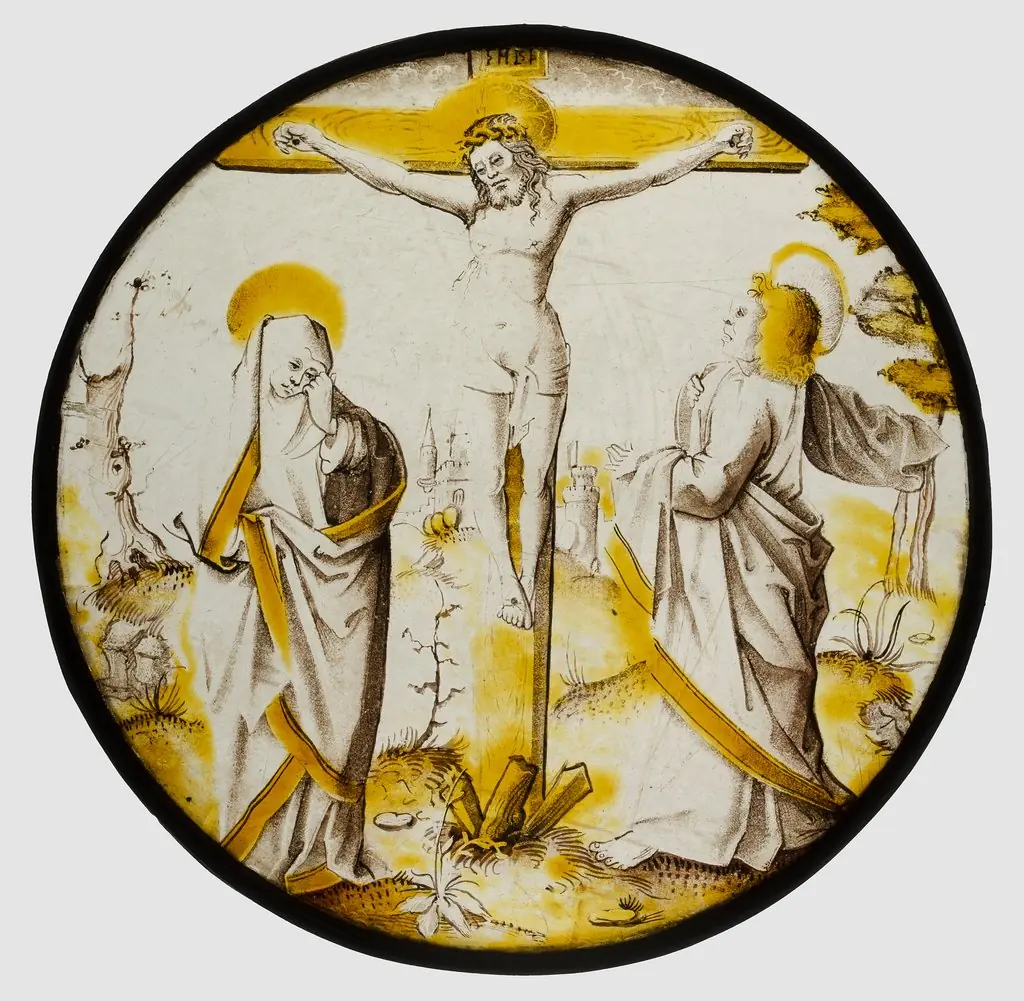 Roundel with the Crucifixion, the Virgin, and Saint John
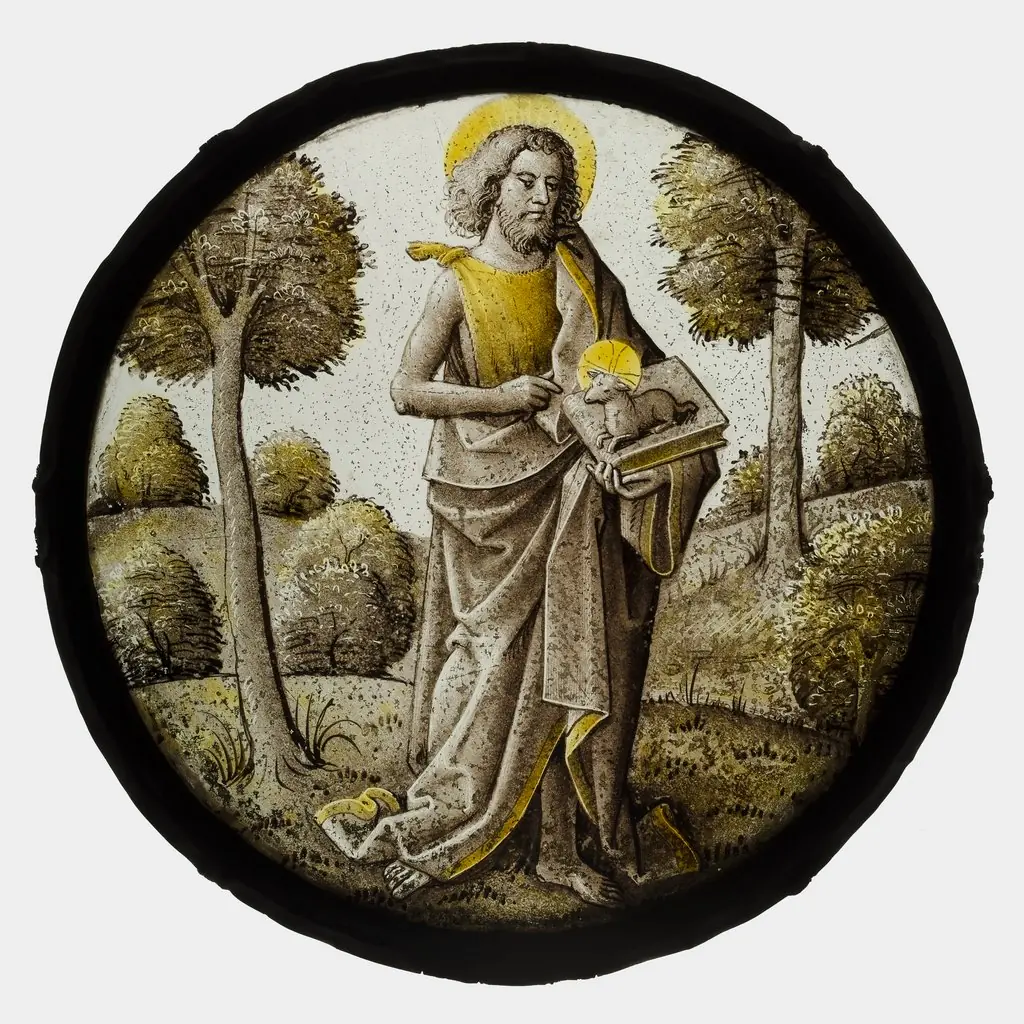 Roundel with Saint John the Baptist
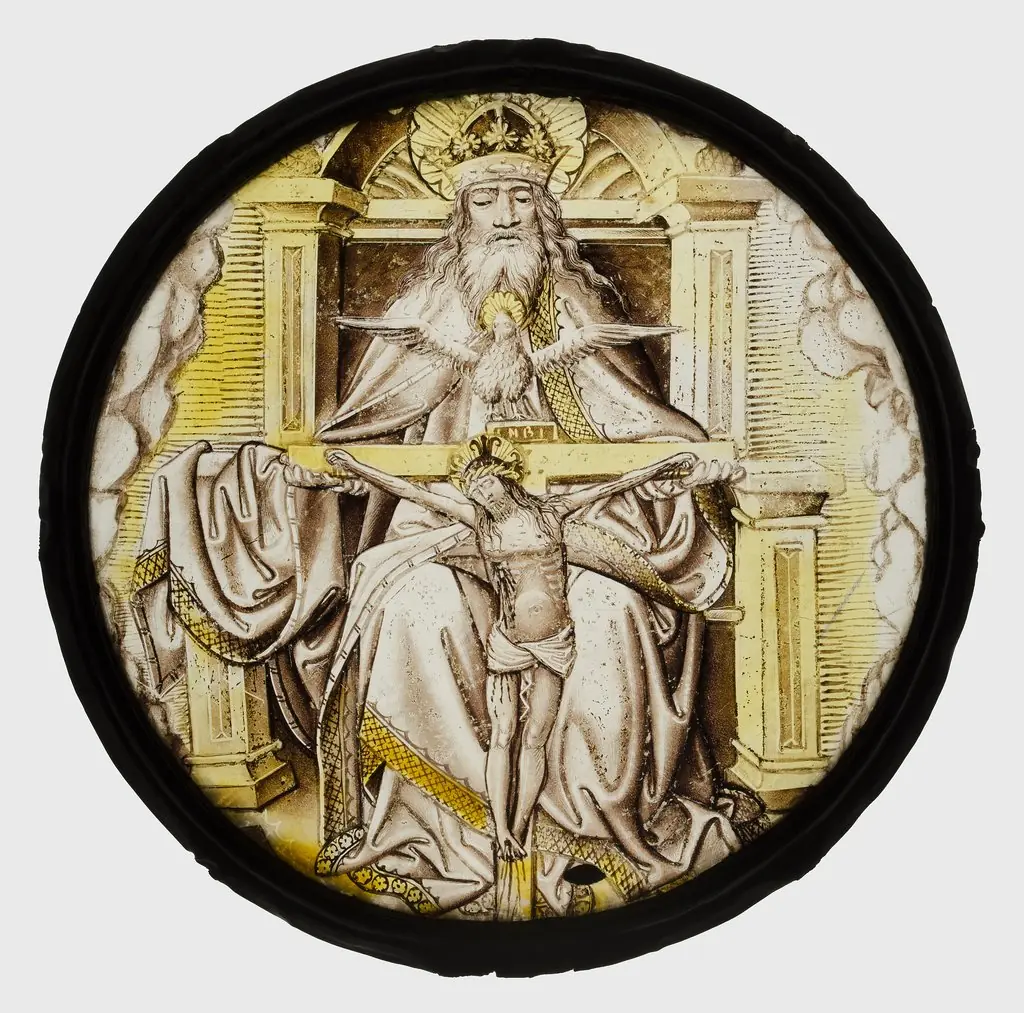 Roundel with the Holy Trinity
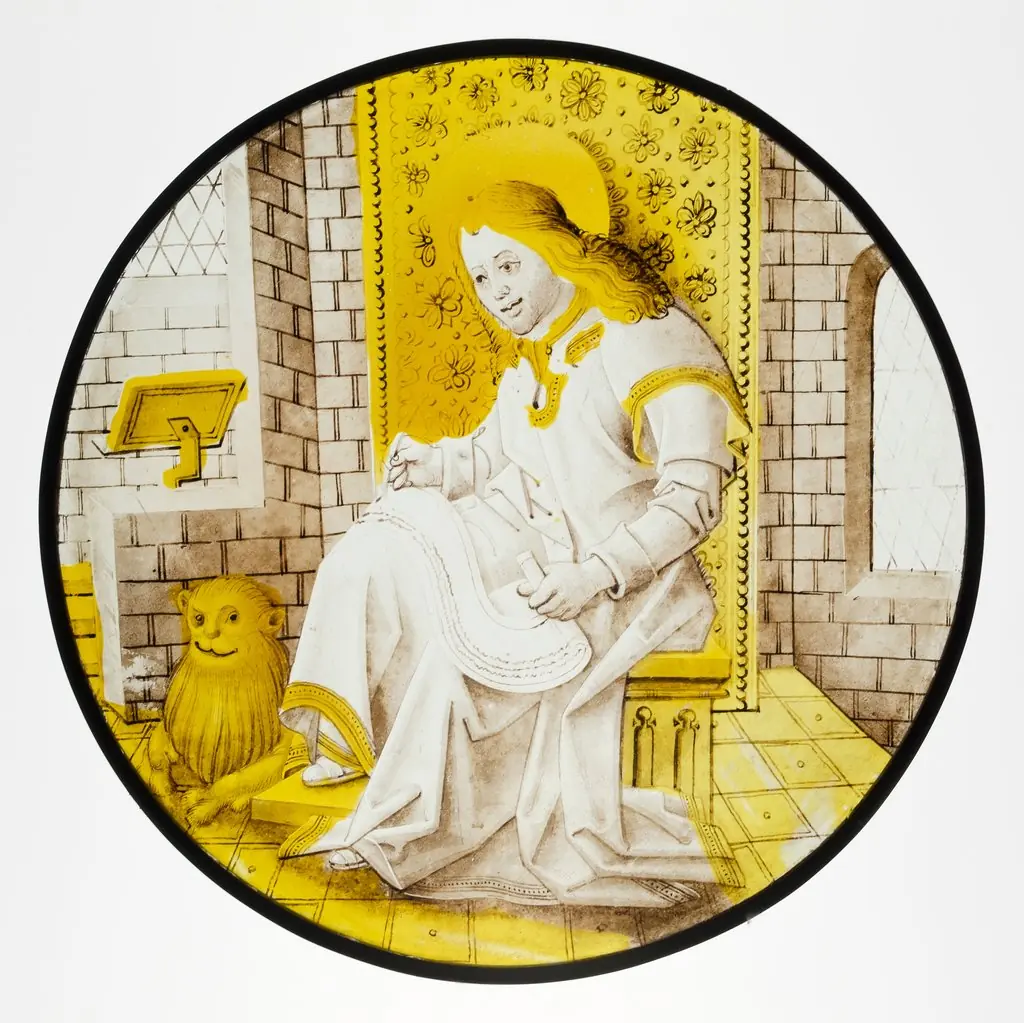 Roundel with Saint Mark
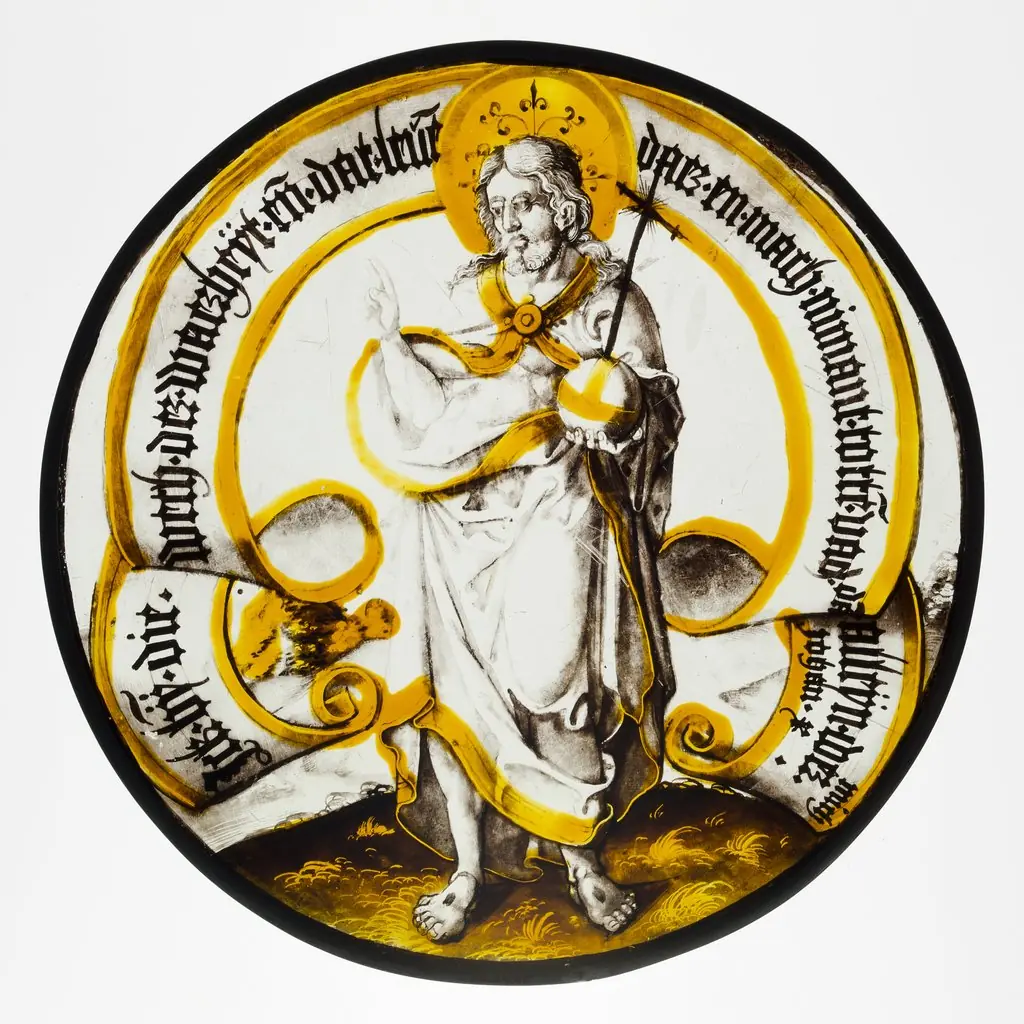 Roundel with Christ as Savior of the World
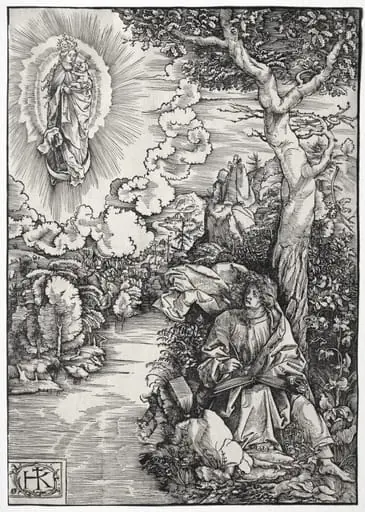 St. John on the Island of Patmos
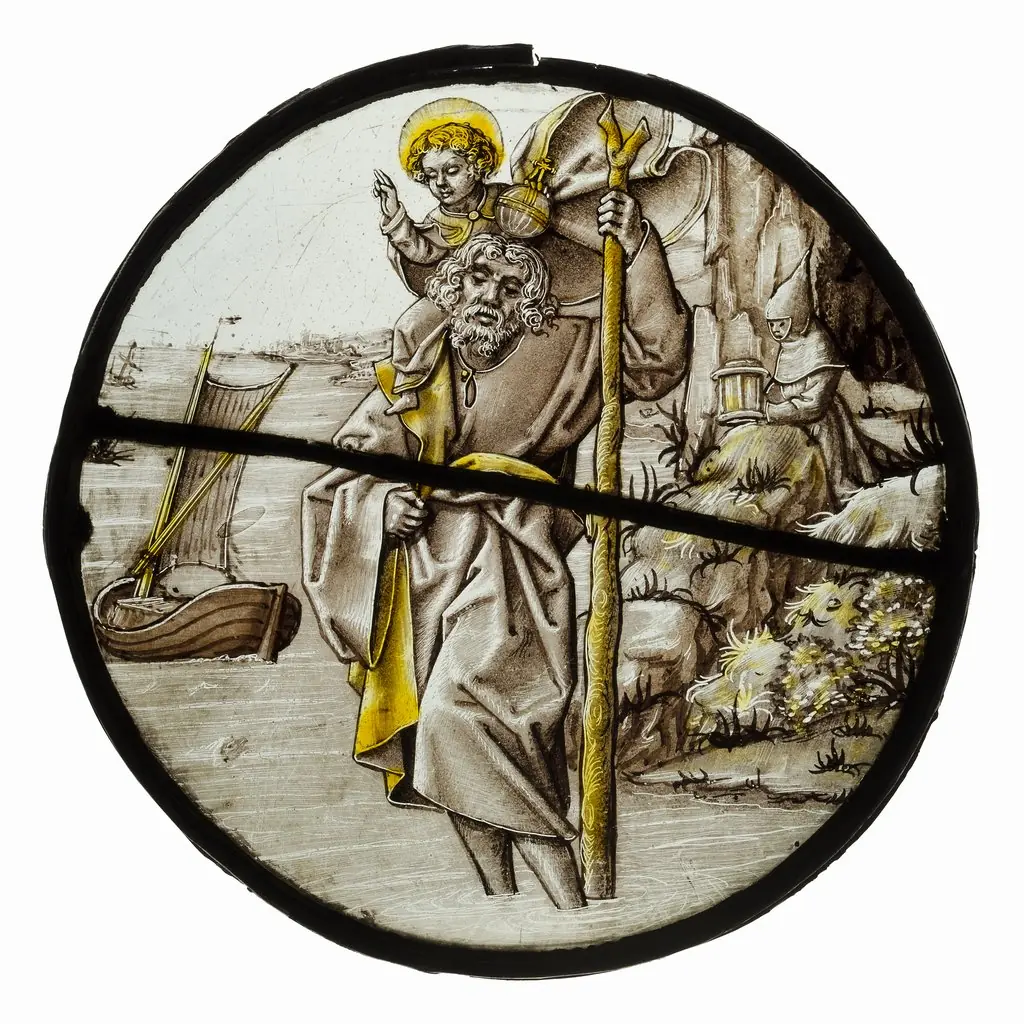 Roundel with Saint Christopher
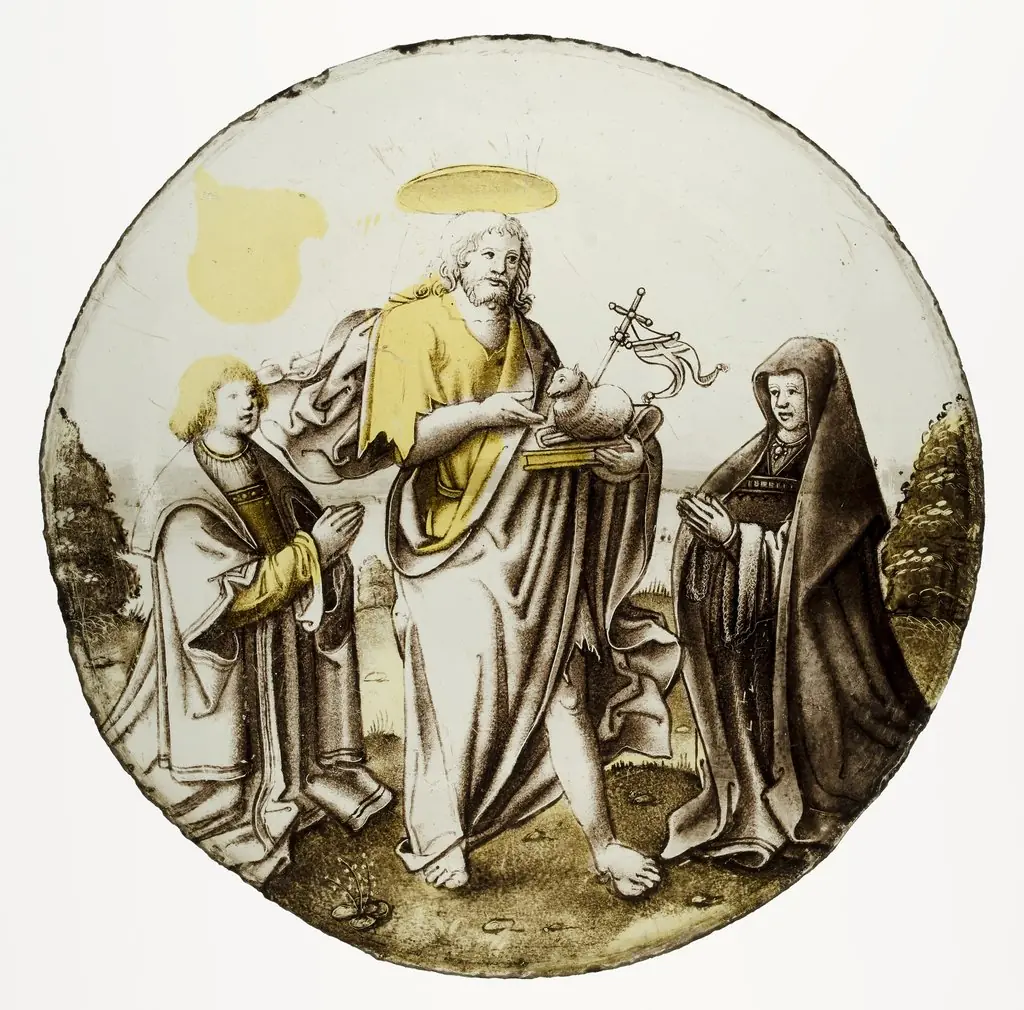 Roundel with Saint John the Baptist and Donors
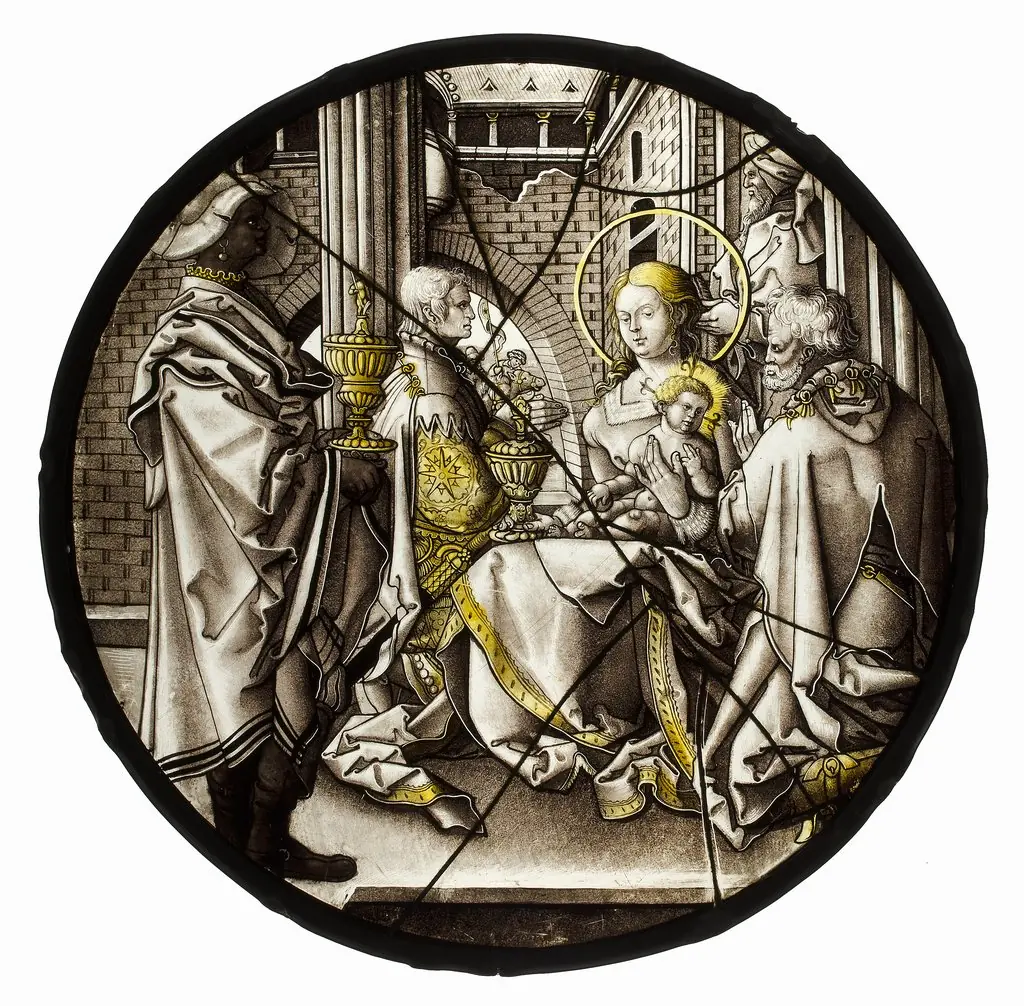 Roundel with Adoration of the Magi
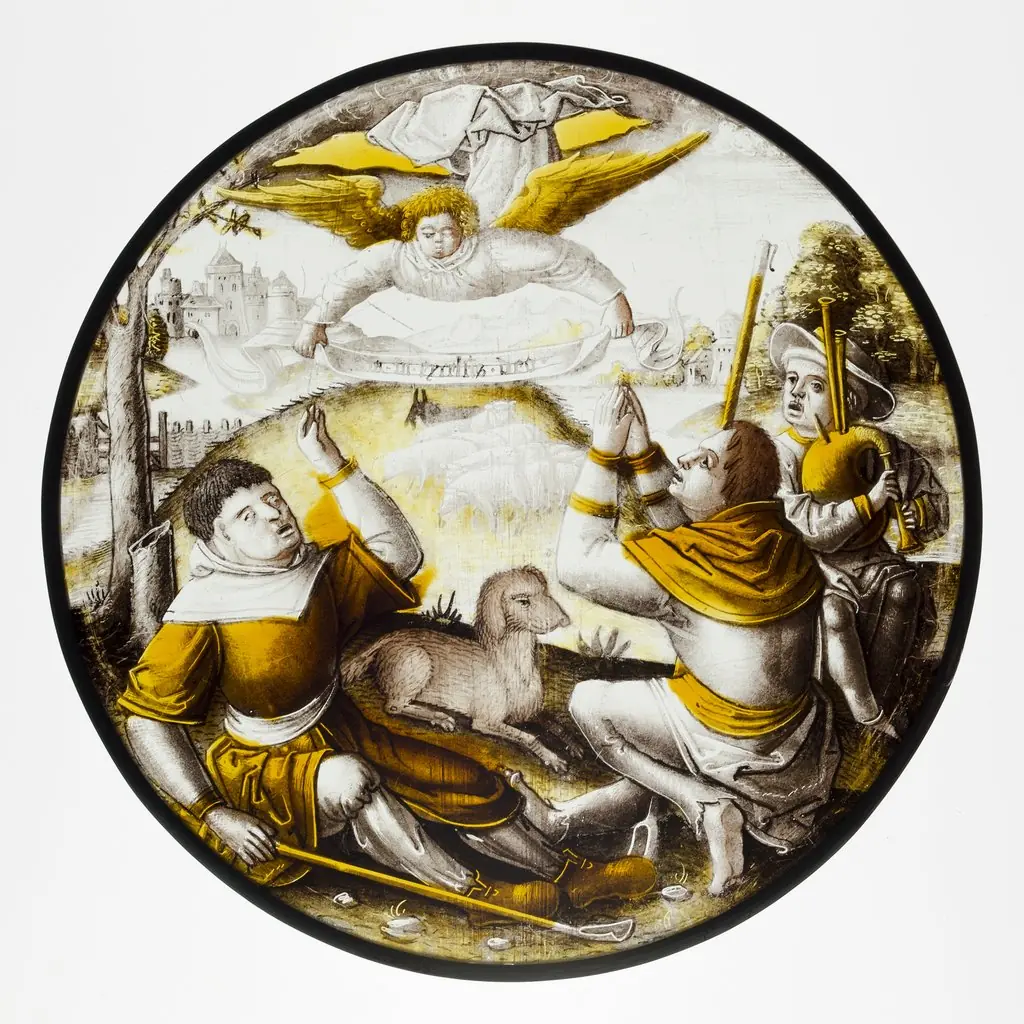 Roundel with Annunciation to the Shepherds
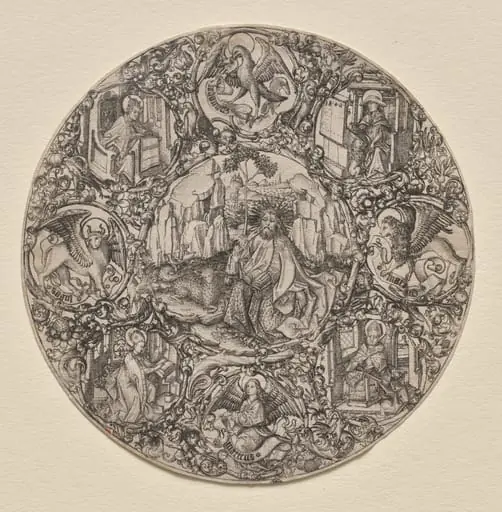 St. John the Baptist Surrounded by the Evangelists and Four Fathers of the Latin Church
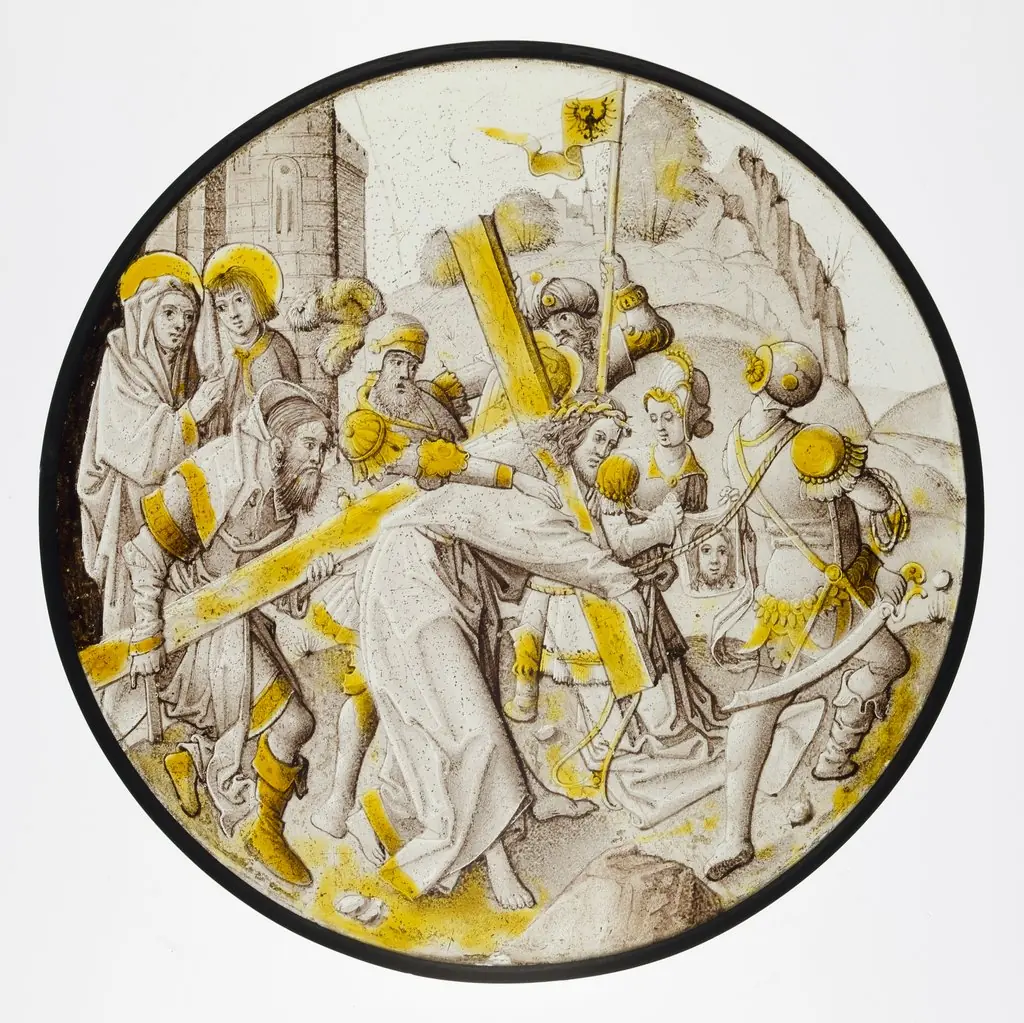 Roundel with Christ Carrying the Cross with Saint Veronica
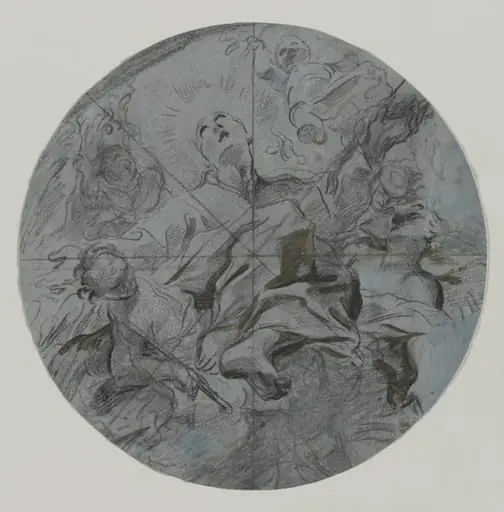 Apotheosis of a Saint (recto)
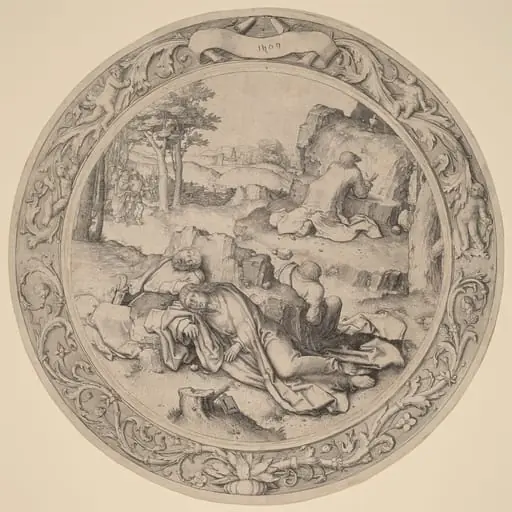 Christ in Gethsemane (Agony in the Garden)
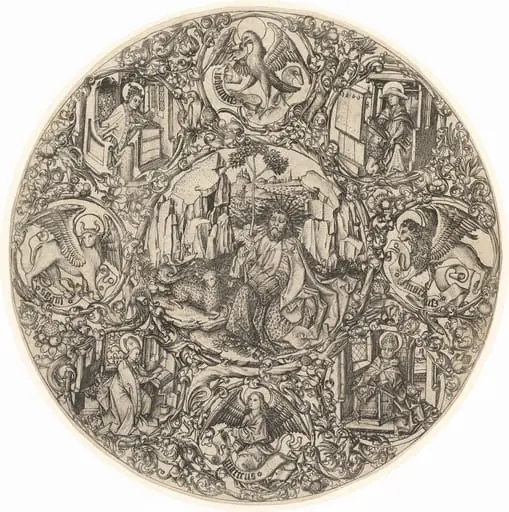 Saint John the Baptist in the Wilderness with the Lamb of God, Surrounded by the Symbols of the Evangelists and the Four Fathers of the Church
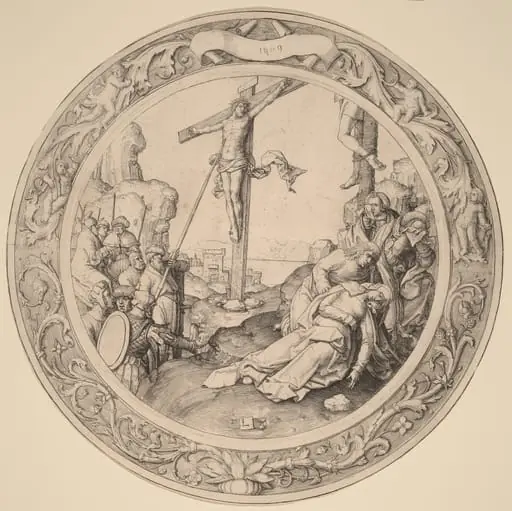 The Crucifixion
 The Round Passion: Christ Carrying the Cross
 Madonna in a Wreath of Roses