Artwork
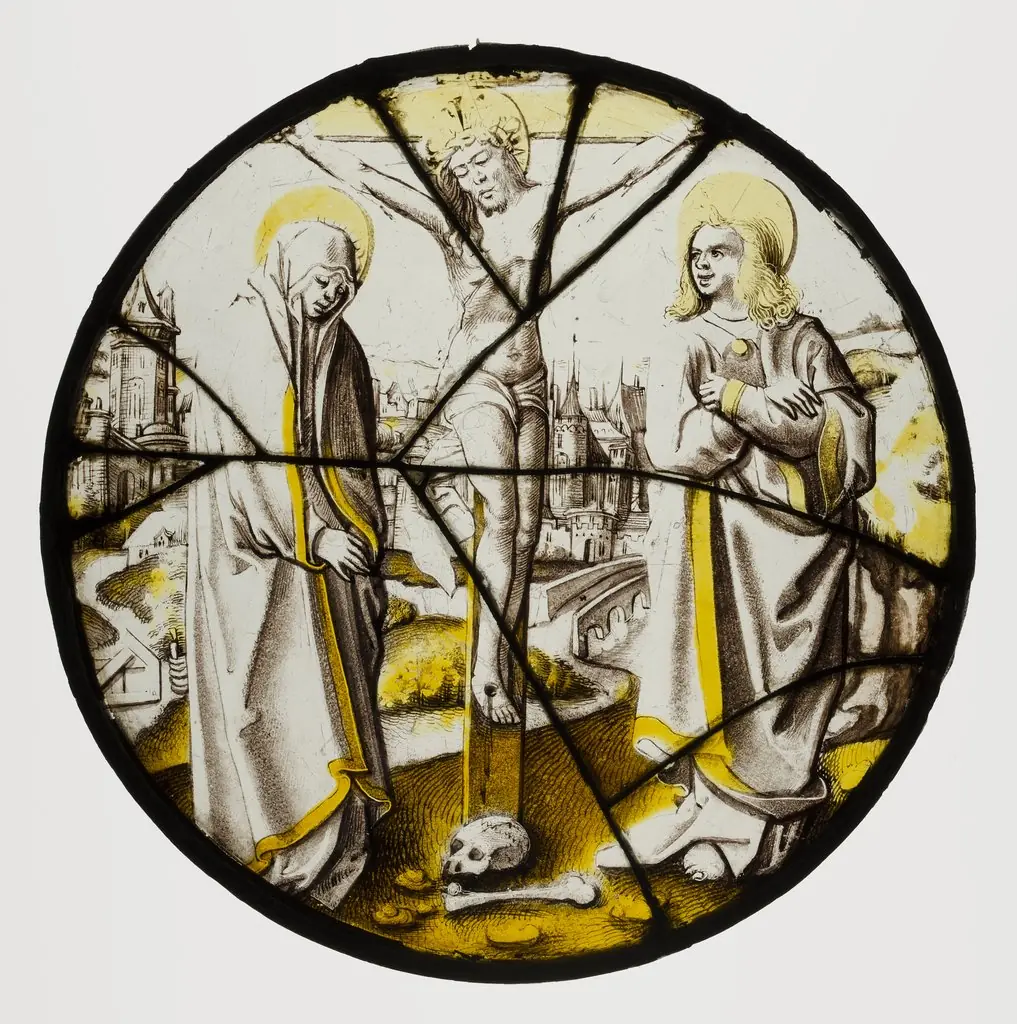
Roundel with the Crucifixion, the Virgin, and Saint John
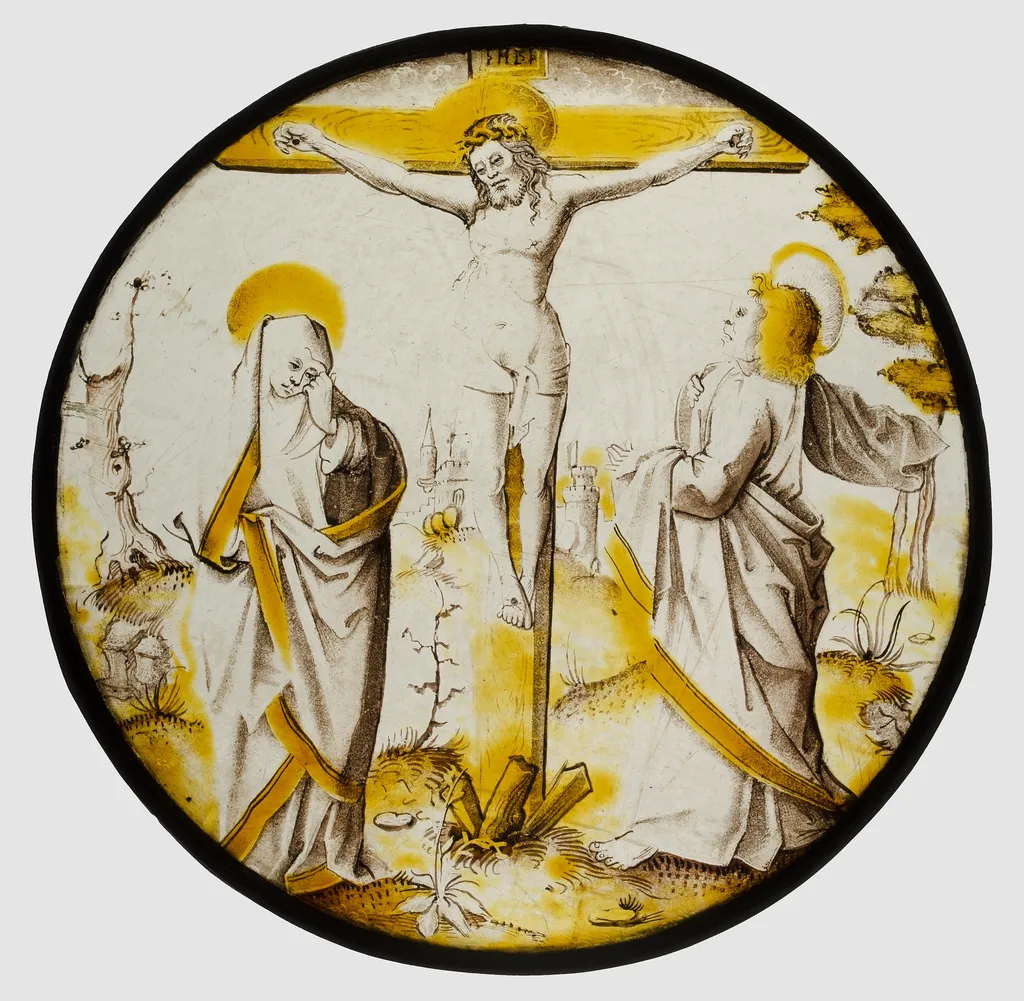
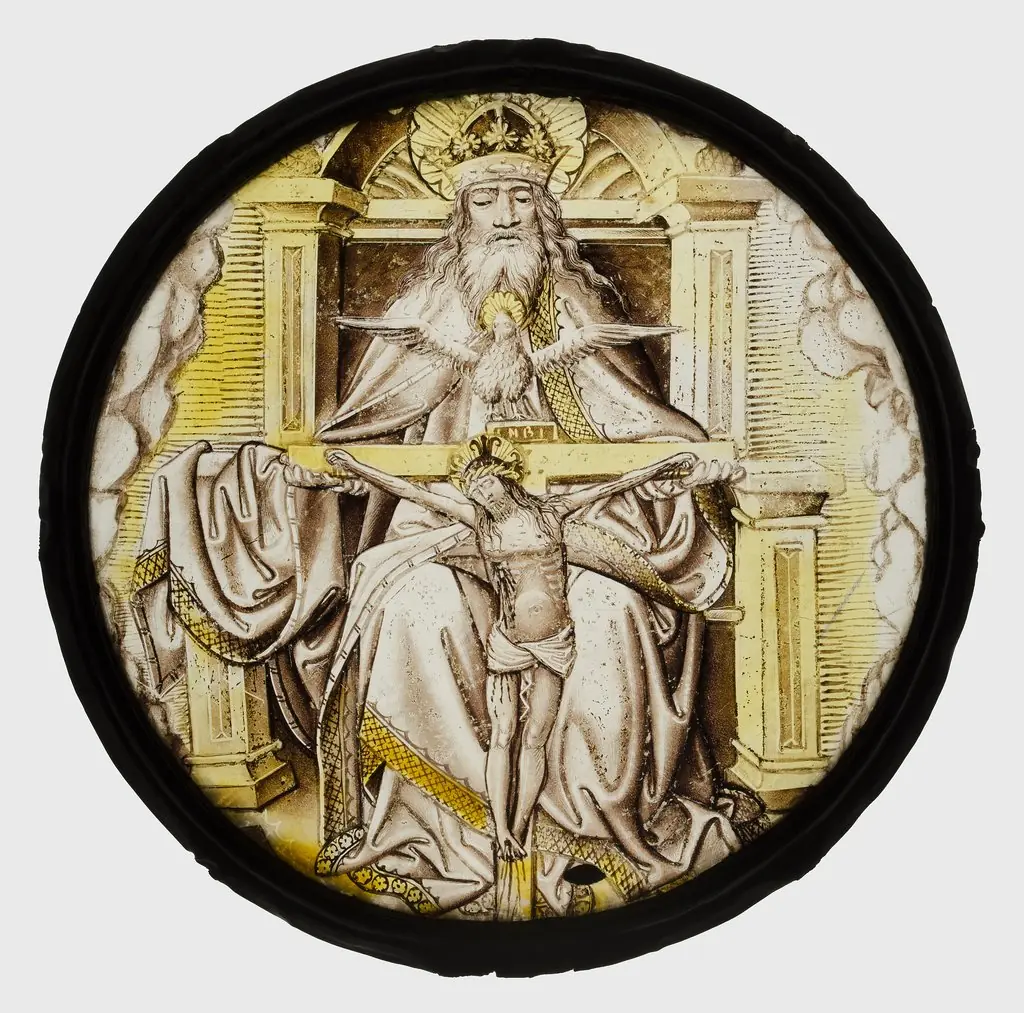
Roundel with the Crucifixion, the Virgin, and Saint John is an unspecified painting. It dates from 1525 and is held in the collection of the Metropolitan Museum of Art. This circular painting depicts the Crucifixion, a central event in Christian theology.
About this work
Subject & Meaning
The inclusion of the Virgin and John serves to emphasize the human sorrow and theological significance of the sacrifice within the Christian narrative.
The work depicts a religious scene centered on the Crucifixion, featuring the Virgin Mary and Saint John the Evangelist. As a piece of religious art created in 1525, the roundel illustrates the traditional iconography of the Passion, where the grieving figures flank the central event of Christ's death. The inclusion of the Virgin and John serves to emphasize the human sorrow and theological significance of the sacrifice within the Christian narrative.
History & Provenance
The roundel depicting the Crucifixion with the Virgin and Saint John was produced in the early sixteenth century, likely around 1525, as recorded in contemporary documentation. Its authorship is attributed to an anonymous painter, reflecting the workshop practice of the period. The work entered the collection of the Metropolitan Museum of Art, where it remains on public display, indicating a continuous ownership chain from its creation to the museum's custody.
While specific acquisition details are not documented, the painting’s religious subject and roundel format align with devotional art commissioned for private contemplation in the Renaissance context.
The roundel is held by the Metropolitan Museum of Art, New York, where it is recorded as accession number 1975.1.120.
It has been exhibited once in modern times: in 1975 the Museum included the roundel in the exhibition “The Italian Paintings before 1800,” held at its main building on Fifth Avenue.
Overview
This circular painting depicts the Crucifixion, a central event in Christian theology. At its core, a figure is affixed to a cross, flanked by two standing individuals below. The composition is characterized by a predominantly gold background, which serves to highlight the central figures. The artwork employs a restrained palette of browns, yellows, and whites, contributing to its overall visual impact.
Technique & Style
Rendered in a round format, the painting utilizes a striking gold background that causes the depicted figures to emerge distinctly. This luminous backdrop is subtly detailed with faint clouds and minor figures in the corners, adding depth without distracting from the main subject. The artist employs a limited color scheme of browns, yellows, and whites, and the slightly softened, blurred edges of the forms contribute to a sense of ethereal quality rather than sharp realism.
Artist & collection

- Roundel with the Crucifixion, the Virgin, and Saint John
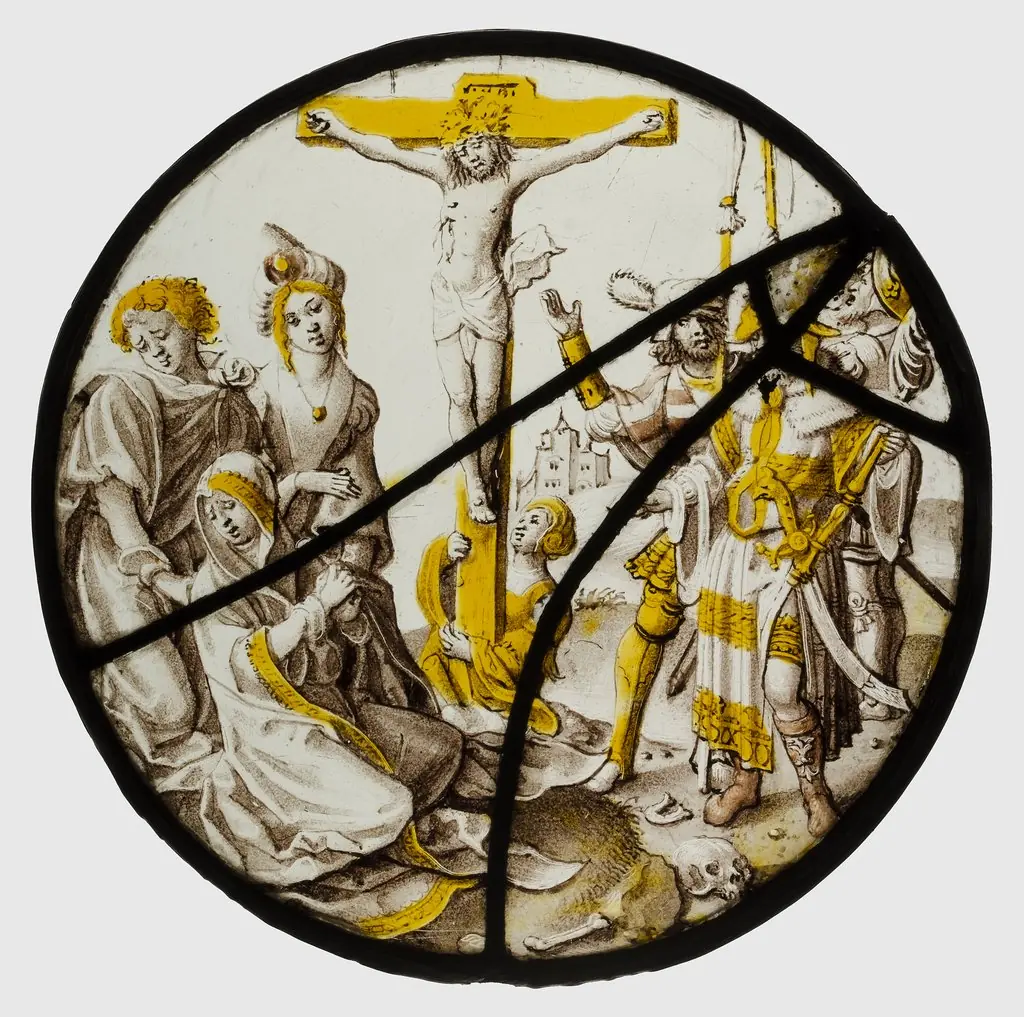 Roundel with the Crucifixion
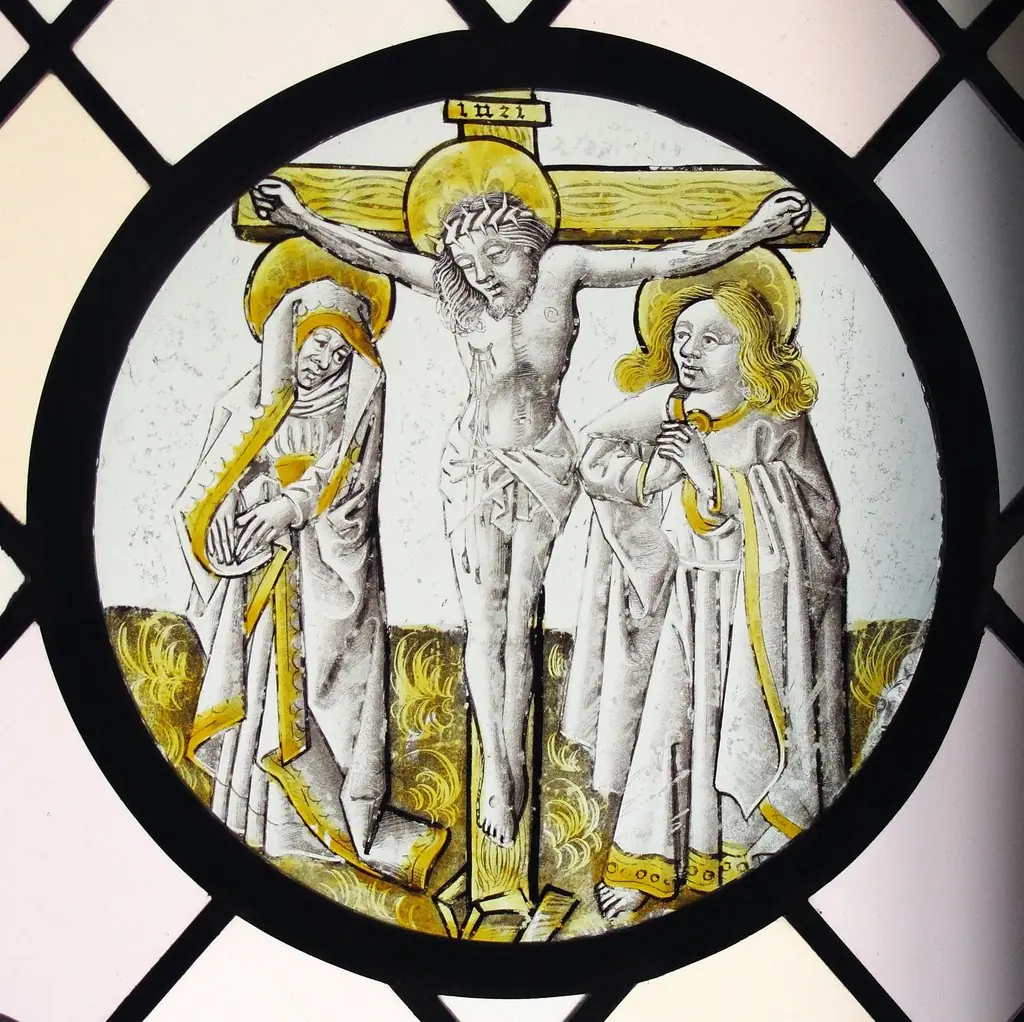 Roundel with Crucifixion, the Virgin and Saint John
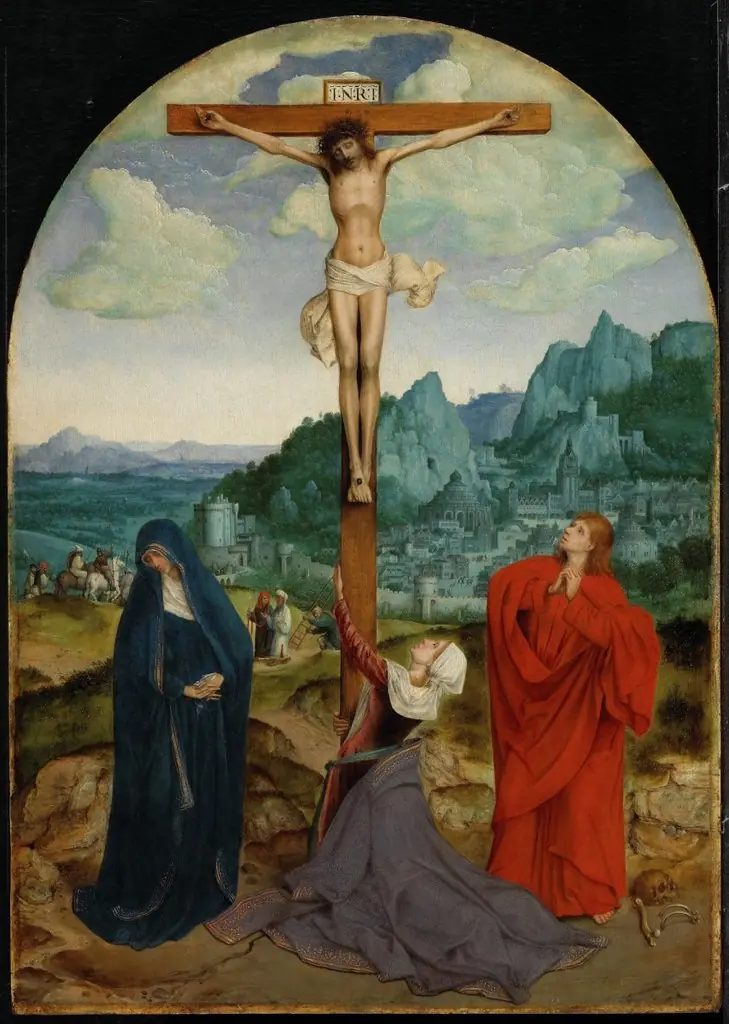 Crucifixion, with the Virgin and Saint John
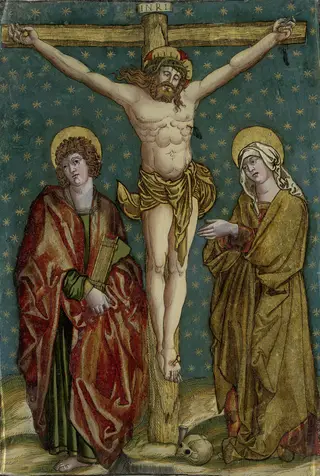 Crucifixion of Christ, with the Virgin and St John
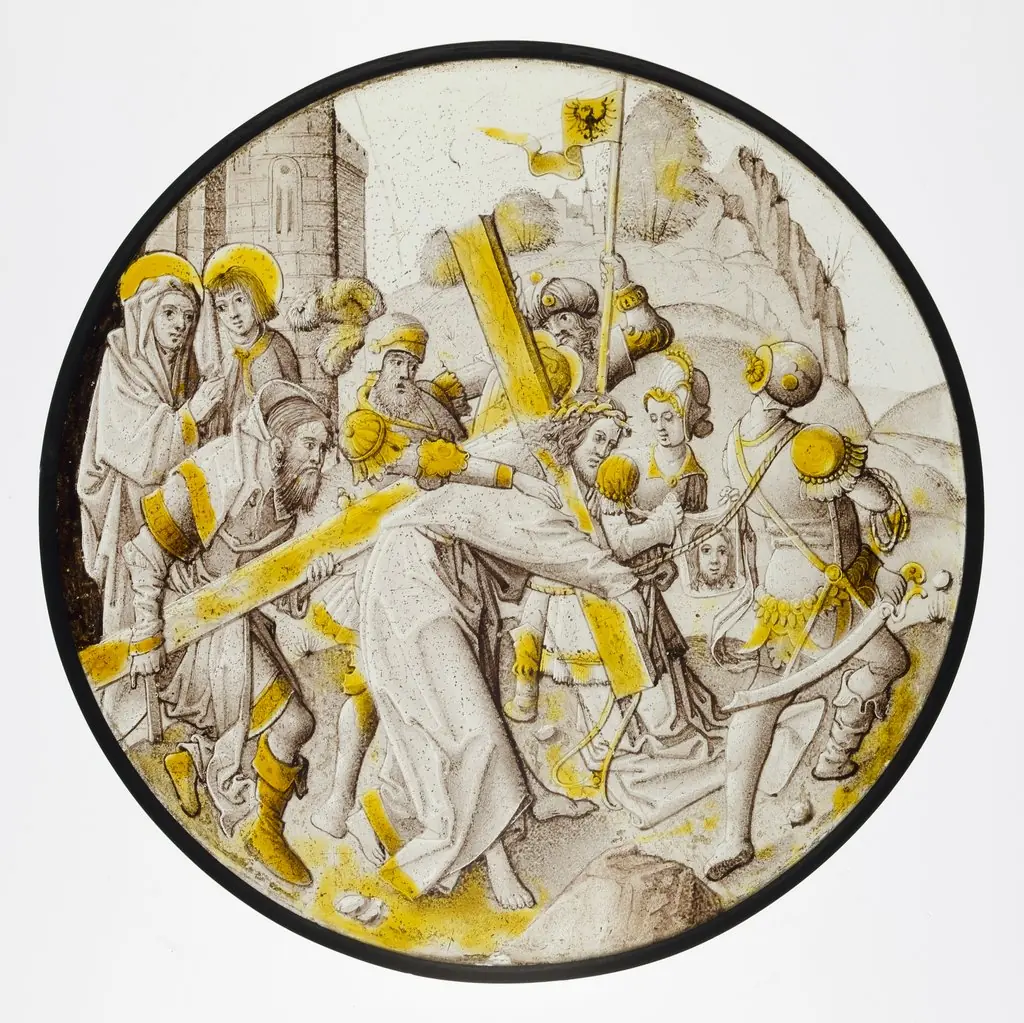 Roundel with Christ Carrying the Cross with Saint Veronica
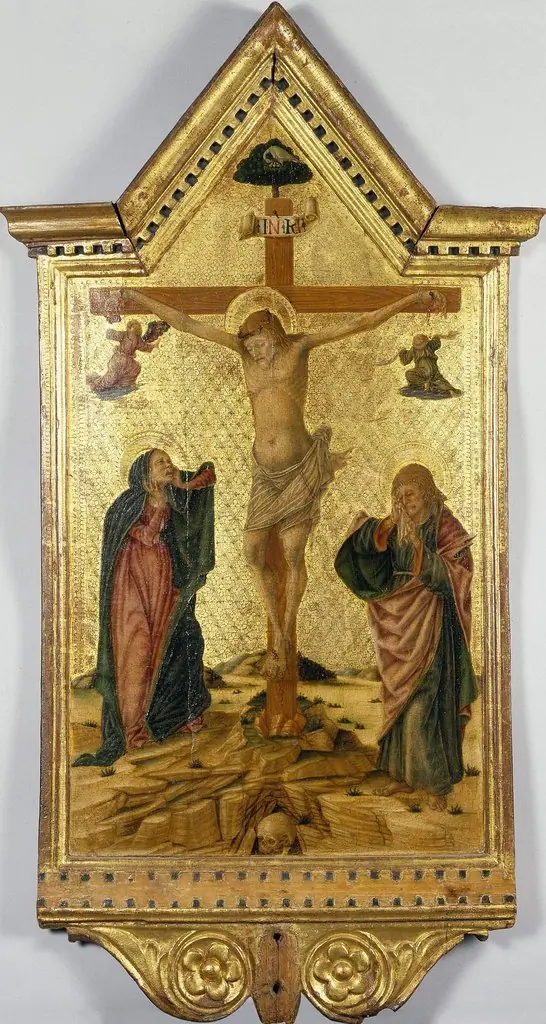 Crucifixion with the Virgin and St John
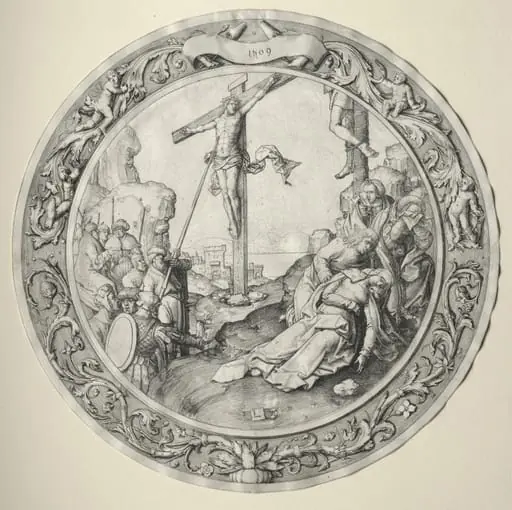 The Round Passion: The Crucifixion
 Roundel with the Holy Trinity