Artwork
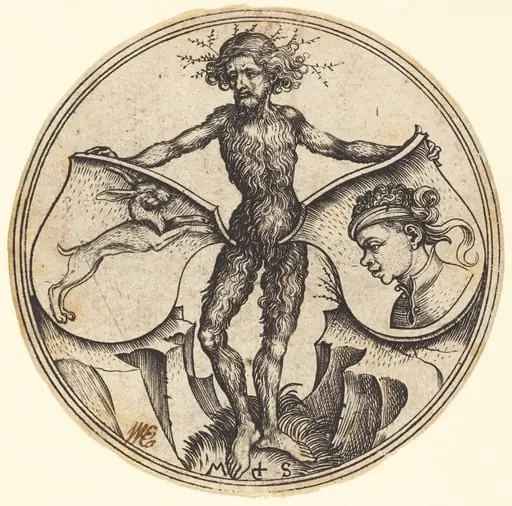
Roundel with Wild Man Supporting a Heraldic Shield
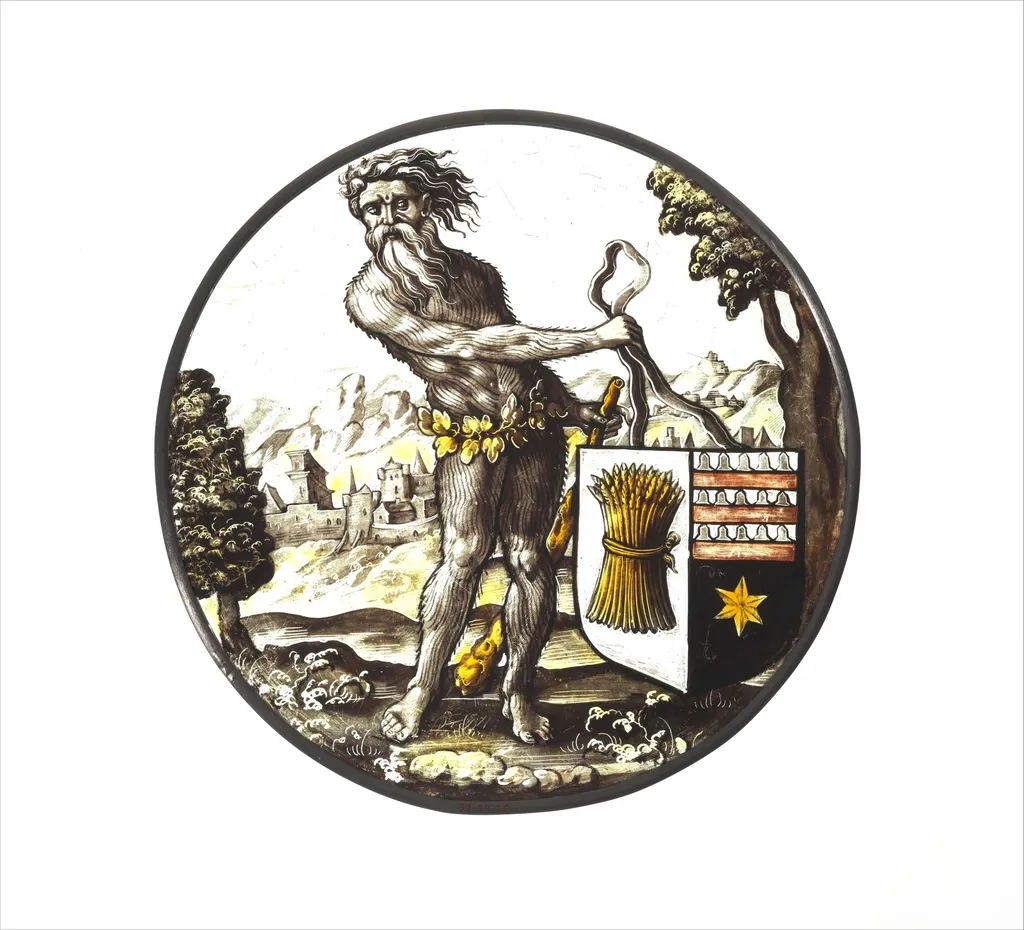
Roundel with Wild Man Supporting a Heraldic Shield is an unspecified painting. It dates from 1520 and is held in the collection of the Metropolitan Museum of Art. The work is a circular panel depicting a wild‑haired figure standing amid a forested landscape.
About this work
Subject & Meaning
The shield’s heraldic bearings likely reference a specific family or virtue, reinforcing the work’s function as a symbolic emblem rather than a narrative scene.
The roundel portrays a wild man bearing a heraldic shield, a figure drawn from medieval folklore and emblematic of untamed strength or primal force. In the context of early sixteenth‑century European art, such personifications often served allegorical purposes, embodying qualities like vigor, protection, or moral ambiguity. The shield’s heraldic bearings likely reference a specific family or virtue, reinforcing the work’s function as a symbolic emblem rather than a narrative scene.
History & Provenance
The roundel with a wild man supporting a heraldic shield is part of the Metropolitan Museum of Art's collection, where it is catalogued under an accession number that identifies it within the museum's holdings. Its provenance traces back to its creation in 1520, and it has been featured in exhibitions that highlight early Netherlandish painting and related works.
Context
The roundel depicting a wild man bearing a heraldic shield was created in 1520 and is classified as a painting. It is attributed to an anonymous artist and is part of the Metropolitan Museum of Art's collection, reflecting the thematic interest in mythical figures during the early 16th century. Scholarly discussions highlight its role in illustrating the period's fascination with allegorical and heraldic imagery, situating it within broader Renaissance artistic practices concerning symbolic representation and narrative composition.
The work's composition and stylistic elements have been analyzed in relation to contemporary decorative arts, emphasizing its significance in understanding the visual culture of the era.
Overview
The work is a circular panel depicting a wild‑haired figure standing amid a forested landscape. He clutches a bundle of wheat in one hand and a staff in the other, while a modest town with towers rises on a hill behind him. To his right a solitary tree bears golden fruit, and a heraldic shield bearing a star and striped pattern rests at his side.
Technique & Style
The artist employs chiaroscuro to accentuate the figure’s dark visage against a luminous background, creating a dramatic contrast that emphasizes volume and three‑dimensionality. The round format focuses attention on the central figure, and the composition balances detailed natural elements with stylized architectural forms, reflecting a synthesis of Northern Renaissance realism and decorative heraldic tradition.
Artist & collection

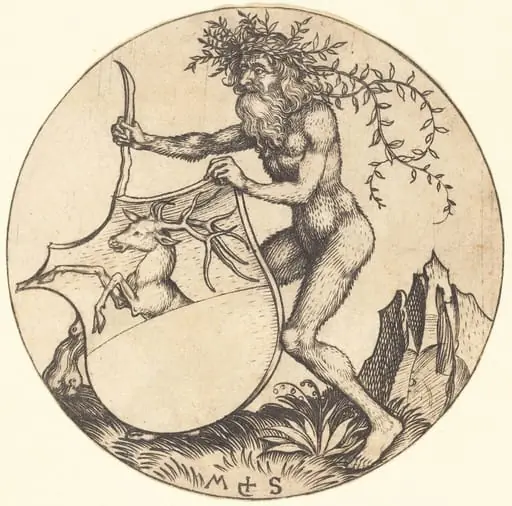
- Shield with Stag, Held by Wild Man
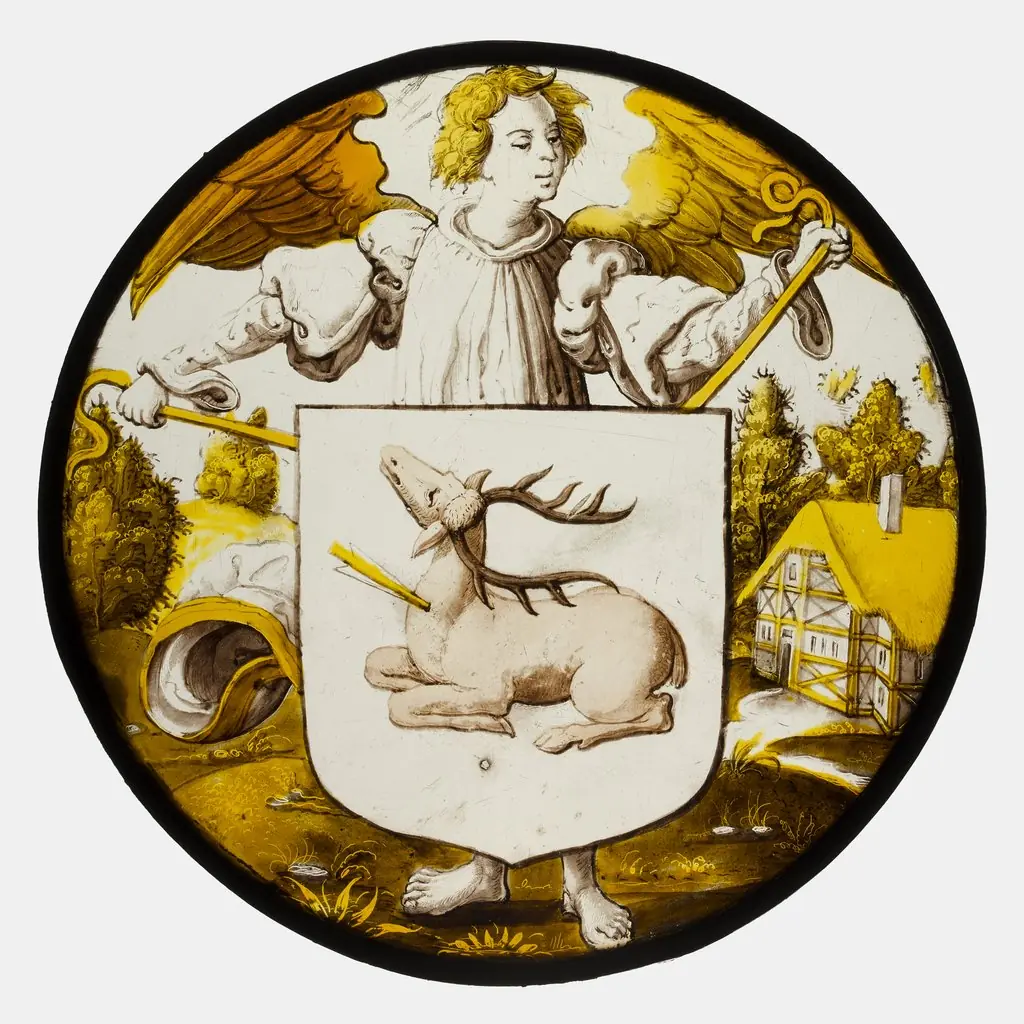 Roundel with Angel Supporting a Heraldic Shield
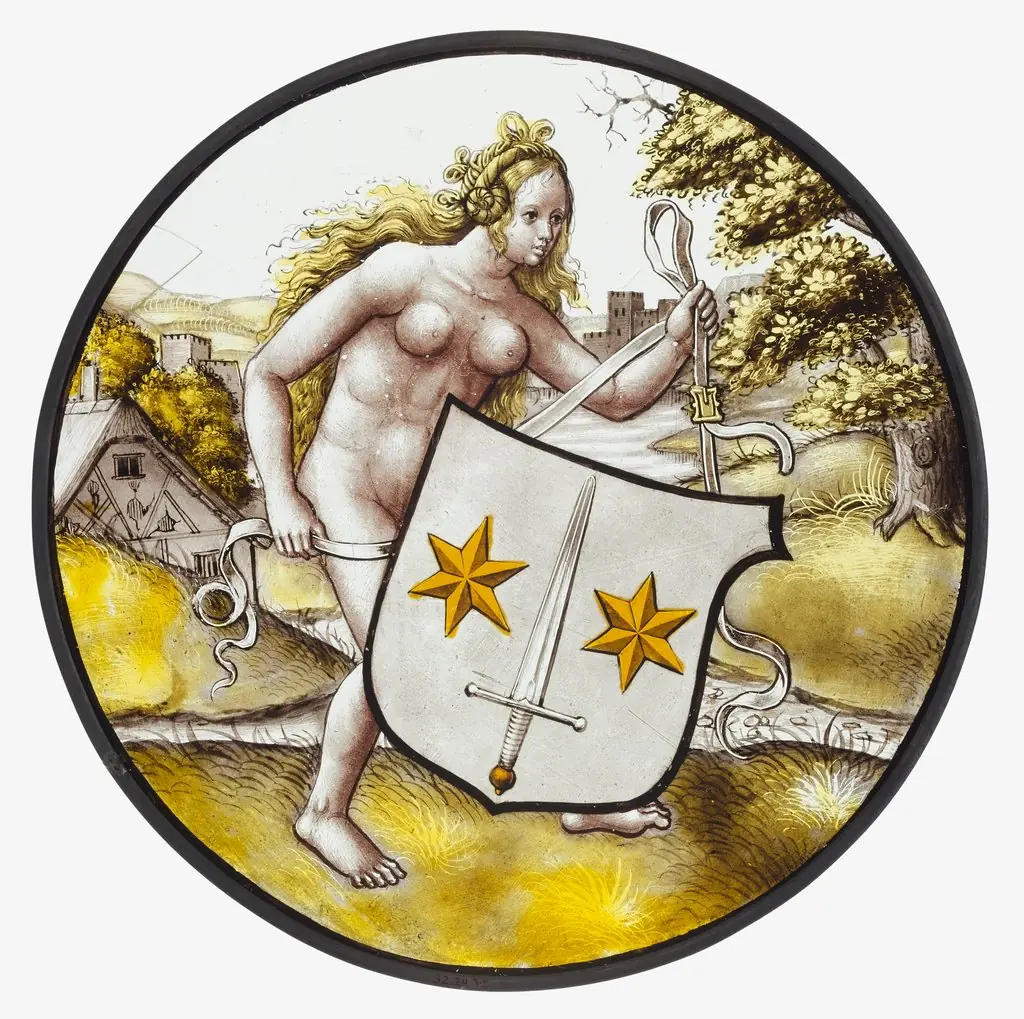 Roundel with Nude Woman Supporting a Heraldic Shield
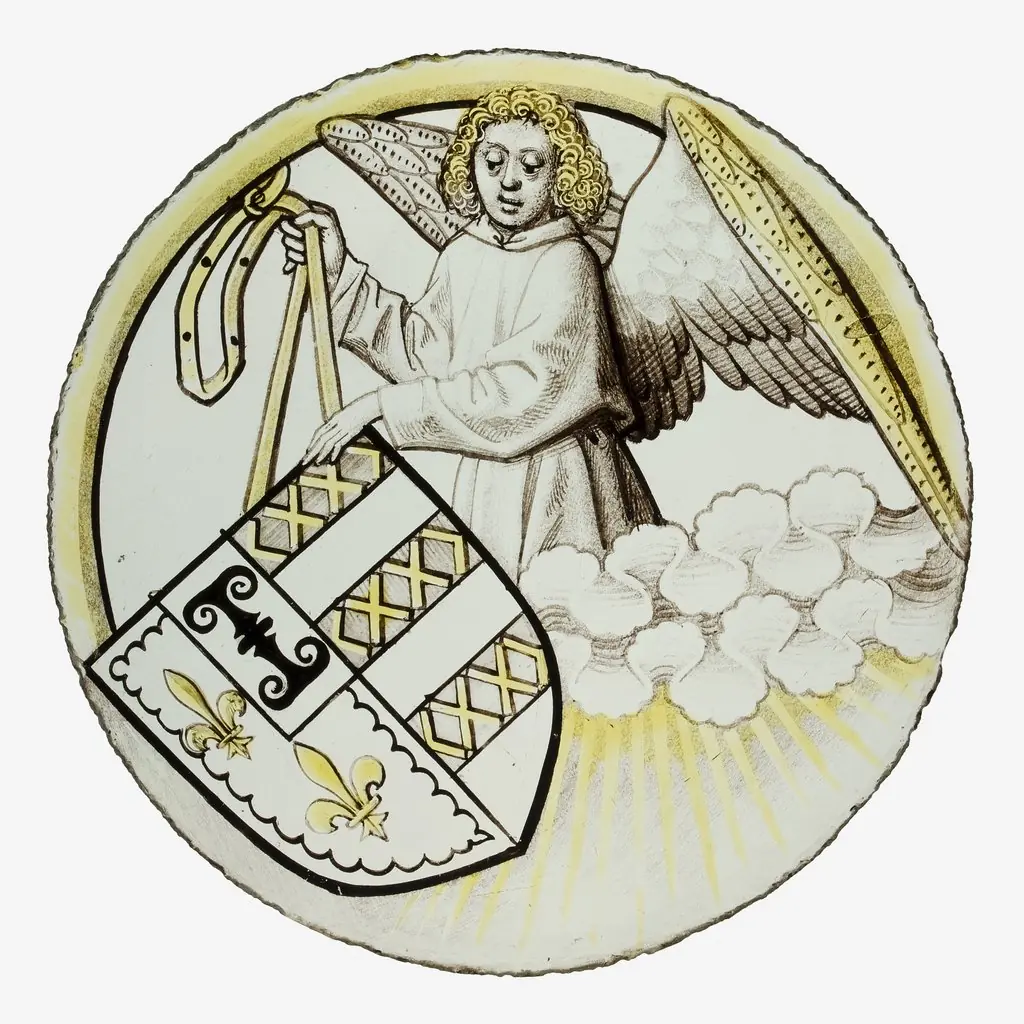 Roundel with Angel Supporting a Heraldic Shield
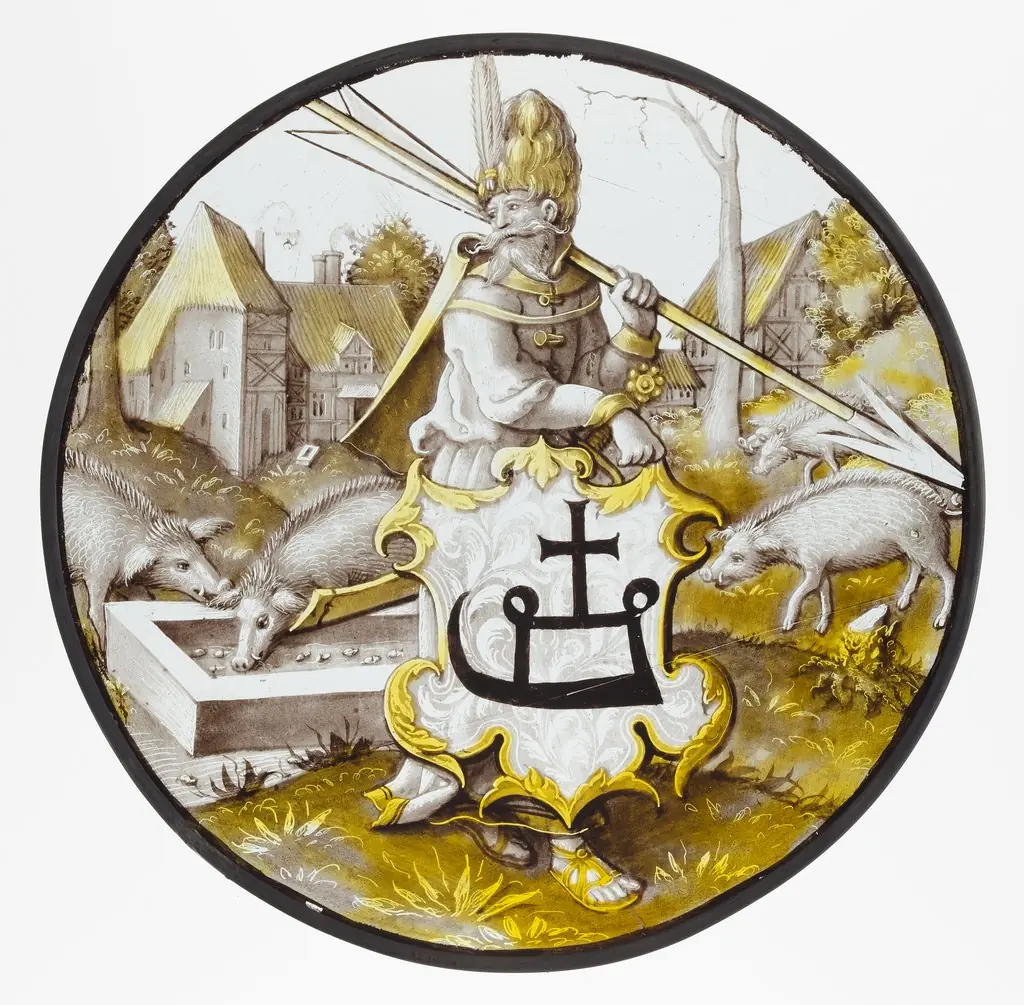 Roundel with Turkish Soldier holding an Arrow and Support
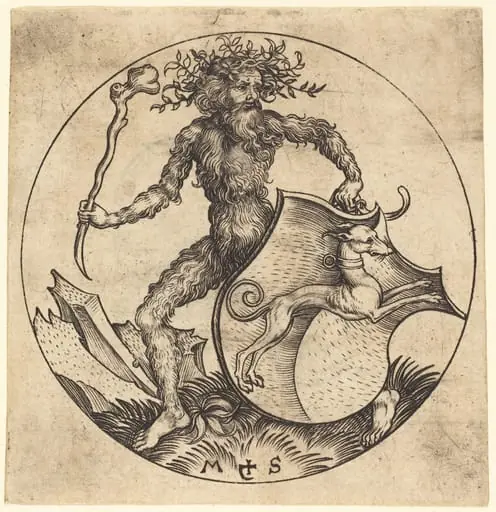 Wild Man Holding a Shield with a Greyhound
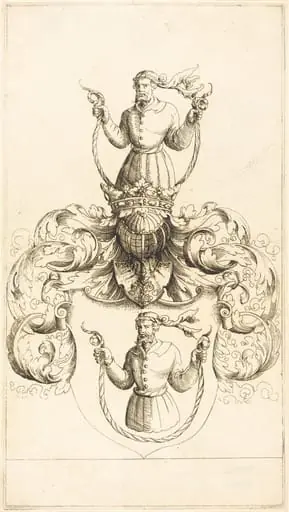 Coat of Arms of Unknown Man
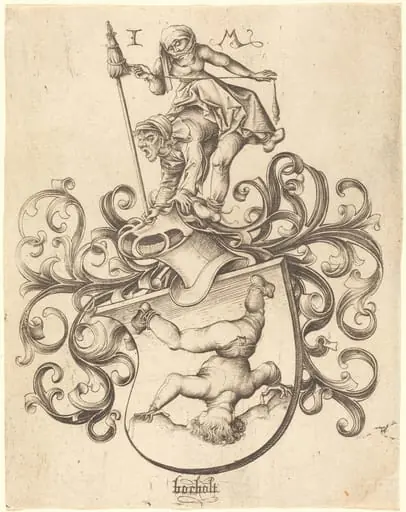 Coat of Arms with Tumbling Boy