Artwork
Roundel with Turkish Soldier holding an Arrow and Support
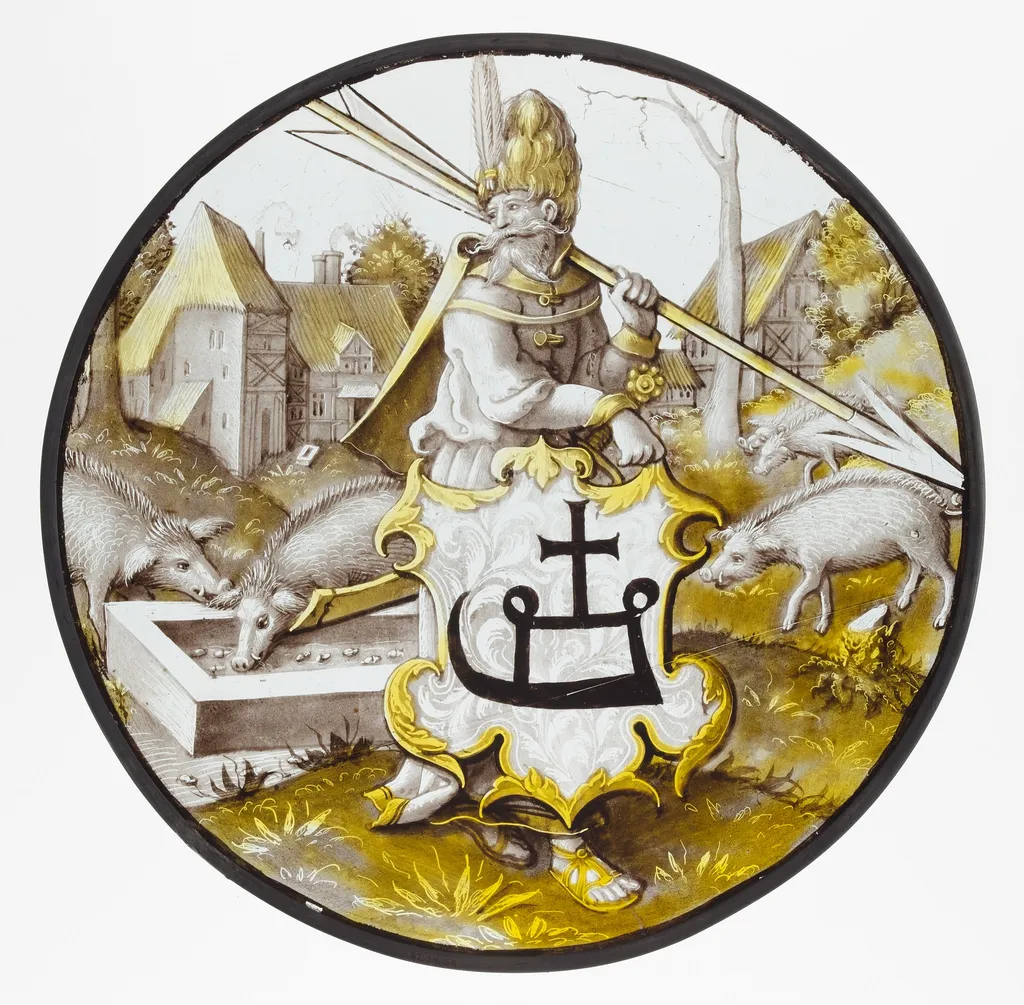
Roundel with Turkish Soldier holding an Arrow and Support is an unspecified painting. It dates from 1525 and is held in the collection of the Metropolitan Museum of Art. The work is a circular painted composition depicting a solitary figure in military attire positioned on a craggy rise.
About this work
Subject & Meaning
The roundel depicts a Turkish soldier holding an arrow, accompanied by a supporting figure or element.
The roundel depicts a Turkish soldier holding an arrow, accompanied by a supporting figure or element. Created in 1525, the work belongs to a broader European tradition of roundels featuring Ottoman or "Turkish" figures, a popular decorative motif in Renaissance Europe that drew on the era's sustained diplomatic, military, and commercial encounters with the Ottoman Empire. Such imagery often carried layered meanings: the soldier with an arrow could function as an exotic or allegorical figure, while the roundel format suggests the image was designed for architectural or ornamental integration, contributing to a visual vocabulary of world peoples and heraldic references.
The arrow is a recurring attribute in depictions of Ottoman warriors and may evoke the archery traditions associated with Turkish military identity, while the supporting element likely balances the composition and reinforces the figure's emblematic status rather than narrating a specific event.
History & Provenance
The roundel dates to 1525. It is classified as a painting and is held in the collection of the Metropolitan Museum of Art in New York, where it is recorded under the accession number 1975.1.1146. The artist is recorded only as an anonymous creator, with no documented commission or prior ownership beyond its current institutional placement, and no exhibition history is recorded.
Legacy
As part of a wider European tradition of roundels depicting Ottoman or "Turkish" figures, the work reflects the early sixteenth-century European fascination with exoticised Ottoman subjects. Its presence in the collection of the Metropolitan Museum of Art has ensured its continued preservation and study.
Overview
The work is a circular painted composition depicting a solitary figure in military attire positioned on a craggy rise. He grasps a bow drawn with an arrow, his armor rendered in gold and white tones. At his feet lie a boar and a ram, while a modest settlement with pointed roofs and a church spire recedes in the distance.
Technique & Style
Executed in a round format, the painting employs strong contrasts of light and shadow reminiscent of chiaroscuro, giving the scene a three‑dimensional quality. The gold‑white armor catches highlights, while the darker terrain recedes, creating depth. The composition balances detailed figuration of the soldier and animals with a simplified, almost schematic rendering of the distant village.
Context
The depiction of a Turkish combatant with emblematic fauna aligns with a broader European fascination with Ottoman subjects during the early modern period. Such images often served to illustrate exoticism and the perceived martial prowess of the East, reflecting contemporary political and cultural interests in the Ottoman Empire’s expanding influence.
Artist & collection

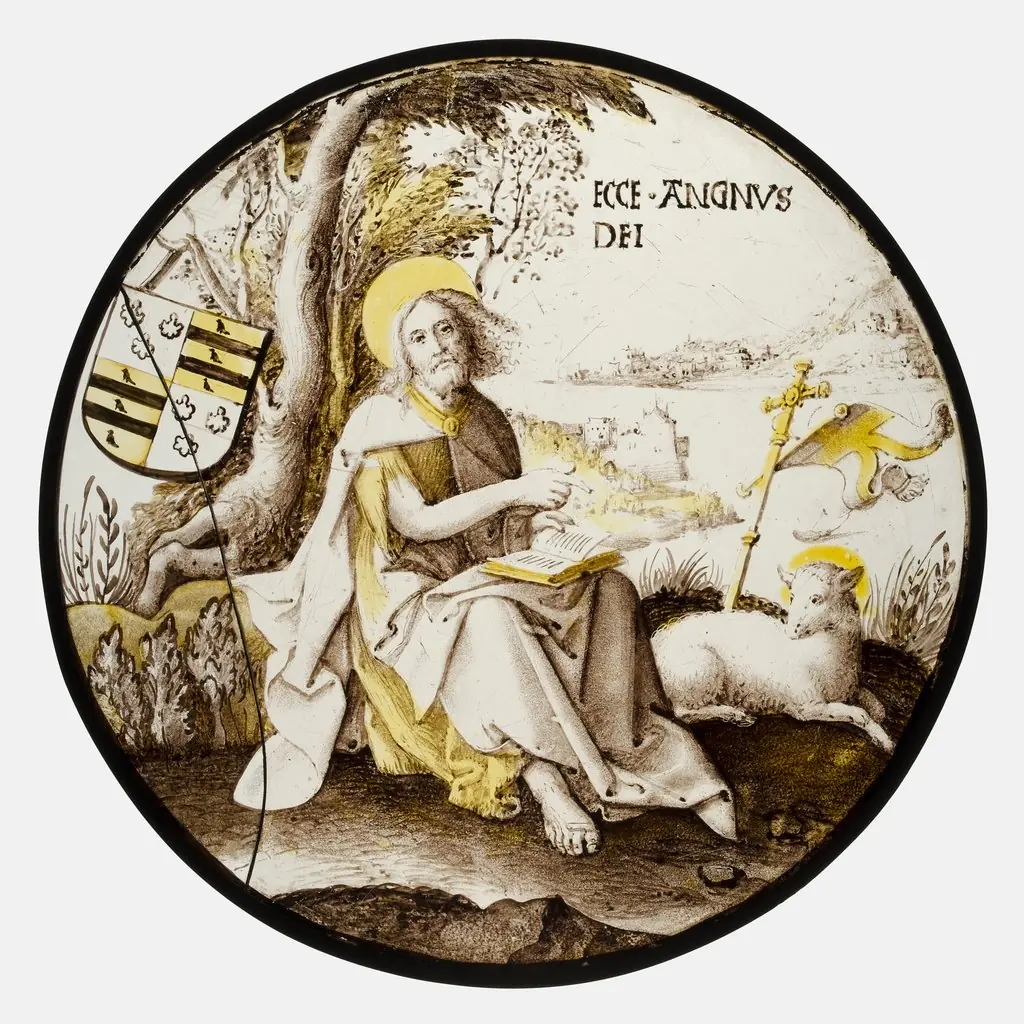 Roundel with Saint John the Baptist
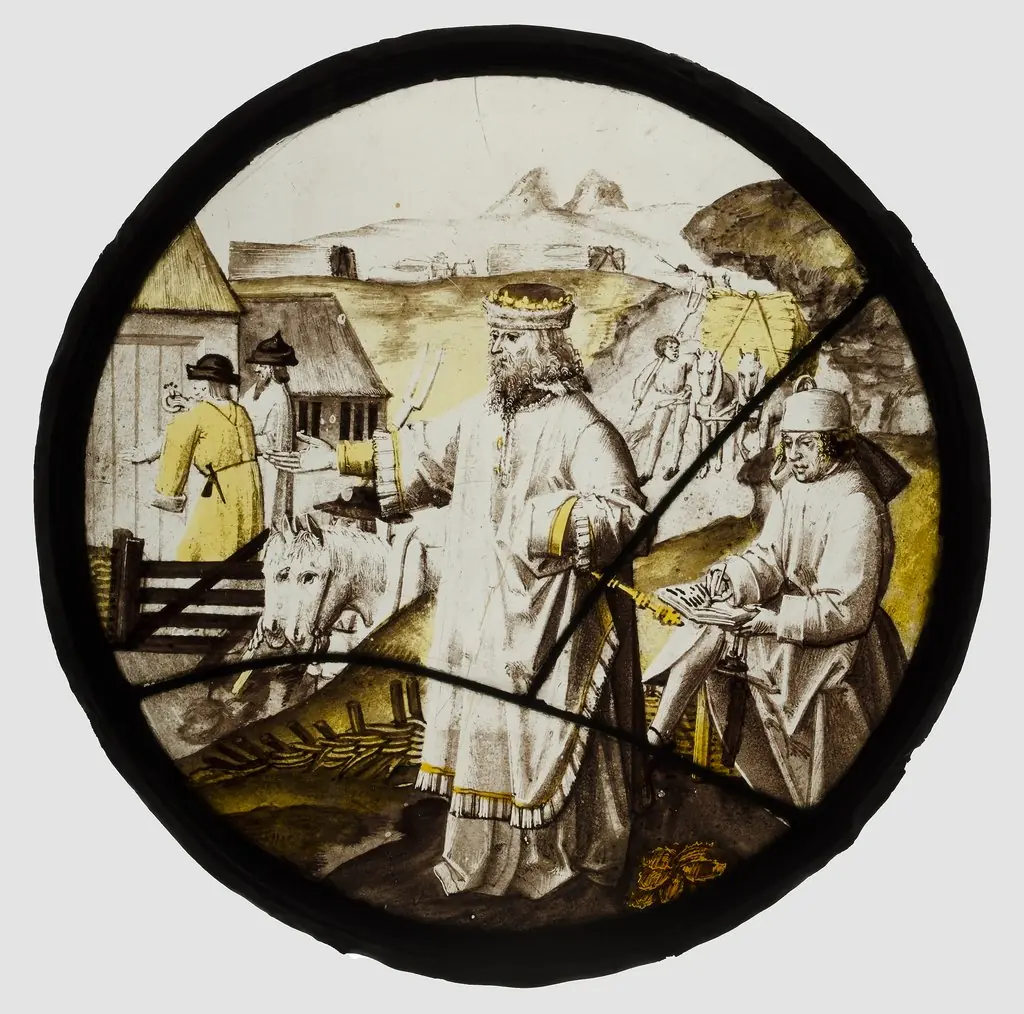 Roundel with Joseph Buying Corn in Egypt
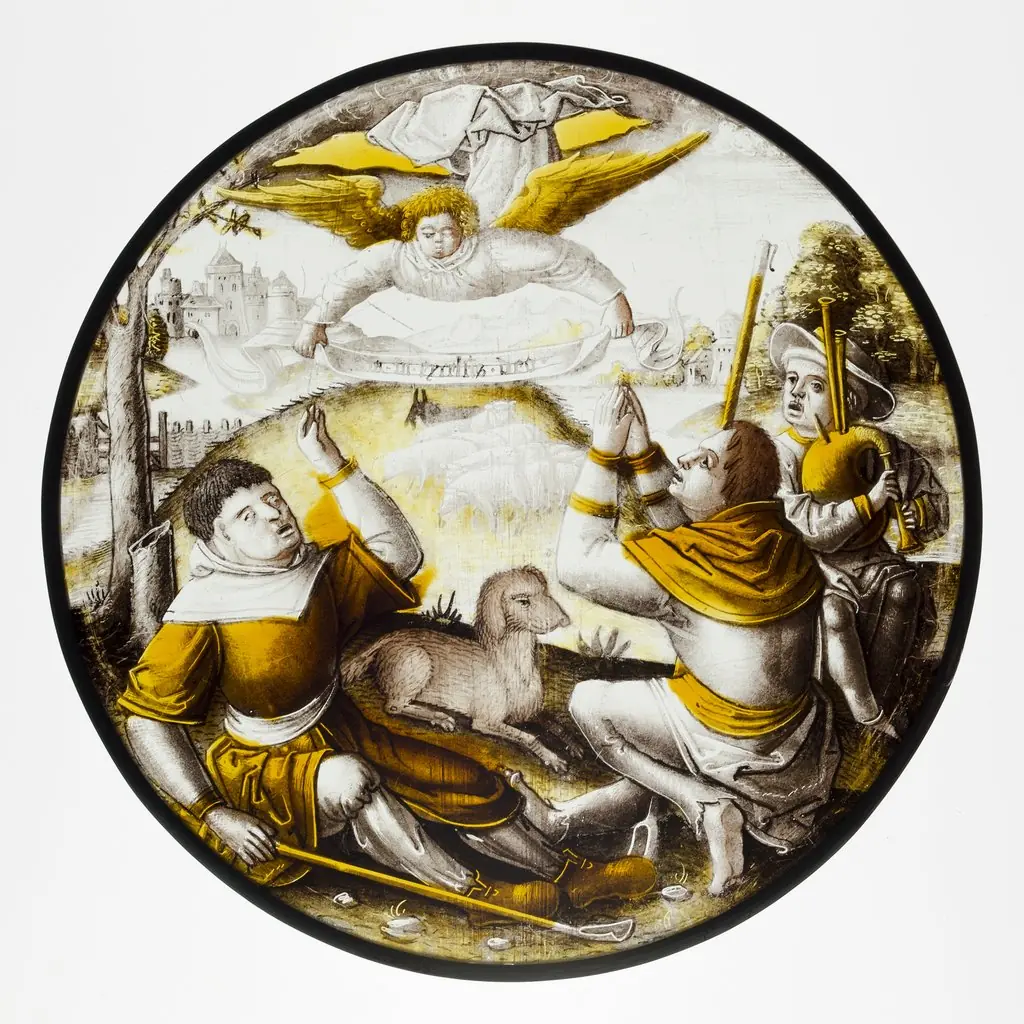 Roundel with Annunciation to the Shepherds
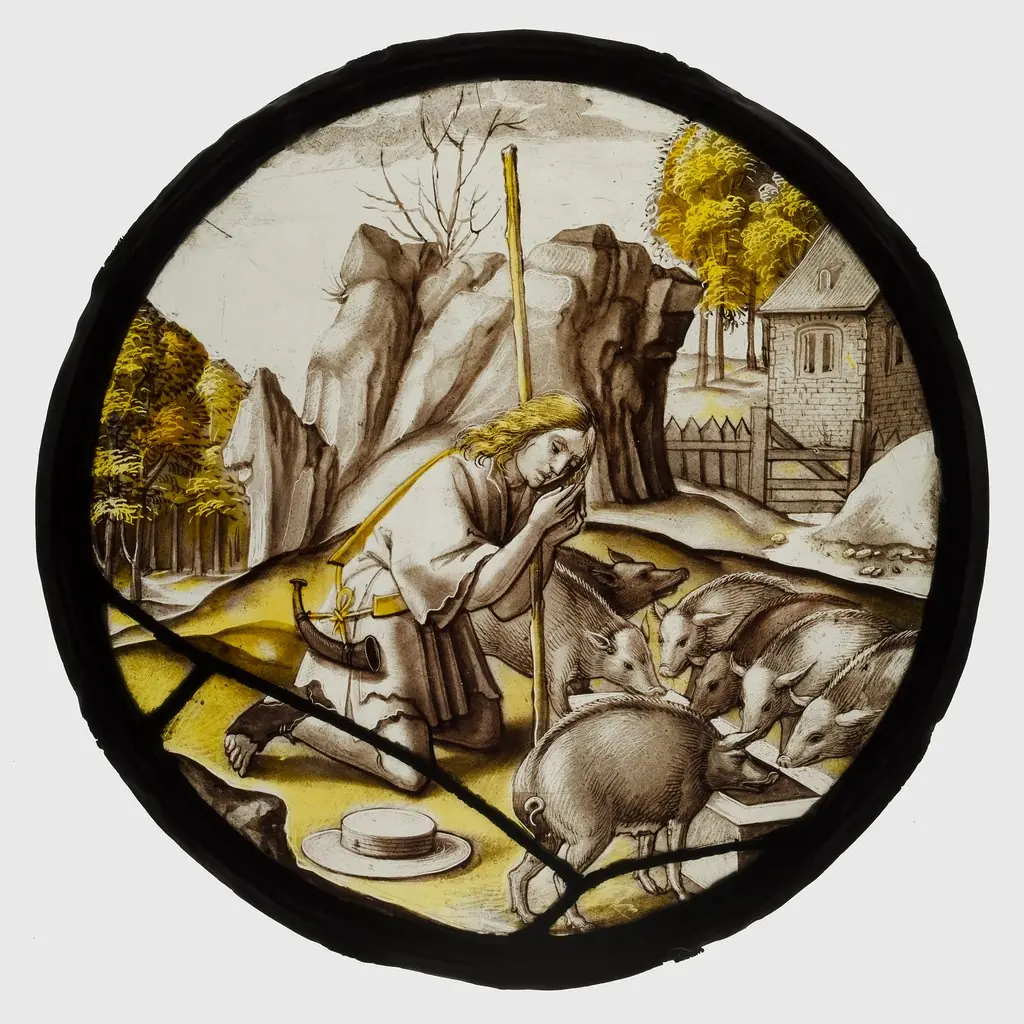 Roundel with the Prodigal Son among the Swine
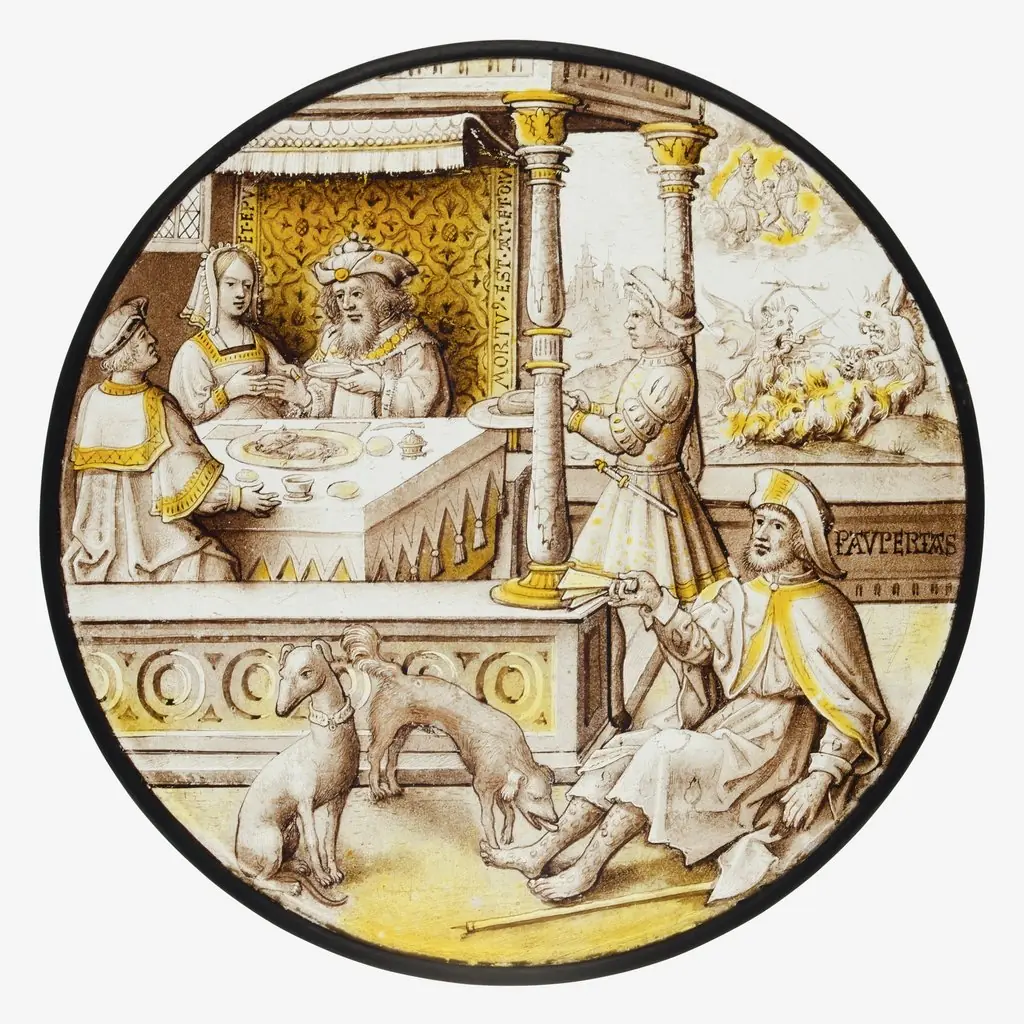 Roundel with Lazarus at the House of Dives
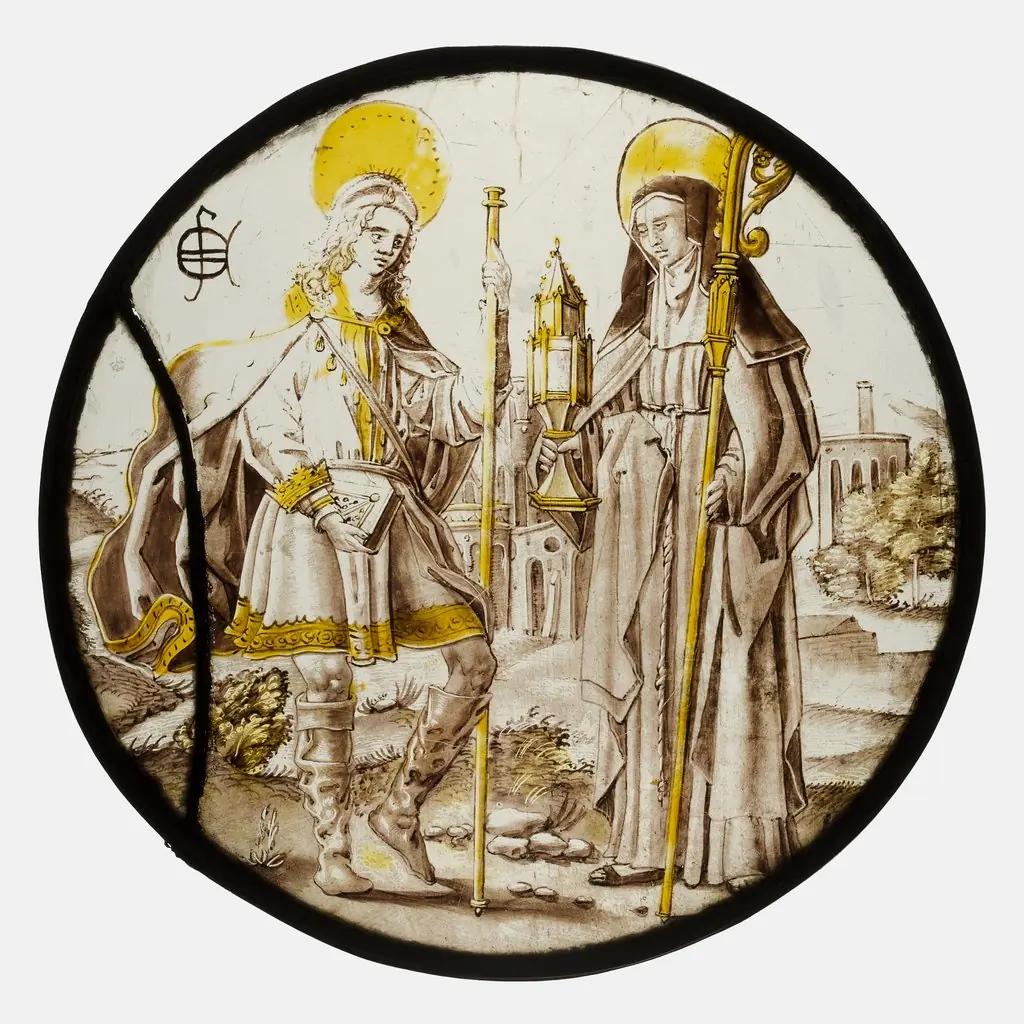 Roundel with Saint Jodocus and St. Clare of Assisi
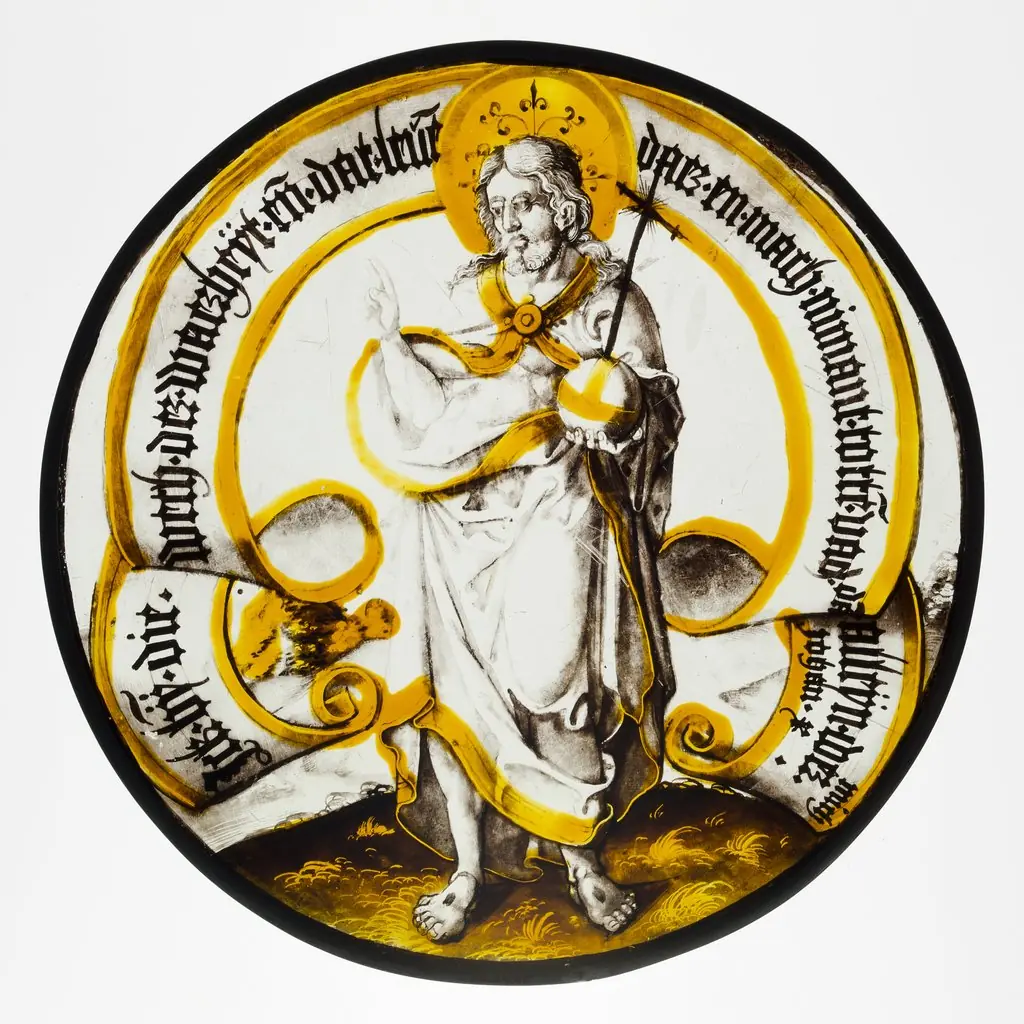 Roundel with Christ as Savior of the World
 Roundel with the Holy Trinity