Artwork
Pluto
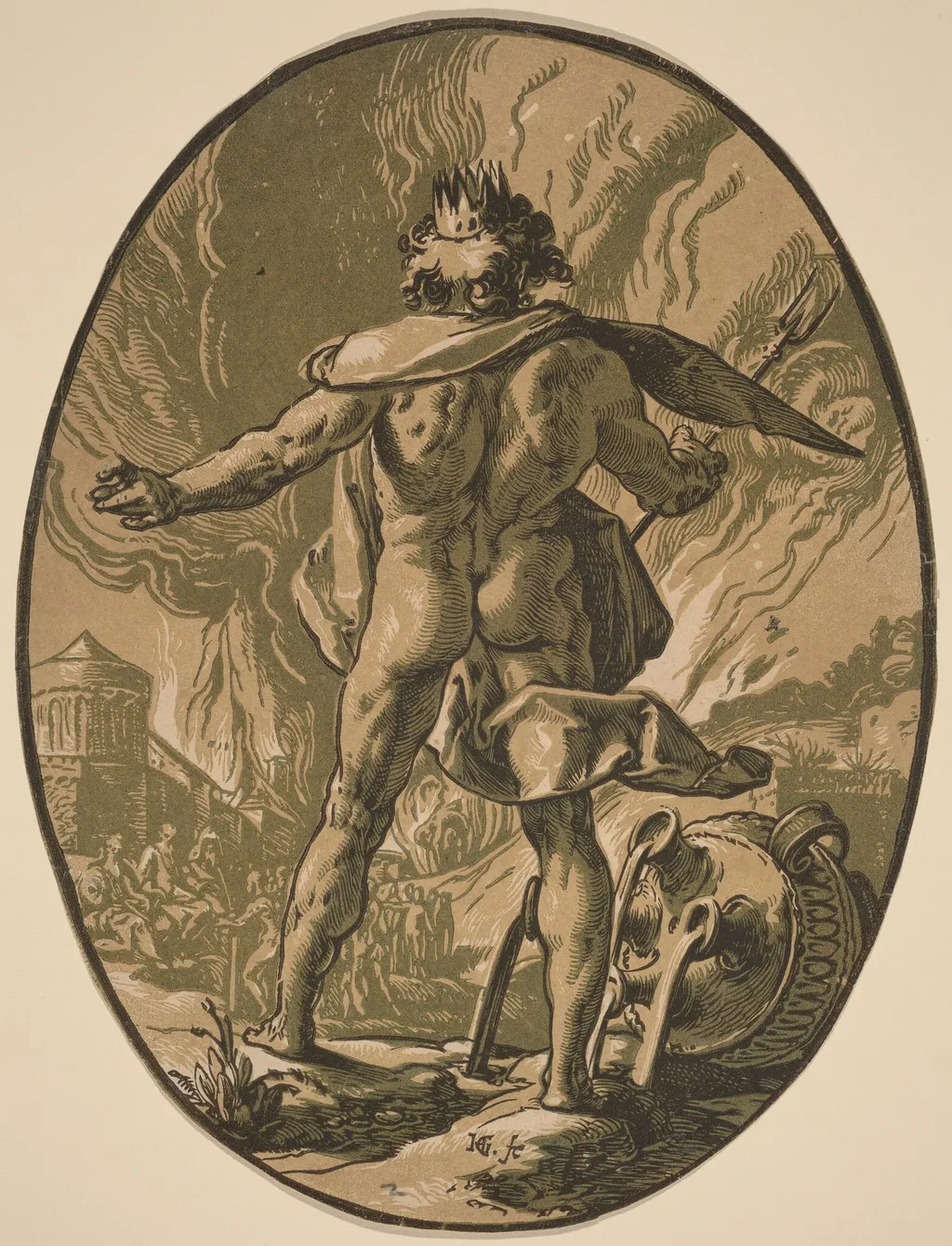
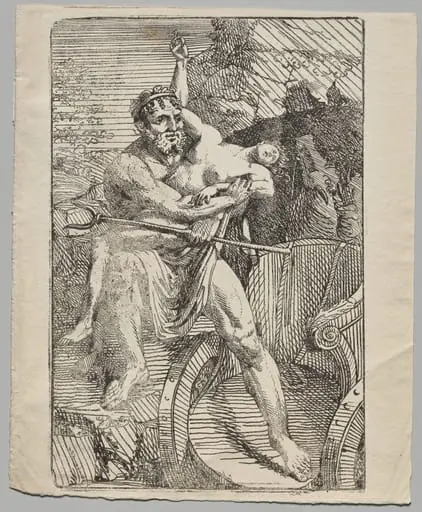
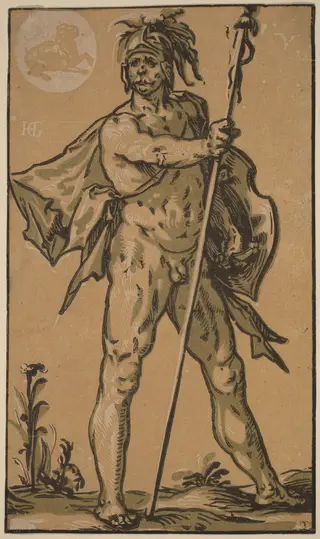
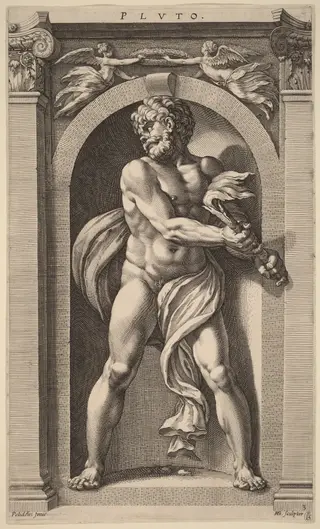
Pluto is an ink print by the Renaissance artist Hendrick Goltzius. It dates from 1589 and is held in the collection of the National Gallery of Art.
- Inscription
- Inscribed:recto: in black block at bottom center: HG. fe; verso: at center in black ink in later hand: R. Rechberg 1802 [Lugt 2133]; at bottom center in graphite in later hand: B 233 / Dut 233 / H. 369 / KK 793
- Markings
- Marked:recto: none; verso: Lessing J. Rosenwald and National Gallery of Art
About this work
Overview
Hendrick Goltzius's 'Pluto' is a print created in 1589 using the chiaroscuro woodcut technique on laid paper. It is a representation of the Roman god of the underworld.
Subject & Meaning
The print depicts Pluto, a figure from Roman mythology associated with the underworld. The dark, shadowy rendering of the god is characteristic of his role.
Technique & Style
Goltzius employed chiaroscuro, a technique that utilizes strong contrasts between light and dark to create depth. The use of sepia-ochre, green, and black inks on laid paper adds to the dimensional effect of the image.
History & Provenance
Created by Hendrick Goltzius, a prominent figure in the Northern Mannerism movement, 'Pluto' showcases the artist's technical skill and intricate composition style, hallmarks of his work as a leading Dutch engraver of the early Baroque period.
Own this work as a print
Artist & collection
Artist
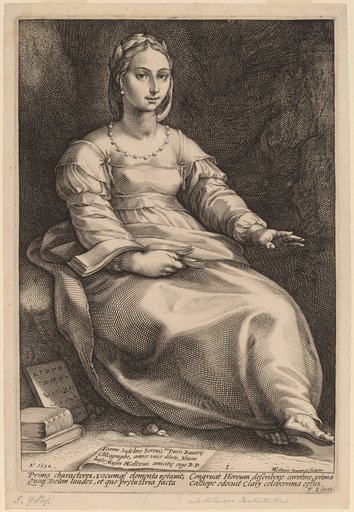
Hendrick Goltzius (German: , Dutch: ; né Goltz; January or February 1558 – 1 January 1617) was a German-born Dutch printmaker, draftsman, and painter.