Artwork
The bag of gold which he received for the slave girl being stolen in a mosque, the young man of Baghdad tears his cloths and is about to fling himself into the Tigris, from a Tuti-nama (Tales of a Parrot): Forty-eighth Night
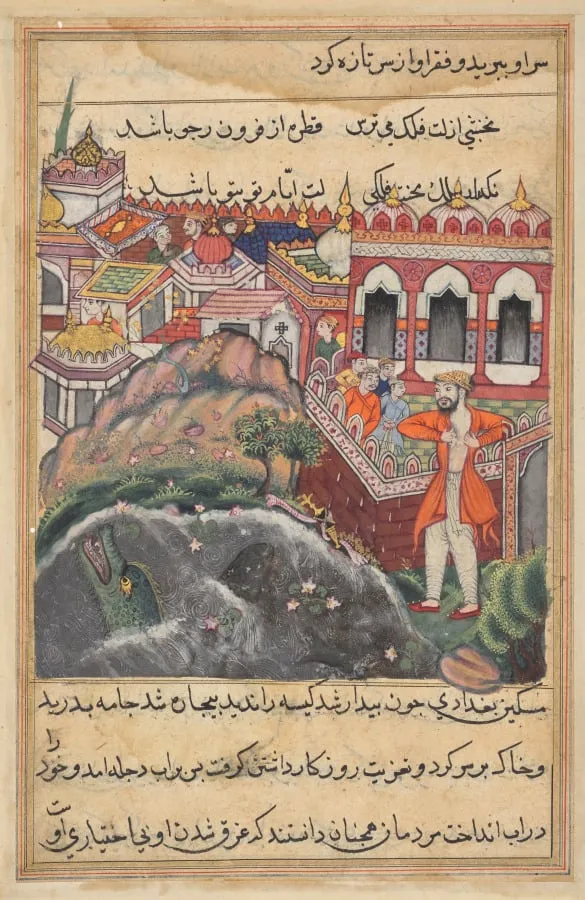
The bag of gold which he received for the slave girl being stolen in a mosque, the young man of Baghdad tears his cloths and is about to fling himself into the Tigris, from a Tuti-nama (Tales of a Parrot): Forty-eighth Night is an unspecified painting by the Mughal Painting artist Unknown. It dates from 1560 and is held in the collection of the Cleveland Museum of Art. The painting portrays a young man in vivid garments standing at the brink of a swift river, his clothing torn in anguish.
About this work
The artist filled the space with tiny details: patterned tiles, flowing water, and the shocked faces of onlookers.
A young man in bright robes stands at the edge of a river, tearing his clothes in grief. Behind him, a crowd watches from a mosque courtyard. The river rushes past, ready to swallow him.
This scene comes from a *Tuti-nama*, a book of parrot tales told to a queen in Mughal India. The story warns against greed—selling his lover left the man with nothing, not even hope. The artist filled the space with tiny details: patterned tiles, flowing water, and the shocked faces of onlookers.
To see more stories like this, look up Mughal India, court of Akbar (reigned 1556–1605).
Overview
The painting portrays a young man in vivid garments standing at the brink of a swift river, his clothing torn in anguish. Behind him, a crowd gathered in the courtyard of a mosque watches, their expressions a mix of shock and concern. The water rushes forward, suggesting an imminent plunge, while the surrounding architecture and tiles frame the dramatic moment.
Subject & Meaning
The scene illustrates a moment from a Tuti‑nama, a collection of parrot tales narrated in Mughal courts. The protagonist, having sold his beloved slave girl for a bag of gold, finds himself penniless and desperate, prompting a suicidal gesture. The composition serves as a moral caution against greed, emphasizing the loss of love and hope that follows avaricious choices.
Technique & Style
Executed in the refined Mughal miniature tradition, the work combines delicate brushwork with intricate detailing. Fine lines delineate patterned tiles and architectural elements, while the flowing river is rendered with subtle washes that convey movement. The artist employs a bright palette for the figure’s robes, contrasting with the muted tones of the surrounding crowd, enhancing the emotional intensity of the central figure.
Context
The narrative originates from a Tuti‑nama, a literary genre popular in Akbar’s court (1556–1605) that blended Persian storytelling with Indian motifs. Such illustrated manuscripts were used to entertain and educate royalty, often embedding moral lessons. This painting reflects the cultural synthesis of Mughal art, where Persian narrative forms were adapted to local sensibilities and courtly patronage.
Artist & collection

 Domestic Scene
 Giacomo and Cardinal Marco, investing Andrea, Abbot of San Zeno, with his Benefice
 The Nymph of Fontainebleau
 Portrait of a Woman
 Madonna and Child with Saints in the Enclosed Garden
 Venus and Minerva
 Family Group of Four on Sofa
 Wall painting from Room H of the Villa of P. Fannius Synistor at Boscoreale
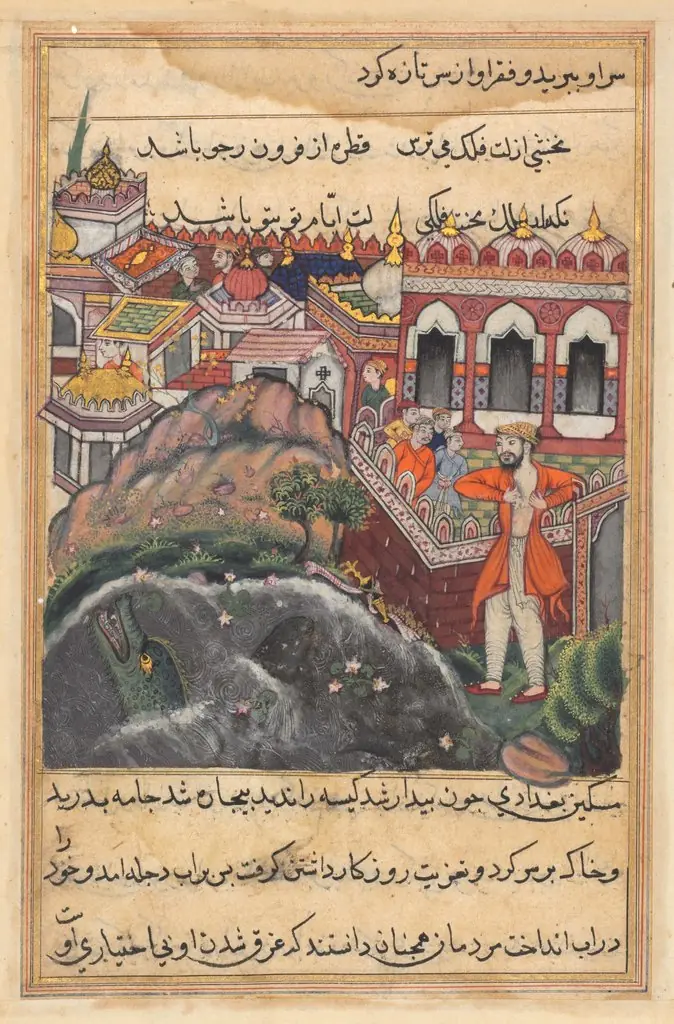 The bag of gold which he received for the slave girl being stolen in a mosque, the young man of Baghdad tears his cloths and is about to fling himself into the Tigris, from a Tuti-nama (Tales of a Parrot): Forty-eighth Night
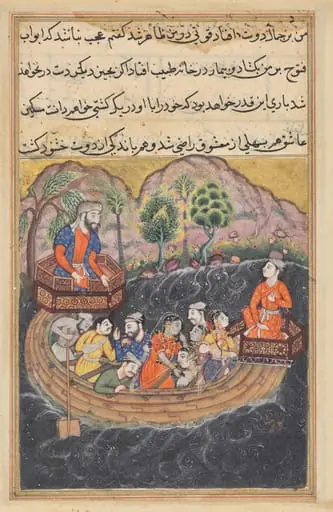 The young man of Baghdad joins the Hashimi’s boat as a sailor to find his slave-girl on board, from a Tuti-nama (Tales of a Parrot): Forty-eighth Night
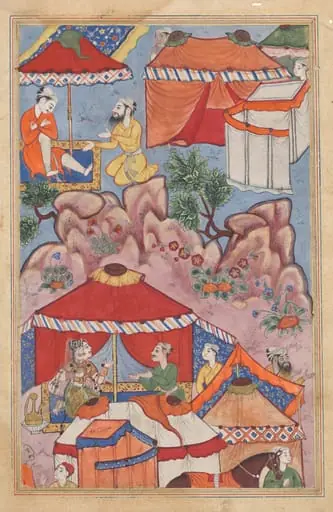 Bashir confides his love for Habbaza to an Arab friend, and sends him to her with a message, from a Tuti-nama (Tales of a Parrot): Twenty-fourth Night
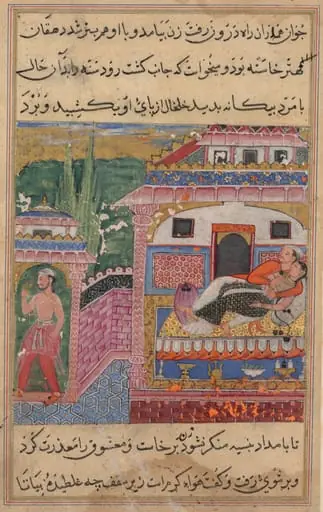 The farmer, father of the son with the deceitful wife, steals away with her anklet while she is in bed with her lover, from a Tuti-nama (Tales of a Parrot): Eighth Night
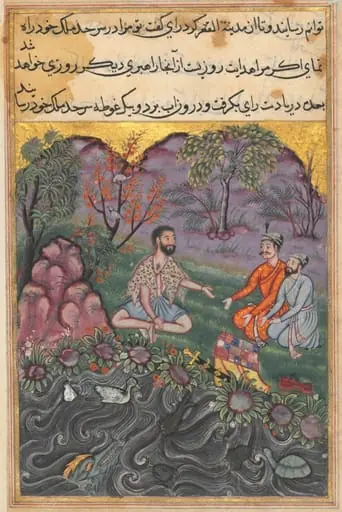 The Raja of Ujjain, who is traveling in the guise of a yogi, meets two brothers who ask him to equitably partition their father’s possession, from a Tuti-nama (Tales of a Parrot): Forty-sixth Night
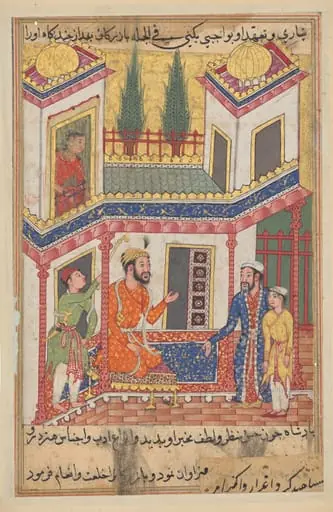 The merchant returns bringing a young slave who is really the son of the princess of Rum, now married to the king, from a Tuti-nama (Tales of a Parrot): Fiftieth Night
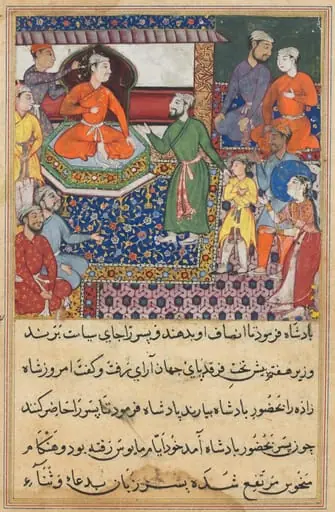 The handmaiden again pleads for the death of the prince, from a Tuti-nama (Tales of a Parrot): Eighth Night
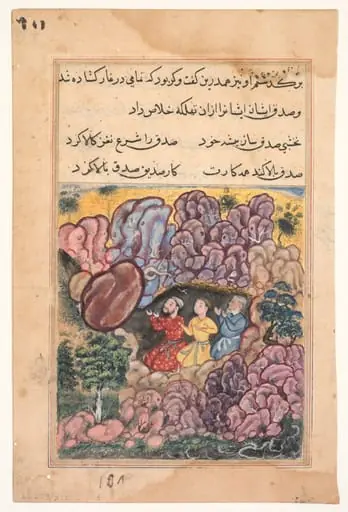 The tale of the three men trapped in a cave by a rolling boulder, from a Tuti-nama (Tales of a Parrot): Thirty-second Night
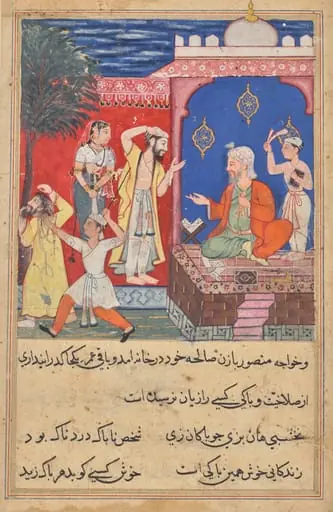 The false Mansur punished before the judge and expelled from the city, from a Tuti-nama (Tales of a Parrot): Seventeenth Night