Artwork
The young man of Baghdad joins the Hashimi’s boat as a sailor to find his slave-girl on board, from a Tuti-nama (Tales of a Parrot): Forty-eighth Night
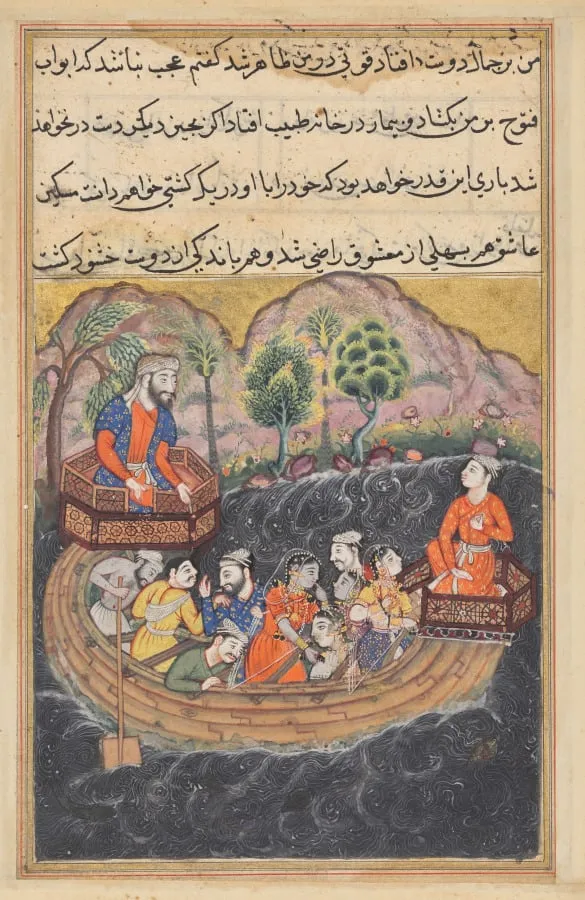
The young man of Baghdad joins the Hashimi’s boat as a sailor to find his slave-girl on board, from a Tuti-nama (Tales of a Parrot): Forty-eighth Night is an unspecified painting by the Mughal Painting artist Unknown. It dates from 1560 and is held in the collection of the Cleveland Museum of Art. This painting illustrates a scene from the Tuti-nama, a collection of tales told over fifty-two nights.
- Accession no.
- 1962.279.307.a
- Credit line
- Gift of Mrs. A. Dean Perry
About this work
The story here is about love and luck: the man lost everything, only to stumble onto the very ship where his lost lover is held.
You see a young man climbing onto a boat, his tattered clothes flapping in the wind. A woman in fine robes stands frozen, one finger raised, she’s just spotted him.
This painting comes from a Tuti-nama, a book of parrot tales told over fifty-two nights. The story here is about love and luck: the man lost everything, only to stumble onto the very ship where his lost lover is held. The bright colors and flat figures are typical of Mughal miniatures, made for royal eyes.
To see more like this, look up Mughal India, court of Akbar (reigned 1556–1605).
Overview
This painting illustrates a scene from the Tuti-nama, a collection of tales told over fifty-two nights. It depicts a young man joining a merchant ship where his lost lover, a slave girl, is being held.
Subject & Meaning
The scene shows the young man's reunion with his lover, who stands on the ship, shocked by his arrival. The narrative revolves around themes of love and fortune, as the young man coincidentally finds his lost lover on the ship he has joined.
Technique & Style
The painting features bright colors and flat, two-dimensional figures, characteristic of Mughal miniature painting. The style was typical of artworks created for the royal court during this period.
Context
The artwork is part of a manuscript from the court of Akbar, who reigned from 1556 to 1605. Mughal miniatures like this one were produced for the imperial court, reflecting the artistic tastes of the ruling elite.
Artist & collection









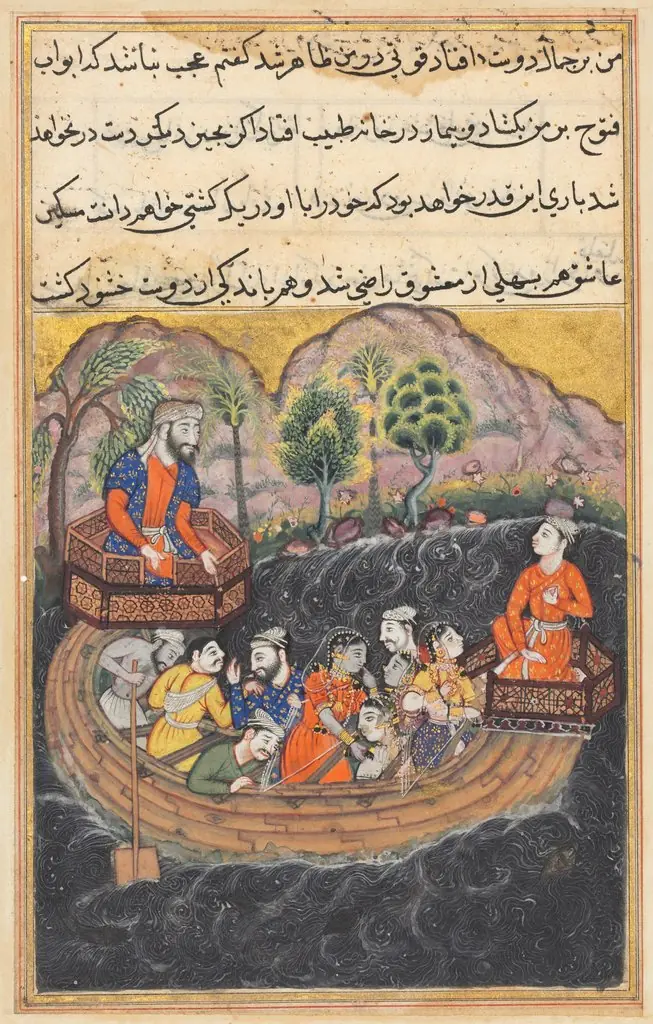
- The young man of Baghdad joins the Hashimi’s boat as a sailor to find his slave-girl on board, from a Tuti-nama (Tales of a Parrot): Forty-eighth Night
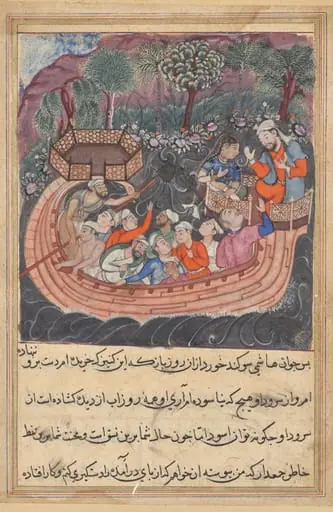 The young man of Baghdad reveals his true identity to the Hashimi, from a Tuti-nama (Tales of a Parrot: Forty-eighth Night
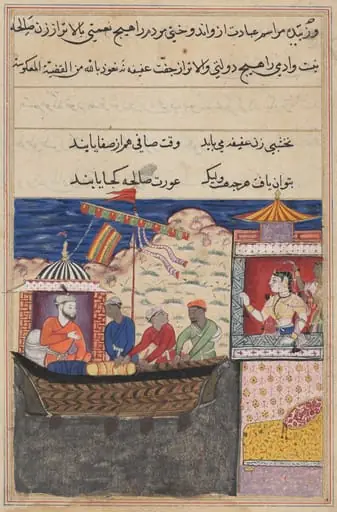 The merchant Mansur departs on a sea voyage, leaving his wife behind, from a Tuti-nama (Tales of a Parrot): Seventeenth Night
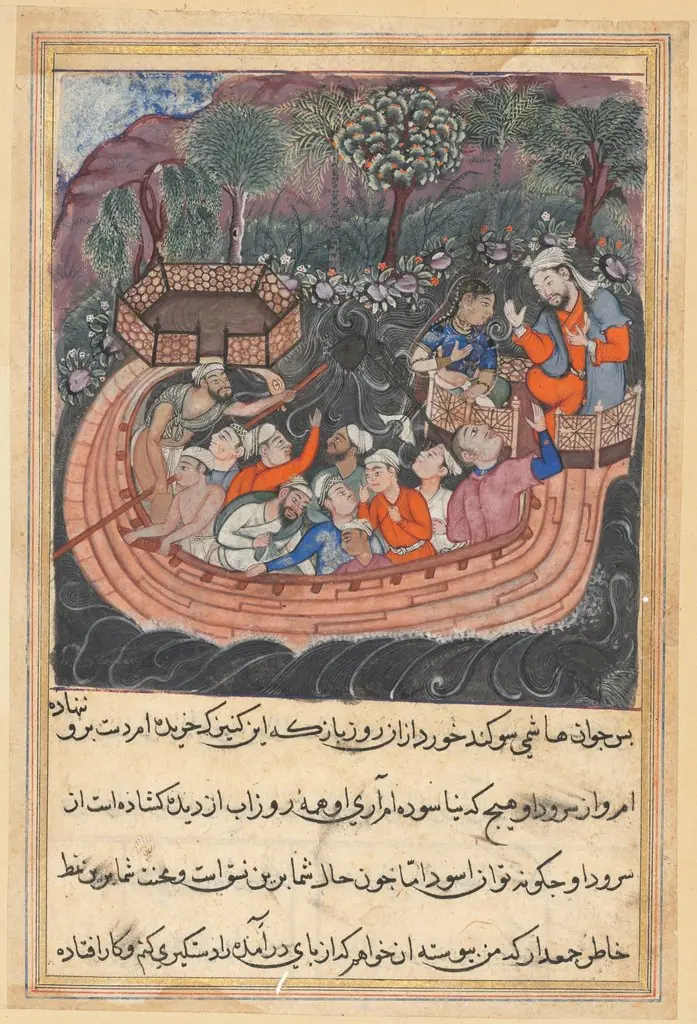 The young man of Baghdad reveals his true identity to the Hashimi, from a Tuti-nama (Tales of a Parrot: Forty-eighth Night
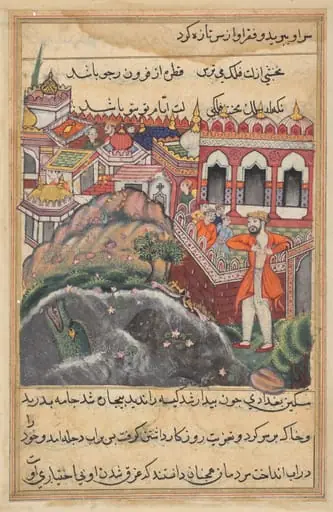 The bag of gold which he received for the slave girl being stolen in a mosque, the young man of Baghdad tears his cloths and is about to fling himself into the Tigris, from a Tuti-nama (Tales of a Parrot): Forty-eighth Night
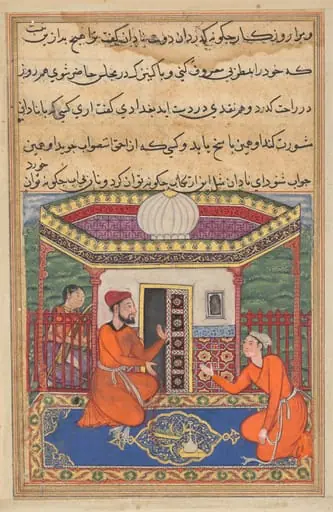 The young man of Baghdad solicits advice from a friend as his slave girl, who is adept at music, awaits, from a Tuti-nama (Tales of a Parrot): Forty-eighth Night
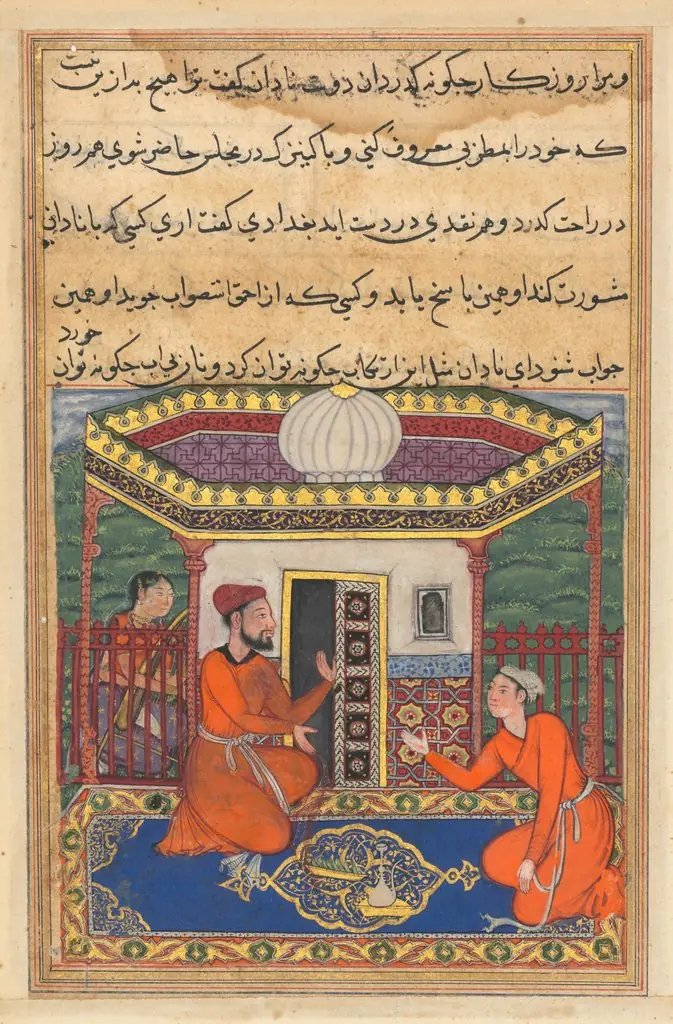 The young man of Baghdad solicits advice from a friend as his slave girl, who is adept at music, awaits, from a Tuti-nama (Tales of a Parrot): Forty-eighth Night
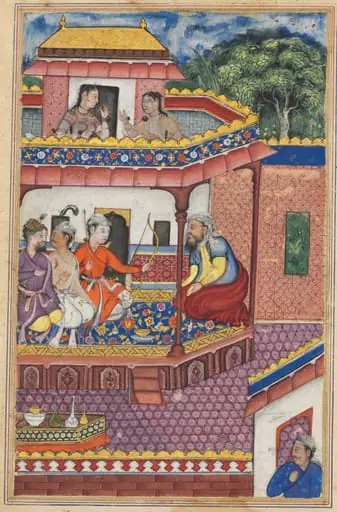 The three young men present themselves as suitors for the hand of Zuhra, the daughter of the merchant of Kabul, from a Tuti-nama (Tales of a Parrot): Thirty-fourth Night
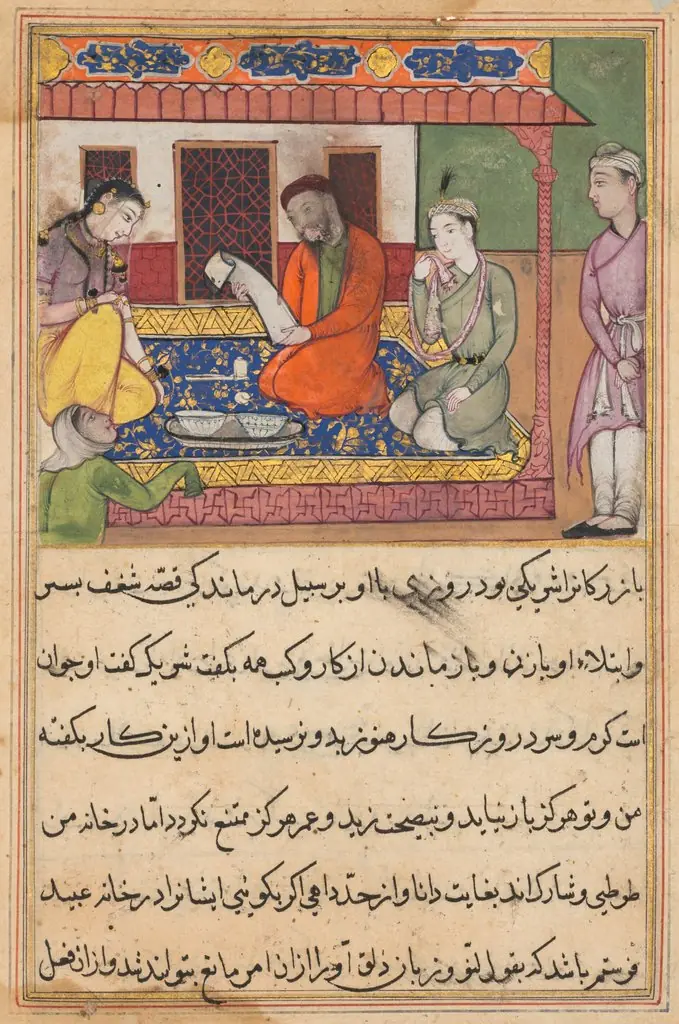 The marriage of ‘Ubaid, son of a merchant of Tirmiz, from a Tuti-nama (Tales of a Parrot): Forty-second Night
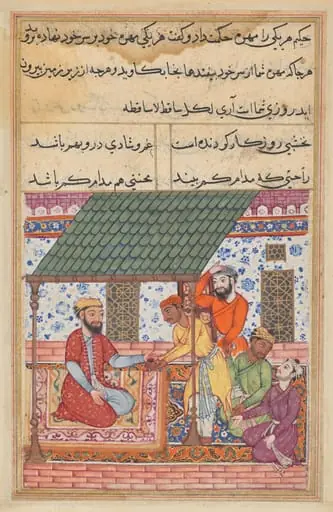 The four destitute friends go to a wise man who gives each one of them a magic shell to be placed on top of the turban, from a Tuti-nama (Tales of a Parrot): Forty-seventh Night