Artwork
The Five Points
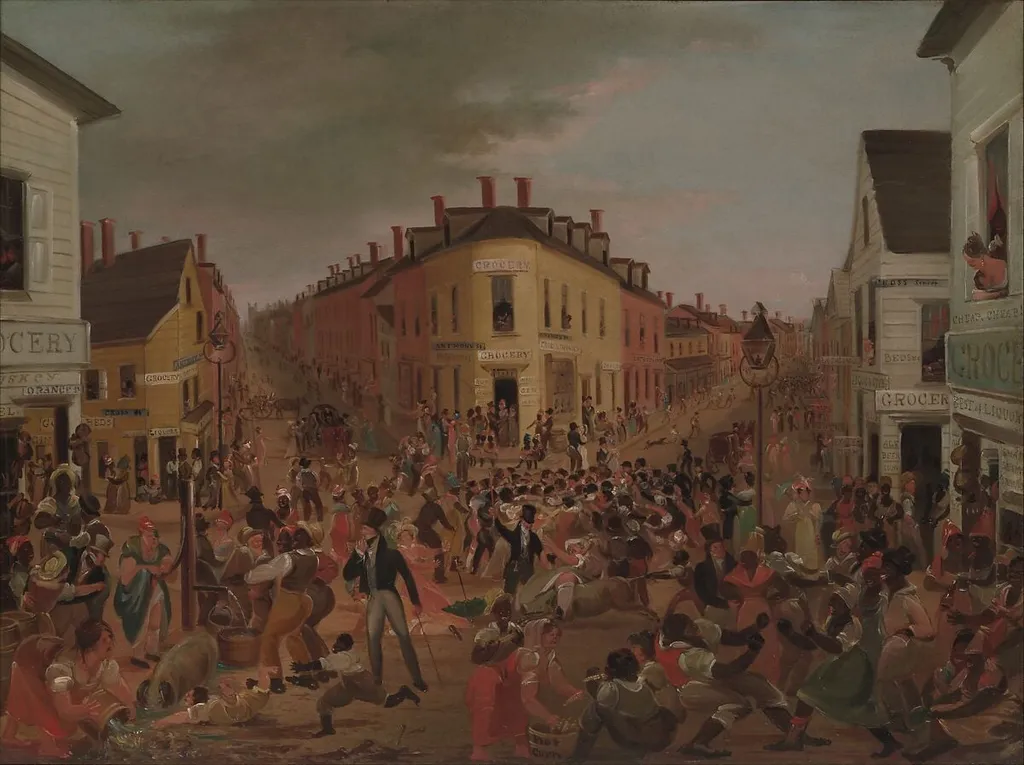
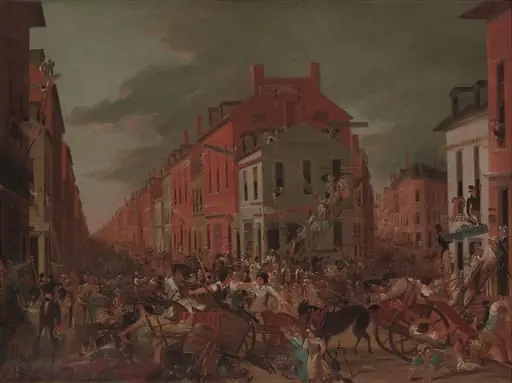
The Five Points is an oil painting. It dates from 1827 and is held in the collection of the Metropolitan Museum of Art.
About this work
Subject & Meaning
While the original work is by an unknown hand, it serves as a reproduction of an earlier oil painting by George Catlin that captured the same subject matter.
Created in 1827 by an unknown artist, this oil painting depicts the Five Points neighborhood in Manhattan, a notorious slum located on the Lower East Side. The composition functions as a cityscape, illustrating the chaotic lifestyle associated with the district through a crowded street scene populated by men and women amidst various buildings. While the original work is by an unknown hand, it serves as a reproduction of an earlier oil painting by George Catlin that captured the same subject matter.
The image gained significant traction as a visual document of the area, evidenced by its frequent re-reproduction, including an appearance in an 1855 guide to New York City. Through these depictions of urban density and disorder, the work represents the specific social conditions and infamy of the Five Points during the early nineteenth century.
Technique & Style
The Five Points is executed in oil paint on a wood panel support, a medium and substrate combination typical of early 19th-century American genre works. Created in 1827 by an unknown artist, the painting functions as a reproduction of a George Catlin original, depicting the chaotic urban environment of the Five Points district. The composition is a cityscape that formally organizes a dense crowd of figures, including men and women, amidst buildings and streets.
This work serves as a visual record of the neighborhood's notorious slum conditions, utilizing the oil-on-panel technique to capture the bustling, disorderly atmosphere of Lower Manhattan. The painting is currently held within the Metropolitan Museum of Art's American Wing collection, where it is displayed in Gallery 758 as a significant example of early urban documentation.
History & Provenance
Created in 1827 by an unknown artist, this oil painting on wood panel serves as a reproduction of an earlier work by George Catlin that depicted the chaotic conditions of Manhattan's Five Points district. While the specific commission details and the full ownership chain prior to its museum acquisition are not detailed in the available records, the work's historical trajectory includes multiple subsequent reproductions, notably appearing in an 1855 guide to New York City. The version currently held by the Metropolitan Museum of Art in New York City, where it is displayed in Gallery 758, represents one of these later iterations derived from Catlin's original composition. The piece is classified as a cityscape genre work within the museum's American Wing collection.
The Five Points is held by The Metropolitan Museum of Art, New York, accessioned as 56.184. The painting entered the collection in 1956 as a gift of Edgar William and Bernice Chrysler Garbisch. It has been exhibited in Gallery 758, where it remains on view.
Overview
The Five Points is an early 19th-century oil painting on wood panel, part of the Metropolitan Museum of Art's American Wing collection. Created by an unknown artist, this work is a reproduction of a painting by George Catlin. It offers a detailed visual record of a bustling street scene in New York City's notorious Five Points district, providing a glimpse into the daily life of a significant urban environment.
Artist & collection

- Moving Day (in Little Old New York)
 First State Election in Detroit, Michigan, 1837
 The County Election
 Richmond Slave Market Auction
 The Independent Voter
 Rip Van Winkle
 Der Auszug der Römer aus Vicenza
 Fighting a Fire
 High Street, Bangor
 Tremont Street, Boston
 Black Methodists Holding a Prayer Meeting
 Firemen's Washing Day