Artwork
The king dreams of a lady, the personification of wealth, departing from him on account of his purchasing a bowl and a staff from a yogi, from a Tuti-nama (Tales of a Parrot): Thirty-sixth Night
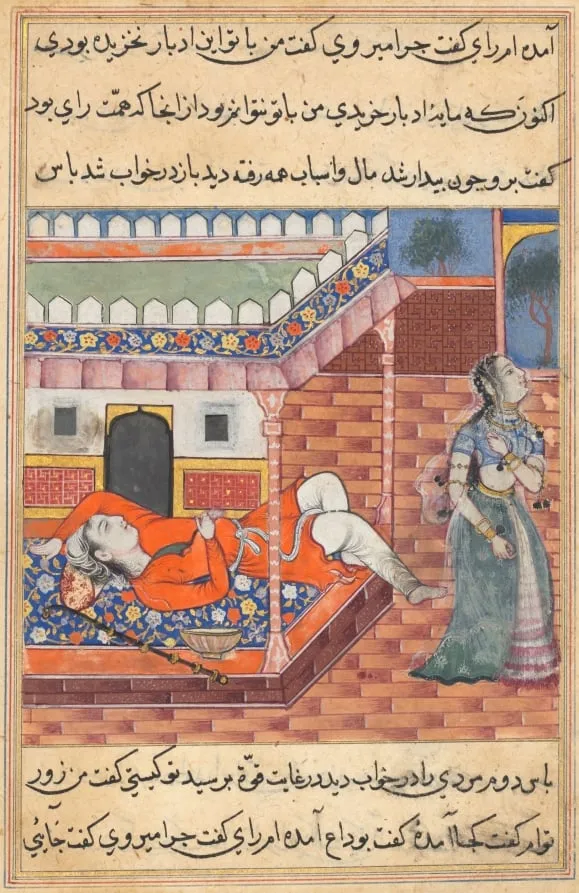
The king dreams of a lady, the personification of wealth, departing from him on account of his purchasing a bowl and a staff from a yogi, from a Tuti-nama (Tales of a Parrot): Thirty-sixth Night is an unspecified painting by the Mughal Painting artist Unknown. It dates from 1560 and is held in the collection of the Cleveland Museum of Art. This painting illustrates a scene from the Tuti-nama, a collection of tales told by a parrot over 52 nights.
About this work
A bowl and a wooden staff lie next to him—gifts from a holy man that now feel like bad luck.
A king sleeps on a richly patterned bed while a woman in gold walks away. A bowl and a wooden staff lie next to him—gifts from a holy man that now feel like bad luck.
The story comes from a 14th-century book of parrot tales told over 52 nights. This scene is the 36th night: the king’s greed costs him everything. The artist shows the moment before he wakes to an empty palace.
To see more stories like this, look up mughal india, court of akbar (reigned 1556–1605).
Overview
This painting illustrates a scene from the Tuti-nama, a collection of tales told by a parrot over 52 nights. The depicted episode is from the Thirty-sixth Night.
Subject & Meaning
The scene shows a king asleep on a richly patterned bed, next to a bowl and staff received from a yogi. A woman, personifying wealth, departs. The king's acquisition of these objects foretells his loss of riches, which he discovers upon waking.
Technique & Style
The artist has captured a moment of narrative tension, juxtaposing the king's slumber with the departure of wealth. The rich patterns of the bed and the woman's golden attire suggest a lavish setting.
Context
The Tuti-nama's stories originated in the 14th century. This painting is associated with the court of Akbar, who reigned from 1556 to 1605, indicating its creation within the cultural milieu of Mughal India during that period.
Artist & collection

 Domestic Scene
 Giacomo and Cardinal Marco, investing Andrea, Abbot of San Zeno, with his Benefice
 The Nymph of Fontainebleau
 Portrait of a Woman
 Madonna and Child with Saints in the Enclosed Garden
 Venus and Minerva
 Family Group of Four on Sofa
 Wall painting from Room H of the Villa of P. Fannius Synistor at Boscoreale
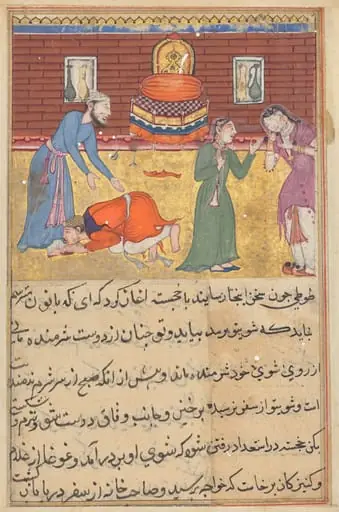 The pious man’s son, now a king, reveals himself to his father; his nurse upbraids his unfaithful mother, from a Tuti-nama (Tales of a Parrot): Fifty-second Night
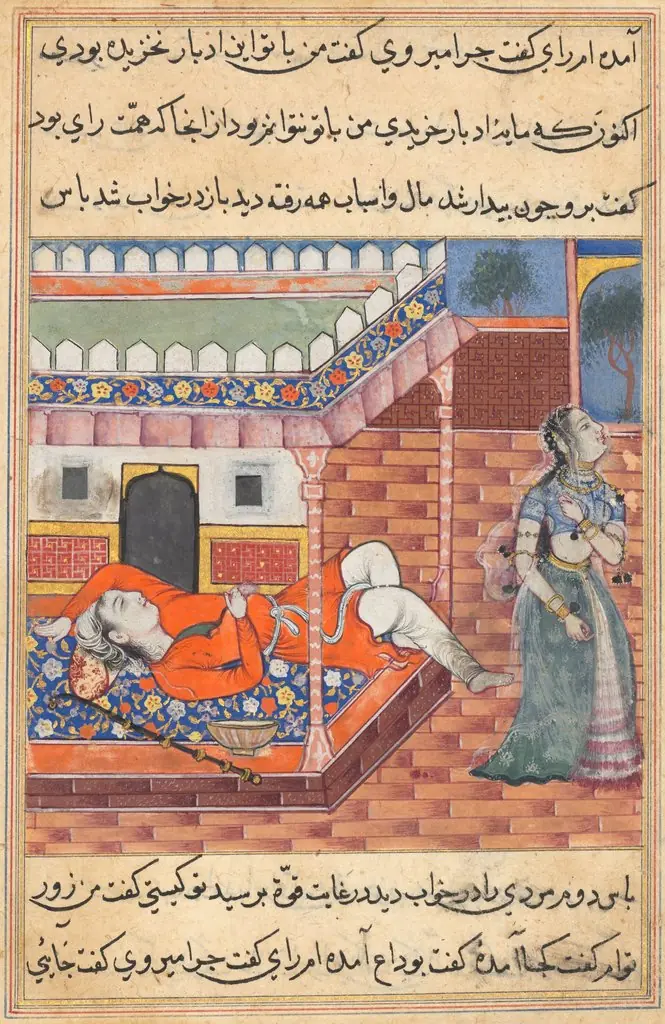 The king dreams of a lady, the personification of wealth, departing from him on account of his purchasing a bowl and a staff from a yogi, from a Tuti-nama (Tales of a Parrot): Thirty-sixth Night
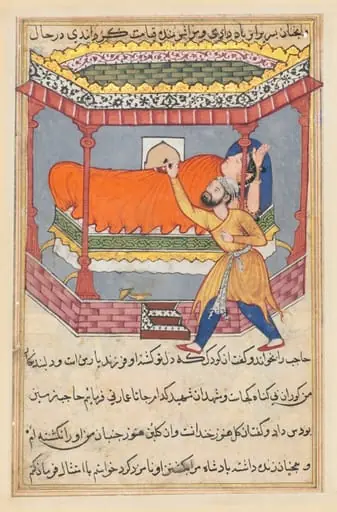 The king places the talisman on his sleeping wife, from a Tuti-nama (Tales of a Parrot): Fiftieth Night
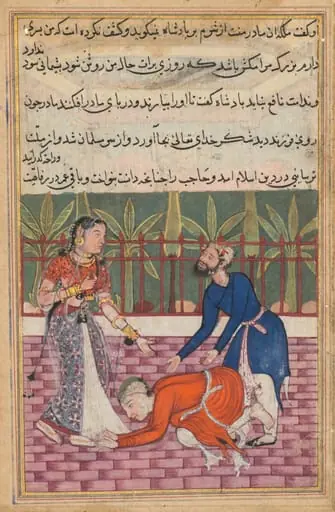 The guard restores the son who falls at his mother’s feet, from a Tuti-nama (Tales of a Parrot): Fiftieth Night
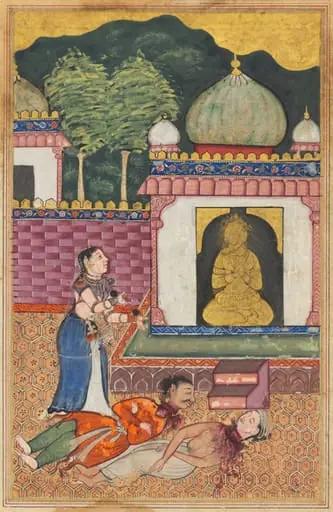 The princess discovers the dead bodies, with heads severed, of her husband and his Brahman friend, from a Tuti-nama (Tales of a Parrot): Thirty-fourth Night
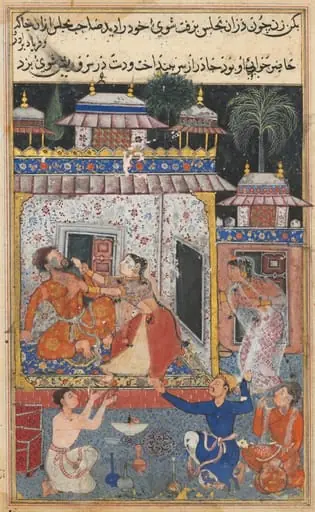 The deceitful wife assaults her erring husband, from a Tuti-nama (Tales of a Parrot): Eighth Night
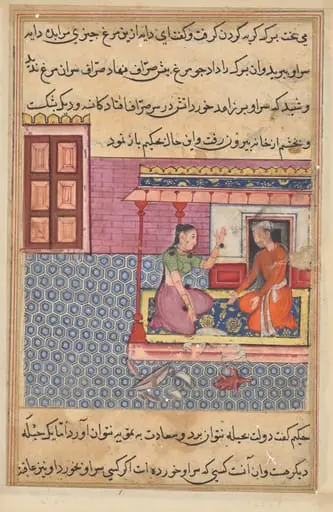 The pious man’s wife offers the seven-colored bird as food to her lover, but not finding its head, he breaks the pot and bowl in anger, from a Tuti-nama (Tales of a Parrot): Fifty-second Night
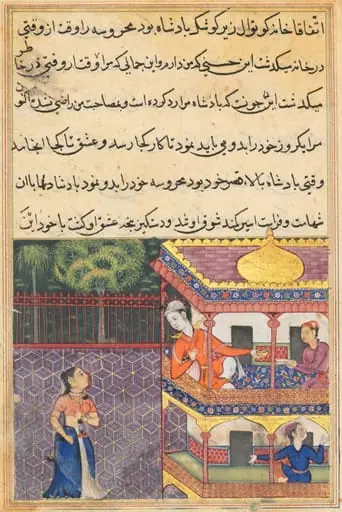 The king of Zabul sees Mahrusa from his palace balcony, from a Tuti-nama (Tales of a Parrot): Thirty-sixth Night
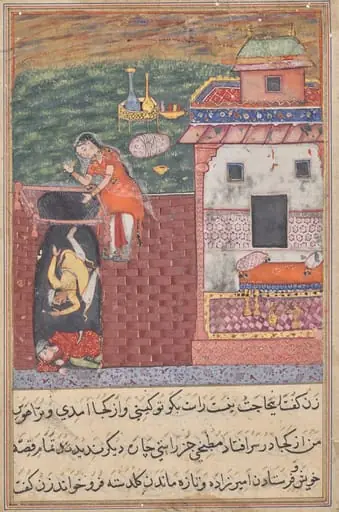 The two cooks, who attempt to seduce the warrior’s loyal wife, are trapped by her in a cellar, from a Tuti-nama (Tales of a Parrot): Fourth Night
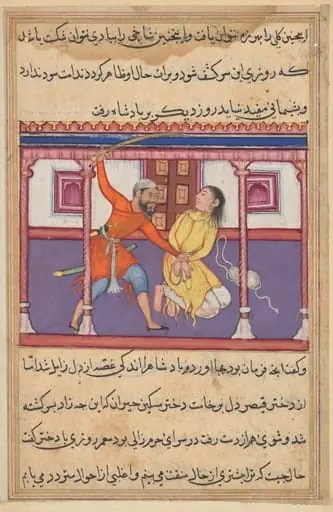 The guard spares the life of the slave when he learns that he is the son of the princess of the Rum, from a Tuti-nama (Tales of a Parrot): Fiftieth Night