Artwork
The lion disturbed by mice who eat the food trapped in his aging teeth, from a Tuti-nama (Tales of a Parrot): Fifteenth Night
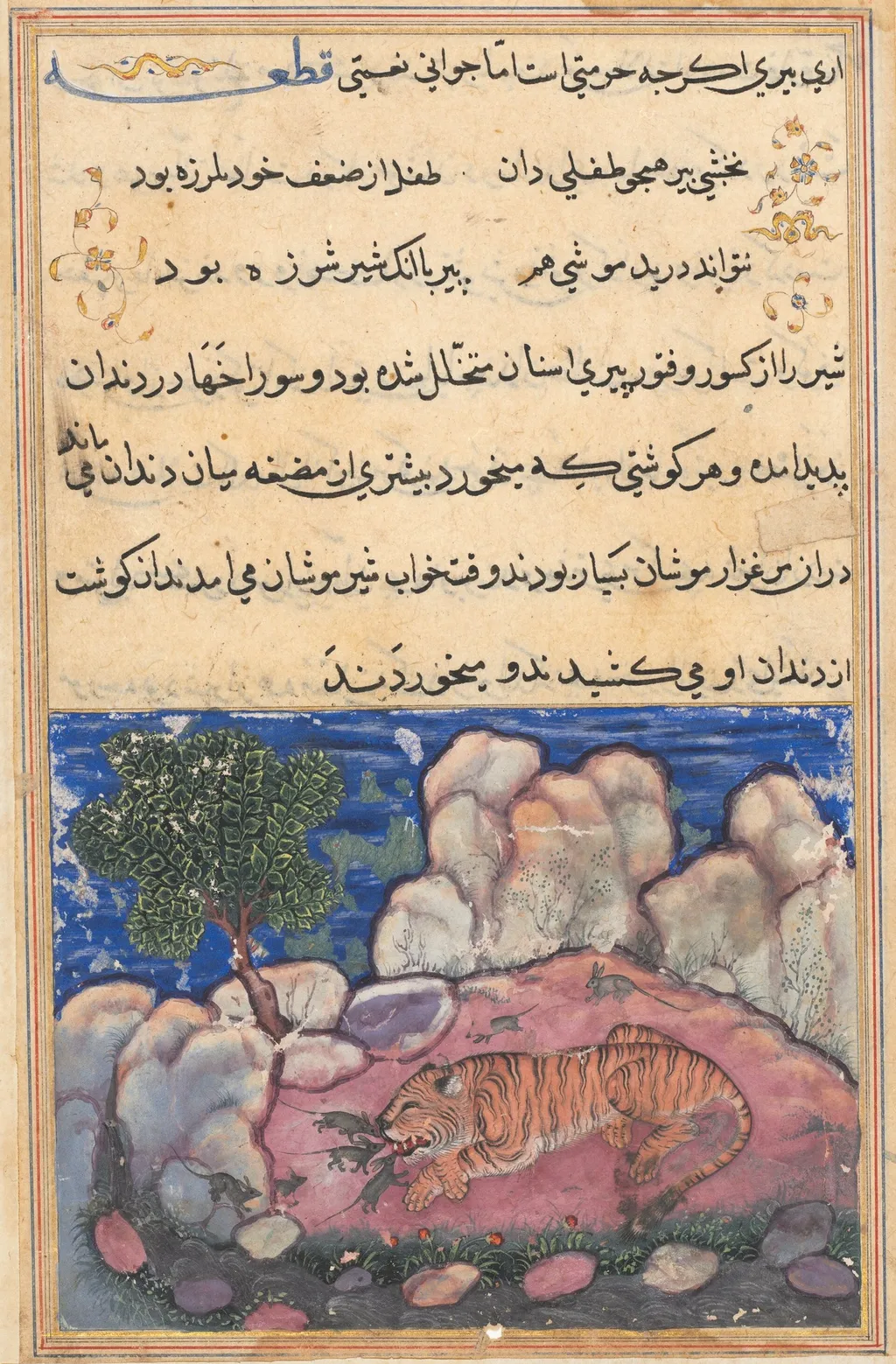
The lion disturbed by mice who eat the food trapped in his aging teeth, from a Tuti-nama (Tales of a Parrot): Fifteenth Night is an unspecified painting. It dates from 1560 and is held in the collection of the Cleveland Museum of Art.
About this work
Subject & Meaning
The work belongs to the Mughal painting tradition produced in India during the mid-sixteenth century and is housed in the Cleveland Museum of Art.
The miniature depicts a lion weakened by age, his teeth filled with trapped food that is being consumed by tiny mice. This scene illustrates the proverb that even the mighty can be undermined by seemingly insignificant forces, a moral emphasized in the fifteenth night of the Tuti-nama. The lion’s distress symbolizes vulnerability in old age, while the mice represent hidden threats that exploit such weakness.
The work belongs to the Mughal painting tradition produced in India during the mid-sixteenth century and is housed in the Cleveland Museum of Art.
History & Provenance
The painting titled "The lion disturbed by mice who eat the food trapped in his aging teeth, from a Tuti-nama (Tales of a Parrot): Fifteenth Night" was created in 1560 in the Mughal Empire. It is part of the collection of the Cleveland Museum of Art, which acquired it under accession number 1962.279.113.a. The work is attributed to an unknown artist and is classified as a painting.
Overview
The work, titled The lion disturbed by mice who eat the food trapped in his aging teeth, from a Tuti-nama (Tales of a Parrot): Fifteenth Night, is a painted composition that portrays a large feline reclining on a rocky ledge. Behind the animal a solitary tree and a body of water extend into the distance, creating a tranquil landscape setting.
Technique & Style
Executed with a palette that balances warm pink‑white rocks, cool blues of water, and the vivid orange of the lion’s coat, the painting employs layered brushwork to convey depth. The composition guides the eye from the foreground animal to the receding landscape, while subtle tonal shifts generate a calm, atmospheric mood.
Context
Within the broader tradition of illustrated storytelling, the painting reflects the Persian‑influenced miniature aesthetic that often combined animal allegory with moral instruction. The serene natural backdrop aligns with the genre’s tendency to situate didactic scenes within idealized, harmonious environments.
Legacy
Although the work is not widely cited in major art historical surveys, it remains an example of narrative painting that merges literary content with visual representation, illustrating how animal motifs were employed to convey philosophical reflections in pre‑modern manuscript art.
Artist & collection

- The lion disturbed by mice who eat the food trapped in his aging teeth, from a Tuti-nama (Tales of a Parrot): Fifteenth Night
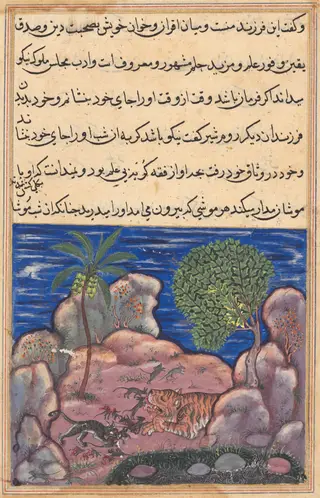 The cat attacks the mice which disturb the lion, from a Tuti-nama (Tales of a Parrot): Fifteenth Night
 The cat attacks the mice which disturb the lion, from a Tuti-nama (Tales of a Parrot): Fifteenth Night
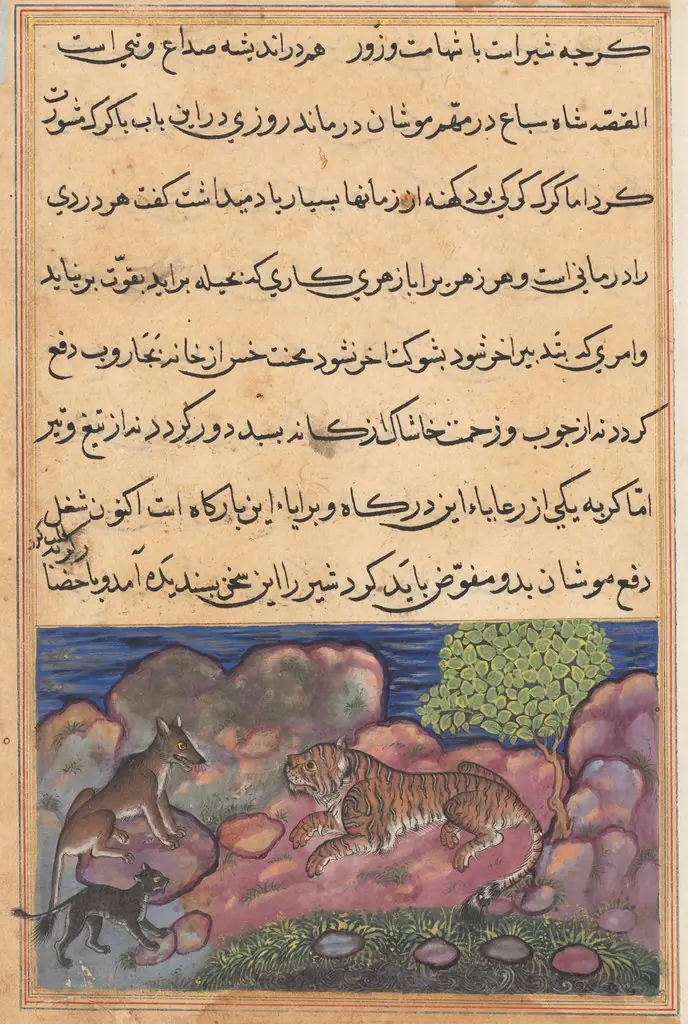 The wolf advises the lion to consult the cat, from a Tuti-nama (Tales of a Parrot): Fifteenth Night
 The wolf advises the lion to consult the cat, from a Tuti-nama (Tales of a Parrot): Fifteenth Night
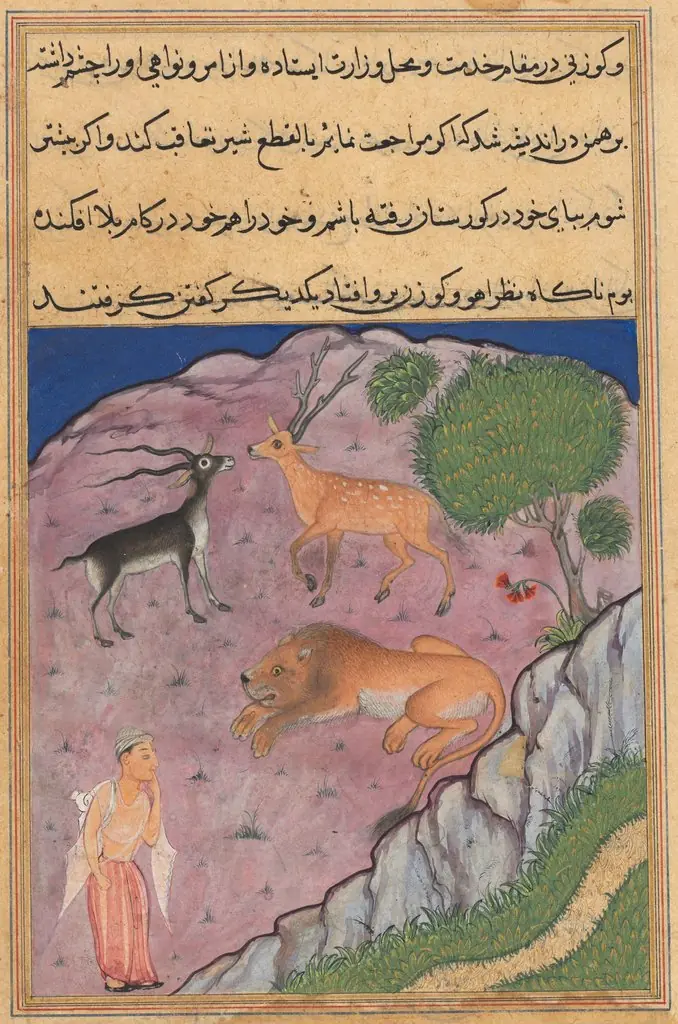 The Brahman comes upon a lion who has a deer and a gazelle as his viziers, from a Tuti-nama (Tales of a Parrot): Twenty-first Night
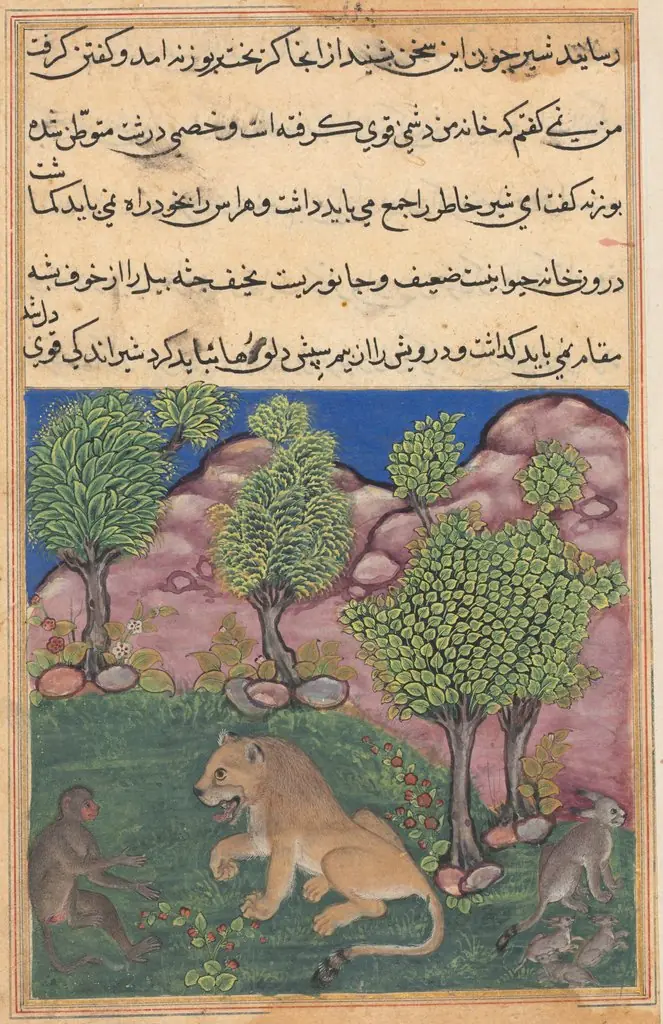 The monkey advises the suspicious lion to cast off fear and take possession of his territory, from a Tuti-nama (Tales of a Parrot): Twenty-ninth Night
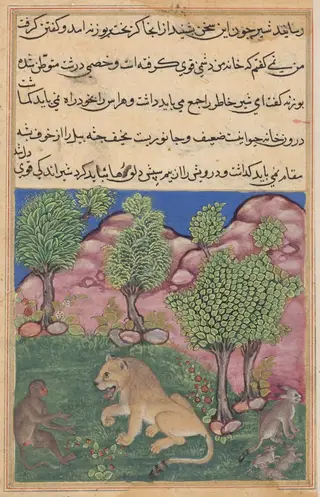 The monkey advises the suspicious lion to cast off fear and take possession of his territory, from a Tuti-nama (Tales of a Parrot): Twenty-ninth Night
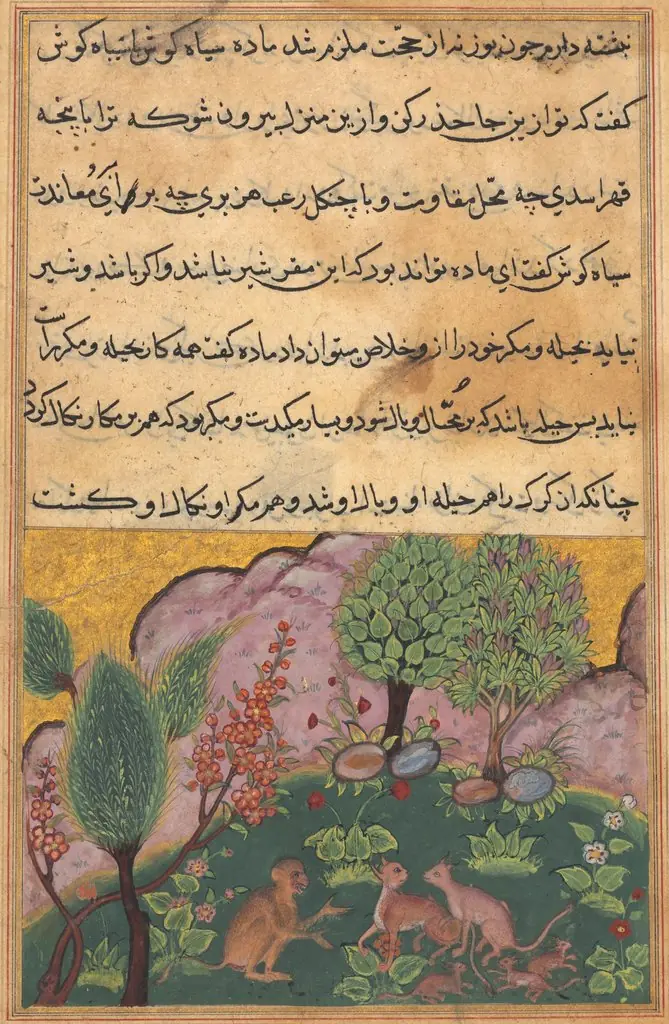 The monkey, serving as the lion’s chamberlain, converses with the lynx and its mate who have arrived with their cubs to settle in the lion’s domain, from a Tuti-nama (Tales of a Parrot): Twenty-ninth Night
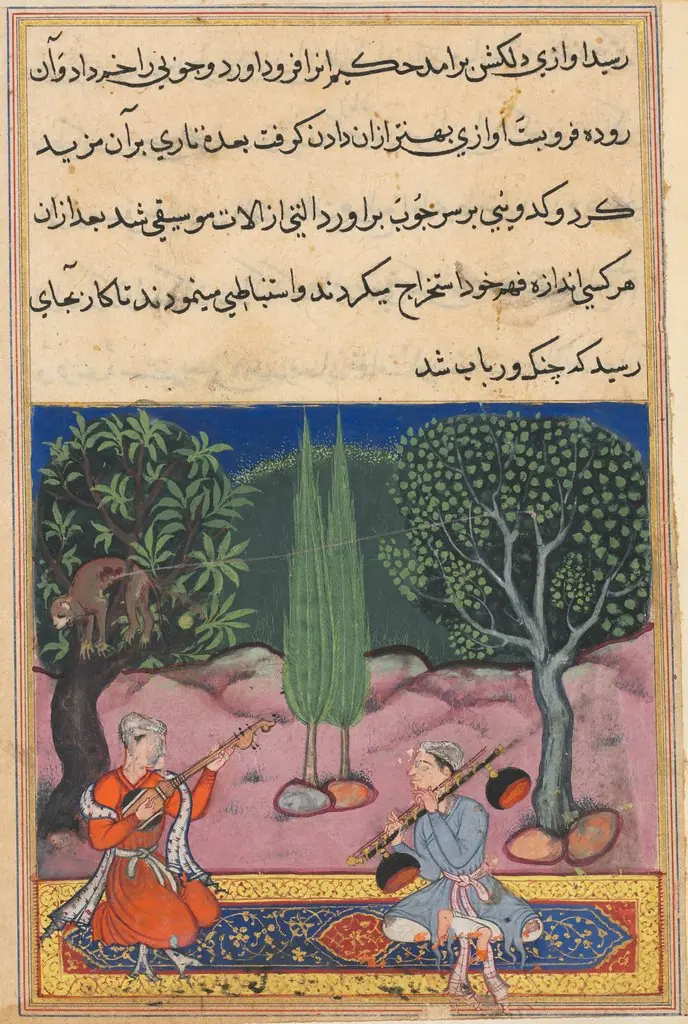 The invention of musical instruments from the intestines of a monkey, from a Tuti-nama (Tales of a Parrot): Fourteenth Night
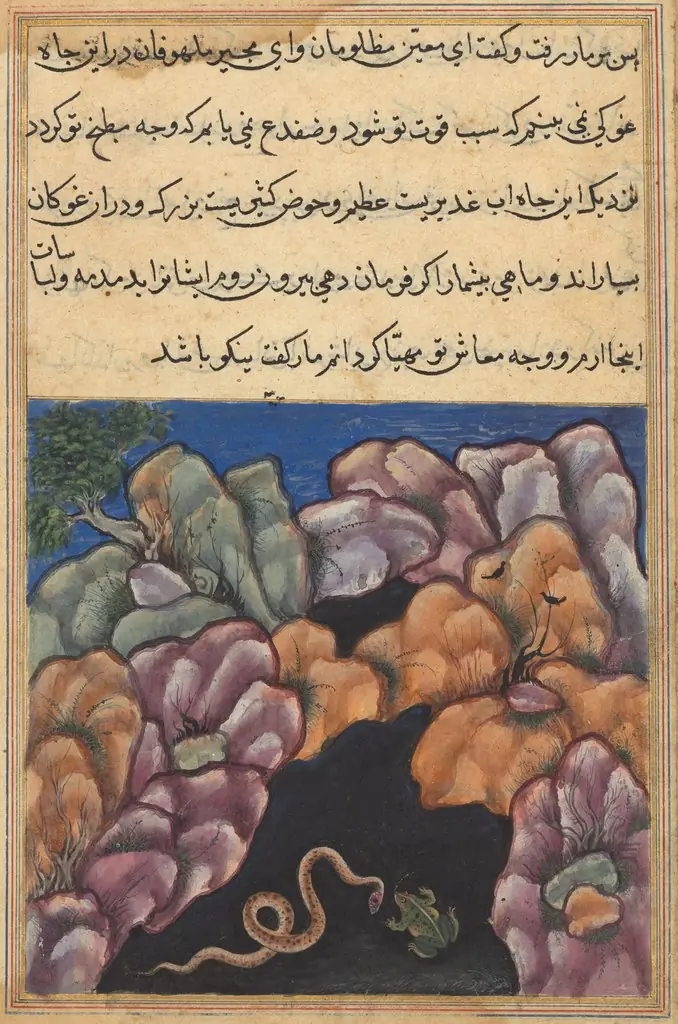 The snake enters into an argument with the frog, from a Tuti-nama (Tales of a Parrot): Twenty-sixth Night
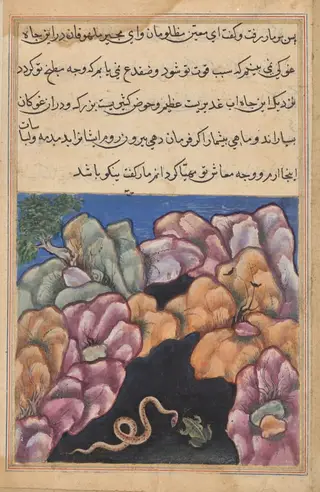 The snake enters into an argument with the frog, from a Tuti-nama (Tales of a Parrot): Twenty-sixth Night
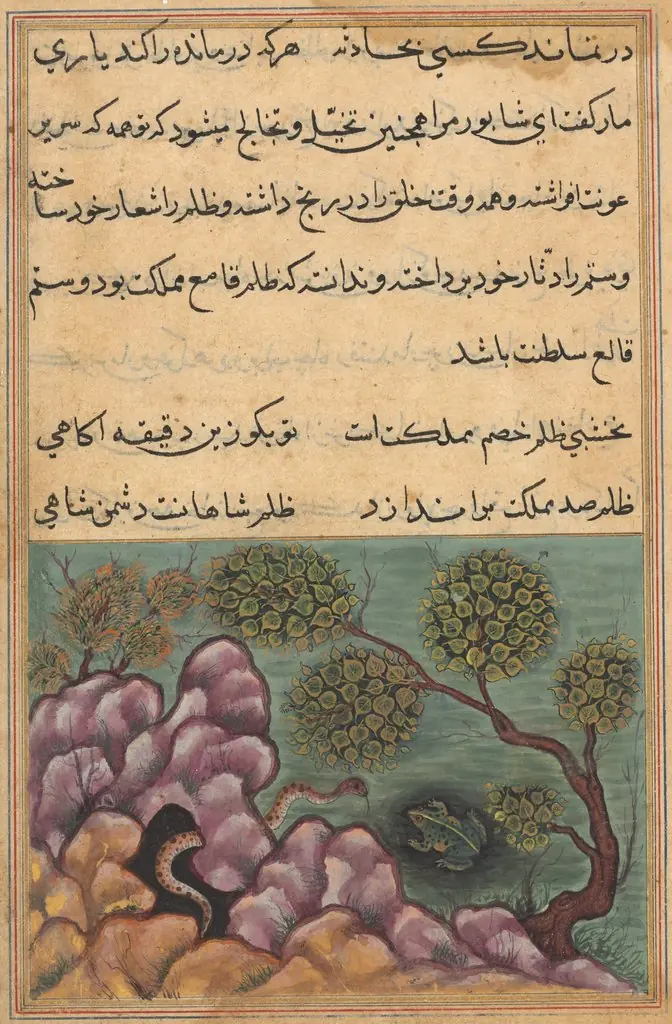 The dethroned frog Shapur seeks the help of the serpent, from a Tuti-nama (Tales of a Parrot): Twenth-sixth Night
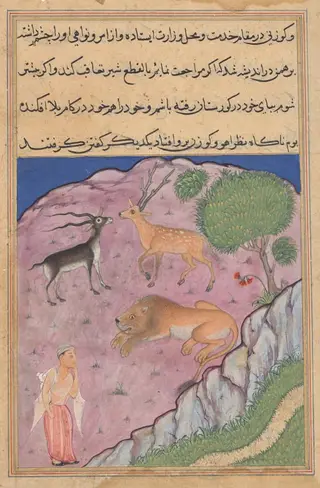 The Brahman comes upon a lion who has a deer and a gazelle as his viziers, from a Tuti-nama (Tales of a Parrot): Twenty-first Night
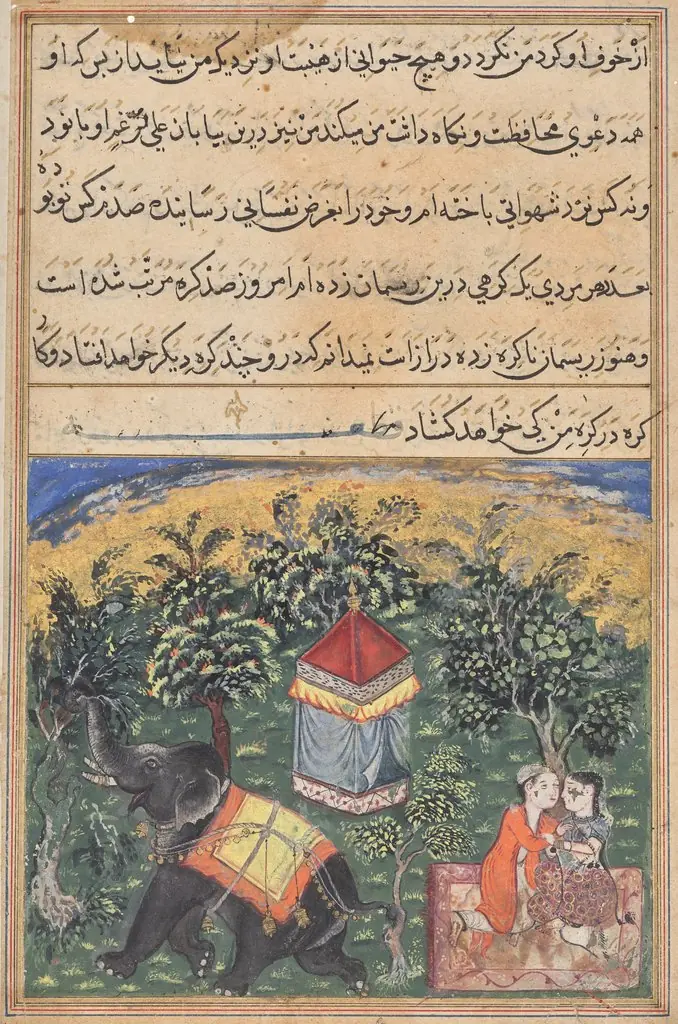 Page from Tales of a Parrot (Tuti-nama): text page