Artwork
The monkey advises the suspicious lion to cast off fear and take possession of his territory, from a Tuti-nama (Tales of a Parrot): Twenty-ninth Night
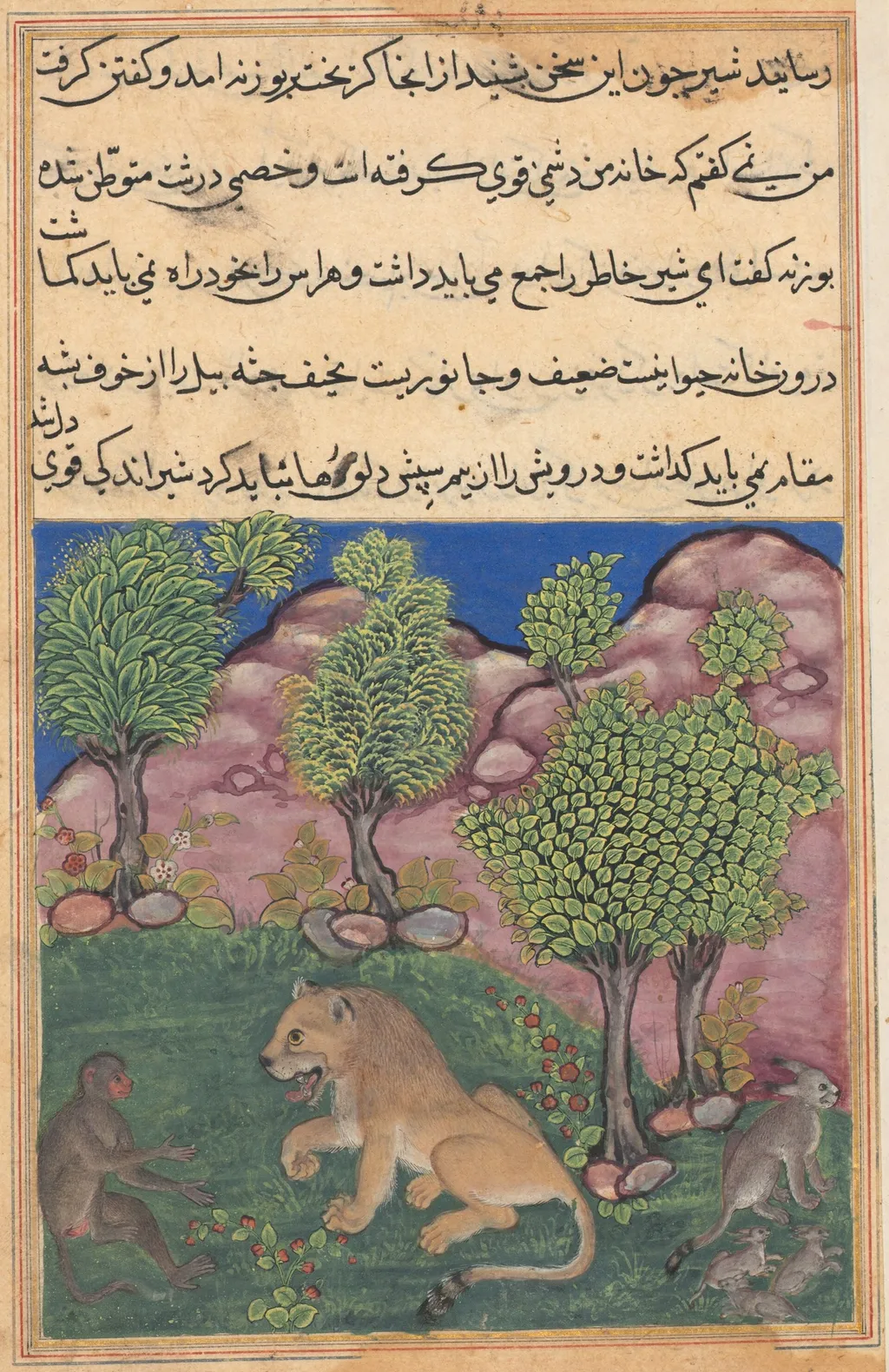
The monkey advises the suspicious lion to cast off fear and take possession of his territory, from a Tuti-nama (Tales of a Parrot): Twenty-ninth Night is an unspecified painting. It dates from 1560 and is held in the collection of the Cleveland Museum of Art. This painting illustrates a scene from the Tuti-nama, or "Tales of a Parrot," specifically depicting the twenty-ninth night's story.
About this work
Subject & Meaning
The composition features a monkey and a lion situated among floral elements, visually enacting the story's title where the primate counsels the feline.
Created in 1560 within the Mughal Empire, this painting illustrates a specific narrative moment from the twenty-ninth night of the Tuti-nama (Tales of a Parrot). The composition features a monkey and a lion situated among floral elements, visually enacting the story's title where the primate counsels the feline. Iconographically, the work captures the interaction between these two animals to represent a moral lesson: the monkey advises the suspicious lion to overcome his fear and seize control of his territory.
The inclusion of flowers frames this dramatic encounter, while the depiction of the lion's hesitation and the monkey's guidance symbolizes the triumph of courage over doubt. As part of the Tuti-nama manuscript tradition, the image serves as a visual interpretation of the parrot's tales, using animal protagonists to convey advice on leadership and self-assurance.
History & Provenance
The painting was produced in 1560 within the Mughal Empire, during the early years of the imperial ateliers established under the dynasty's founding rulers. It forms part of an illustrated manuscript of the Tuti-nama (Tales of a Parrot), specifically illustrating the Twenty-ninth Night episode in which a monkey counsels a wary lion. The work is now held by the Cleveland Museum of Art, where it is catalogued under accession number 1962.279.196.a.
The accession year of 1962 indicates that the page entered the museum's collection during the early 1960s, though the sources do not detail the intermediate ownership chain or the circumstances of its acquisition prior to that date. No information regarding an original patron or commissioning context is recorded in the available documentation.
The Cleveland Museum of Art holds the work under inventory number 1962.279.196.a. It entered the collection in 1962 as part of a gift or acquisition that included other folios from the same Tuti-nama manuscript. The painting has not been recorded in major traveling exhibitions focused on Mughal manuscript painting, and its exhibition history consists primarily of on-site displays within the museum’s permanent galleries dedicated to Indian and South Asian art.
Overview
This painting illustrates a scene from the Tuti-nama, or "Tales of a Parrot," specifically depicting the twenty-ninth night's story. It portrays a pivotal moment where a monkey offers counsel to a hesitant lion, urging it to overcome its apprehension and reclaim its domain. The artwork is characterized by vibrant natural elements and a clear narrative focus, typical of illustrated fables, and is identified by the flowing script integrated into the composition.
Technique & Style
The composition features a golden-furred lion as the central focus, positioned in vivid green grass, looking surprised by the brown monkey's directive. Three additional monkeys observe from surrounding bushes, contributing to the scene's narrative tension. The background consists of trees with yellow-green foliage set against a flat blue sky, creating a distinct, stylized landscape. The flowing script above the scene integrates the visual and textual components, characteristic of illustrated manuscripts.
Context
This painting originates from a Tuti-nama manuscript, an influential collection of Indian fables translated into Persian. These tales, often featuring animals with human-like qualities, served to impart moral lessons and entertain. The "Twenty-ninth Night" refers to one of the many stories narrated by a parrot to its mistress, delaying her from an illicit rendezvous. Such illustrations were integral to the storytelling experience, bringing the narratives to life for readers.
Artist & collection

- The monkey advises the suspicious lion to cast off fear and take possession of his territory, from a Tuti-nama (Tales of a Parrot): Twenty-ninth Night
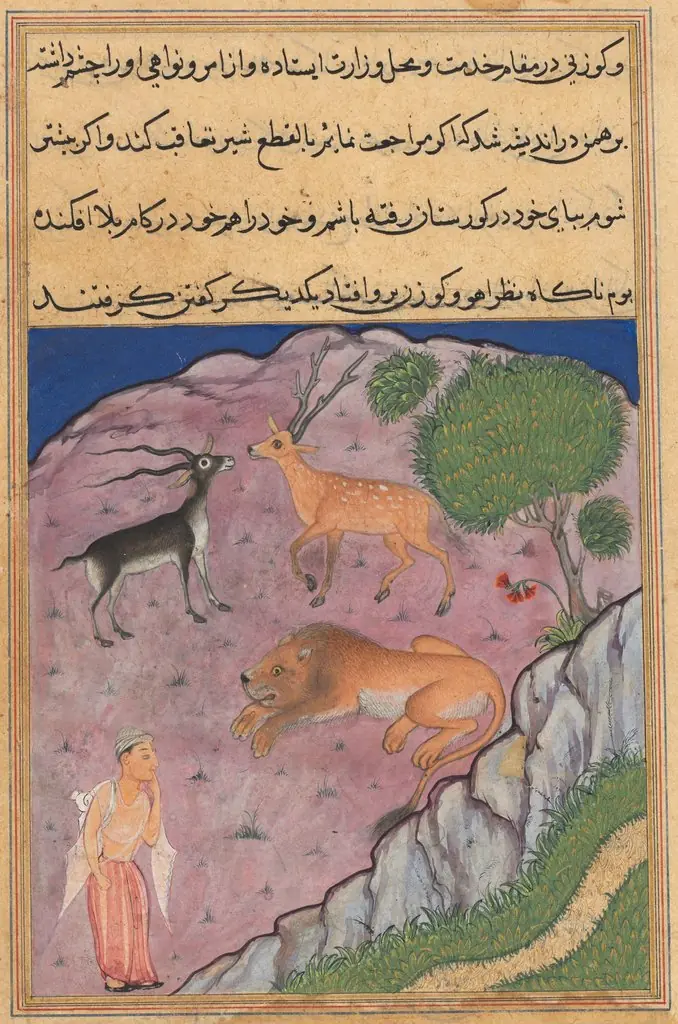 The Brahman comes upon a lion who has a deer and a gazelle as his viziers, from a Tuti-nama (Tales of a Parrot): Twenty-first Night
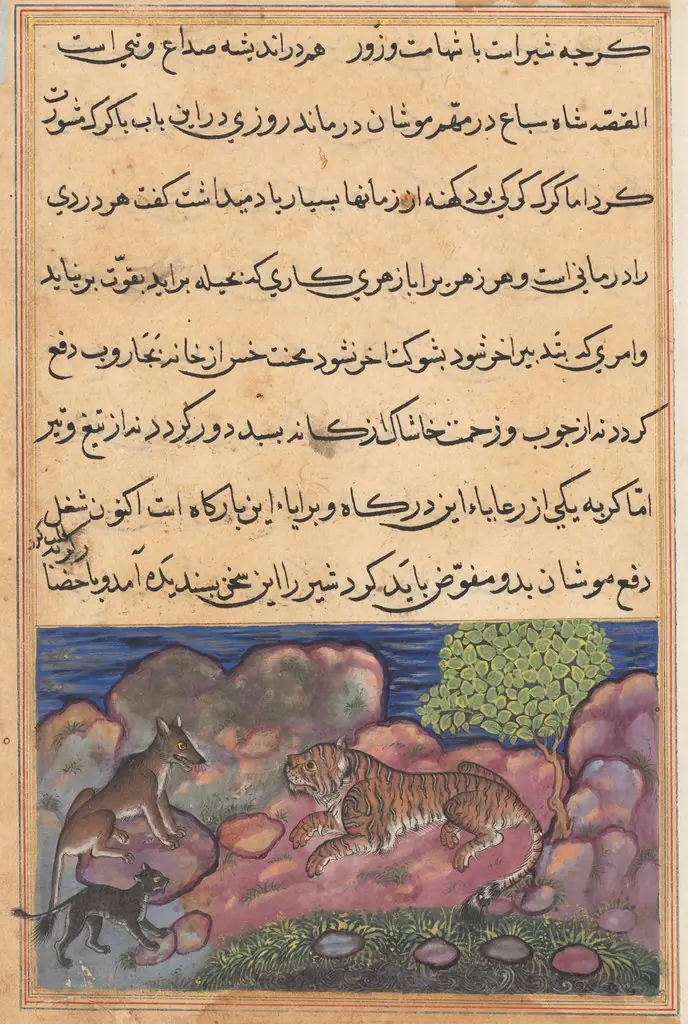 The wolf advises the lion to consult the cat, from a Tuti-nama (Tales of a Parrot): Fifteenth Night
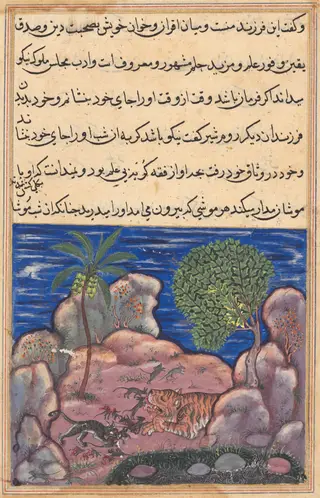 The cat attacks the mice which disturb the lion, from a Tuti-nama (Tales of a Parrot): Fifteenth Night
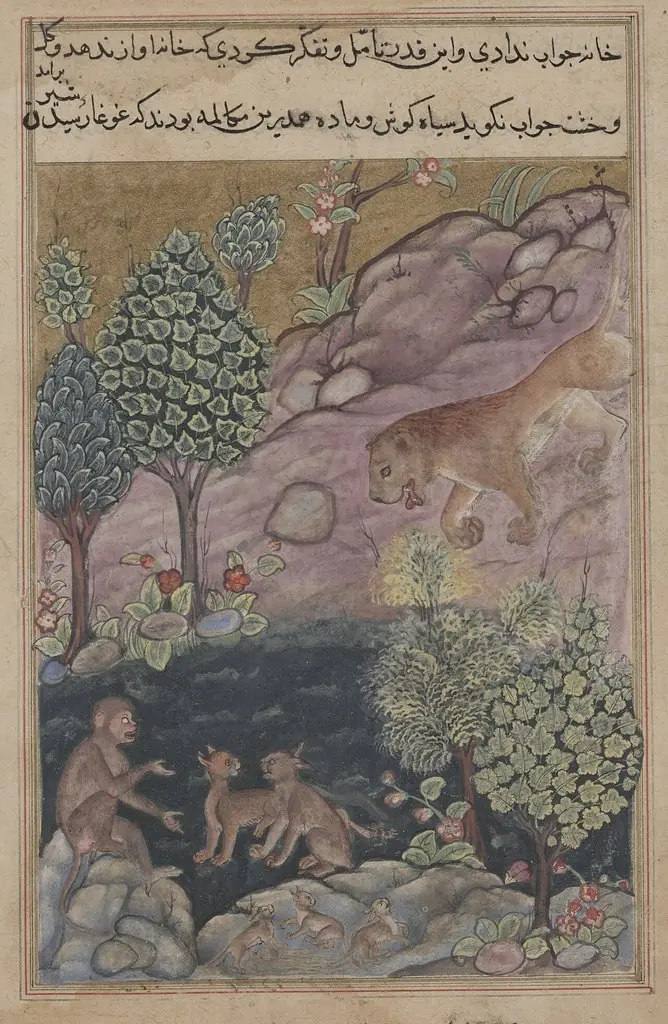 The lion returns to his territory and sees the monkey conversing with the lynx, from a Tuti-nama (Tales of a Parrot): Twenty-ninth Night
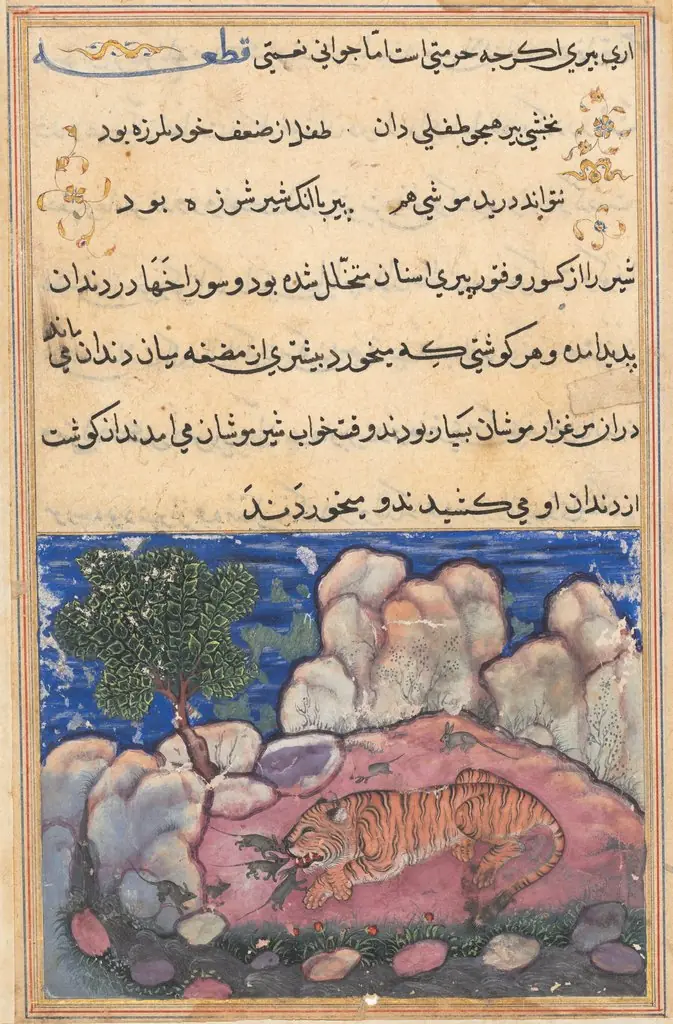 The lion disturbed by mice who eat the food trapped in his aging teeth, from a Tuti-nama (Tales of a Parrot): Fifteenth Night
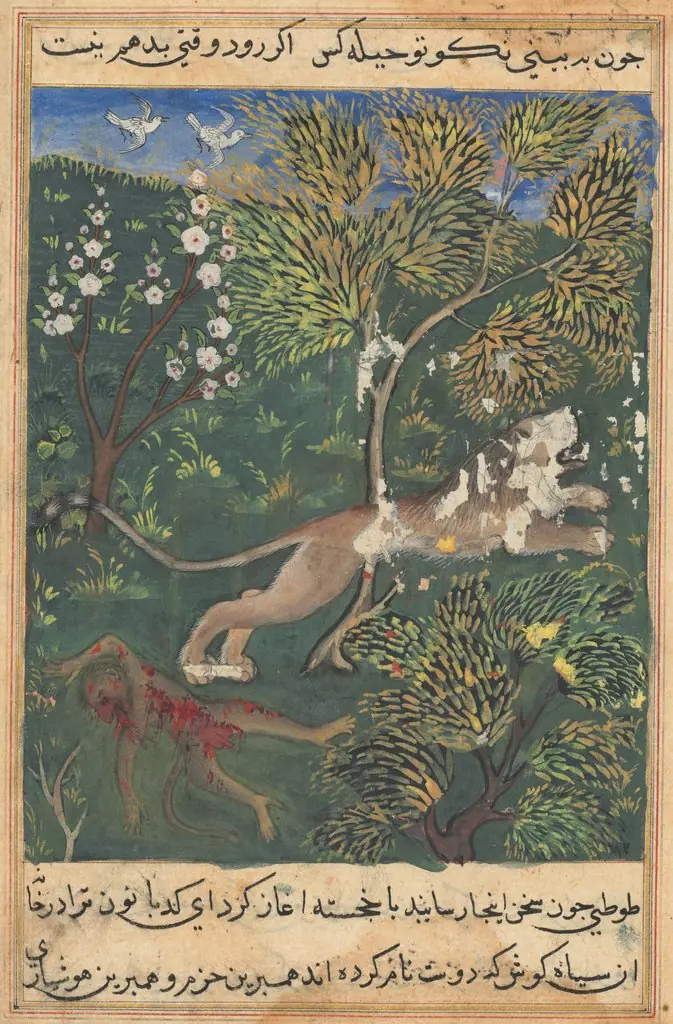 The lion, suspecting treachery on the part of the monkey, slays him and flees, from a Tuti-nama (Tales of a Parrot): Twenty-ninth Night
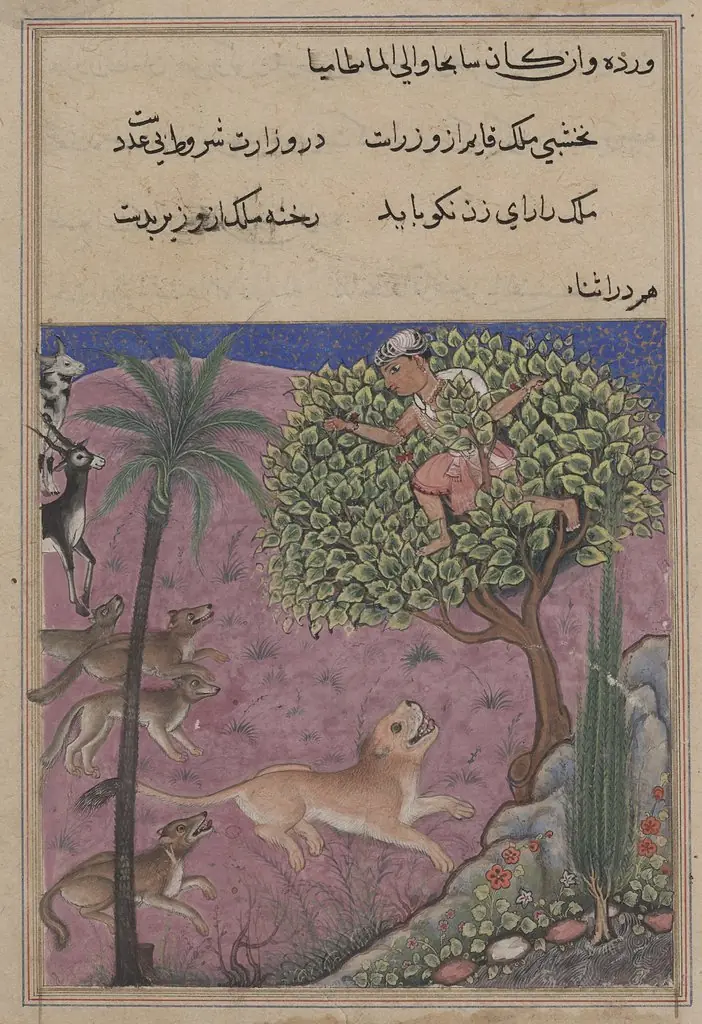 The wolf and the jackal, serving as viziers, instigate the lion who pursues the Brahman up a tree, from a Tuti-nama (Tales of a Parrot): Twenty-first Night
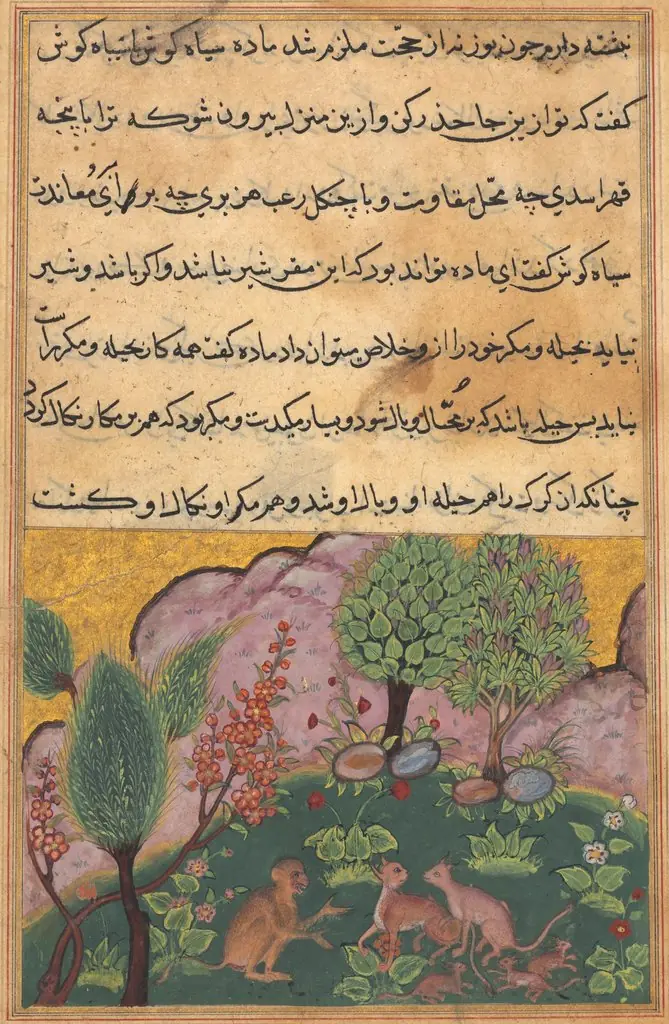 The monkey, serving as the lion’s chamberlain, converses with the lynx and its mate who have arrived with their cubs to settle in the lion’s domain, from a Tuti-nama (Tales of a Parrot): Twenty-ninth Night
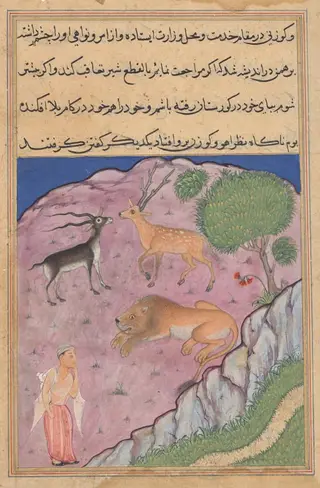 The Brahman comes upon a lion who has a deer and a gazelle as his viziers, from a Tuti-nama (Tales of a Parrot): Twenty-first Night
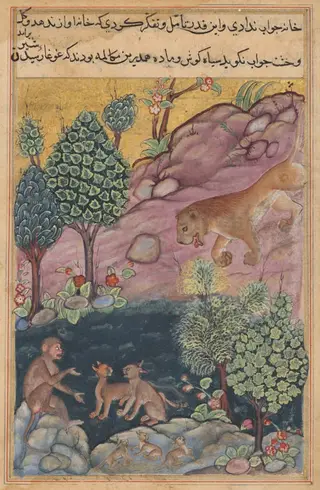 The lion returns to his territory and sees the monkey conversing with the lynx, from a Tuti-nama (Tales of a Parrot): Twenty-ninth Night
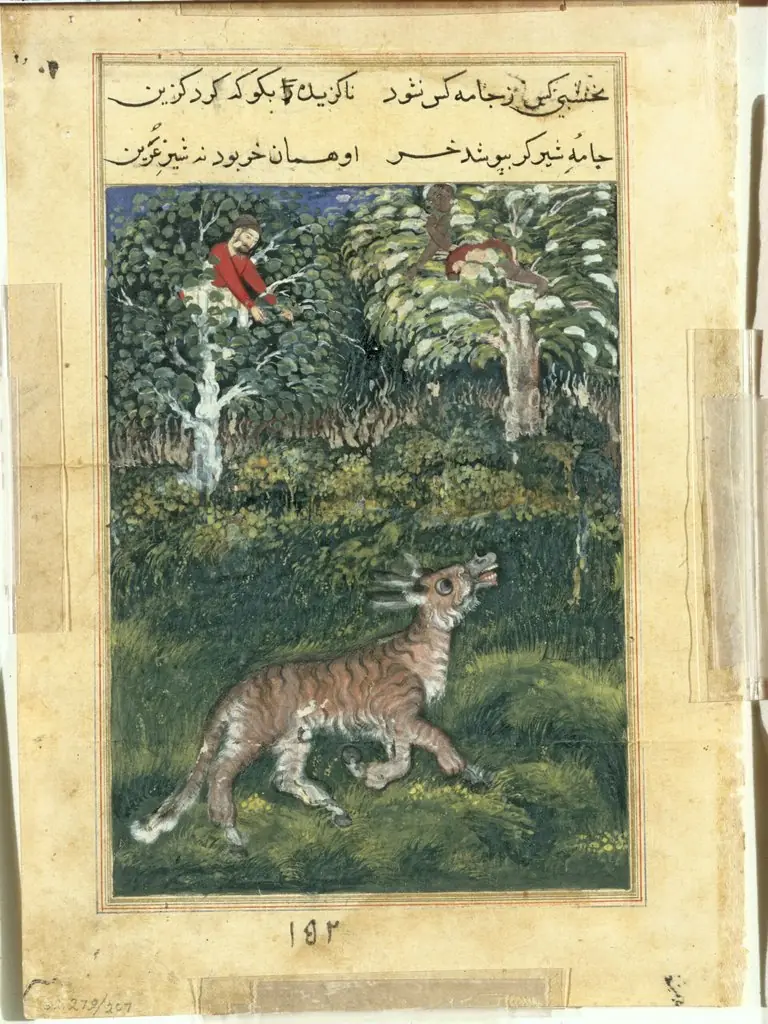 The donkey, in a tiger’s skin, reveals his identity by braying aloud, from a Tuti-nama (Tales of a Parrot): Thirty-first Night
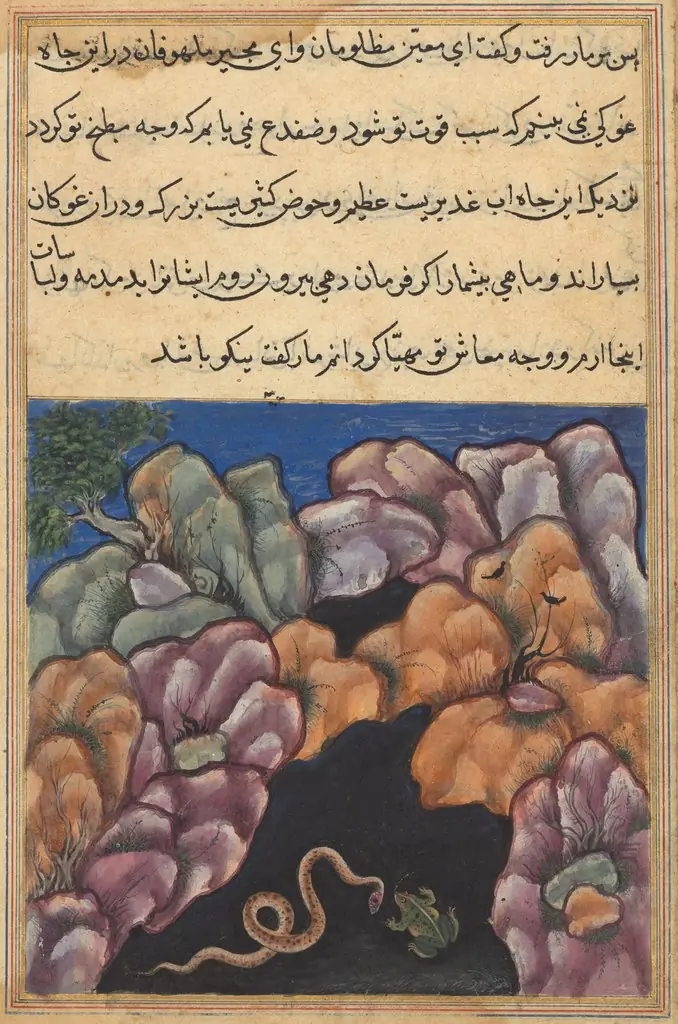 The snake enters into an argument with the frog, from a Tuti-nama (Tales of a Parrot): Twenty-sixth Night
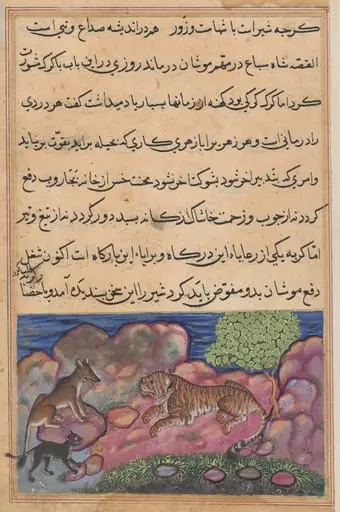 The wolf advises the lion to consult the cat, from a Tuti-nama (Tales of a Parrot): Fifteenth Night
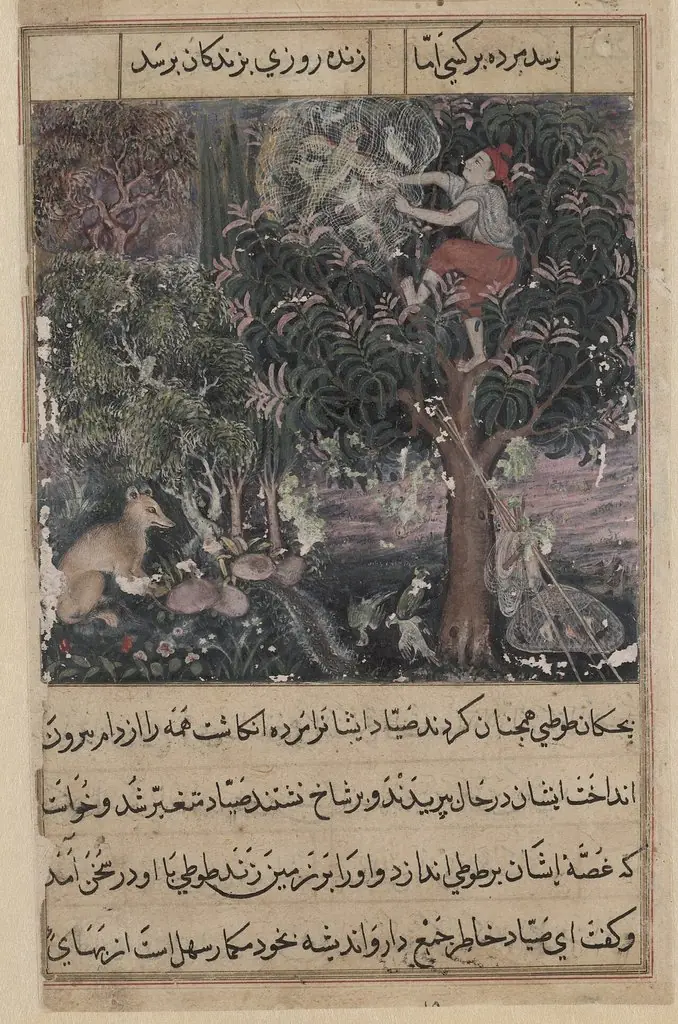 The hunter throws away the baby parrots, who pretend to be dead, and captures the mother, from a Tuti-nama (Tales of a Parrot): Fifth Night
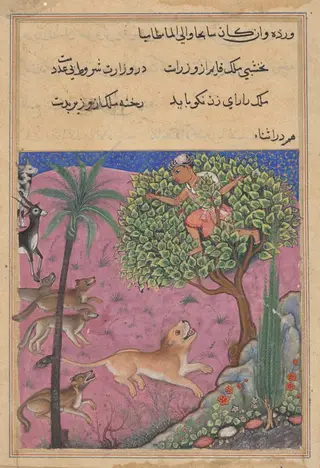 The wolf and the jackal, serving as viziers, instigate the lion who pursues the Brahman up a tree, from a Tuti-nama (Tales of a Parrot): Twenty-first Night
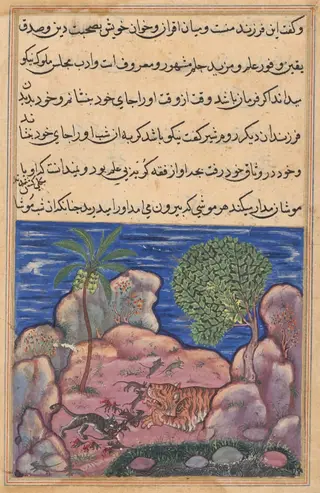 The cat attacks the mice which disturb the lion, from a Tuti-nama (Tales of a Parrot): Fifteenth Night