Artwork
The monkey, serving as the lion’s chamberlain, converses with the lynx and its mate who have arrived with their cubs to settle in the lion’s domain, from a Tuti-nama (Tales of a Parrot): Twenty-ninth Night
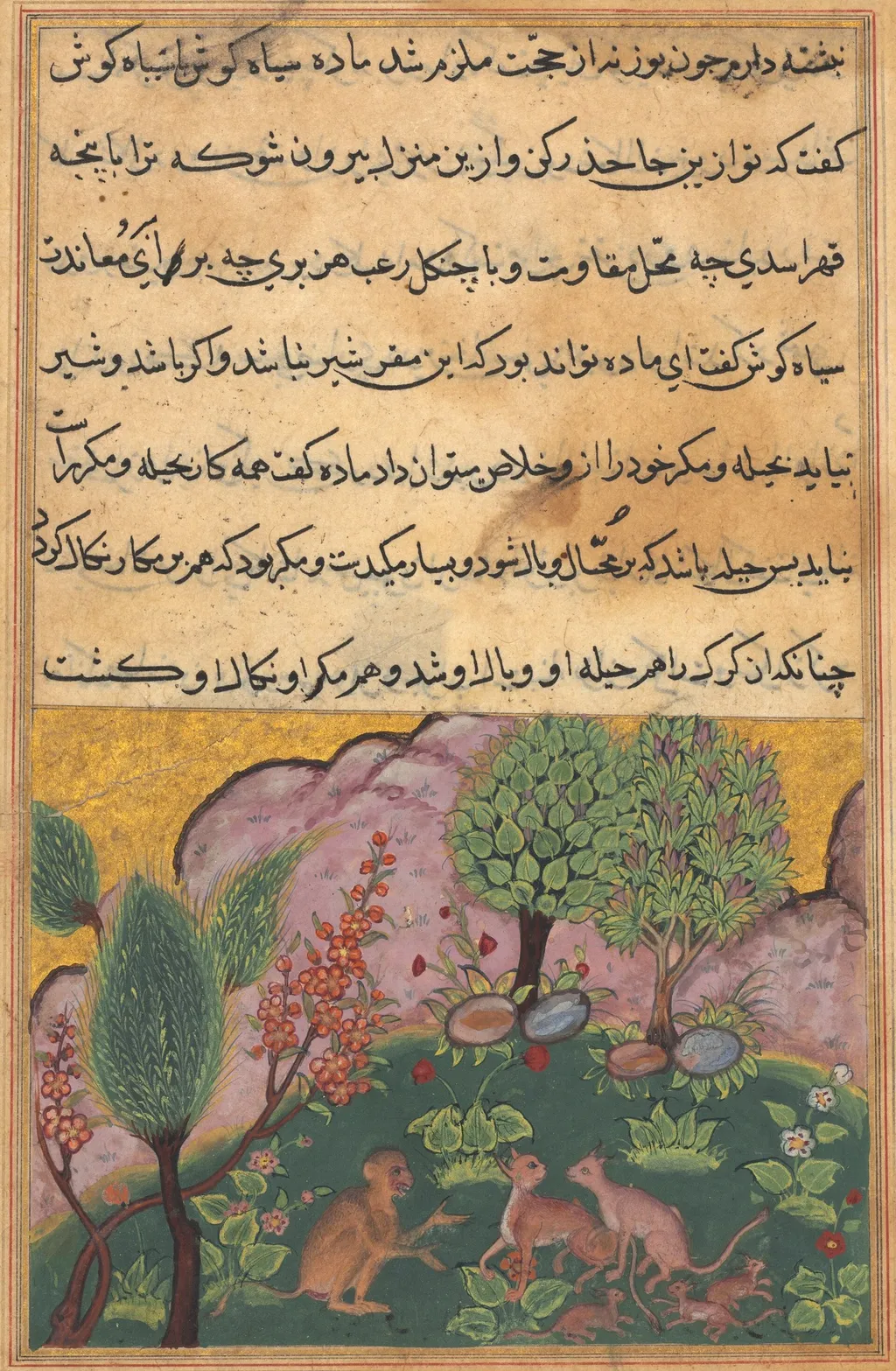
The monkey, serving as the lion’s chamberlain, converses with the lynx and its mate who have arrived with their cubs to settle in the lion’s domain, from a Tuti-nama (Tales of a Parrot): Twenty-ninth Night is an unspecified painting. It dates from 1560 and is held in the collection of the Cleveland Museum of Art.
About this work
History & Provenance
The miniature depicts the monkey chamberlain mediating between the lion and the arriving lynx pair, a scene from the twenty-ninth night of the tale.
This illustration, The monkey, serving as the lion's chamberlain, converses with the lynx and its mate who have arrived with their cubs to settle in the lion's domain, was produced circa 1560 in Mughal India as part of an illustrated Tuti-nama (Tales of a Parrot) manuscript. The miniature depicts the monkey chamberlain mediating between the lion and the arriving lynx pair, a scene from the twenty-ninth night of the tale. Attributed to an unnamed artist, the work combines Persian narrative tradition with Mughal visual sensibility.
It is held by the Cleveland Museum of Art under accession number 1962.279.193.a, having entered the museum's collection in 1962. No exhibition history is documented in the provided sources.
Overview
This painting illustrates a scene from the Tuti-nama, or "Tales of a Parrot," specifically depicting the twenty-ninth night of the narrative. It presents a small, vibrant forest setting where animal characters engage in a quiet exchange. The artwork's title, "The monkey, serving as the lion’s chamberlain, converses with the lynx and its mate who have arrived with their cubs to settle in the lion’s domain," outlines the intricate animal fable unfolding within the composition.
Subject & Meaning
The painting captures a moment of diplomatic interaction within an animal kingdom. A monkey, identified as the lion's chamberlain, stands upright, seemingly in conversation with a pair of lynxes and their young. This gathering signifies the lynx family's arrival to establish themselves within the lion's territory, a common theme in fables exploring societal structures and integration. The scene suggests a narrative unfolding, characteristic of the didactic stories found in the Tuti-nama manuscript.
Technique & Style
The artist rendered this forest scene with notable attention to detail and a vibrant palette. Bright colors define the foliage of a tree adorned with green leaves and red berries, anchoring the left side of the composition. The depiction of animal fur and individual leaves exhibits a meticulous hand, contributing to the lively quality of the image. Soft pink and green hills form the background, creating a gentle, naturalistic setting for the animal figures.
Artist & collection

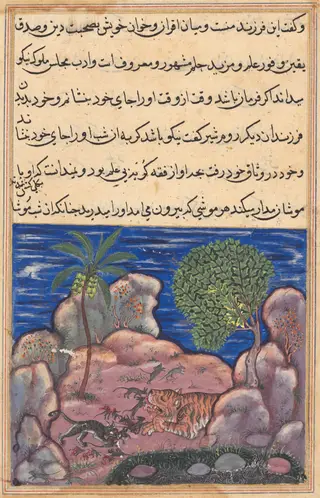 The cat attacks the mice which disturb the lion, from a Tuti-nama (Tales of a Parrot): Fifteenth Night
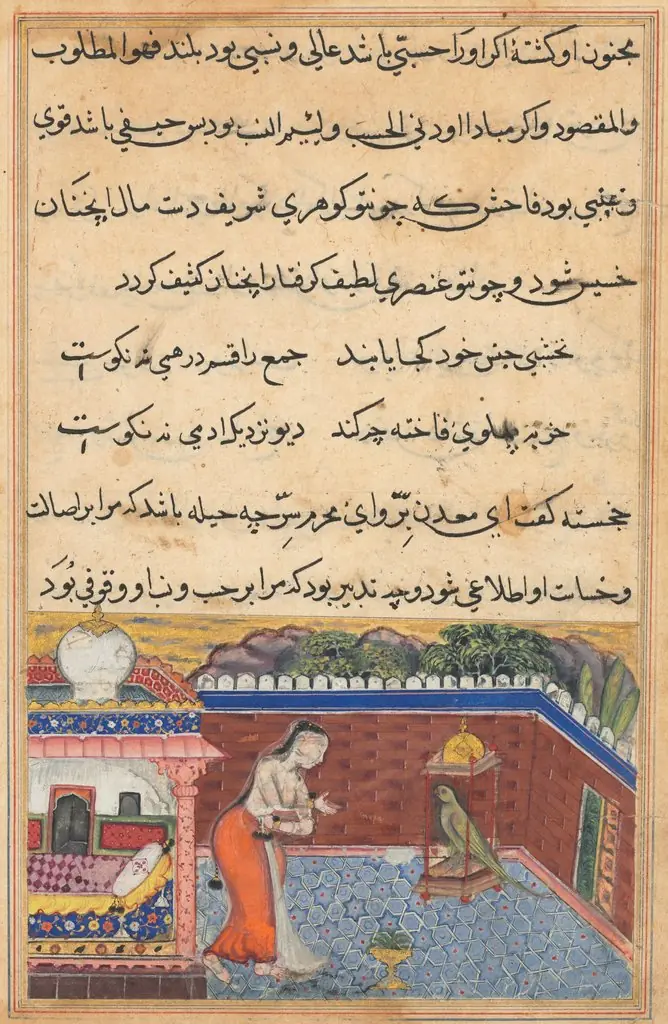 The parrot addresses Khujasta at the beginning of the thirty-first night, from a Tuti-nama (Tales of a Parrot)
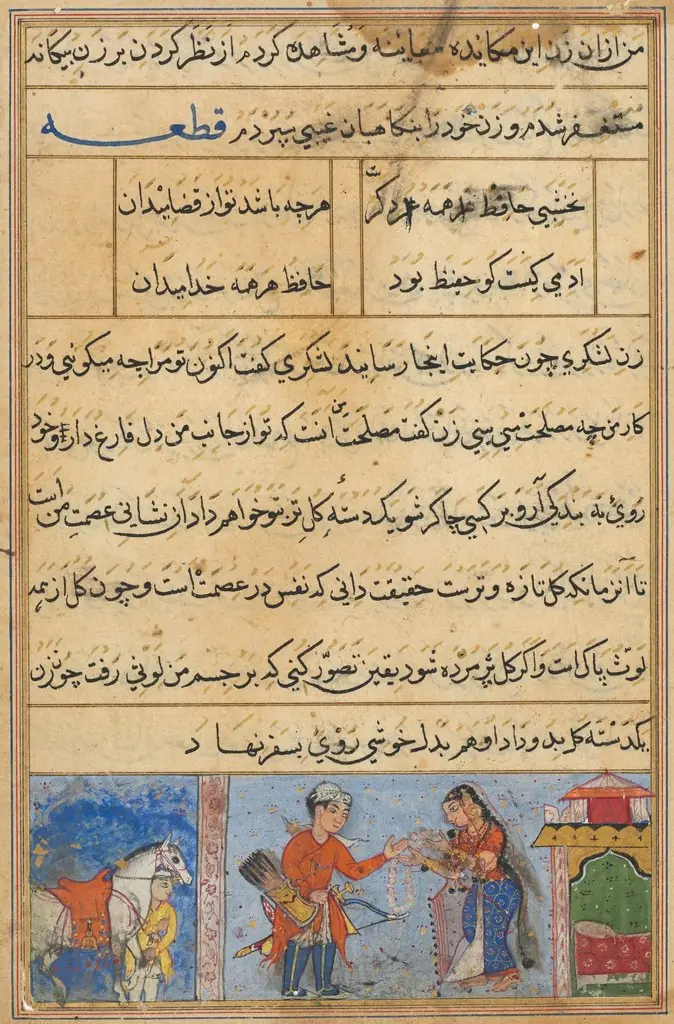 The soldier receives a garland of roses from his wife which will remain fresh as long as she is faithful, from a Tuti-nama (Tales of a Parrot): Fourth Night
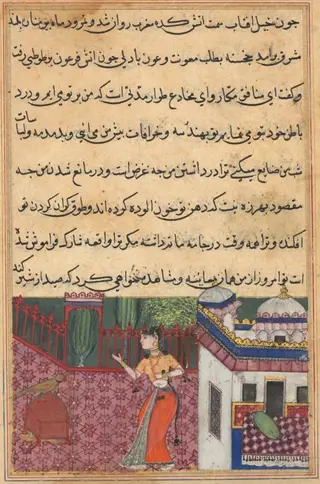 The parrot addresses Khujasta at the beginning of the thirty-third night, from a Tuti-nama (Tales of a Parrot)
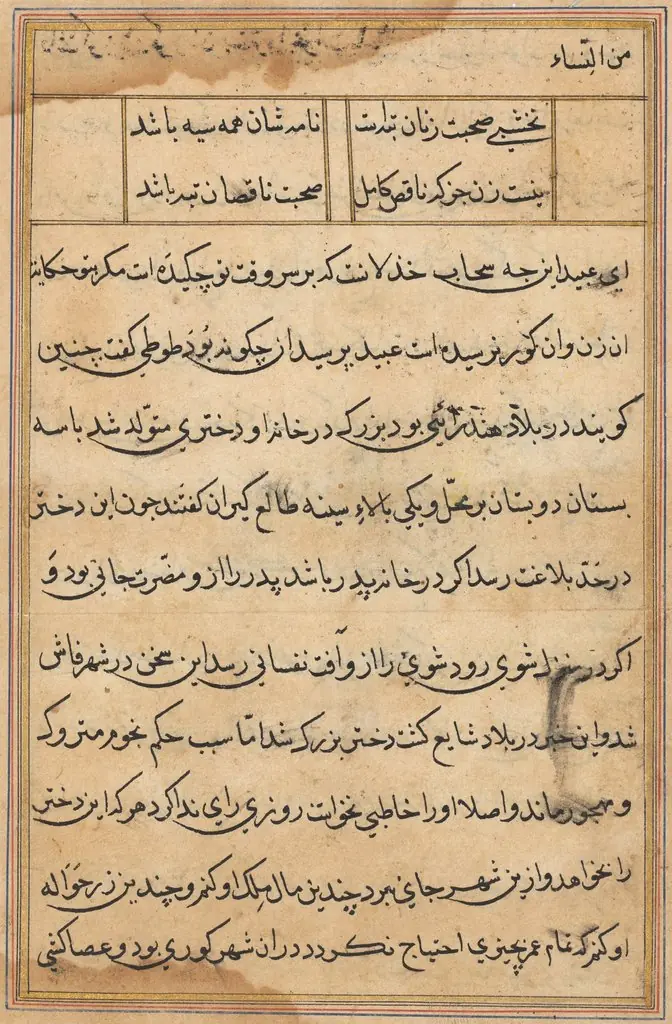 Page from Tales of a Parrot (Tuti-nama): text page
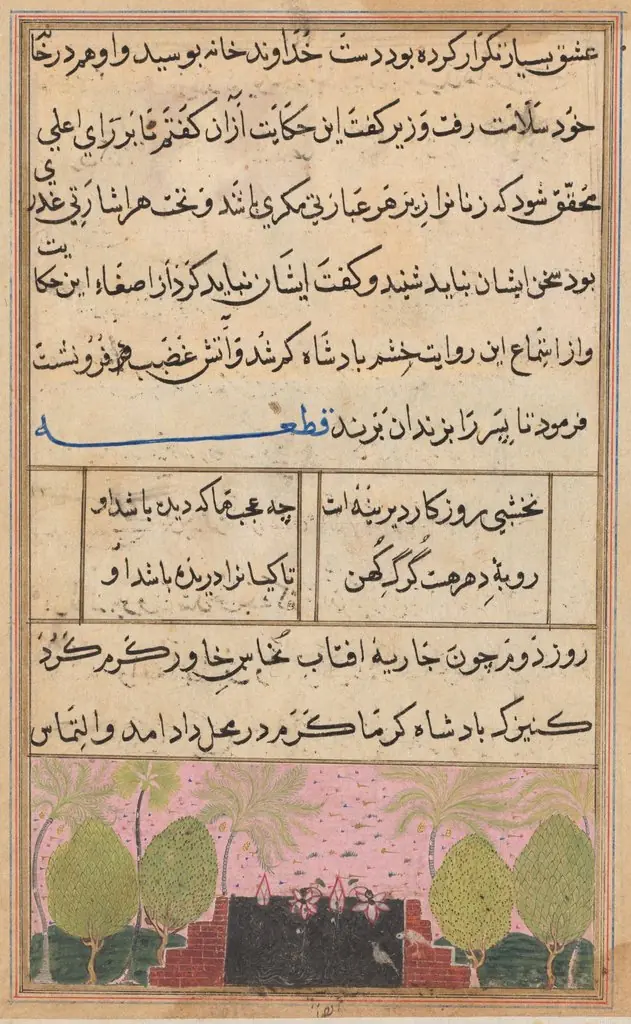 Landscape with a lotus pool, from a Tuti-nama (Tales of a Parrot), Eighth Night
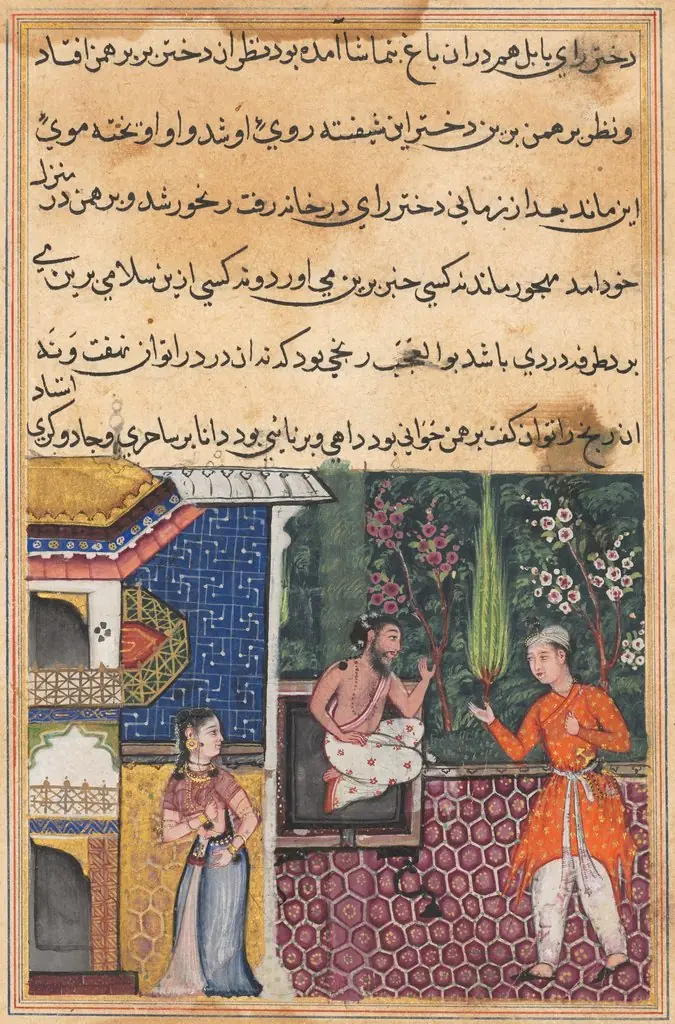 The Brahman gives an account of his falling in love with the king of Babylon’s daughter to his friend, the magician, from a Tuti-nama (Tales of a Parrot): Thirty-fifth Night
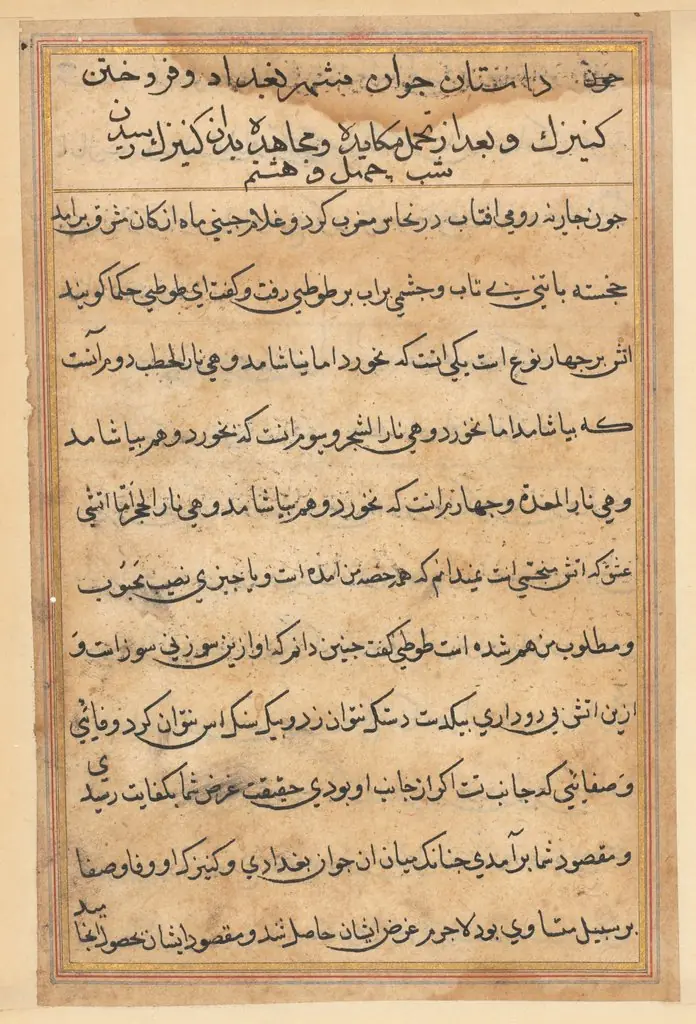 Page from Tales of a Parrot (Tuti-nama): text page
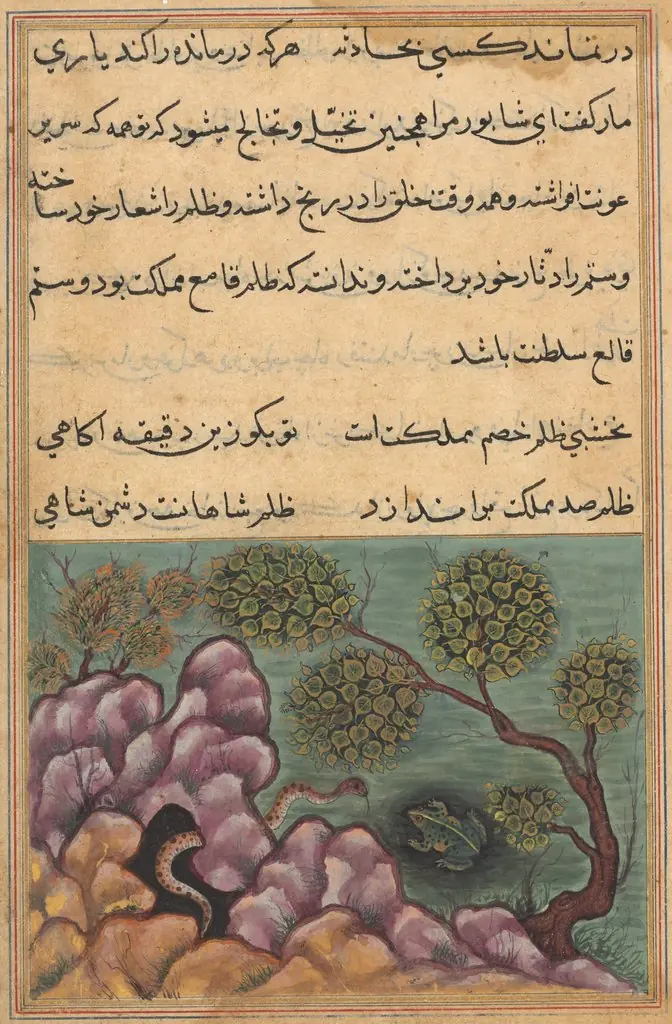 The dethroned frog Shapur seeks the help of the serpent, from a Tuti-nama (Tales of a Parrot): Twenth-sixth Night
- The monkey, serving as the lion’s chamberlain, converses with the lynx and its mate who have arrived with their cubs to settle in the lion’s domain, from a Tuti-nama (Tales of a Parrot): Twenty-ninth Night
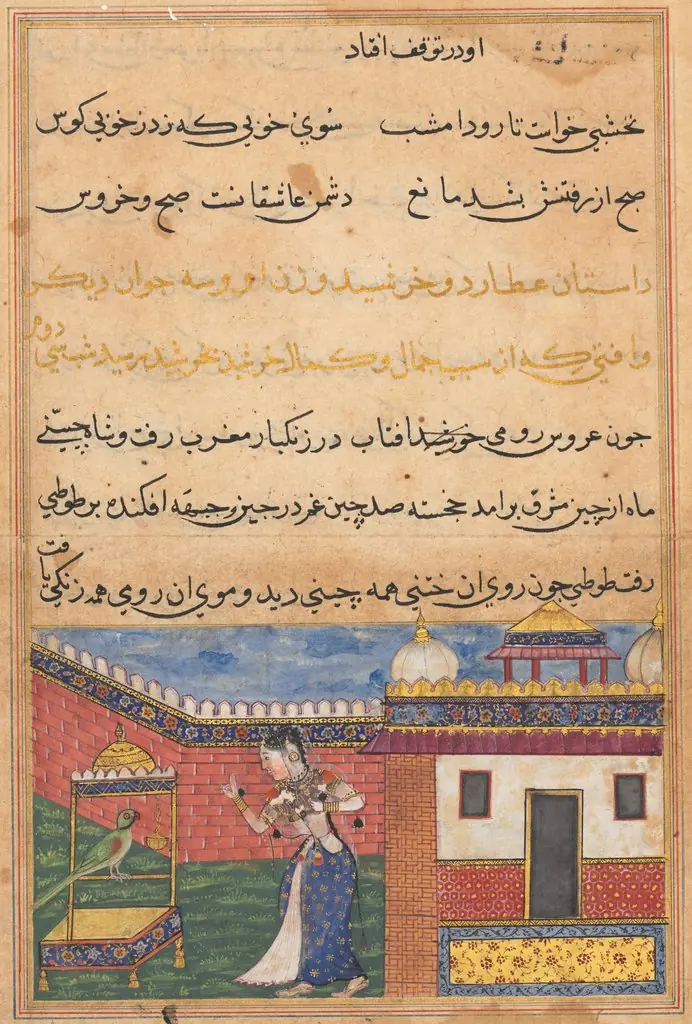 The parrot addresses Khujasta at the beginning of the thirty-second night, from a Tuti-nama (Tales of a Parrot)
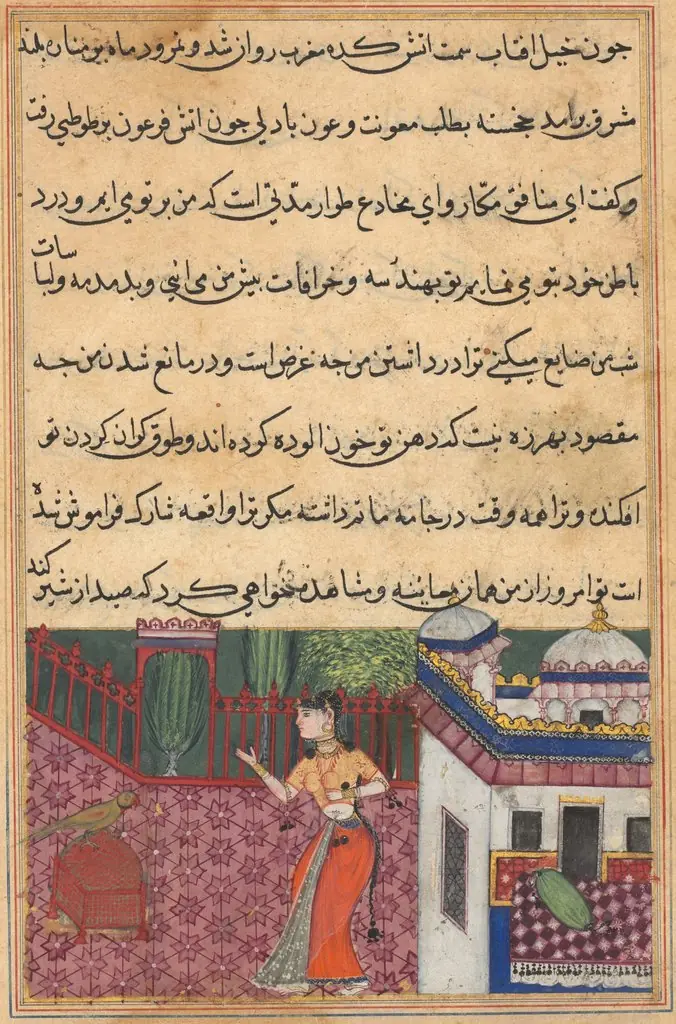 The parrot addresses Khujasta at the beginning of the thirty-third night, from a Tuti-nama (Tales of a Parrot)