Artwork
The Presentation in the Temple
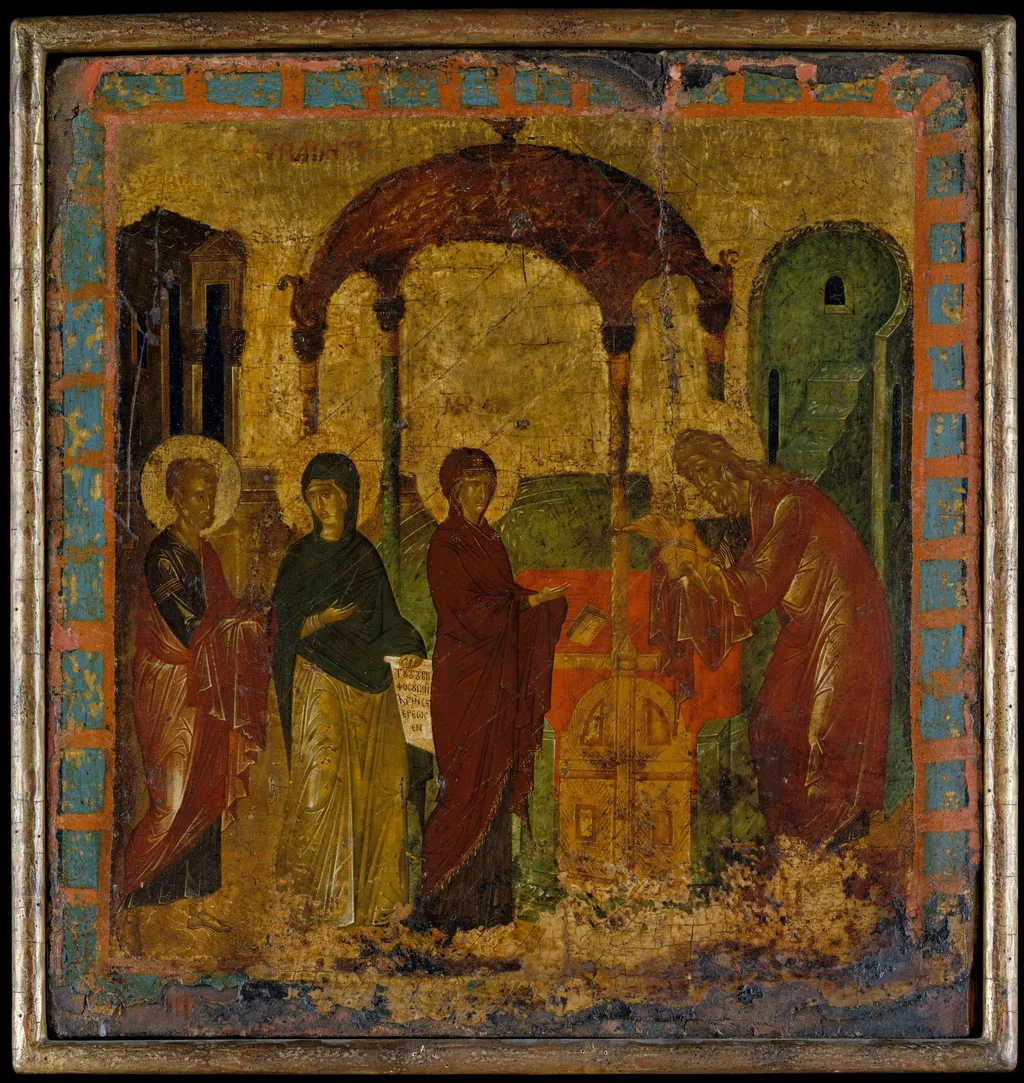
The Presentation in the Temple is a tempera painting. It dates from 1500 and is held in the collection of the Metropolitan Museum of Art.
About this work
Technique & Style
Stylistically, it adheres to the Byzantine tradition, utilizing the tempera medium to render the Presentation of Jesus at the Temple with formal clarity.
Created in 1500, this religious icon is executed in tempera on a wooden panel support. The work measures 44.5 cm in height and 42.2 cm in width, typical dimensions for a devotional panel of this period. Stylistically, it adheres to the Byzantine tradition, utilizing the tempera medium to render the Presentation of Jesus at the Temple with formal clarity.
The composition features the central subject of Christ surrounded by halos, consistent with the iconographic conventions of the era. The handling of the paint on the rigid panel support allows for the precise delineation of figures and sacred attributes characteristic of the Metropolitan Museum of Art's collection.
History & Provenance
The Presentation in the Temple is a tempera-on-panel painting created in the year 1500. Classified as a religious icon, the work depicts the Presentation of Jesus at the Temple and features figures such as Jesus Christ with a halo. The piece measures 44.5 cm in height and 42.2 cm in width.
It is currently held in the collection of the Metropolitan Museum of Art, where it is cataloged under the accession number 31.67.8. The artwork is attributed to a Byzantine painter, though the specific identity of the artist is not detailed in the provided records. The creation date is established as 1500.
Context
The 1500 tempera panel titled The Presentation in the Temple, attributed to a Byzantine painter, exemplifies early sixteenth-century devotional iconography; its depiction of the ritual presentation of Jesus at the Temple aligns with Orthodox liturgical themes. As part of the Metropolitan Museum of Art's collection, the work illustrates the transmission of icon-painting conventions and contributes to scholarly discussion of religious imagery from the period.
Legacy
The Presentation in the Temple, painted circa 1500 in tempera on panel, entered the collection of the Metropolitan Museum of Art, where its display has contributed to ongoing scholarship on early sixteenth‑century devotional imagery. As a religious work attributed to a Byzantine‑influenced painter, the piece exemplifies the transitional stylistic trends that preceded the High Renaissance, and its inclusion in a major public museum underscores its recognized cultural significance. The painting’s provenance, medium, and subject matter have been cited in exhibitions and academic literature concerning the iconography of the Presentation of Jesus at the Temple, reinforcing its legacy as a reference point for studies of religious art in the early 1500s.
Overview
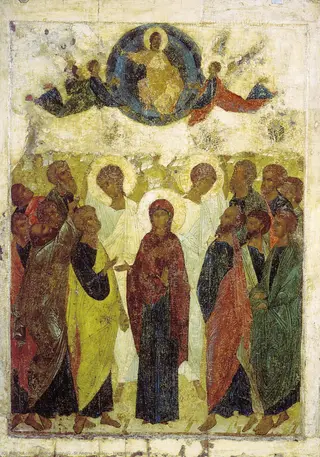
This tempera painting, titled "The Presentation in the Temple," portrays a significant religious event set within an architectural space reminiscent of a temple. Five figures are centrally arranged, some distinguished by golden halos and others holding sacred texts. The artwork presents an aged aesthetic, characterized by a subdued color palette and visible signs of historical wear, including areas where the paint has chipped, reflecting its considerable age and journey through time.
Subject & Meaning
The painting depicts the biblical narrative of the Presentation of Jesus at the Temple, a ritual of purification and dedication. Two figures on the left, identified by their halos, likely represent holy individuals. Other participants hold scrolls or books, emphasizing the scriptural context of the event.
The central interaction involves two women presenting an offering or a child to the men, highlighting the ceremonial nature of the scene and its profound theological significance within Christian tradition.
Artist & collection

- The control water
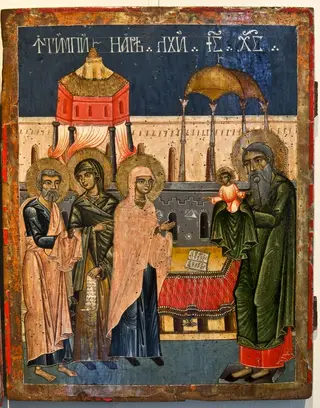 Întâmpinarea Domnului în biserică; Stretenia
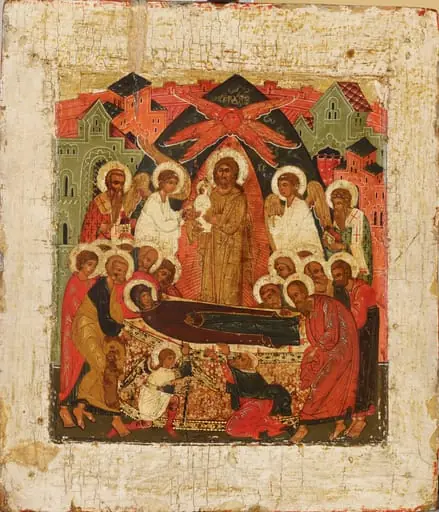 Jumalanäidin kuolonuneen nukkuminen, venäläinen ikoni
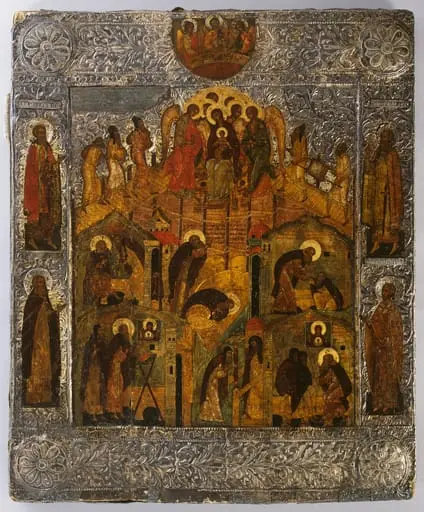 Neitsyt Marian ilmestyminen pyhittäjä Aleksanteri Syväriläiselle kirkon perustuksella
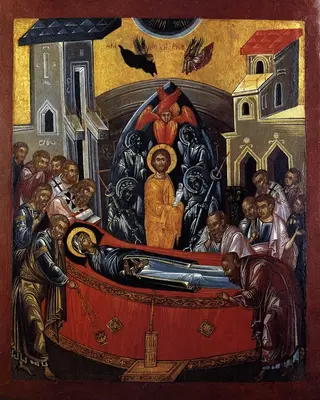 The Dormition of the Mother of God
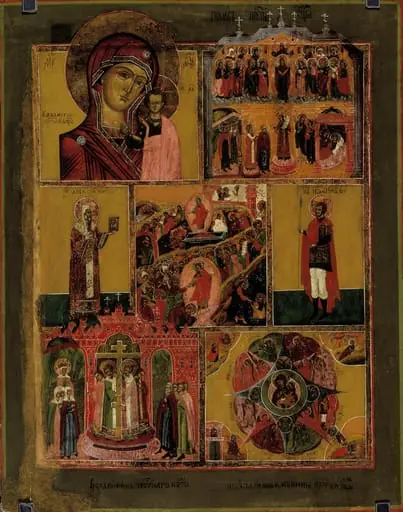 Pääsiäinen ja kirkkovuoden juhlia, venäläinen ikoni
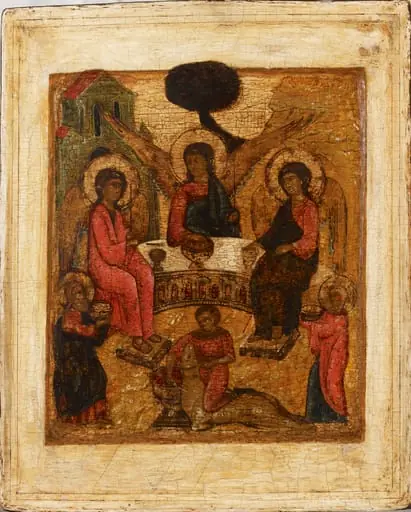 Pyhä Kolminaisuus, venäläinen ikoni
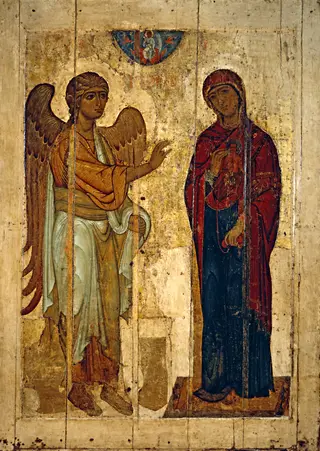 Ustyug Annunciation
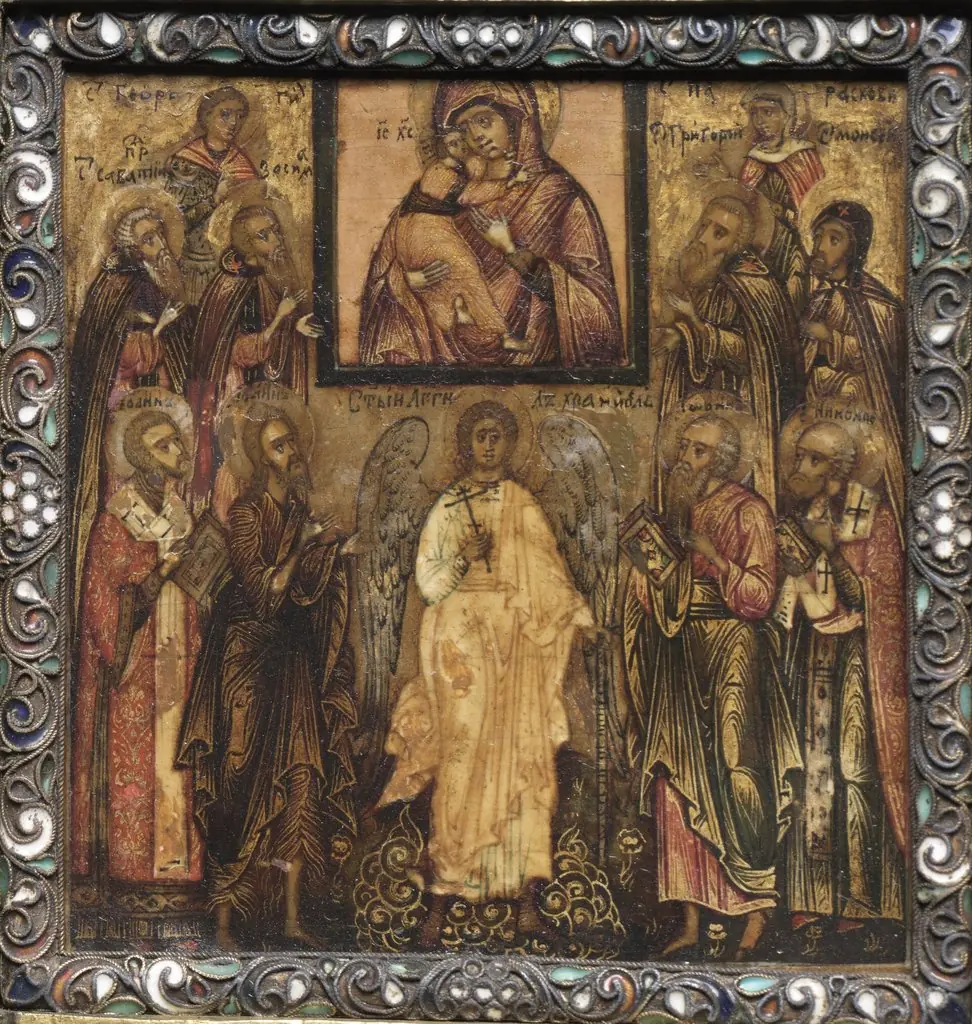 Portable Triptych Icon: Adoration of the Miracle-Working Icon of the Vladimir Mother of God
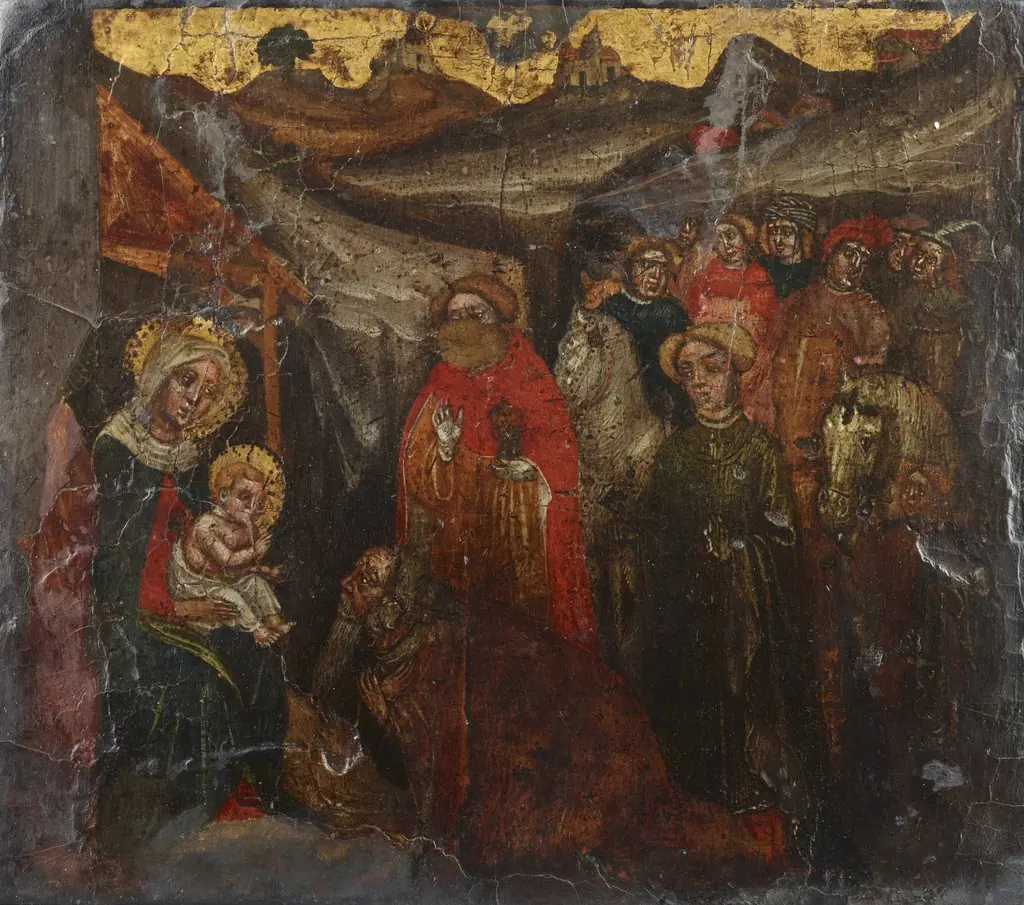 Adoration of the Magi
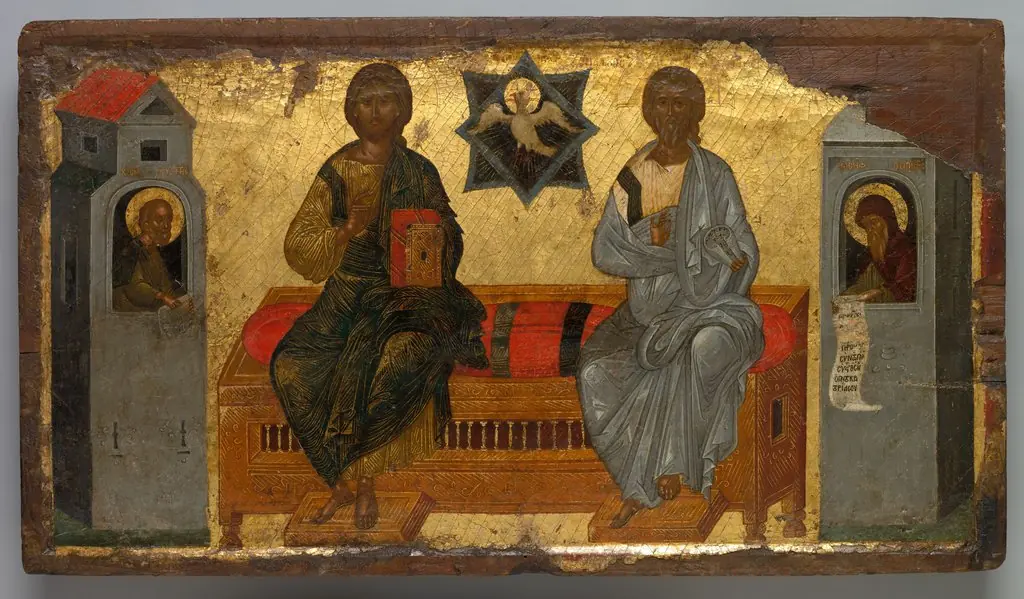 Icon of the New Testament Trinity
 Untitled