Artwork
The Virgin with the Child, Saint John and Angels
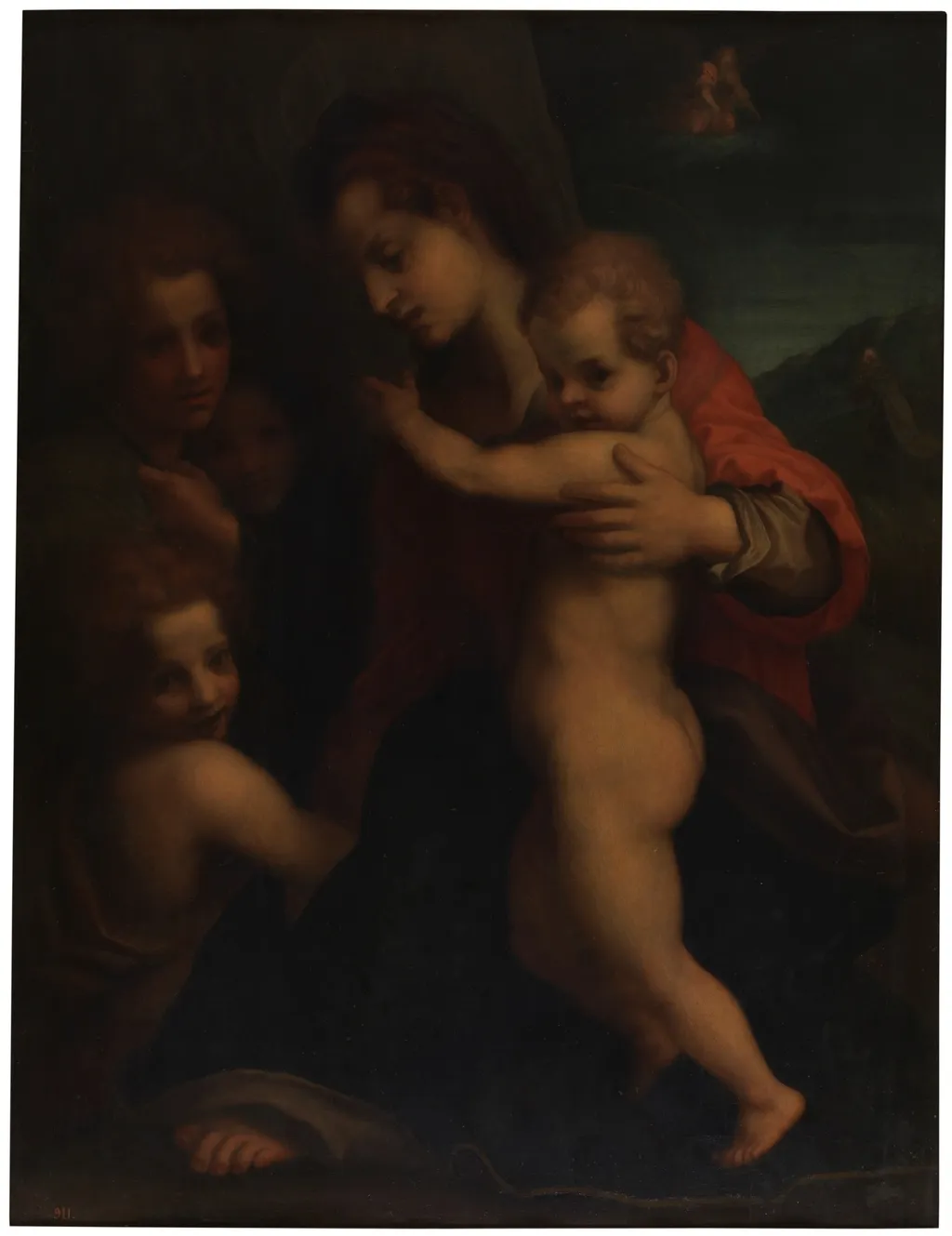
The Virgin with the Child, Saint John and Angels is an unspecified painting. It dates from 1501 and is held in the collection of the Museo del Prado. The work presents a Virgin Mary cradling the infant Christ, accompanied by the youthful Saint John the Baptist and two angelic figures.
About this work
Subject & Meaning
This religious painting depicts the Virgin Mary accompanied by the Christ Child and the infant John the Baptist.
This religious painting depicts the Virgin Mary accompanied by the Christ Child and the infant John the Baptist. The composition includes angels, aligning with the work's full title. Created in 1501, the piece is identified as a work based on Andrea del Sarto's The Virgin and Child with the Infant Baptist, suggesting it interprets an established iconographic scheme where the holy family is joined by the young Baptist.
The presence of these specific figures represents a standard devotional subject in Christian art, focusing on the early relationship between Jesus and his cousin John.
Technique & Style
The Virgin with the Child, Saint John and Angels is an oil painting executed in 1501. The work measures 106 cm in height and 79 cm in width, serving as a copy after a composition by Andrea del Sarto. It depicts the Virgin Mary with the Christ Child, the infant John the Baptist, and angels within a religious art context. The piece is currently held in the collection of the Museo del Prado.
History & Provenance
The Virgin with the Child, Saint John and Angels was created in 1501 as a religious painting. It is identified as a work executed after Andrea del Sarto, based on his composition known as The Virgin and Child with the Infant Baptist. The piece is currently held within the collection of the Museo del Prado.
While the specific commission details and original ownership chain are not detailed in the available records, the work's inception is firmly established at the beginning of the sixteenth century. The painting depicts the Virgin Mary, the Christ Child, and the infant John the Baptist, reflecting its genre as religious art.
Context
The work is understood as a derivative of Andrea del Sarto's composition, reflecting early sixteenth-century devotional practices in Italian religious painting. Its formal qualities align with High Renaissance conventions of sacred narrative and compositional harmony, situating it within the artist's brief but significant output during the transitional period before his Roman sojourn. Current scholarship emphasizes its role as a bridge between Florentine workshop traditions and emerging Mannerist stylization, though debate persists regarding the extent of the original hand versus workshop execution.
Overview
The work presents a Virgin Mary cradling the infant Christ, accompanied by the youthful Saint John the Baptist and two angelic figures. Set against a dark, indeterminate background, the composition relies on stark light and shadow to isolate the figures, creating a solemn yet intimate atmosphere.
Artist & collection

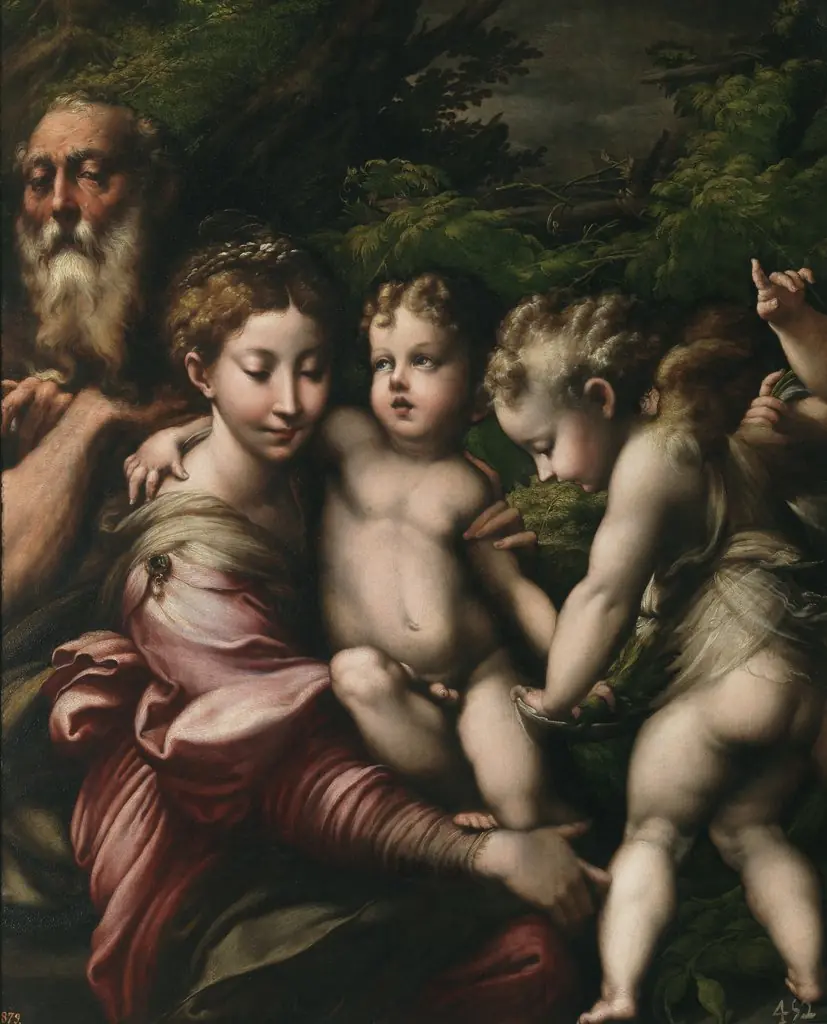 The Holy Family with Angels
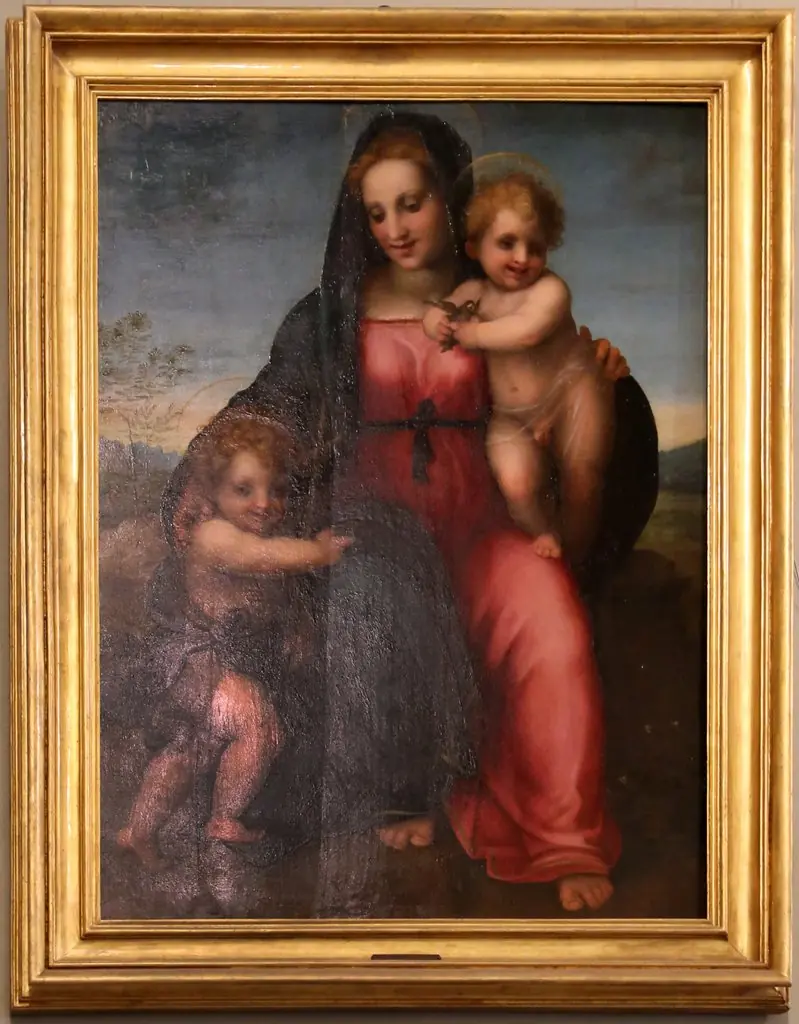 Madonna col Bambino e san Giovannino
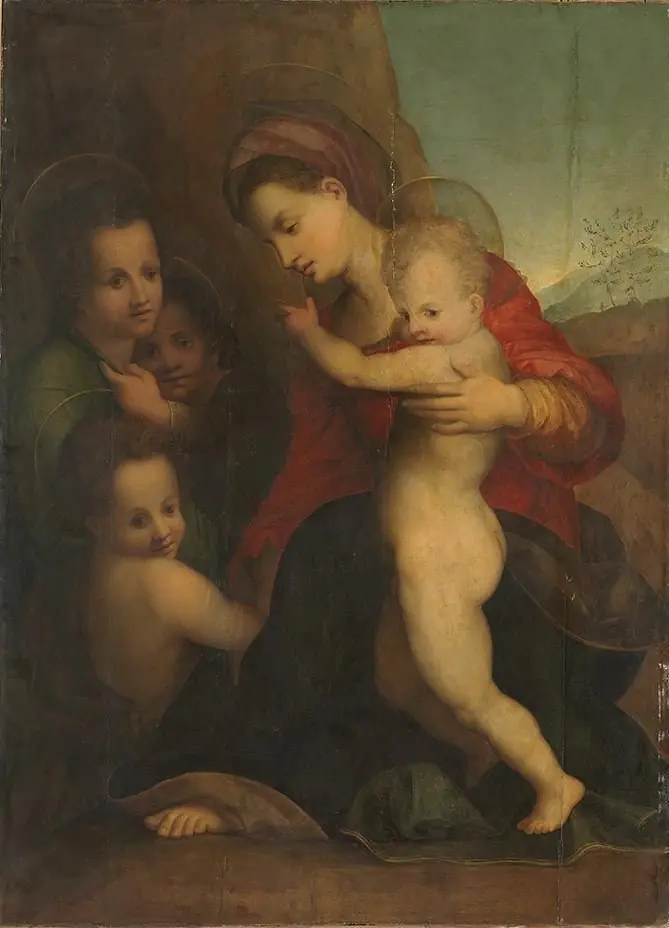 Mary with Child, John the Baptist, and Angels
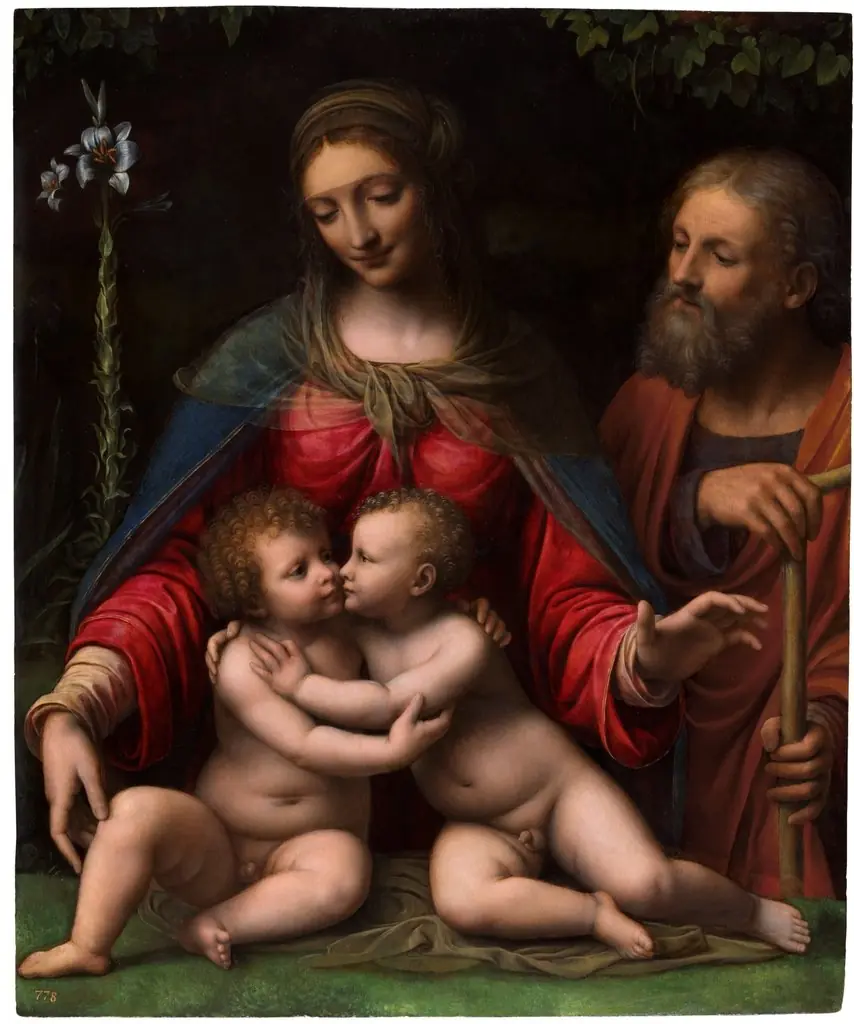 The Holy Family
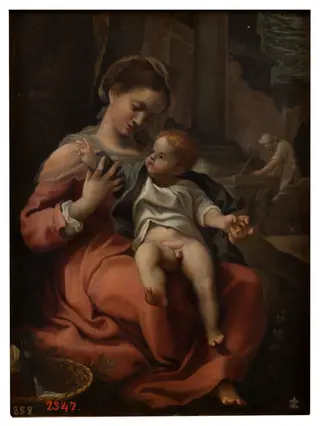 La Virgen del canastillo
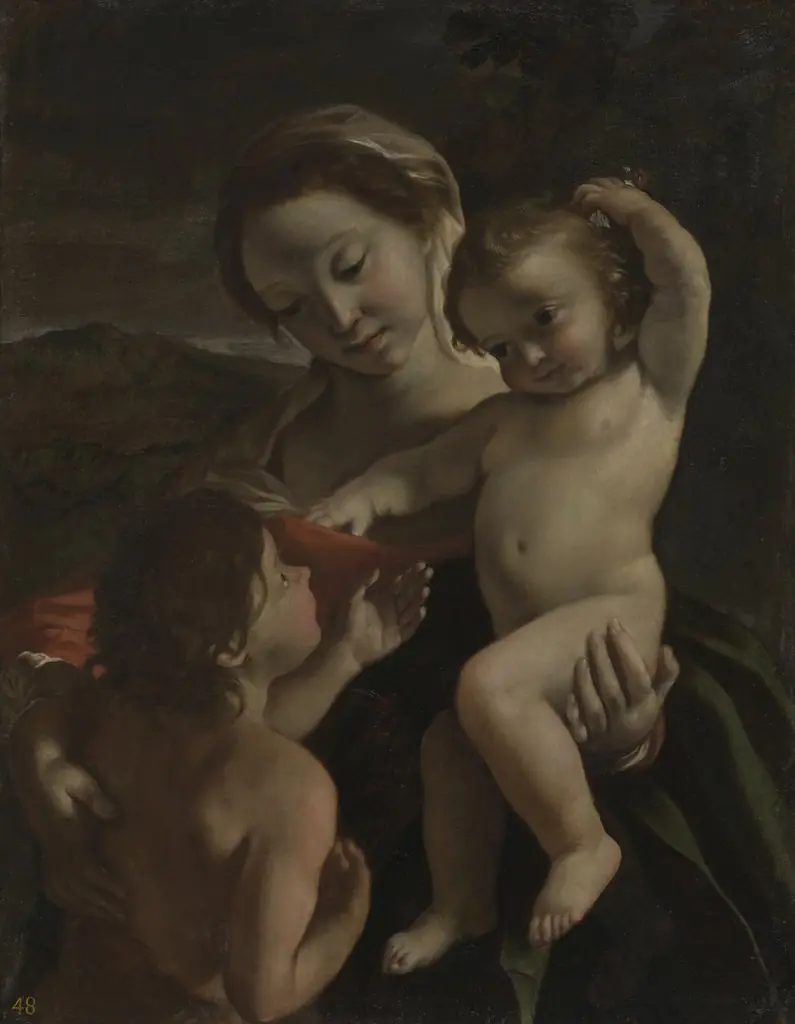 Madonna and Child with the Infant Saint John the Baptist
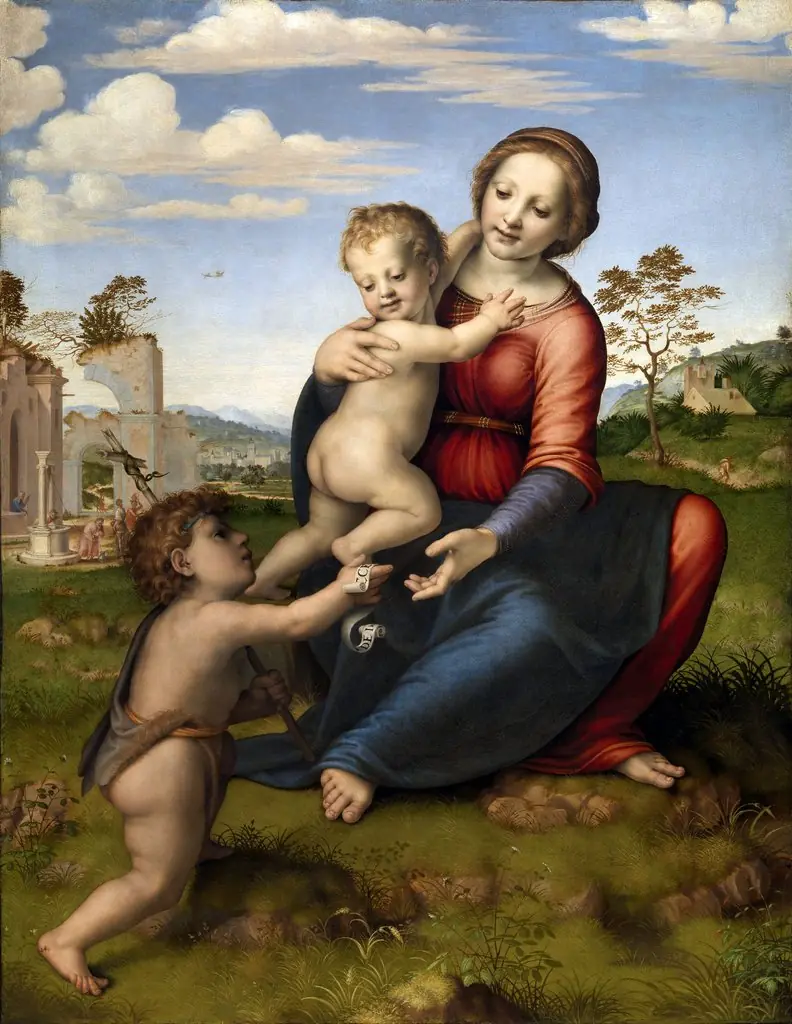 Madonna of the Well or Madonna and Child with the young St. John the Baptist
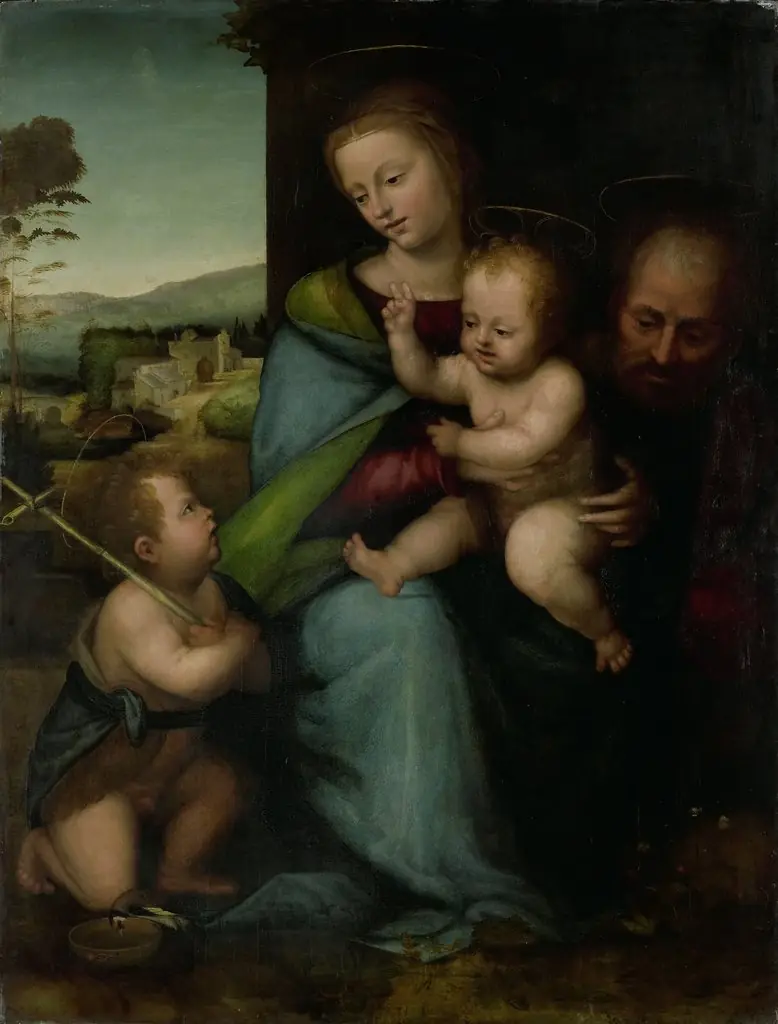 The Holy Family with the Infant John the Baptist
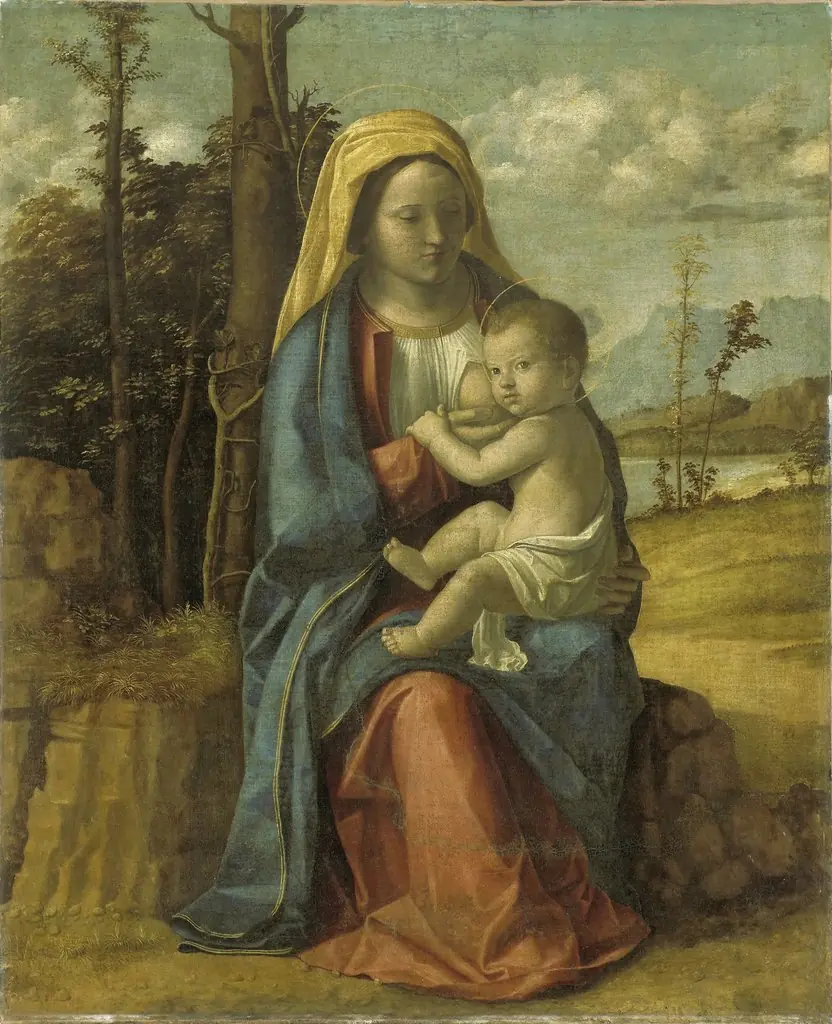 Madonna and Child