Artwork
Untitled
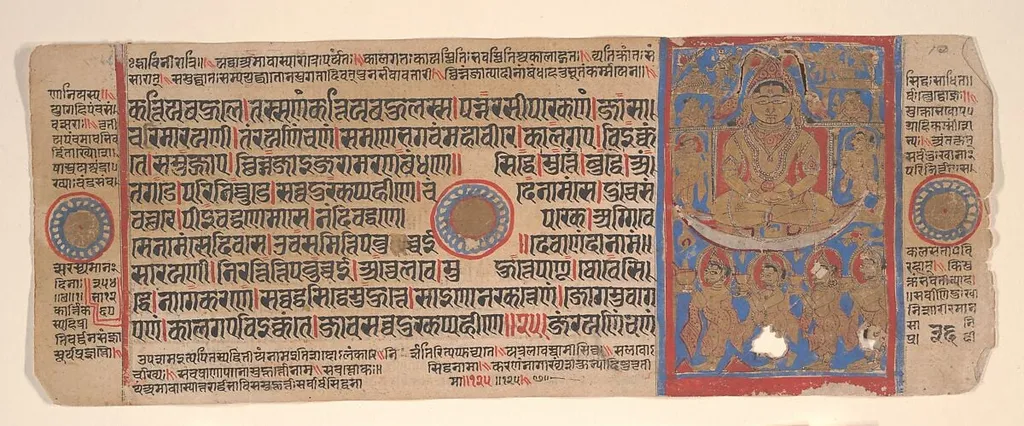
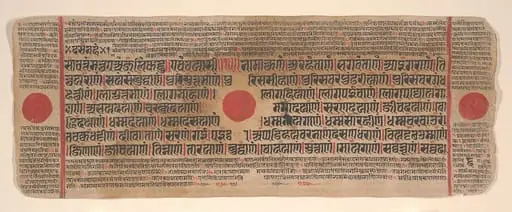
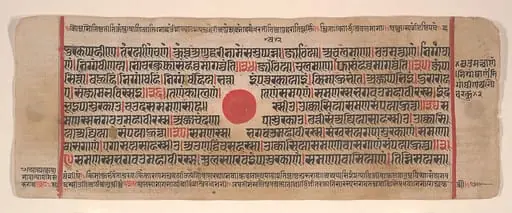
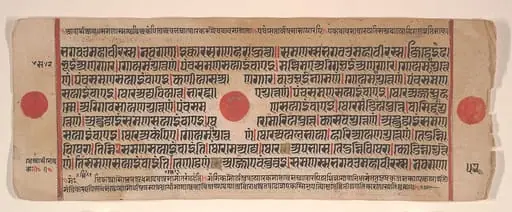
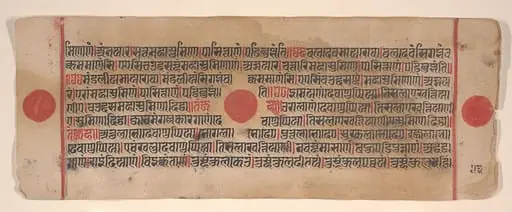
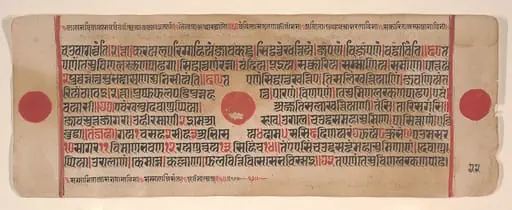
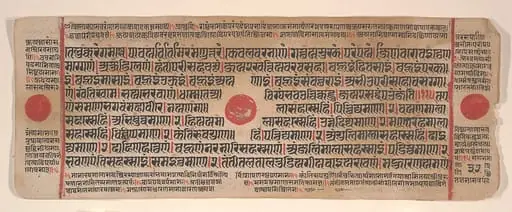
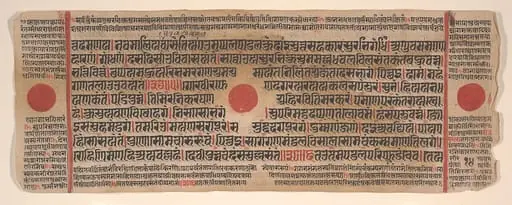
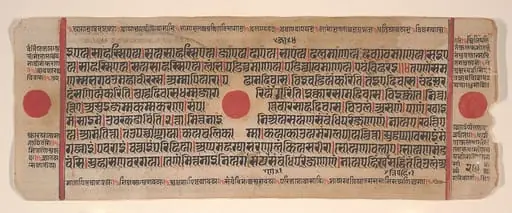
Untitled is a watercolor painting by the Indian Miniature artist Bhadrabahu. It dates from 1449 and is held in the collection of the Metropolitan Museum of Art.
About this work
Subject & Meaning
The leaf is associated with the Kalpasutra textual tradition attributed to the Jain teacher Bhadrabahu rather than being the work of a documented painter.
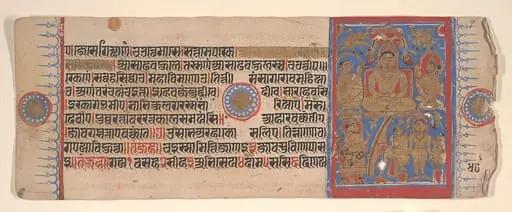
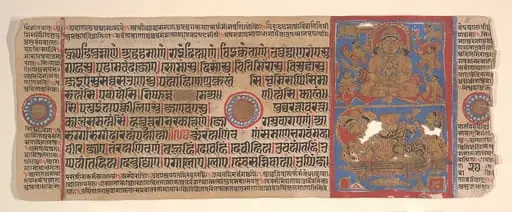
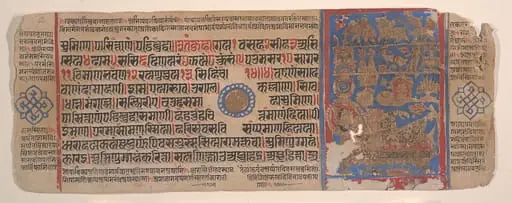
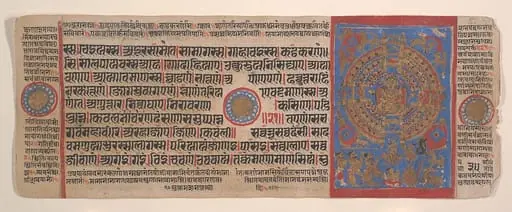
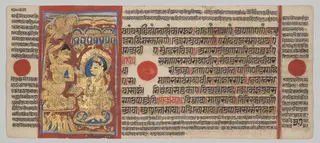
This painting, dated around 1449, portrays a Jain religious subject rendered according to traditional Jain visual conventions. Executed in ink, opaque watercolor, and gold on paper, it belongs to the religious genre and was produced in India; it is now in the collection of the Metropolitan Museum of Art. Its imagery reflects core Jain principles of asceticism and non-violence common in Jain manuscript illustration, while the gold accents and flattened perspective signal its devotional significance.
The leaf is associated with the Kalpasutra textual tradition attributed to the Jain teacher Bhadrabahu rather than being the work of a documented painter.
Technique & Style
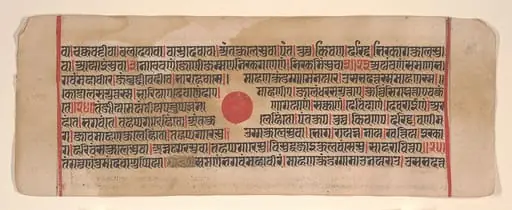
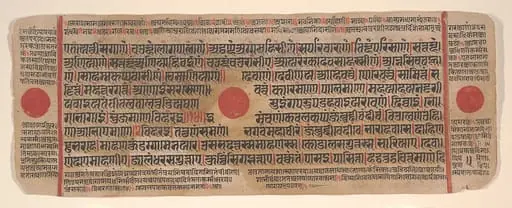
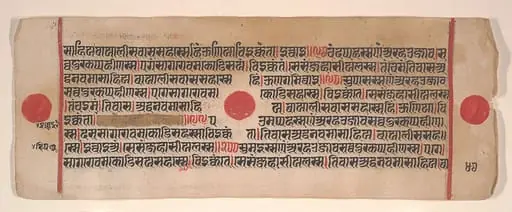
The painting is executed in ink, opaque watercolor, and gold on paper, a technique typical of Jain manuscript production. Its support is a single sheet of paper, and the work is classified as a religious painting depicting a Jain subject. Measuring roughly 11.4 cm in height and 28.9 cm in width, a horizontal format derived from earlier palm-leaf manuscripts, the piece was created in India around 1449 and is now part of the Metropolitan Museum of Art's collection in New York.
History & Provenance
The work is held in the collection of the Metropolitan Museum of Art in New York, catalogued under accession number 57.51.38.10. Created around 1449 in India, this ink, opaque watercolor, and gold painting on paper depicts a Jain religious subject and is the work of an anonymous artist. The available source confirms its current location and accession number but provides no details of earlier provenance or past exhibitions.
Overview
This untitled work, created by Bhadrabahu in 1449, is a religious painting executed with ink, opaque watercolor, and gold on paper. It offers a visual representation of Jainism, a spiritual tradition emphasizing non-violence and asceticism. The artwork captures a serene moment, characteristic of devotional imagery from the period, inviting contemplation of its central figure and surrounding elements.
Context
This painting belongs to a long tradition of Jain manuscript and devotional art, which often illustrates the lives of Tirthankaras (spiritual teachers) or depicts scenes of meditation and renunciation. Such works served as aids for spiritual practice and objects of veneration, conveying core tenets of the faith through visual narratives. Artists frequently rendered these quiet, contemplative moments with meticulous detail and symbolic elements.
Artist & collection