Artwork
Queen Trishala's Grief and Happiness, Folio 29 (recto), from a Kalpa-sutra
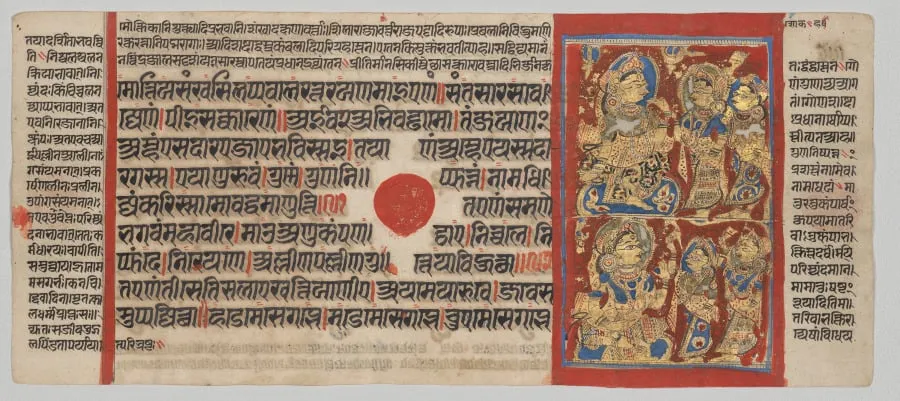
Queen Trishala's Grief and Happiness, Folio 29 (recto), from a Kalpa-sutra is an unspecified painting by the Mughal Painting artist Unknown. It dates from 1488 and is held in the collection of the Cleveland Museum of Art. The recto of folio 29 from a Kalpa‑sutra illustrates a scene from the early life of Mahavira, the future founder of Jainism.
- Accession no.
- 1932.119.29.a
- Credit line
- Edward L. Whittemore Fund
About this work
Overview
The recto of folio 29 from a Kalpa‑sutra illustrates a scene from the early life of Mahavira, the future founder of Jainism. Queen Trishana, depicted seated on an ornate golden throne within a palace garden, cradles her pregnant abdomen while her attendants converse around her. The composition captures a moment of maternal anxiety about the apparent stillness of the unborn child.
Subject & Meaning
The narrative portrays Queen Trishana questioning her handmaids about the fate of her unborn son, fearing miscarriage or death because the baby no longer moves. According to the Jain text, the infant Mahavira deliberately remains motionless out of compassion, not wishing to disturb his mother. When he senses her distress, he makes a slight movement, which brings relief and happiness to the queen.
Technique & Style
The composition balances narrative clarity with decorative detail, allowing the emotional exchange between the queen and her attendants to be read easily.
Rendered in vivid blue pigments for the queen’s attire against a gold‑toned throne, the painting employs the bright color palette typical of Western Indian manuscript illumination. Figures are outlined with fine lines, and the garden setting is suggested through stylized foliage. The composition balances narrative clarity with decorative detail, allowing the emotional exchange between the queen and her attendants to be read easily.
Context
This folio belongs to a Kalpa‑sutra manuscript used in Jain religious instruction, likely produced in Gujarat during the medieval period when manuscript painting flourished in western India. Such works served both devotional and didactic purposes, visually conveying stories from Jain canon to monastic and lay audiences.
Legacy
The illustration exemplifies how Jain artists integrated textual episodes into visual form, contributing to the broader tradition of narrative art in the region. By portraying the compassionate silence of Mahavira, the image reinforces core Jain values of empathy and self‑restraint, themes that continued to influence later Jain manuscript production.
Artist & collection









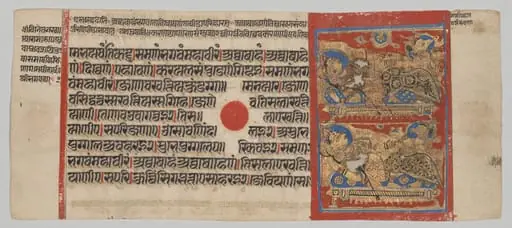
- Transfer of the Embryo of Mahavira, Folio 12 (recto), from a Kalpa-sutra
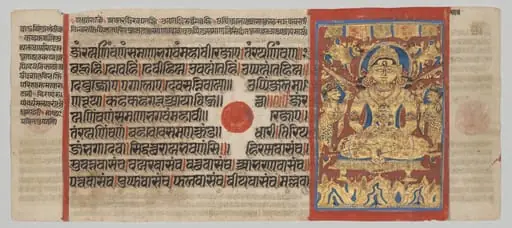 Ritual Bath of Mahavira, Folio 31 (recto), from a Kalpa-sutra
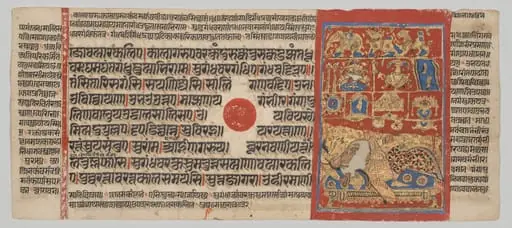 The Fourteen Dreams of Queen Trishala, folio 14 (recto), from a Kalpa-sutra
 Text, folio 24 (verso), from a Kalpa-sutra
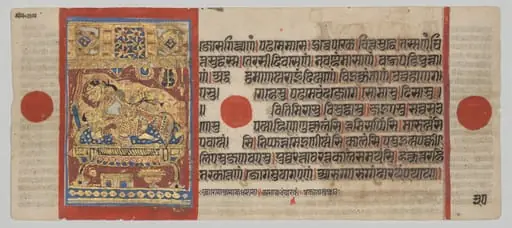 Birth of Mahavira, folio 30 (verso), from a Kalpa-sutra
 Text, folio 12 (verso), from a Kalpa-sutra
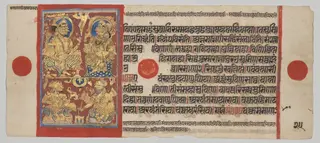 King Siddhartha and Queen Trishala with the Dream Interpreters, Folio 25 (verso), from a Kalpa-sutra
 Text, Folio 31 (verso), from a Kalpa-sutra