Artwork
布袋市右衛門図大津絵|Ōtsu-e of Kabuki Actor Playing Hotei Ichiemon
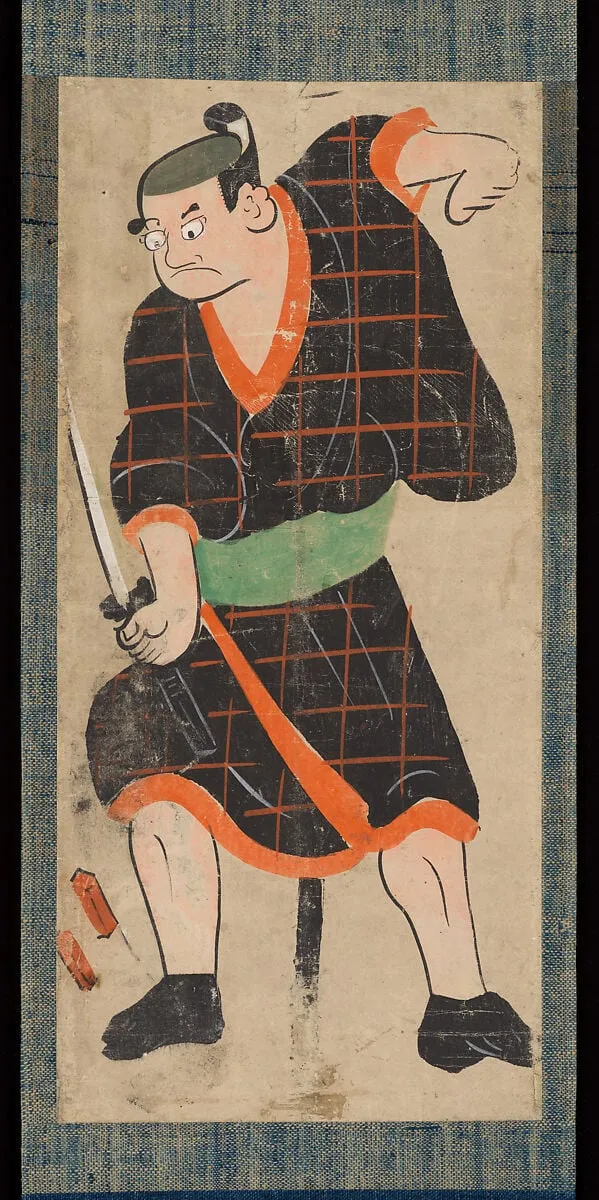
布袋市右衛門図大津絵|Ōtsu-e of Kabuki Actor Playing Hotei Ichiemon is an ink painting. It dates from 1716 and is held in the collection of the Metropolitan Museum of Art. This Ōtsu-e print depicts a kabuki actor portraying Hotei Ichiemon, a well-known figure from the Japanese stage.
About this work
Subject & Meaning
As a genre work classified as a portrait, the image captures the theatrical representation of this specific character rather than a historical individual.
This 1716 Ōtsu-e hanging scroll portrays a male Kabuki actor performing the role of Hotei Ichiemon. As a genre work classified as a portrait, the image captures the theatrical representation of this specific character rather than a historical individual. The subject is identified simply as an actor and a man, reflecting the work's function as a record of contemporary stage performance.
Produced in Japan as a hand-painted Ōtsu-e on paper, the work serves as a visual document of early eighteenth-century theater culture, preserving the likeness of the performer in character.
Technique & Style
The piece is executed in ink and color on paper, intended for display as a hanging scroll. Ōtsu-e were inexpensive folk pictures produced quickly near Ōtsu on the Tōkaidō road for sale to travelers, with pigments applied by hand, sometimes over stencilled outlines, to achieve broad, economical effects. Its support consists of a narrow scroll format typical of the genre, which facilitates vertical presentation. The composition features a single figure of a kabuki actor, rendered with clear outlines and flat areas of color that emphasize theatrical gesture. No documented conservation issues are noted in the available records.
History & Provenance
The work is dated 1716 and is attributed to an anonymous maker of Ōtsu-e, a genre of popular pictures produced near Ōtsu on the Tōkaidō road. It entered the collection of the Metropolitan Museum of Art as part of its holdings of Japanese paintings, where it remains housed in New York.
Context
The 1716 hanging scroll depicting a kabuki actor in the role of Hotei Ichiemon exemplifies the genre of Ōtsu-e portraiture, a popular form of inexpensive, narrative-driven folk pictures produced in Edo-period Japan. Although the artist remains unidentified, the work's presence in the Metropolitan Museum of Art collection underscores scholarly interest in anonymous practitioners of this tradition and their contribution to the visual documentation of contemporary performance culture. Researchers have highlighted the piece as a reference for understanding how Edo artists blended theatrical iconography with folk-painting techniques, situating it within broader discussions of anonymity and genre specialization in early modern Japanese painting.
Overview
This Ōtsu-e print depicts a kabuki actor portraying Hotei Ichiemon, a well-known figure from the Japanese stage. Rendered as a hand-colored woodblock print on paper, it is presented as a hanging scroll. The subject, a man in a loose robe, displays a wide grin while holding a fan and a bag, characteristic attributes of the deity Hotei.
His face is distinctively painted white, accented with prominent red and black lines defining his eyebrows and cheeks.
Artist & collection

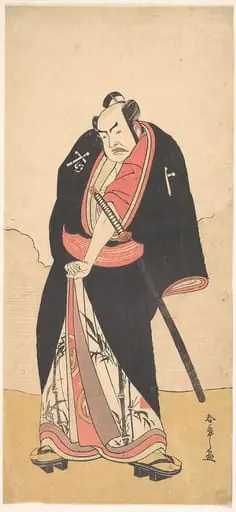
- 二代目中村助五郎|Kabuki Actor Nakamura Sukegorō II as Kaminari Shōkurō
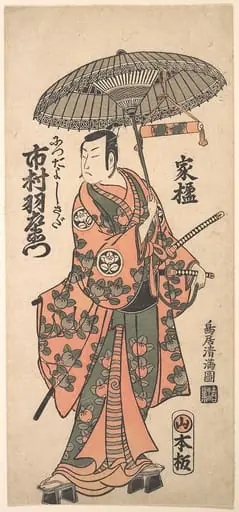 鳥居清満画 九代目市村羽左衛門|Kabuki Actor Ichimura Uzaemon IX
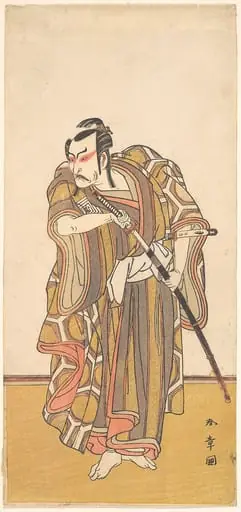 四代目市川團蔵|Kabuki Actor Ichikawa Danzō IV
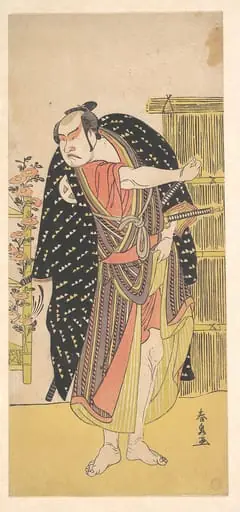 勝川春泉画 三代目大谷廣次|Kabuki Actor Ōtani Hiroji III
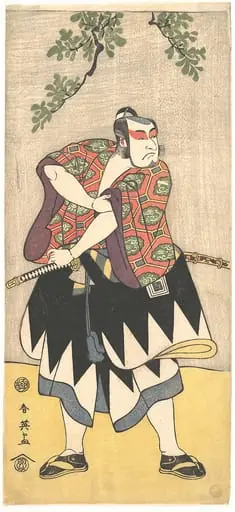 勝川春英画 二代目市川門之助|Kabuki Actor Ichikawa Monnosuke II
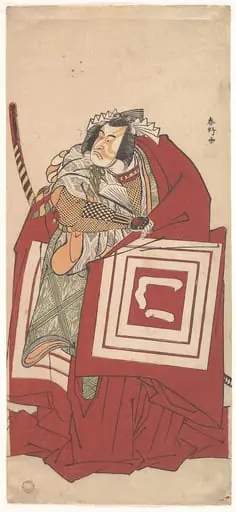 二代目市川門之助|Kabuki Actor Ichikawa Monnosuke II as Shinozuka in a Shibaraku (Stop Right There!) Scene
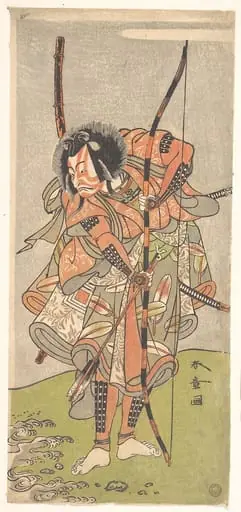 三代目市川海老蔵|Kabuki Actor Ichikawa Ebizō III (Ichikawa Danjūrō IV)