Artwork
Untitled
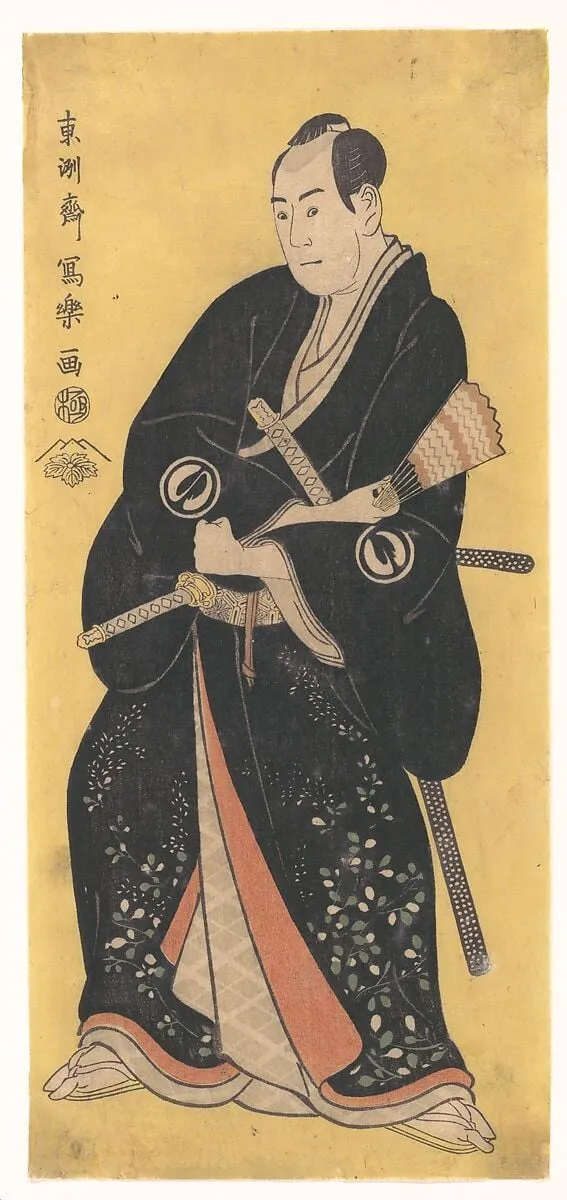
Untitled is an ink print by the Romanticist artist Tōshūsai Sharaku. It dates from 1794 and is held in the collection of the Metropolitan Museum of Art.
About this work
The faces he drew look almost like caricatures, but actors loved them because they showed real emotion.
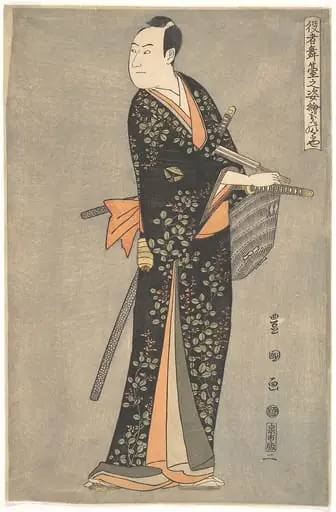
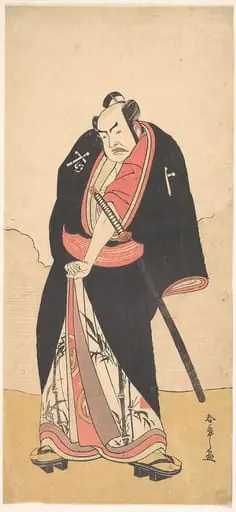
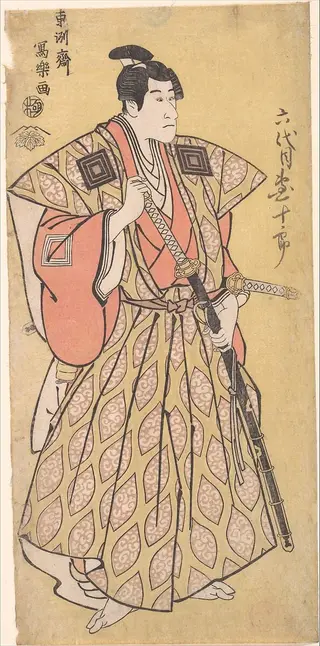
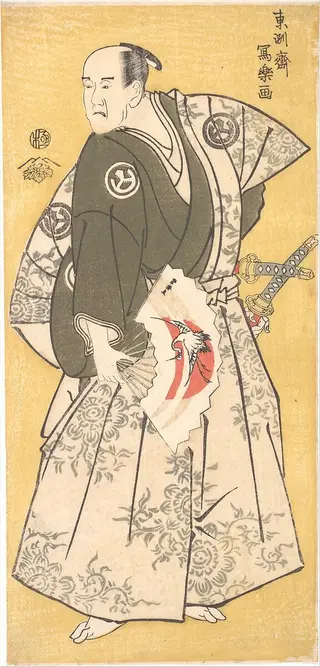
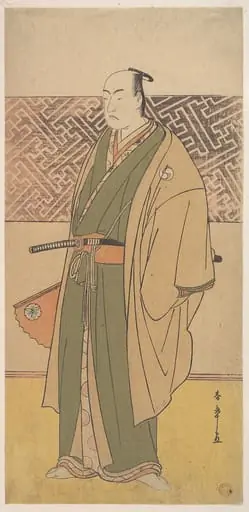
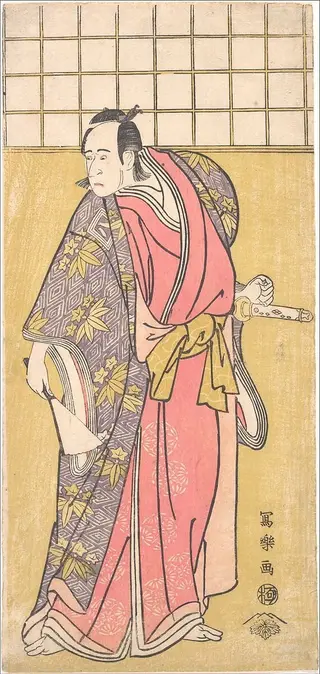
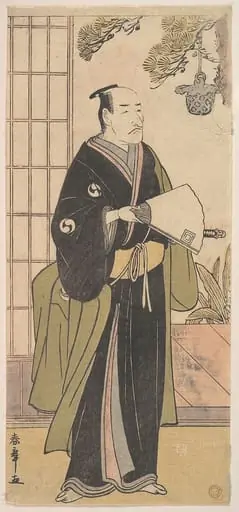
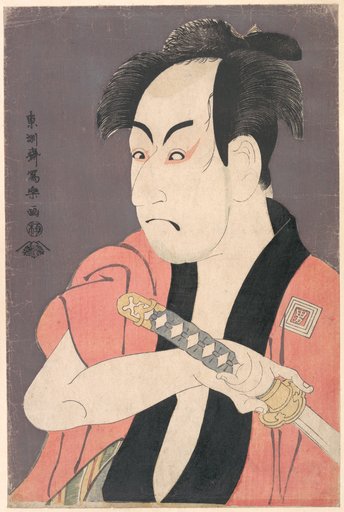
A man in a black robe grips a sword and a fan, his face twisted in a fierce scowl. The print is bold and flat, with sharp black outlines and patches of bright color.
Sharaku made these prints for kabuki theaters in 1794–95. He worked fast, only ten months, and then vanished. No one knows why. The faces he drew look almost like caricatures, but actors loved them because they showed real emotion.
If you like this, look up the subject of actors in Japanese prints.
Subject & Meaning
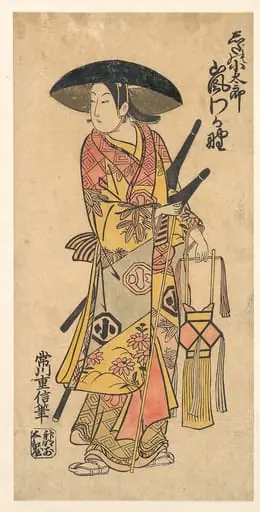
This 1794 woodblock print by Tōshūsai Sharaku functions as a yakusha-e, a portrait within the ukiyo-e tradition dedicated to capturing kabuki actors. The work depicts Sawamura Sōjūrō III, a renowned performer of the era, rendered as a male figure in character. The iconography centers on two primary props: a hand fan and a sword, which the actor holds or wears as part of his costume.
These objects serve not merely as accessories but as symbolic indicators of the specific role being portrayed, grounding the image in the theatrical narrative of the time. As a nishiki-e (full-color print), the piece utilizes ink and color on paper to emphasize the dramatic presence of the subject, representing the fleeting intensity of a live stage performance frozen in time.
Technique & Style
Created in 1794, this work is a woodblock print executed with ink and color on paper. The piece belongs to the ukiyo-e tradition, specifically categorized as a nishiki-e (brocade picture) and yakusha-e (actor print). Stylistically, it functions as a portrait depicting the actor Sawamura Sōjūrō III.
The composition features the subject holding a hand fan and a sword, characteristic elements used to define the role and status of the portrayed figure within the genre.
History & Provenance
Created in 1794, this woodblock print is attributed to the artist Tōshūsai Sharaku. The work, classified as a nishiki-e and yakusha-e within the ukiyo-e genre, portrays the actor Sawamura Sōjūrō III holding a hand fan and sword. The piece currently resides in the collection of the Metropolitan Museum of Art.
No specific details regarding its original commission or intermediate ownership history prior to its museum acquisition are provided in the available records.
The work is held in the collection of the Metropolitan Museum of Art, where it is catalogued under the accession number 2005.176. It has been exhibited in the museum’s 2005 exhibition “Japanese Prints: The Art of Sharaku” and subsequently featured in the 2015 retrospective “Sharaku: The Japanese Printmaker of the Late Edo Period” at the same institution.
Context
The print portrays the celebrated kabuki actor Sawamura Sōjūrō III in a dynamic pose, holding both a sword and a hand fan, and was produced by Tōshūsai Sharaku in 1794 as a striking example of yakusha-e portraiture within the ukiyo-e tradition. Contemporary scholarship highlights its bold graphic style and psychological intensity, noting how Sharaku’s work diverged from earlier, more idealized representations of actors and helped define a new era of individualized celebrity imagery in Edo-period Japan. The piece is held in the Metropolitan Museum of Art, underscoring its recognized significance in the canon of Japanese printmaking.
Legacy
The print's striking realism and psychological intensity reshaped the portrayal of kabuki actors in Japanese print culture, influencing subsequent ukiyo-e artists to emphasize individual character over generic representation. Although Sharaku's career was brief, his work was collected by major institutions including the Metropolitan Museum of Art from its inception in 1794, ensuring continued scholarly attention. The depiction of Sawamura Sōjūrō III remains emblematic of the period's dramatic portraiture, cited in museum catalogues for its technical innovation and role in elevating actor imagery within the ukiyo-e genre.
Overview
Created in 1794 by Tōshūsai Sharaku, this woodblock print is a dynamic portrait of a kabuki actor captured in a moment of intense dramatic action. The composition features a male figure clad in a black robe, gripping both a sword and a fan while his face is contorted into a fierce, exaggerated scowl. Sharaku employs a bold, flat aesthetic characterized by sharp black outlines and strategic patches of bright color, a style that prioritizes psychological immediacy over realistic modeling.
Produced during the artist's brief, ten-month career in Edo, this work belongs to the series of actor portraits Sharaku created specifically for the kabuki theater scene. These prints are renowned for their unflinching, often critical depiction of actors, breaking from the idealized conventions of the time to reveal the raw energy of performance. The work stands as a quintessential example of Sharaku's unique contribution to ukiyo-e, marking a high point in the genre of yakusha-e (actor prints) before the artist's sudden and unexplained disappearance from the historical record.
Artist & collection

 Untitled
 Untitled
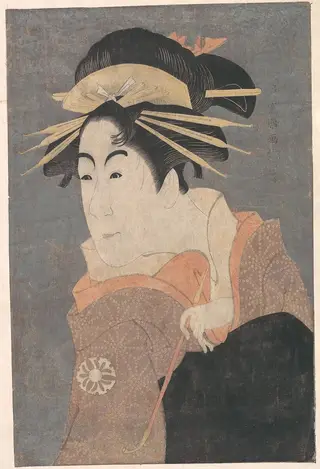 Untitled
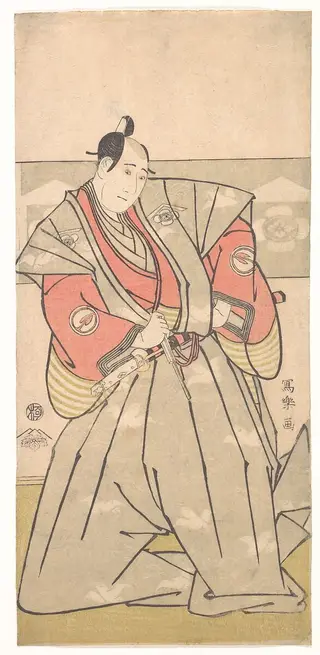 Untitled
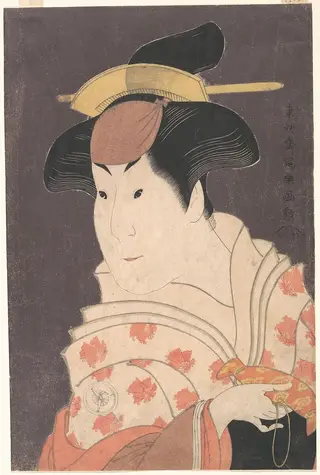 東洲斎写楽画 四代岩井半四郎の重の井 『恋女房染分手綱』|Iwai Hanshirō IV as Shigenoi in the Play "Koinyōbō Somewake Tazuna"
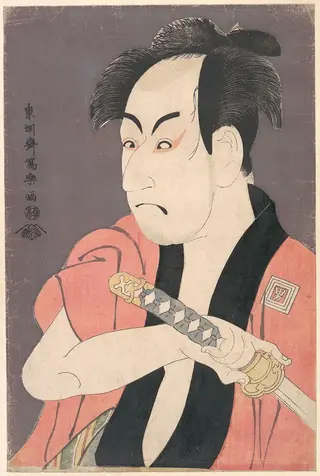 東洲斎写楽画 初代市川男女蔵の奴一平 『恋女房染分手綱』|Ichikawa Omezō I in the Role of Yakko Ippei from the Play "Koinyōbō somewake tazuna"
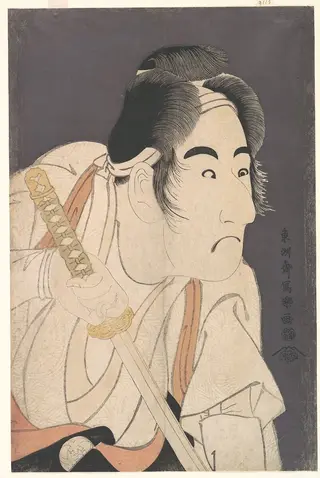 東洲斎写楽画 二世坂東三津五郎の石井源蔵 『花菖蒲文禄曽我』|Bandō Mitsugorō II as Ishii Genzō in the Play "Hana-ayame Bunroku Soga"
 Untitled