Artwork
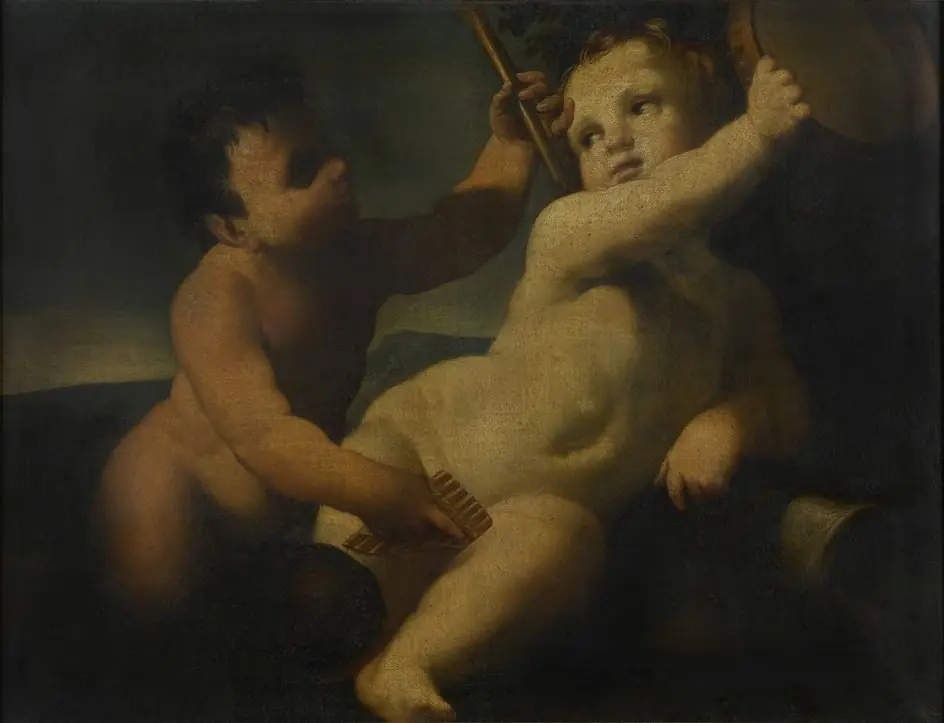
Two Putti
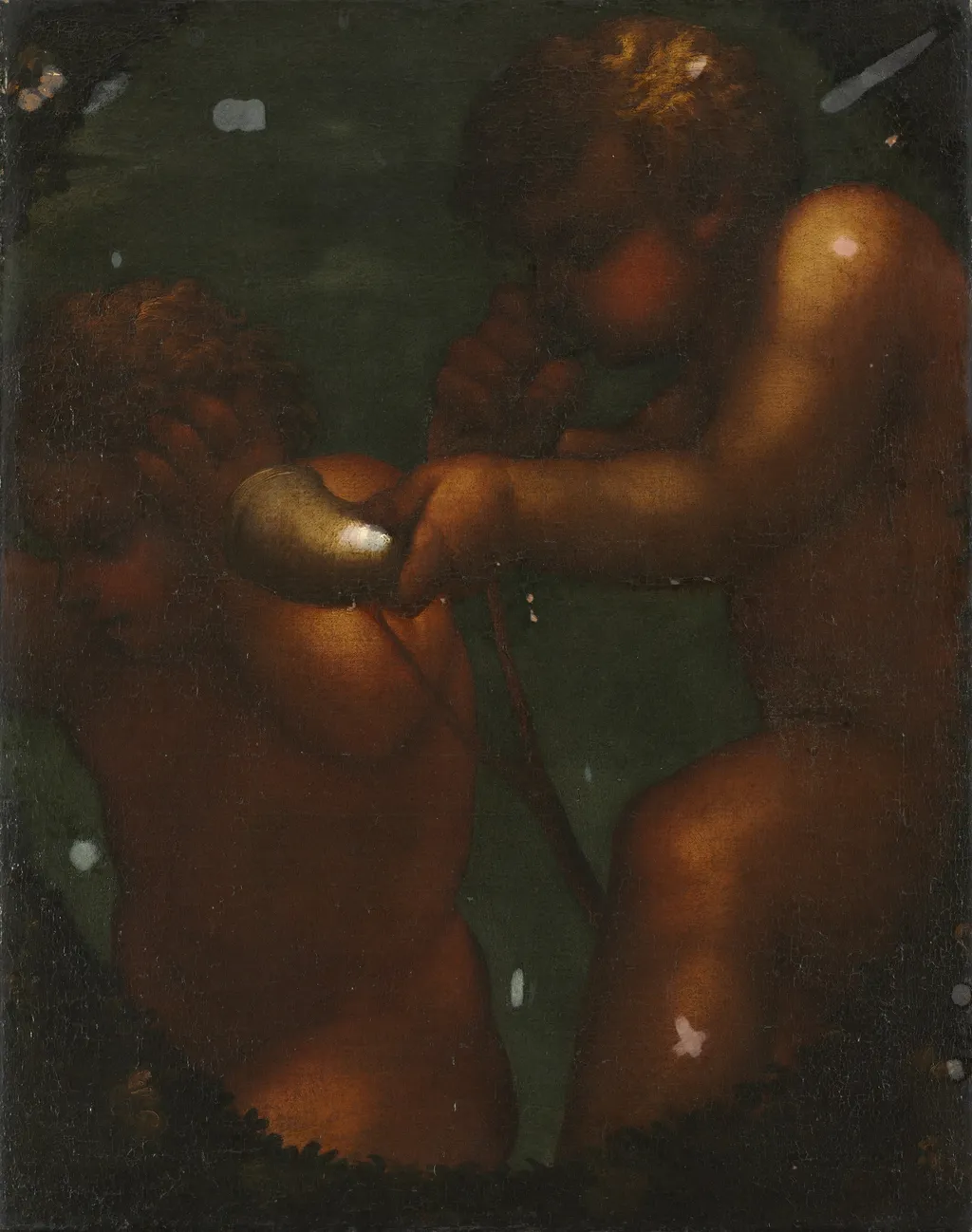
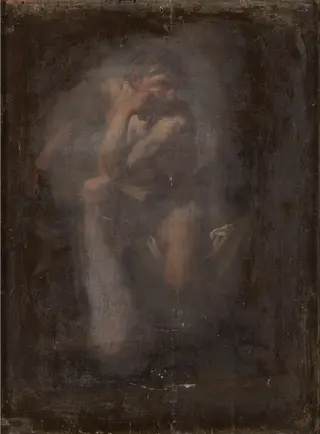
Two Putti is an oil painting. It dates from 1749 and is held in the collection of the Cleveland Museum of Art. The work depicts two cherubic, plump figures rendered in oil on canvas.
About this work
Technique & Style
Created in 1749, Two Putti is an oil painting executed on a canvas support. The work measures 103.0 cm in height and 81.5 cm in width. Produced in Italy, the piece employs traditional oil paint techniques characteristic of 18th-century European painting.
As a canvas work, the medium allows for the fluid application and blending typical of the period's handling of paint.
History & Provenance
It entered the collection of the Cleveland Museum of Art, where it is held under accession number 1916.
Two Putti was created in Italy in 1749 as an oil-on-canvas work by an unidentified artist. It entered the collection of the Cleveland Museum of Art, where it is held under accession number 1916.966. The work measures 103.0 cm in height by 81.5 cm in width.
Beyond its attribution to eighteenth-century Italian decorative painting and its presence in the museum, no earlier ownership chain or intermediate transfers are documented in the available sources, and no specific exhibition history is recorded.
Legacy
Two Putti is held in the collection of the Cleveland Museum of Art as part of its European painting holdings. No significant exhibitions, scholarly reappraisals, or direct stylistic lineages are documented for the work in the available sources; its interest lies primarily in its status as a surviving example of 18th-century Italian decorative painting.
Overview
The work depicts two cherubic, plump figures rendered in oil on canvas. Set against a deep, shadowed backdrop, the children’s flesh catches warm highlights that suggest a localized light source. One figure clutches a spherical object resembling a ball, while the other extends an arm upward, reaching toward an unseen point. The composition relies on contrast between darkness and illuminated skin to define the scene.
Subject & Meaning
The pair of putti, traditional symbols of innocence and divine love, are presented in a moment of playful interaction. The ball held by one child hints at leisure or a game, whereas the upward gesture of the other may imply aspiration or a yearning for something beyond reach. The ambiguous narrative invites viewers to contemplate themes of childhood curiosity and the tension between grounded activity and upward longing.
Context
Putti were a recurring motif in European art from the Renaissance through the Baroque, often employed to convey allegorical or decorative purposes. In this painting, the isolated figures and stark lighting echo the dramatic effects favored by artists such as Caravaggio, who pioneered the use of chiaroscuro to heighten emotional impact. The work thus situates itself within a broader tradition of using youthful forms to explore light, shadow, and narrative suggestion.

Artist & collection

![The Rule of Bacchus [left panel]](https://artifactworldgallery.com/img/the-rule-of-bacchus-left-panel--5f2819b3a3b6a2cc-w320.webp)