Artwork
Infant Christ
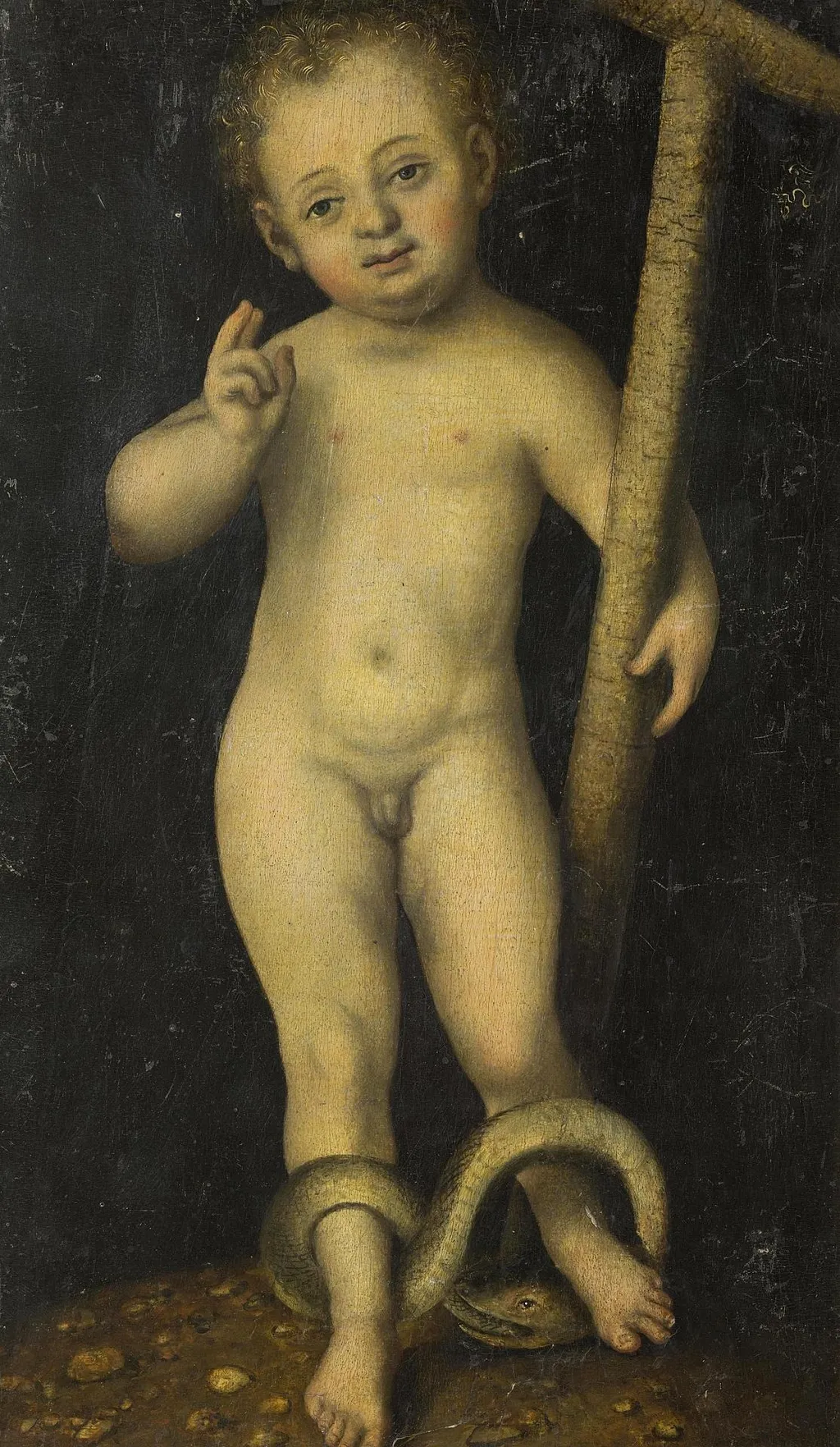
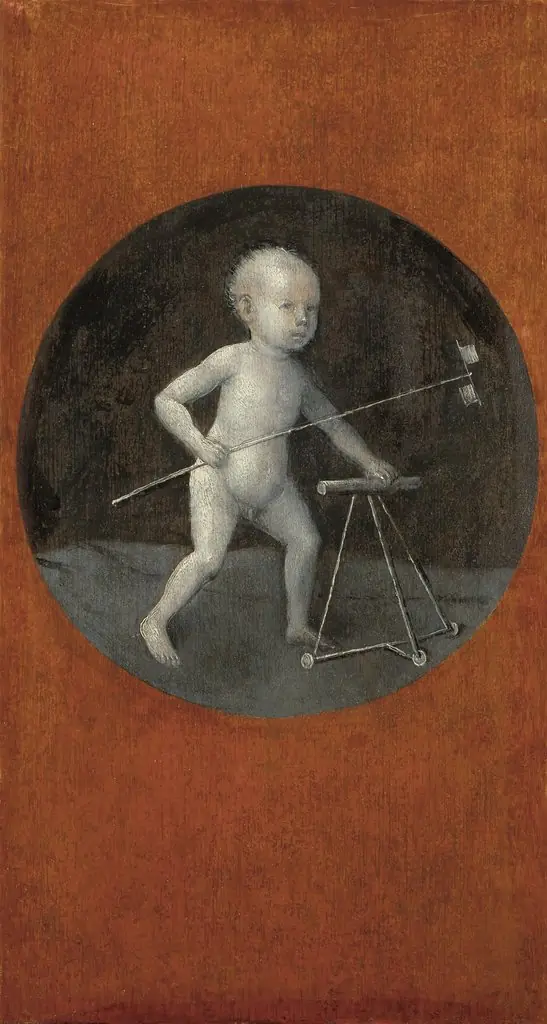
Infant Christ is a paint painting by the Northern Renaissance artist Lucas Cranach the Elder. It dates from 1520 and is held in the collection of the Hermitage Museum.
About this work
Overview
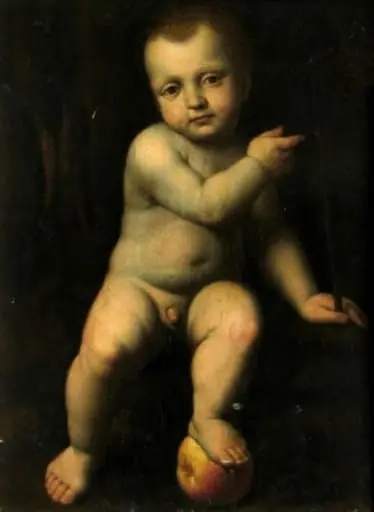
Painted in 1520 by Lucas Cranach the Elder, this small devotional work portrays the infant Christ as a solitary figure against a dark, undefined space. Rendered in muted tones, the scene avoids ornate detail, focusing instead on symbolic presence. The painting resides in the State Hermitage Museum, where it is preserved as an example of early 16th-century German religious imagery.
Subject & Meaning
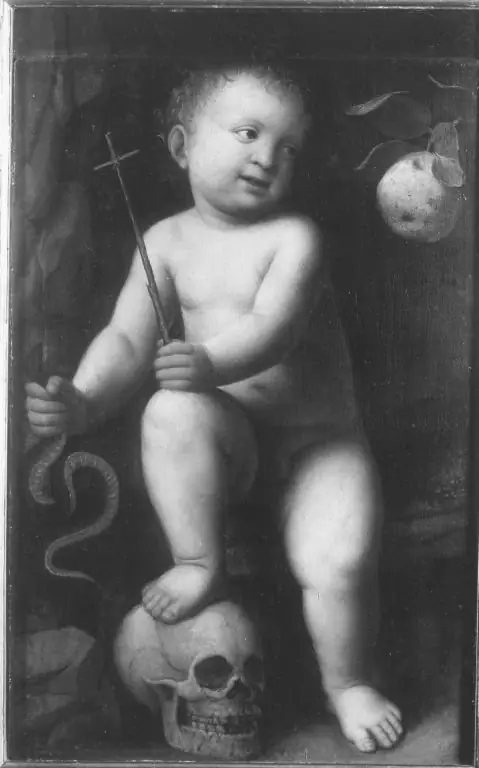
The nude infant Christ stands with one leg bent, holding a staff, while a snake coils around his right ankle. This imagery alludes to the biblical prophecy of Christ’s triumph over sin and evil, symbolized by the serpent. The staff may reference authority or the cross, framing the child not merely as a holy infant but as a prefiguration of redemption.
Technique & Style
Cranach employs thin, precise brushwork to define the child’s form and the snake’s scales, contrasting with the flat, shadowed background. Colors are restrained, ochres, grays, and muted browns, enhancing the contemplative tone. The lack of landscape or architectural context directs focus entirely to the figure, reflecting a devotional simplicity common in Lutheran-influenced art of the period.
History & Provenance
The painting entered the Hermitage collection in the 18th century, likely acquired during the expansion of Russian imperial holdings of European art. Its early history prior to this is undocumented, but its style aligns with Cranach’s workshop output during the Reformation, when religious imagery was being redefined in Protestant territories.
Context
Created during the early years of the Protestant Reformation, the painting reflects a shift in religious representation: away from elaborate Catholic iconography toward symbolic, introspective depictions. Cranach, a close associate of Martin Luther, adapted traditional subjects to convey theological ideas with clarity and restraint, avoiding excess while preserving spiritual weight.
Legacy
This work exemplifies how Cranach reimagined sacred figures through a new theological lens, influencing later Protestant devotional art. Its minimalism and symbolic clarity distinguish it from contemporaneous Italian or Netherlandish treatments of the Christ child, marking a uniquely Northern European approach to religious representation in the age of reform.
Artist & collection
Artist
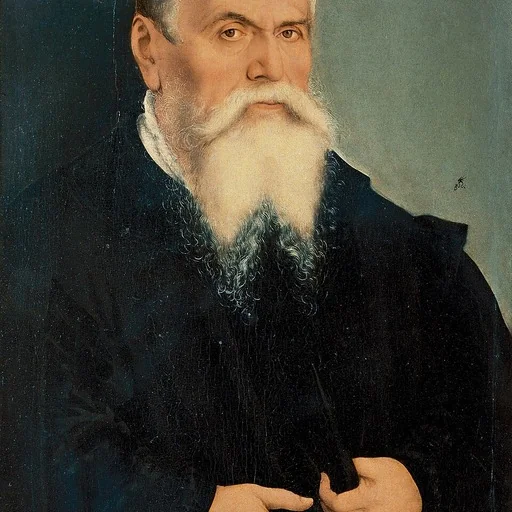
Lucas Cranach the Elder was a German Renaissance painter and printmaker in woodcut and engraving.