Artwork
Untitled
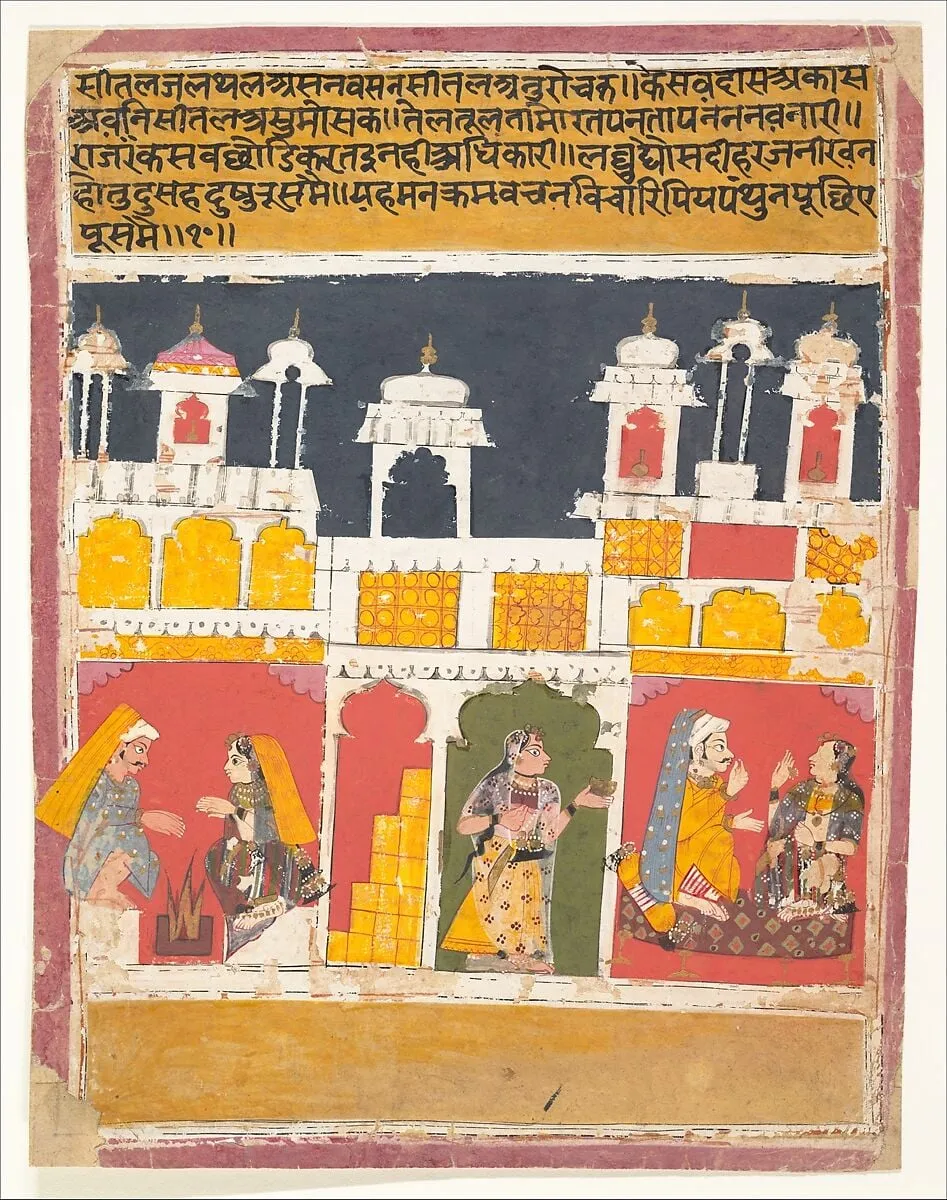
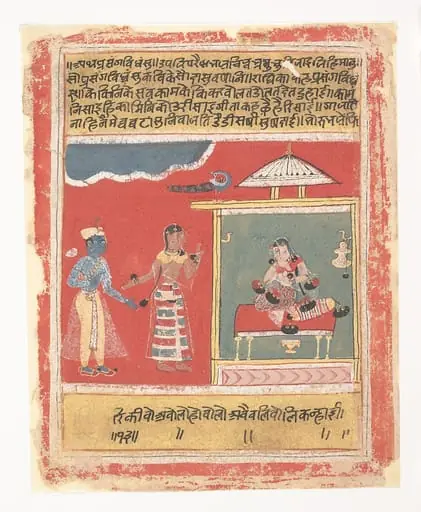
Untitled is a watercolor painting. It dates from 1650 and is held in the collection of the Metropolitan Museum of Art. This work, executed in ink and opaque watercolor on paper, presents a street scene populated by figures in traditional dress.
- Accession no.
- 1975.410.4
- Credit line
- Gift of Mr. and Mrs. Ed Weiner, 1975
About this work
Subject & Meaning
Because the artist is recorded as unknown, the specific narrative or figure portrayed is not identifiable, and no iconographic attributes have been documented.
The painting, dated 1650 and executed in ink with opaque watercolor on paper, is classified as a genre scene produced in India. Because the artist is recorded as unknown, the specific narrative or figure portrayed is not identifiable, and no iconographic attributes have been documented. Its meaning derives from the broader tradition of 17th-century Indian genre painting, in which everyday activities were rendered without overt allegorical content.
Technique & Style
This work is executed in ink and opaque watercolor on paper, a combination typical of South Asian painting traditions that allows precise linear detail and saturated, flat color areas. The opaque watercolor (gouache) permits layered, non-transparent applications, while ink provides structural definition. As a genre scene, the composition depicts everyday life with observational intent.
Its date of 1650 and Indian origin place it within the Mughal or Deccan context, where such works on paper were commonly produced as album folios.
History & Provenance
Untitled, an ink and opaque watercolor painting on paper, was created in 1650 in India by an anonymous artist. It is held in the Metropolitan Museum of Art, New York, under accession number 1975.410.4. The specific commission and ownership chain prior to the museum's acquisition are not documented. No exhibition history is recorded in the available sources.
Overview
This work, executed in ink and opaque watercolor on paper, presents a street scene populated by figures in traditional dress. Three distinct pairs of individuals are shown engaged in conversation, set against a backdrop of buildings topped with towers. The composition is framed by a line of text positioned at the upper edge of the paper.
Context
The inclusion of a textual element at the top aligns the work with traditions that blend visual and written communication, a practice seen in various regional art forms. The architectural features, such as towers, may reference a specific locale, offering clues to the cultural setting of the scene.
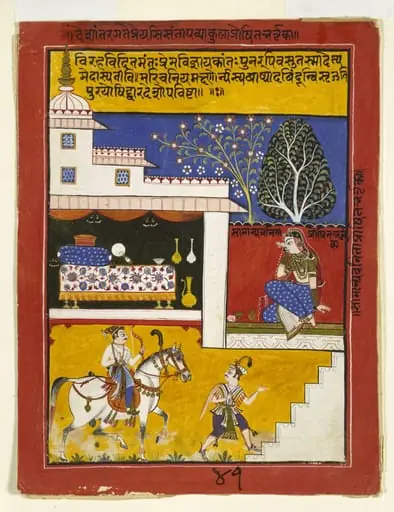
Artist & collection

- A deceitful lady
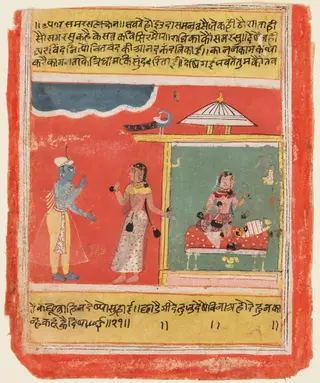 The Sentiment of Peace: Sama Rasa, from a Rasikapriya
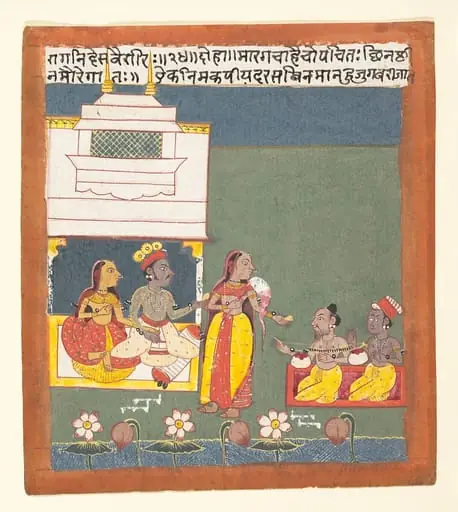 Untitled
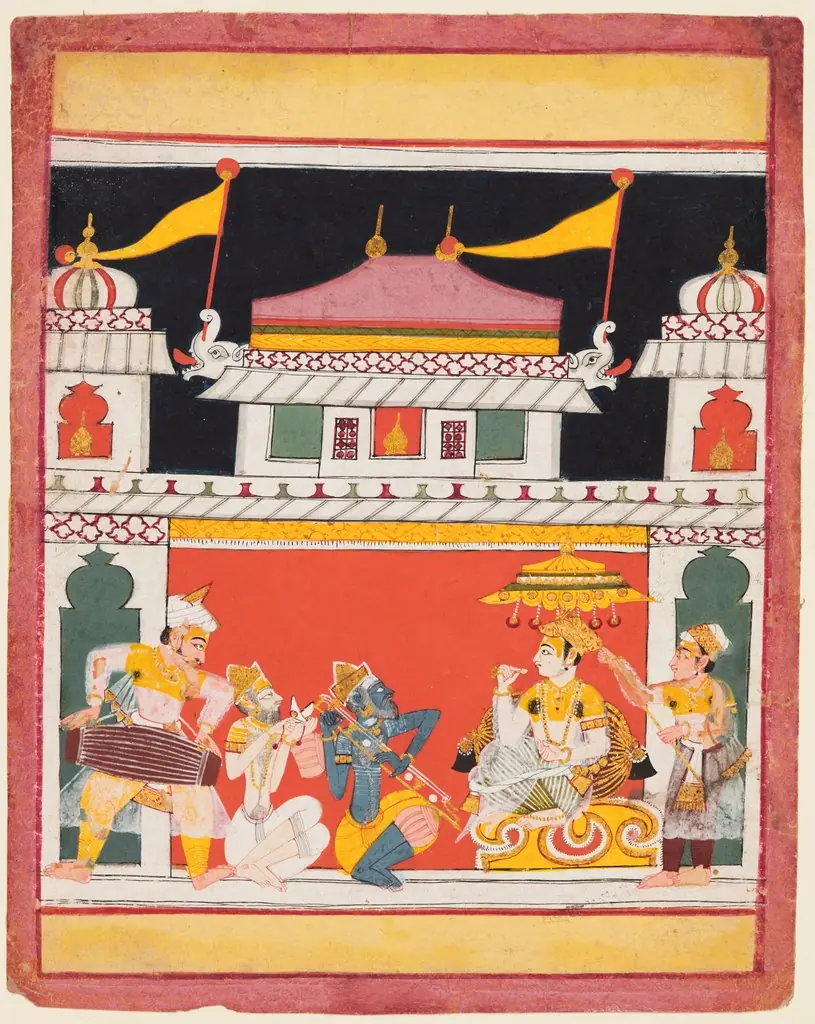 Three Musicians Perform Before a King: Shri Raga, from a Ragamala
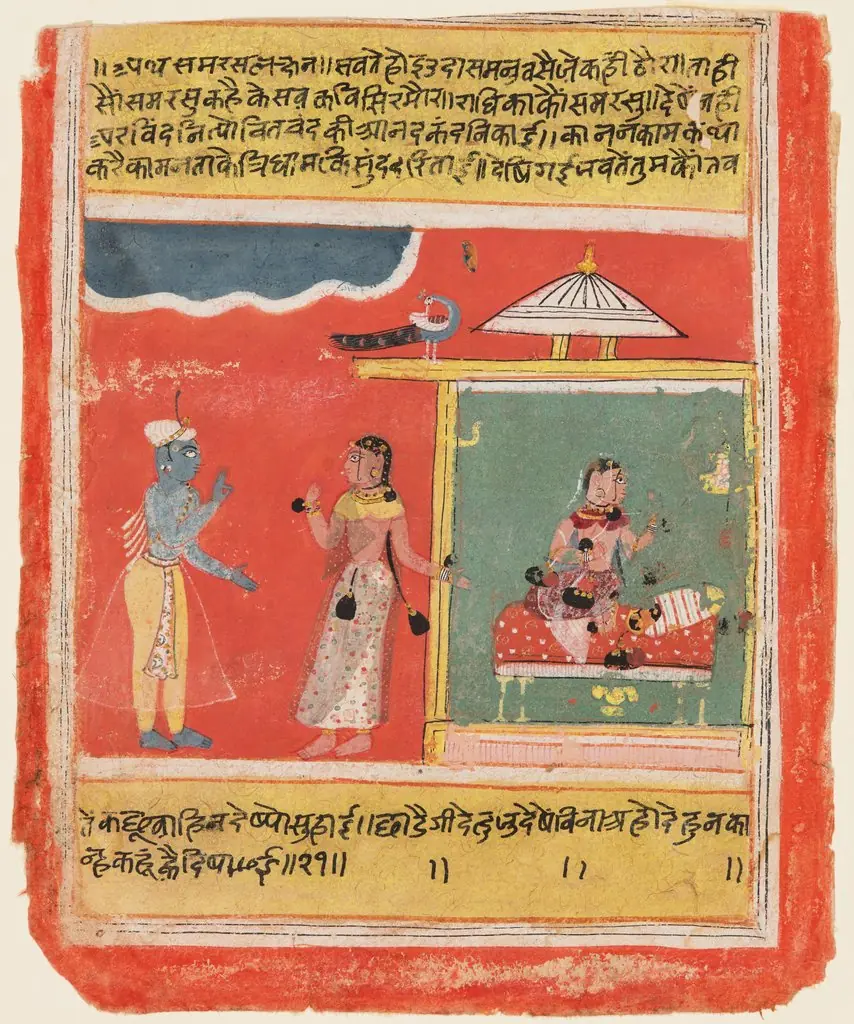 The Sentiment of Peace: Sama Rasa, from a Rasikapriya
 Three Musicians Perform Before a King: Shri Raga, from a Ragamala
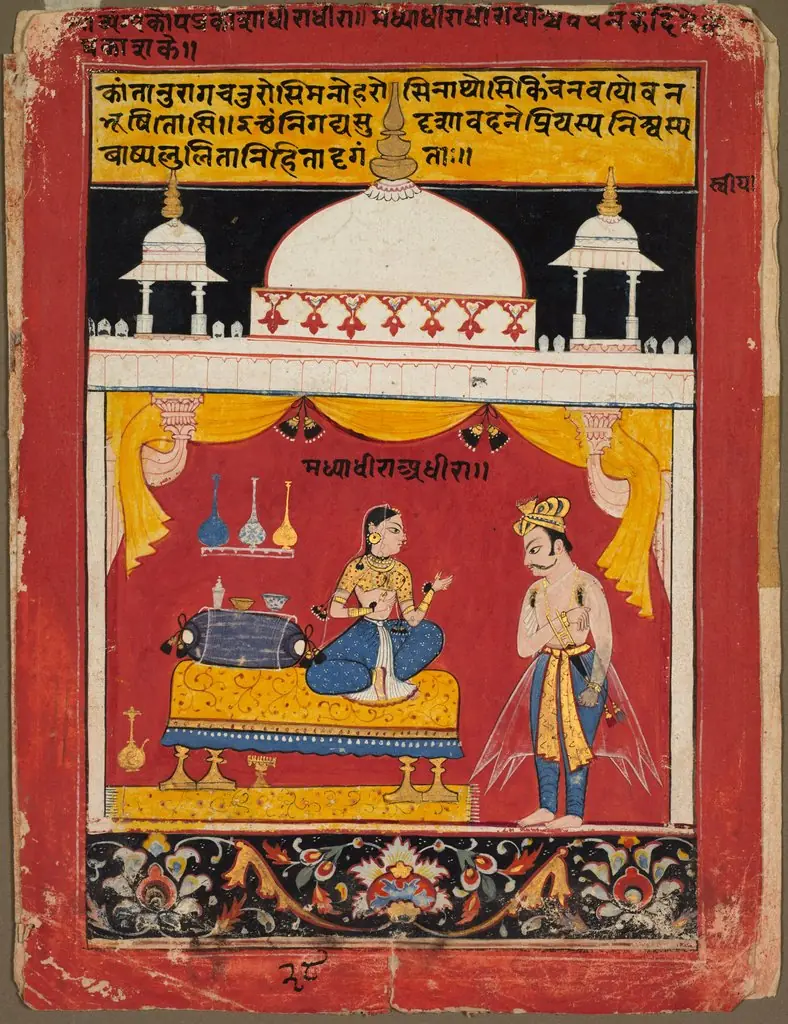 A Young, Angry Heroine, Folio 28 from a Rasamanjari
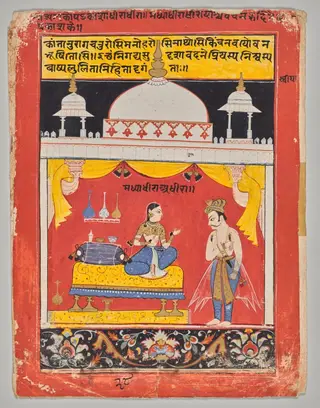 A Young, Angry Heroine, Folio 28 from a Rasamanjari
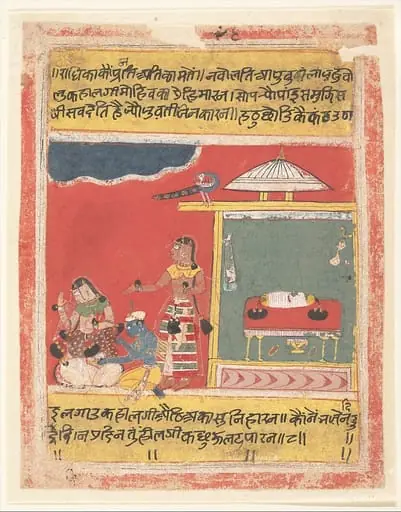 Untitled
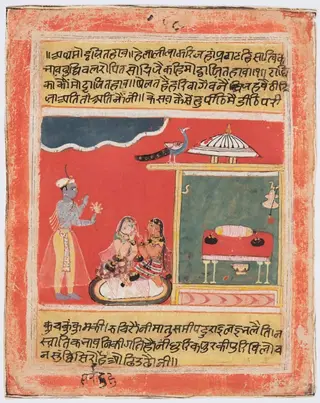 Krishna and Radha Avoid Embarrassment: Mottaita Bhava, from a Rasikapriya
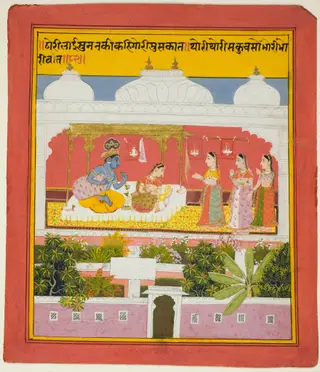 Krishna and Radha in a Pavilion, from a copy of the Seven Hundred Verses (Sat Sai) of Bihari
 Untitled