Artwork
Untitled
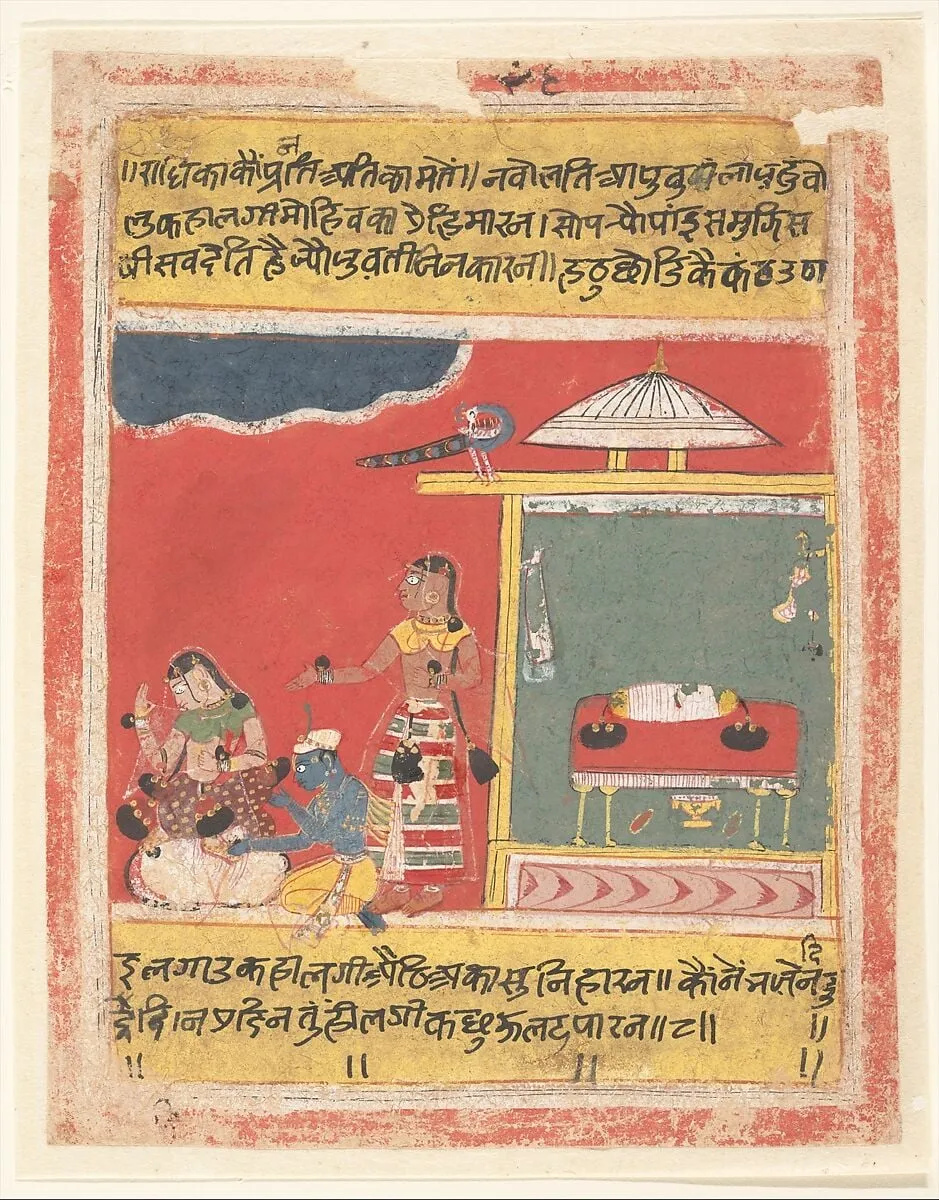
Untitled is a watercolor painting. It dates from 1634 and is held in the collection of the Metropolitan Museum of Art.
About this work
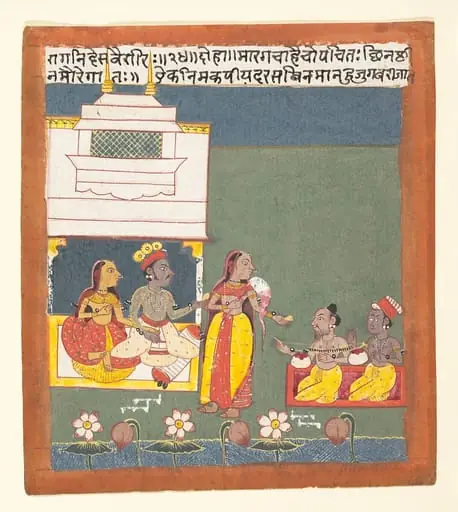
Two women in bright saris stand under a tree among peacocks and flowers. One holds a flute, the other reaches toward her. Painted in a small Indian kingdom around 1634, the colors were built up with tiny brushstrokes layered like thin sheets of glass, a technique called glazing. The faces are nearly identical; the clothes and jewels tell them apart.
Subject & Meaning
A standing woman, possibly a companion or devotee, holds a peacock fan, reinforcing the avian motif.
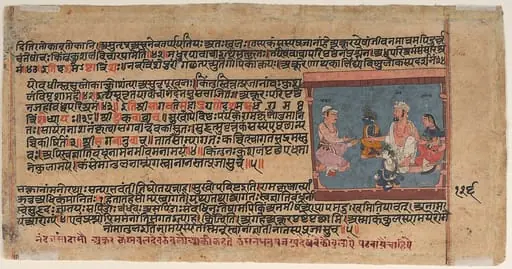
The painting depicts a trio of figures alongside two peafowl, centered on the divine couple Krishna and Rādhā, who appear in human guise with identifying attributes. Krishna is shown with a blue-hued complexion and peacock-feather crown, while Rādhā is rendered in profile wearing a red sari and jewelry, their interaction suggesting romantic intimacy. A standing woman, possibly a companion or devotee, holds a peacock fan, reinforcing the avian motif.
The presence of peafowl and the lovers’ iconography aligns with Vaishnava imagery from the period, indicating a devotional representation of divine love and grace.
Technique & Style
Created in 1634 by an anonymous artist in India, this work is executed in ink and opaque watercolor on paper. Classified as a painting within the portrait genre, the piece depicts the figures of Krishna, Rādhā, and a woman alongside a peafowl. The medium of opaque watercolor on paper suggests a traditional Indian manuscript or album leaf technique, allowing for both linear definition through ink and solid color application via the watercolor.
The support consists of paper, a common substrate for such devotional imagery of the period. While the specific handling of the brushwork or current physical condition is not detailed in the available records, the combination of ink and opaque watercolor defines the formal approach to rendering the subjects and the peafowl within the composition.
Context
The 1634 painting Untitled, executed in ink and opaque watercolor on paper, exemplifies early modern Indian artistic practice. Attributed to an anonymous creator, the work portrays the divine couple Krishna and Rādhā alongside a woman and a peafowl, a composition typical of devotional portraiture in the region. Its production in India and subsequent acquisition by the Metropolitan Museum of Art underscores its significance as a rare surviving example of 17th‑century Indian miniature painting, offering insight into the stylistic and thematic concerns of the period.
Legacy
Although the artist remains unidentified, the 1634 painting Untitled has come to be recognized through its inclusion in the Metropolitan Museum of Art, where it is displayed as part of the museum’s collection of early Indian works. This institutional presence has facilitated scholarly examination of the piece as a key example of devotional portraiture from the period, influencing subsequent studies of Krishna‑Rādhā imagery and the visual representation of Hindu mythology in Indian art.
Overview
This untitled painting, rendered in ink and opaque watercolor on paper, depicts two women beneath a tree adorned with peacocks and blossoms. One figure holds a flute, while the other extends her hand towards her companion. The vibrant saris and intricate jewelry distinguish the otherwise similar countenances of the subjects, reflecting a refined artistic practice from a 17th-century Indian kingdom.
History & Provenance
This artwork was created in a small Indian kingdom around 1634. Its origin within a regional court suggests patronage that valued detailed craftsmanship and narrative illustration. While the specific artist and patron are not recorded, the painting exemplifies the artistic styles and cultural interests prevalent in the courts of the Indian subcontinent during the early to mid-17th century.
Artist & collection

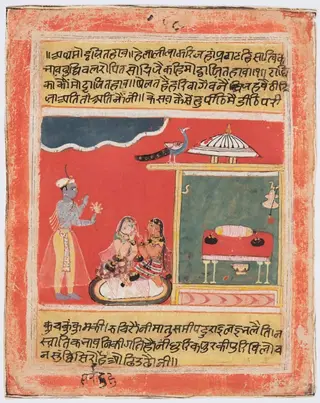
- Krishna and Radha Avoid Embarrassment: Mottaita Bhava, from a Rasikapriya
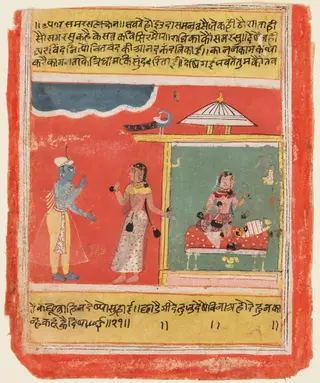 The Sentiment of Peace: Sama Rasa, from a Rasikapriya
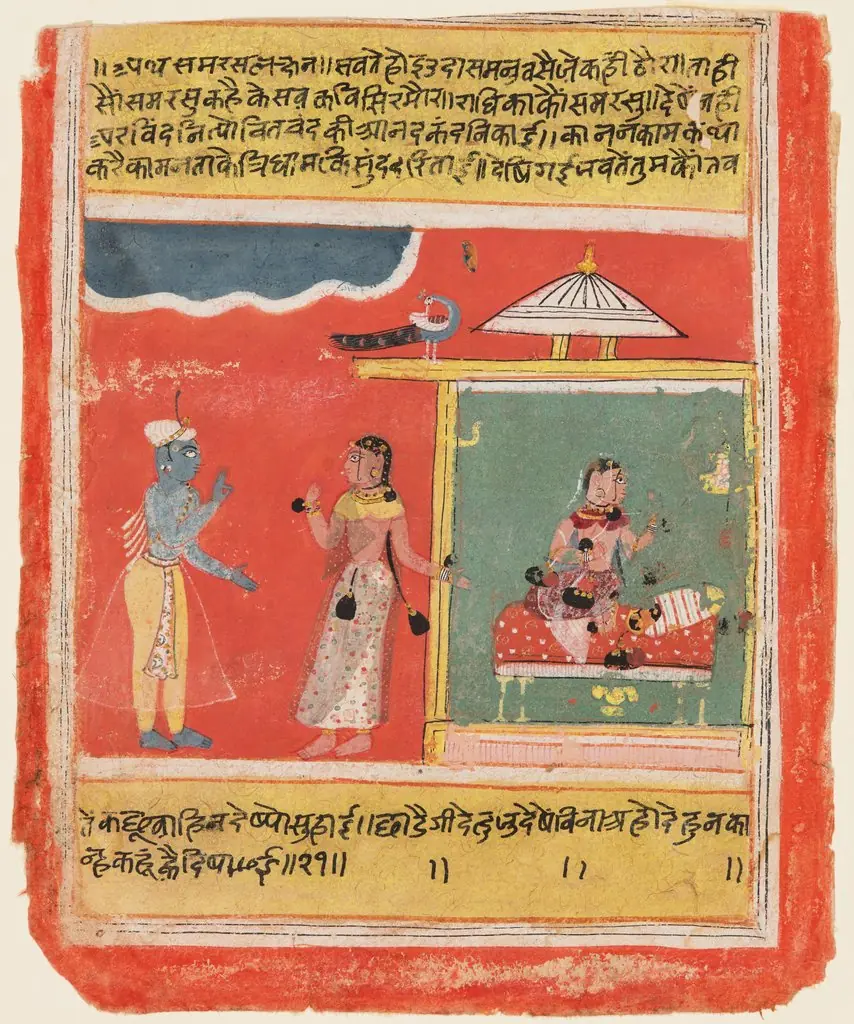 The Sentiment of Peace: Sama Rasa, from a Rasikapriya
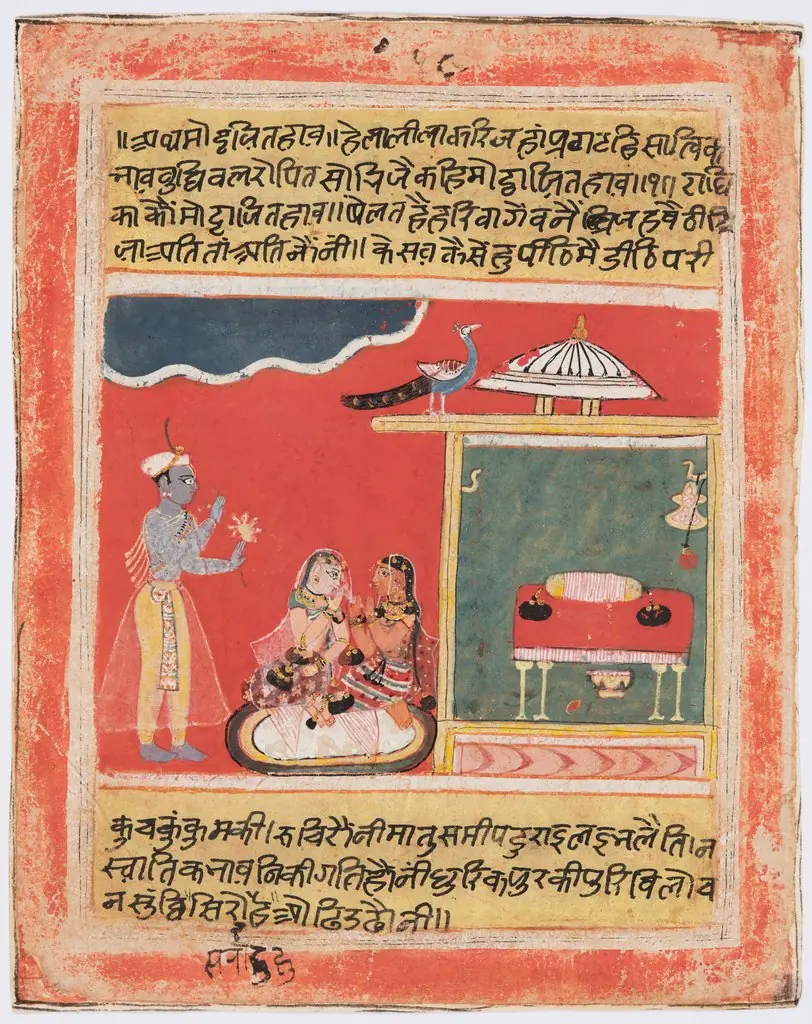 Krishna and Radha Avoid Embarrassment: Mottaita Bhava, from a Rasikapriya
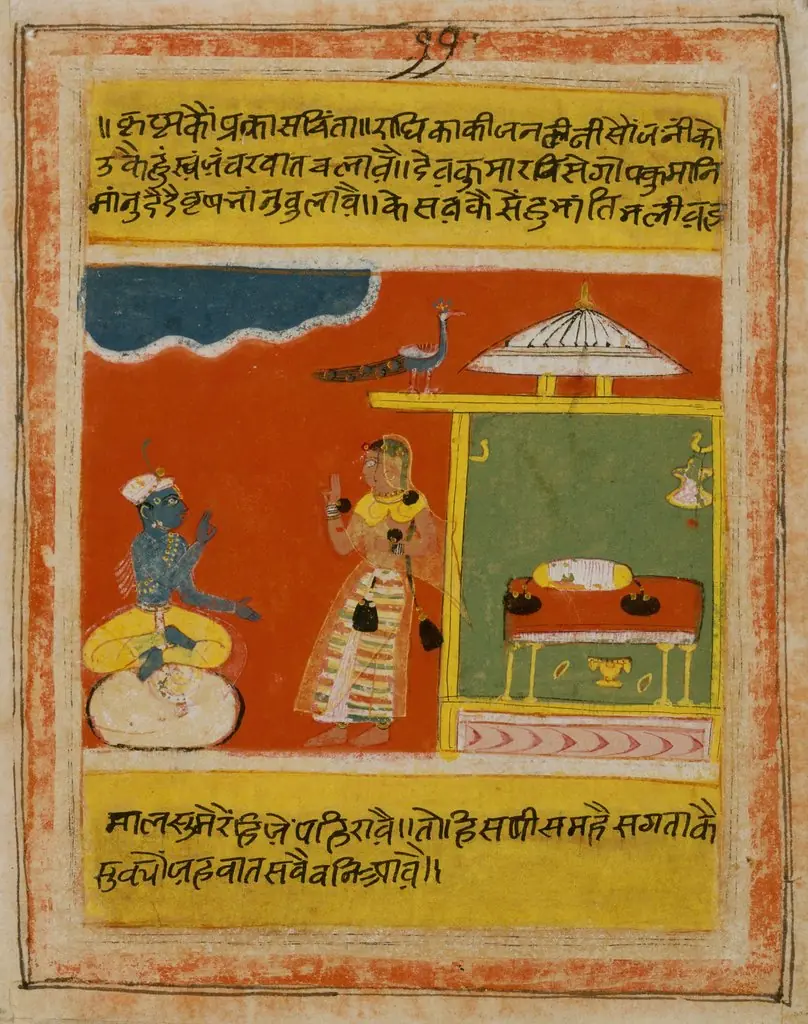 Krishna and Radha
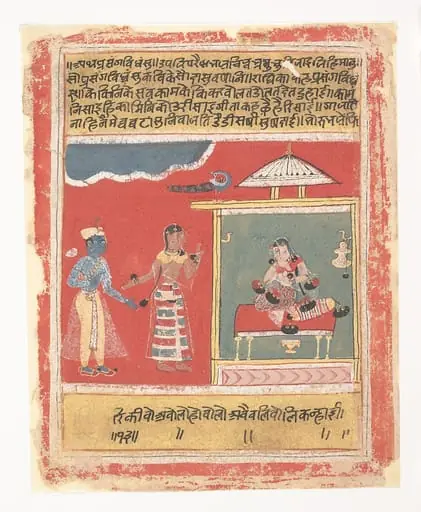 Untitled
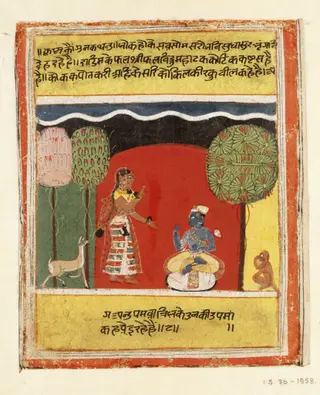 Radha and Krishna
 Untitled
 Untitled
 Krishna's Insomnia, Page from a Rasikapriya
 Ragini Setmalar, Page from a Jaipur Ragamala Set
 Untitled