Artwork
Untitled
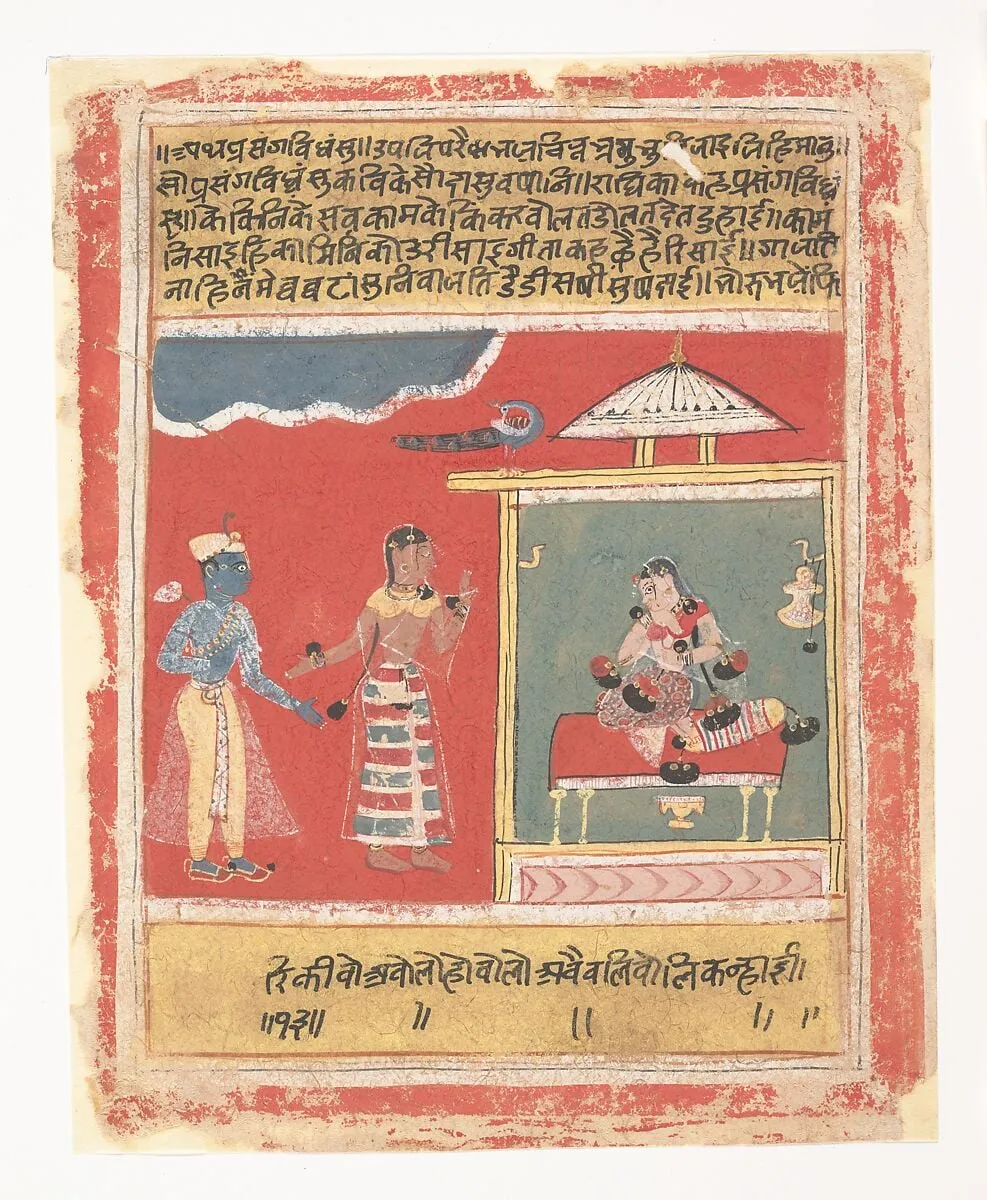
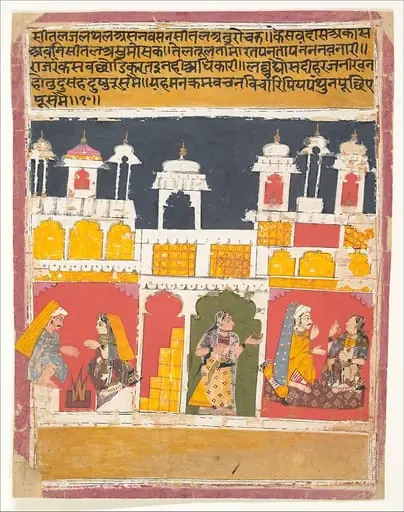
Untitled is a watercolor painting. It dates from 1634 and is held in the collection of the Metropolitan Museum of Art.
About this work
Subject & Meaning
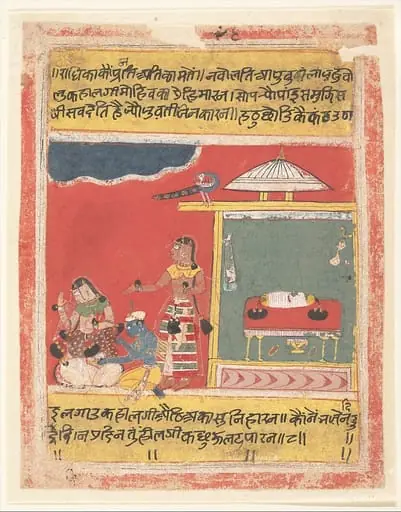
The work is a religious painting that portrays the Hindu deities Krishna and his consort Radha accompanied by a peafowl and an unidentified woman.
The work is a religious painting that portrays the Hindu deities Krishna and his consort Radha accompanied by a peafowl and an unidentified woman. The presence of Krishna and Radha situates the scene within the bhakti tradition of divine love, while the peafowl appears as an accompanying motif often associated with beauty and auspiciousness in Indian art. The composition reflects the devotional focus characteristic of 17th‑century Indian miniature painting.
Technique & Style
The painting is executed in ink and opaque watercolor on paper, employing a refined technique characteristic of Mughal-era manuscript painting. The medium’s luminous, layered washes and delicate ink outlines create a refined interplay of light and form, enhancing the devotional intimacy of the scene. Stylistically, the work exhibits the period’s hallmark naturalism, with softly modeled figures and attentive detail to costume and gesture.
The composition’s balance and the restrained palette, predominantly earth tones punctuated by jewel-like accents, reflect the restrained elegance typical of 17th-century Indian religious imagery. The sheet’s small dimensions (height 19.7 cm, width 15.2 cm) suggest its use as a devotional miniature or album leaf rather than a wall painting.
History & Provenance
Created in 1634 in India, this ink and opaque watercolor painting on paper was produced by an anonymous artist. The work depicts religious figures, specifically Krishna and Rādhā, alongside a peafowl and a woman. While the specific commissioning patron and initial ownership details are not recorded in the available documentation, the painting's creation history is firmly dated to the seventeenth century.
The artwork eventually entered the collection of the Metropolitan Museum of Art, where it is currently held. No further details regarding intermediate owners or the specific circumstances of its acquisition by the museum are provided in the source records, though its origin is established as Indian and its date as 1634.
Legacy
The painting, dated 1634 and held by the Metropolitan Museum of Art, exemplifies early Indian devotional art and is frequently cited in scholarship on Krishna iconography and Mughal-era miniature painting. Its depiction of Krishna, Rādhā, a woman, and peafowl reflects religious themes of the period and has informed analyses of anonymous works from that tradition. The work’s provenance and attributes contribute to the broader understanding of cross-cultural artistic exchange in South Asian art.
Overview
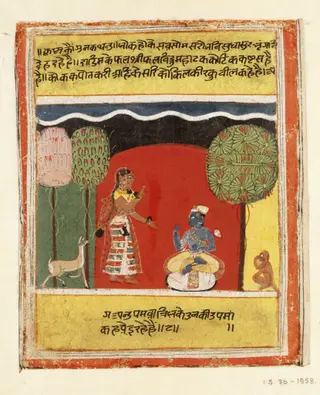
This untitled painting, rendered with ink and opaque watercolor on paper, depicts a scene from central India in the 1600s. It features a woman in a vibrant red skirt standing beneath a tree adorned with peacocks, while a blue-skinned male figure plays a flute nearby. The artwork's creator remains anonymous, yet it offers insight into the artistic traditions of its time and place.
Context
This painting exemplifies the artistic output of central India during the 1600s, particularly resonating with styles found in the region of Madhya Pradesh. Such works often illustrate religious or literary themes, reflecting the cultural and spiritual landscape of the time. Further examples of this artistic tradition, characterized by its distinctive palette and narrative focus, can be explored by examining works attributed to India (Madhya Pradesh).
Artist & collection

- Radha and Krishna
 The Sentiment of Peace: Sama Rasa, from a Rasikapriya
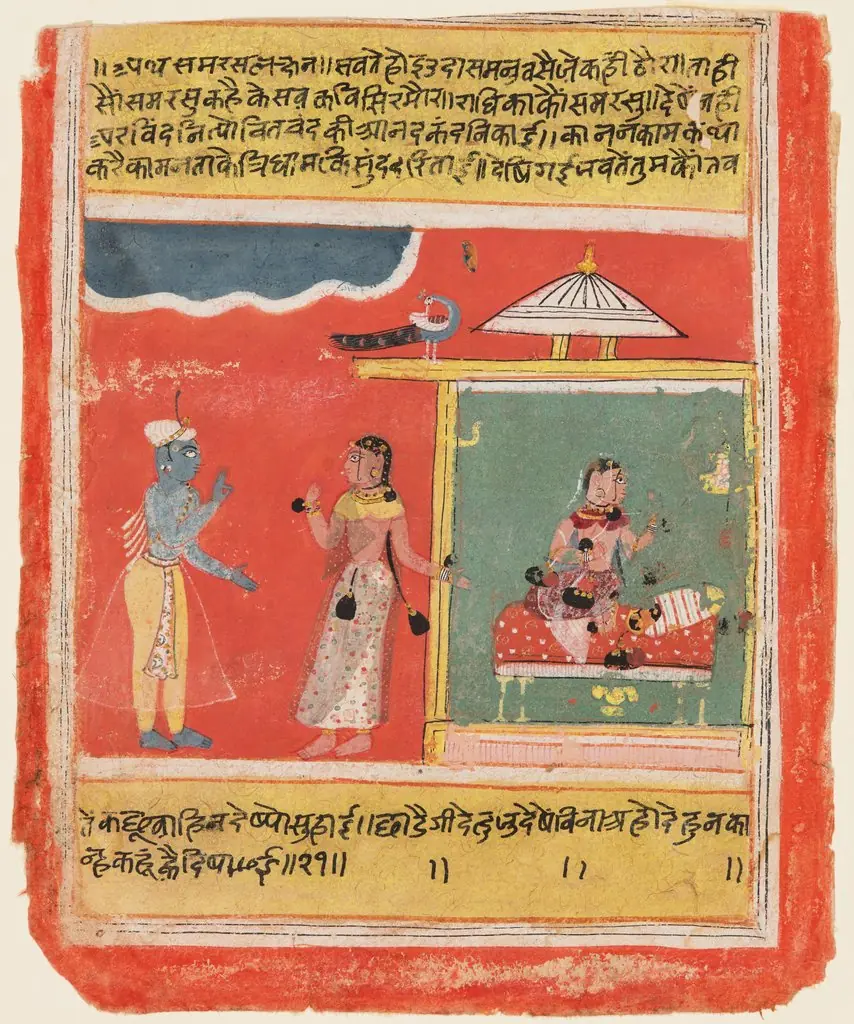 The Sentiment of Peace: Sama Rasa, from a Rasikapriya
 Untitled
 Krishna and Radha Avoid Embarrassment: Mottaita Bhava, from a Rasikapriya
 Tantric Manuscript "Sangrahani Sutra"
 Krishna and Radha Avoid Embarrassment: Mottaita Bhava, from a Rasikapriya
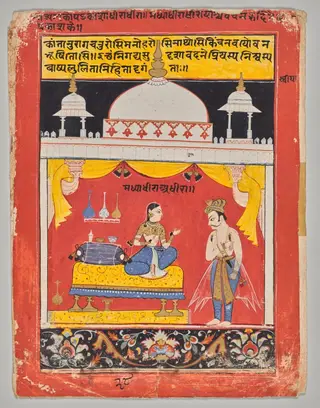 A Young, Angry Heroine, Folio 28 from a Rasamanjari
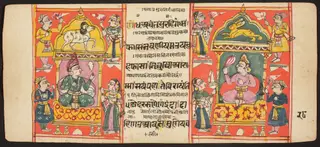 Tantric Manuscript "Sangrahani Sutra"
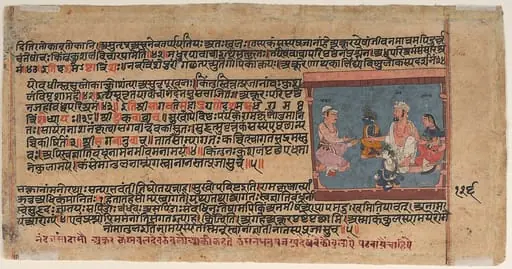 Untitled
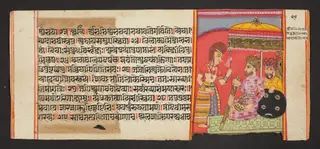 Legend of Durga
 Untitled