Artwork
Untitled
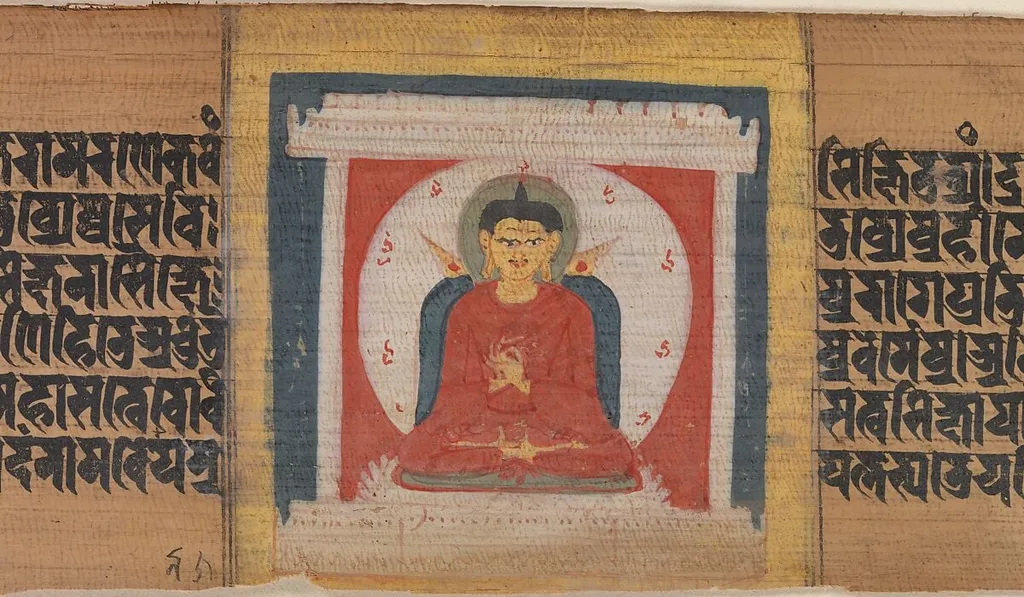
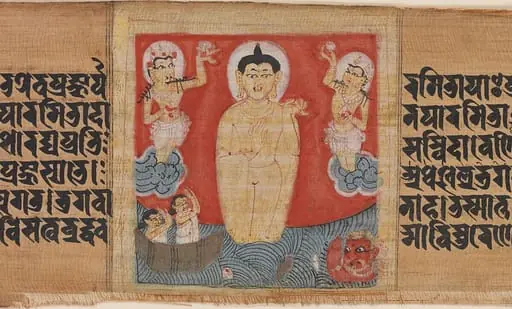
Untitled is a watercolor painting. It dates from 1090 and is held in the collection of the Metropolitan Museum of Art.
- Accession no.
- 55.121.36.6
- Credit line
- Rogers Fund, 1955
About this work
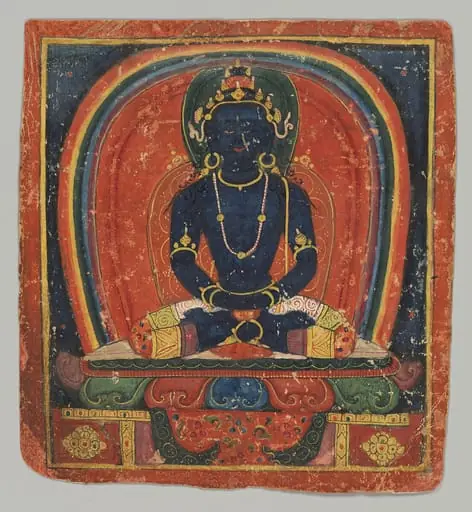
A small palm leaf painted with a seated Buddha in bright reds and blues, its lines thin and careful. Made around 1090 in Bengal or Bangladesh, when artists painted on palm leaves because paper was rare. This leaf was likely one page of a longer book, perhaps about the Buddha's life.
Subject & Meaning
The work depicts the Buddha and embodies Buddhist religious themes, consistent with its classification as religious art.
The work depicts the Buddha and embodies Buddhist religious themes, consistent with its classification as religious art. Created in 1090 in India as an opaque watercolor on palm leaf, the painting belongs to a tradition of devotional imagery in which the figure of the Buddha serves as the central focus of veneration. The narrow horizontal format, measuring 5.6 by 56.8 centimeters, is characteristic of palm-leaf manuscripts used for sacred texts and accompanying illustrations, suggesting the image functioned within a Buddhist devotional or liturgical context.
The iconographic emphasis on the Buddha reflects broader Buddhist visual traditions of the period, in which the enlightened teacher is portrayed as an object of reverence and a symbol of awakening.
History & Provenance
The work titled Untitled is a religious painting created in India around 1090. Executed in opaque watercolor on palm leaf by an anonymous artist, it depicts the Buddha and Buddhist themes, consistent with its classification as religious art. The painting measures 5.6 centimeters in height and 56.8 centimeters in width, a narrow horizontal format characteristic of palm-leaf manuscripts.
It is held in the collection of the Metropolitan Museum of Art. No accession number, specific commission, or detailed chain of ownership prior to its acquisition is recorded in the available sources, and no exhibition history has been published in the referenced documentation.
Context
The painting Untitled, dated 1090 and executed in opaque watercolor on palm leaf, belongs to the visual culture of Buddhist India. Classified as religious art, it portrays the Buddha and forms part of a body of anonymous works produced in the Indian subcontinent in the late eleventh century. Its inclusion in the Metropolitan Museum of Art's collection reflects its interest as an example of Buddhist iconography and palm-leaf painting practice.
The narrow format is typical of illustrated manuscript leaves of the period, and the anonymous authorship is characteristic of devotional production in monastic contexts.
Legacy
The anonymous 11th‑century watercolor, housed in the Metropolitan Museum of Art, is cited as a key example of early Buddhist visual culture on palm leaf. Its depiction of Buddha has made it a reference point for studies of medieval Indian art, illustrating the visual conventions of the period and their significance within the broader trajectory of Buddhist painting.
Overview
This untitled painting, created around 1090 in the Bengal region, depicts a seated Buddha using opaque watercolor on a palm leaf. The small scale of the work is characteristic of the period, reflecting the materials and common formats available to artists. Its vibrant palette of reds and blues, combined with precise draftsmanship, illustrates the refined aesthetic of the era.
Technique & Style
Executed with opaque watercolor, the painting features a striking use of bright red and blue pigments. The artist employed fine, deliberate lines, creating a sense of precision and detail despite the small surface. The choice of palm leaf as a support medium was a practical necessity in the region during this period, as paper had not yet become widely accessible for manuscript production.
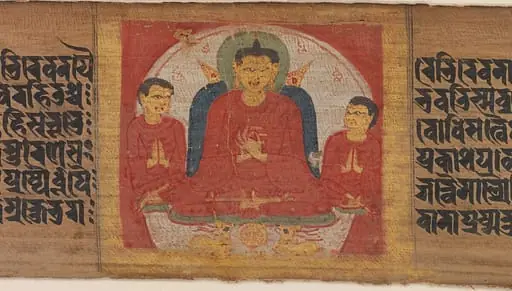
Artist & collection

- Untitled
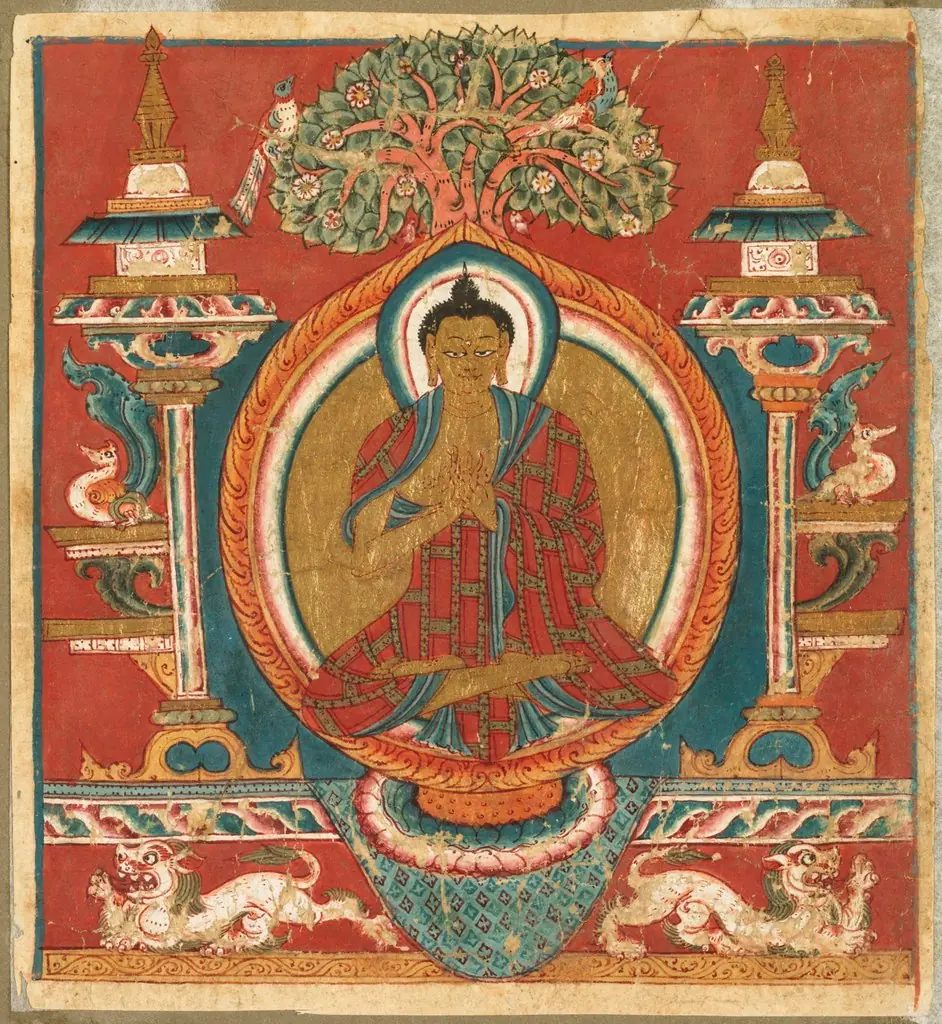 Preaching Sakyamuni
 Votive initiation card (tsakali) with preaching Buddha Shakyamuni
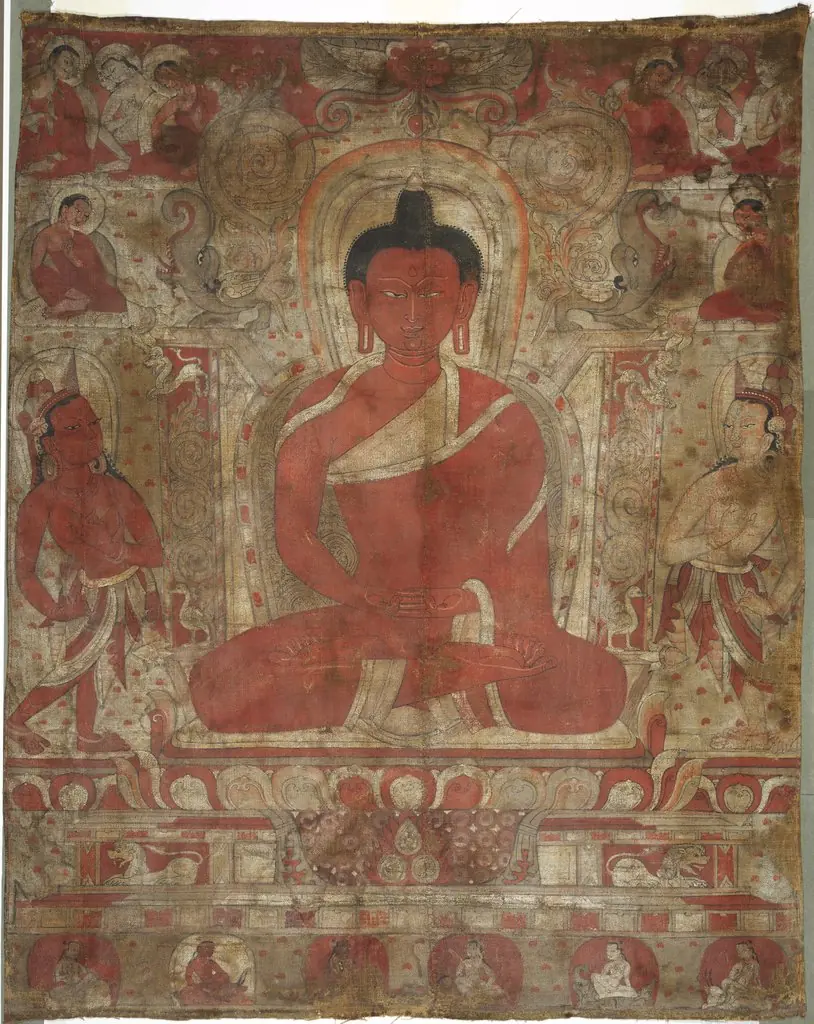 Seated Amitabha with Attendants
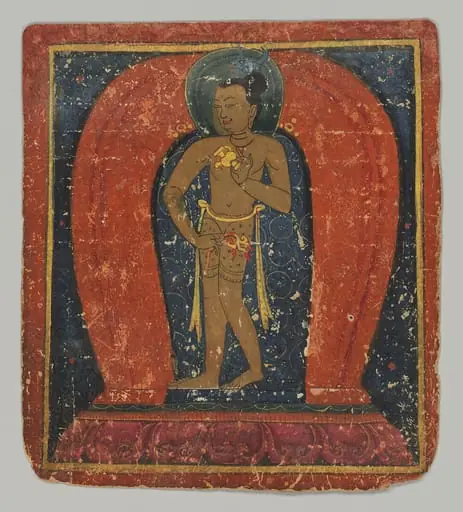 Untitled
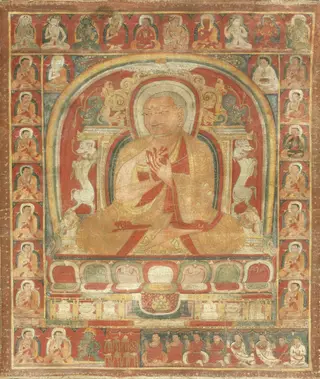 An Abbot and His Lineage
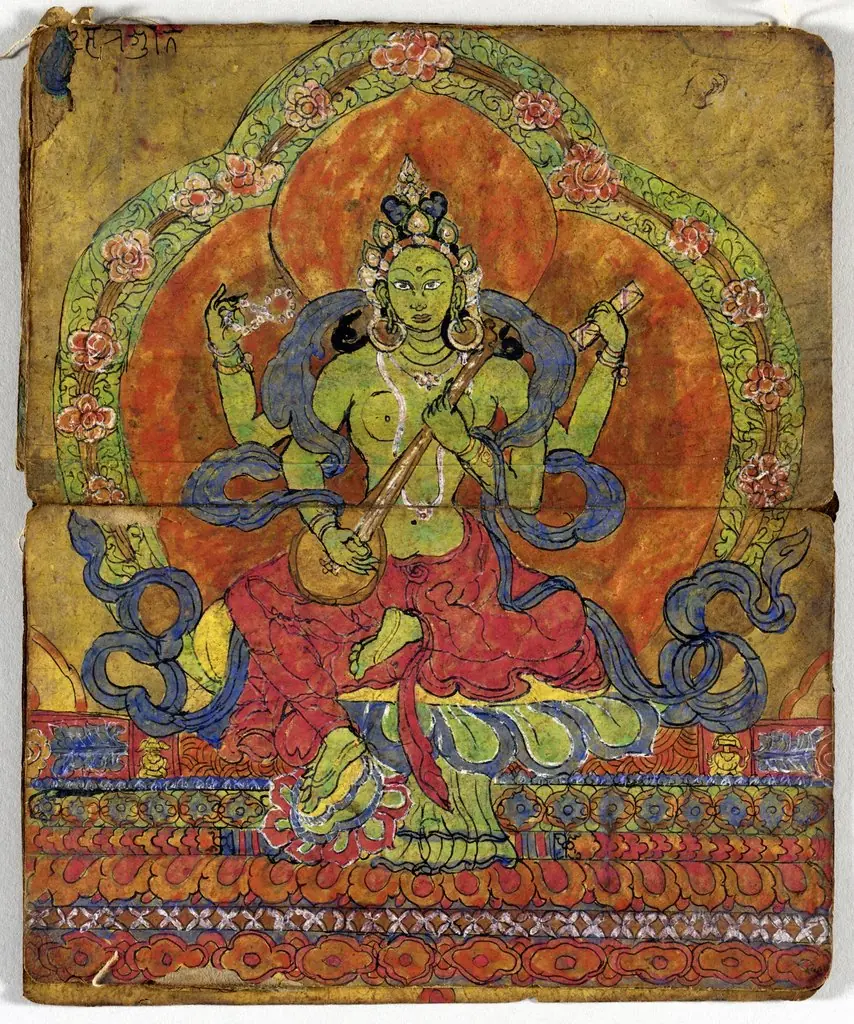 Book of Buddhist Images
 Bejeweled Buddha Preaching
 Untitled
 Figure Seated on Lotus, from a Set of Initiation Cards (Tsakali)
 Tsong Khapa, Founder of the Geluk Order
 Untitled