
Artist
Movement
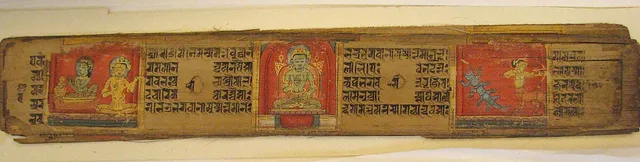
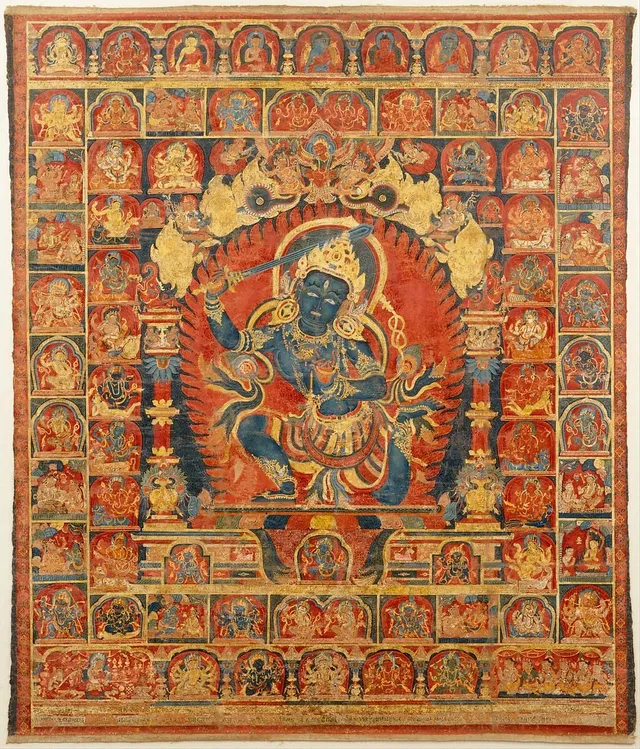
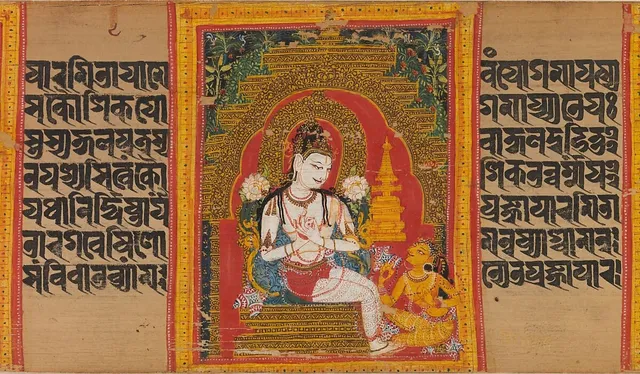
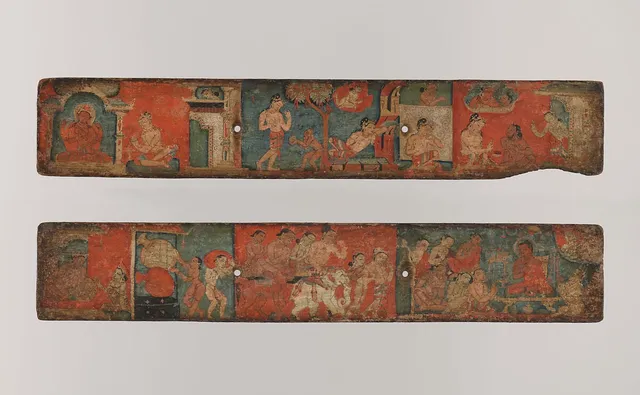
Benin Bronze Tradition is an art movement of the 1200–1900 period. The gallery holds 24 works in this movement, including works by Mahavihara Master. Browse Benin Bronze Tradition paintings, portraits, pictures and artworks from the world's public-domain museum collections.
The Benin Bronze tradition is the courtly metal art of the Kingdom of Benin, a powerful Edo state centred on Benin City in what is now southern Nigeria's Edo State. In this kingdom the Oba, or king, was regarded as a semi-divine figure, and the casting of brass was bound tightly to his authority. By court tradition the lost-wax technique was refined in Benin in the late thirteenth century by a master caster named Igueghae, said to have come south from the neighbouring city of Ife. From him descended the royal brass-casters' guild, the Igun Eronmwon, who for some seven centuries have worked on Igun Street in the heart of the city and ranked among the highest of the palace guilds.
Though called "bronzes," most works are in fact leaded brass and copper alloy, cast by the cire perdue (lost-wax) method, in which a fine clay investment surrounds a wax model that is melted away and replaced by molten metal. The tradition's most celebrated products are the roughly nine hundred relief plaques produced largely between the mid-sixteenth and mid-seventeenth centuries, during the kingdom's height. These adorned the palace's wooden pillars and record dynastic life in dense, hierarchically scaled detail: enthroned Obas, war chiefs, court attendants, and the armoured Portuguese traders who reached Benin in the late fifteenth century.
Equally canonical are the commemorative cast heads placed on royal ancestral altars. Heads of Queen Mothers (Iyoba), distinguished by the forward-pointing peak of their coral-beaded crowns, honour figures such as Idia, mother of Oba Esigie, who secured his early-sixteenth-century reign. The famous Iyoba pendant mask of Idia was carved in ivory by the separate Igbesanmwan guild, underscoring how Benin's court arts spanned several specialised workshops. Because authorship lay with the guild rather than the individual, most works—like several in this collection—are appropriately catalogued without a named maker.
The tradition is heir to earlier West African metalwork, including the naturalistic brass heads of Ife and, more distantly, the Nok terracottas. In 1897 a British punitive expedition sacked Benin City and looted thousands of objects, dispersing them to museums worldwide and igniting today's restitution debates—even as the Igun Eronmwon casters continue their work.
Artist
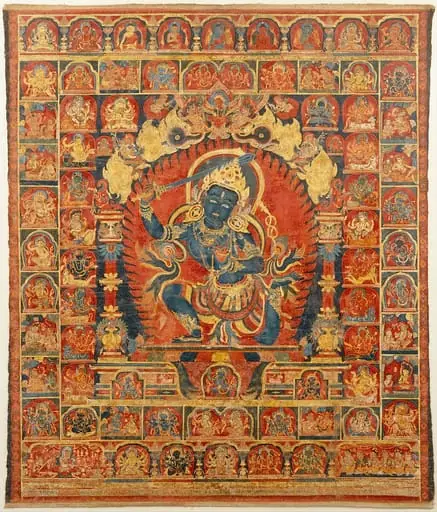 Untitled
 Untitled
 Untitled
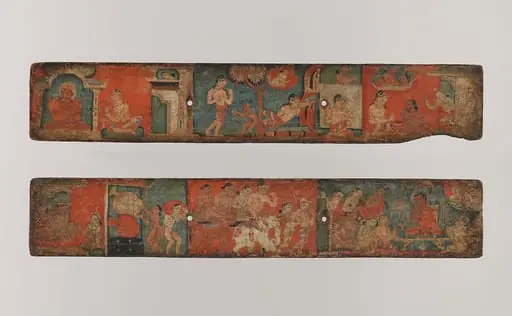 Untitled
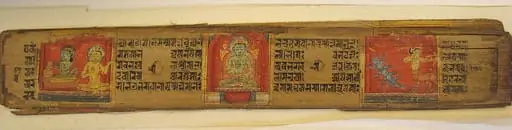 Untitled
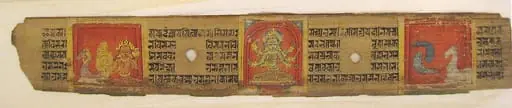 Untitled
 Untitled
 Untitled
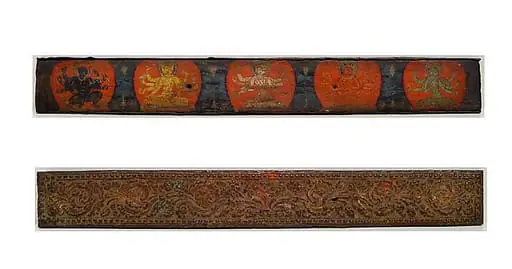 Untitled
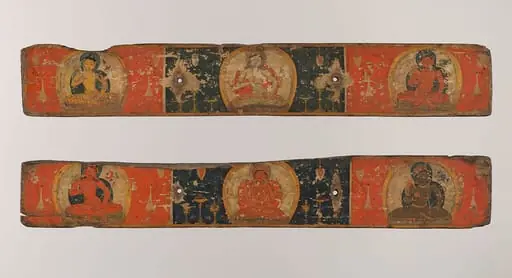 Untitled
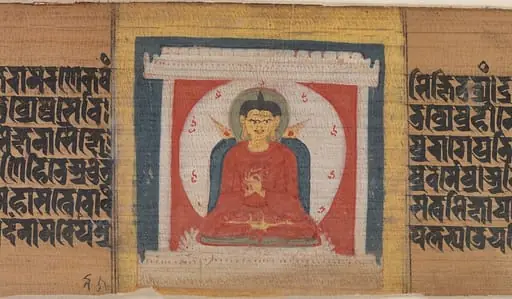 Untitled
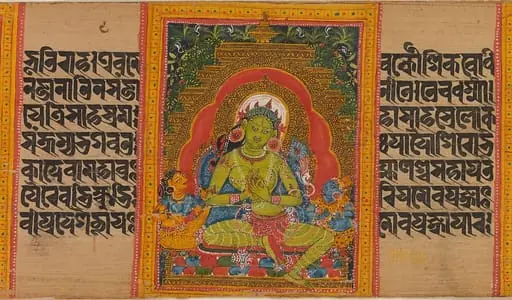 Untitled
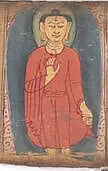 Untitled
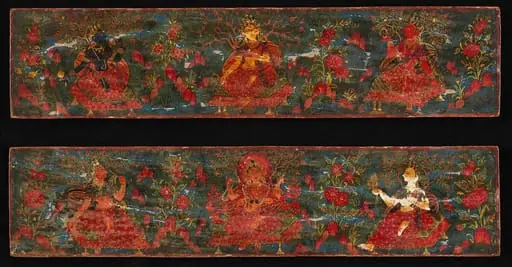 Untitled
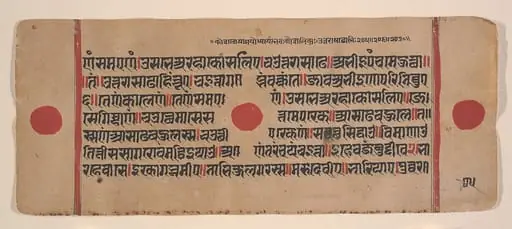 Untitled
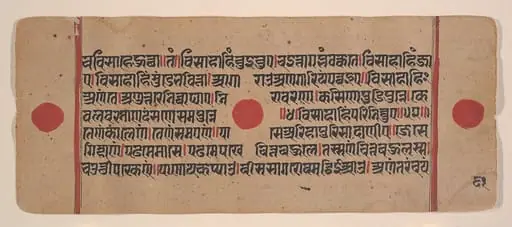 Untitled
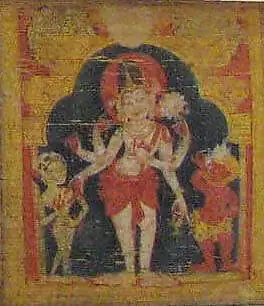 Untitled
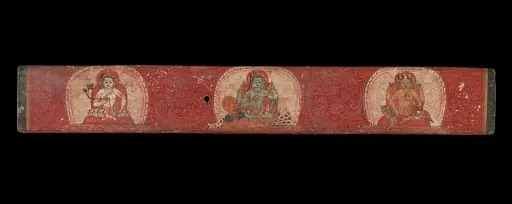 Untitled
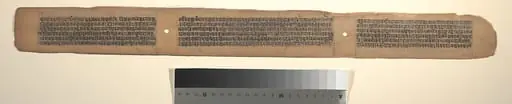 Untitled
 Untitled
 Untitled
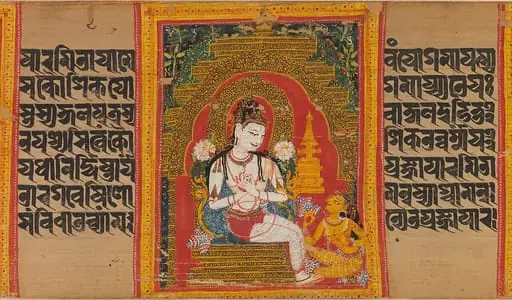
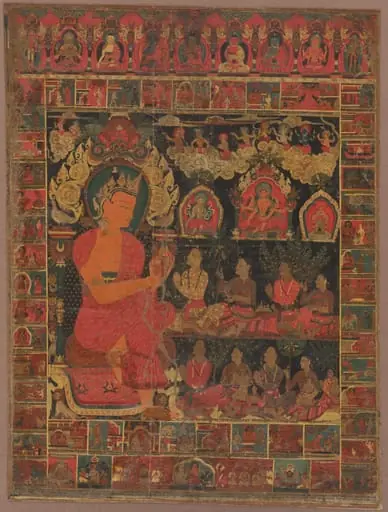 Bejeweled Buddha Preaching
 Text, Folio 153 (verso), from a Manuscript of the Perfection of Wisdom in Eight Thousand Lines (Ashtasahasrika Prajnaparamita-sutra)
 Text, Folio 135 (verso), from a Manuscript of the Perfection of Wisdom in Eight Thousand Lines (Ashtasahasrika Prajnaparamita-sutra)
Benin Bronze Tradition is an art movement. The royal art of the Kingdom of Benin in West Africa, famed for its cast brass and bronze plaques and heads.
Artifact World Gallery holds 24 public-domain Benin Bronze Tradition works, all free to view and download.
Key Benin Bronze Tradition artists in the collection include Mahavihara Master.
Benin Bronze Tradition dates from 1200–1900.
Benin Bronze Tradition works in the collection are held by Metropolitan Museum of Art and Cleveland Museum of Art.
Your cart is empty
Browse artworks →