Artwork
Untitled
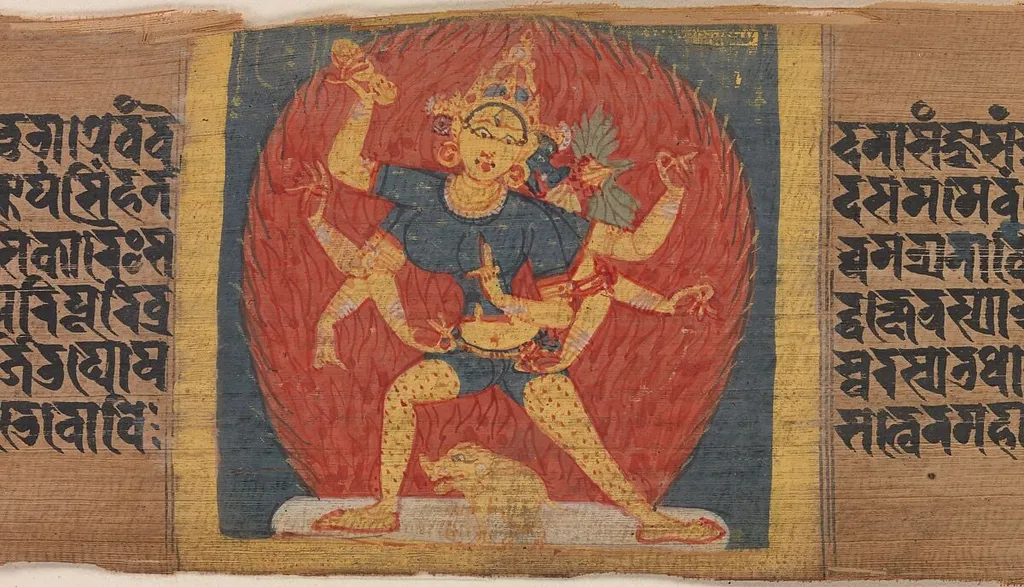
Untitled is a watercolor painting. It dates from 1090 and is held in the collection of the Metropolitan Museum of Art.
About this work
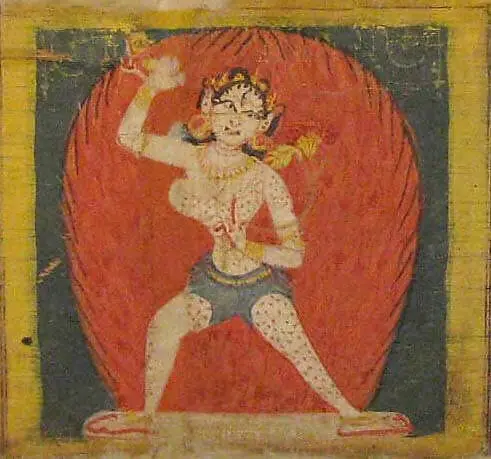
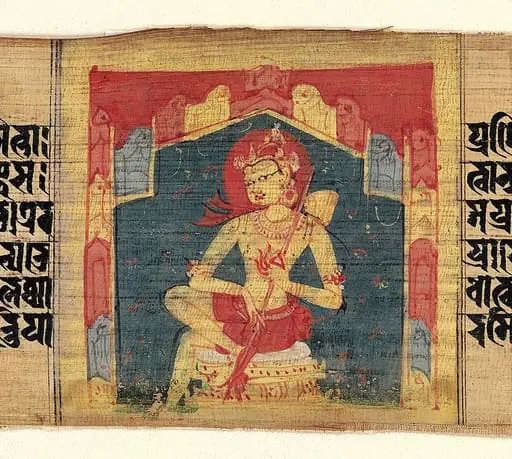
On a small strip of palm leaf, a blue-skinned god sits on a coiled snake, ringed by animals and flames. Made around 1090 in Bengal or Bangladesh, long before paper was common there, it was painted on leaves that were dried, cut, and stitched into books. The pigment sits on the surface, so its colors stay vivid.
Subject & Meaning
The work, dated to 1090, is an opaque watercolor on palm leaf that portrays an animal alongside a Buddhist deity, embodying religious iconography typical of its genre. Its subject reflects Buddhist symbolism, where the animal serves as an attribute of the depicted deity, signifying spiritual qualities within the Buddhist tradition. The painting belongs to the religious art category and was created in India before entering the collection of the Metropolitan Museum of Art, where it remains on display.
Technique & Style
The work is executed in opaque watercolor applied to a palm‑leaf support, a technique documented for this early Indian painting.
The work is executed in opaque watercolor applied to a palm‑leaf support, a technique documented for this early Indian painting. Its dimensions measure roughly 5.7 cm in height by 57.2 cm in width, indicating a vertical format typical of devotional panels. The surface shows the natural texture of the leaf, suggesting careful handling to preserve the fragile substrate.
Stylistically, the composition depicts a Buddhist deity surrounded by animal motifs, rendered with restrained line work and muted color washes that emphasize spiritual symbolism over naturalistic detail. The painting’s condition is not explicitly recorded, but the use of palm leaf as a support implies a degree of vulnerability that requires controlled environmental storage.
History & Provenance
The work, titled Untitled and created around 1090 by an unknown artist, is currently held in the collection of the Metropolitan Museum of Art. The museum lists the piece as a painting by an anonymous painter, originating from India. Specific inventory details include its classification within the museum's holdings, though a unique accession number is not provided in the available records.
The artwork has not been documented with a specific exhibition history in the provided sources, but its presence in the Metropolitan Museum of Art's collection is confirmed. The piece measures 5.7 units in height and 57.2 units in width, reflecting its format as a small-scale religious painting on palm leaf, consistent with its depiction of Buddhist deities and animals.
Context
The untitled palm‑leaf painting, dated to 1090 and attributed to an anonymous Indian artist, exemplifies early Buddhist visual culture in the Indian subcontinent. Its depiction of a deity within an animal‑filled composition reflects the syncretic religious art practiced in the region, a subject of ongoing scholarly attention in studies of South Asian Buddhist iconography【1】【2】. As part of the Metropolitan Museum of Art’s collection, the work informs broader discussions of how religious narratives were materialized in material media during the late medieval period, positioning it within a corpus of anonymous paintings that shaped regional artistic traditions【2】.
Scholarship emphasizes its role in illustrating the spread of Buddhist iconography across Asia, underscoring its significance in the historiography of Asian art【1】.
Overview
This untitled painting, created around 1090 in the Bengal region, utilizes opaque watercolor on a palm leaf. It depicts a blue-skinned deity seated upon a coiled serpent, encircled by various animals and flickering flames. This small-scale work offers insight into artistic practices in South Asia during a period when paper was not yet widely adopted for manuscripts. Its vibrant colors remain striking due to the application method.
Artist & collection

- Untitled
 Untitled
 Painted Banner (Thangka) of Skull-Cup Bearing (Kapâladhara) Hevajra
 Untitled
 Untitled
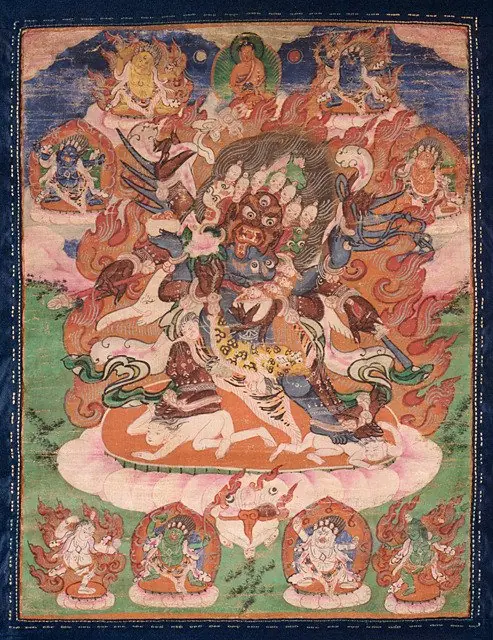 Garuda-Feathered Hayagriva and Consort
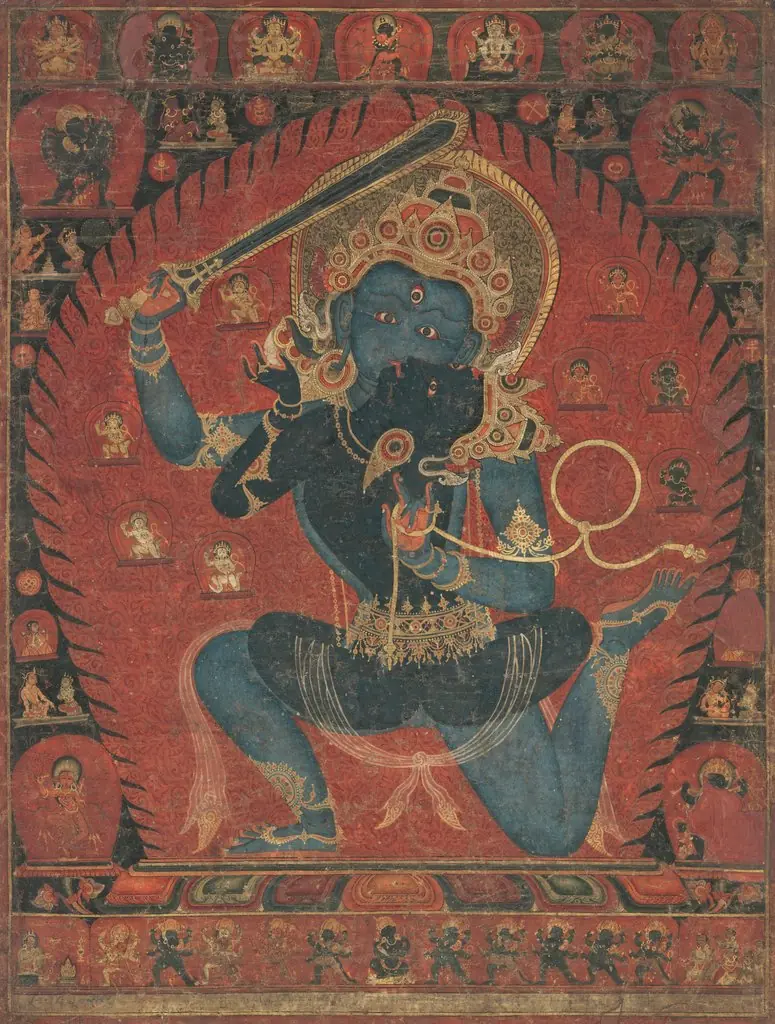 Achala with His Consort Vishvavajri
 Untitled
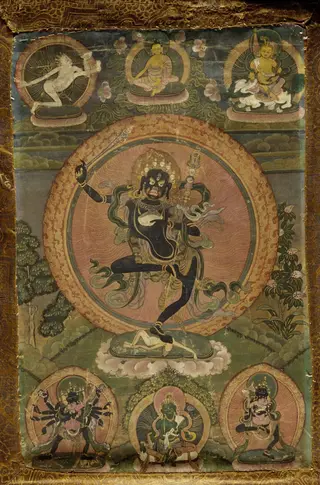 Khadgayogini
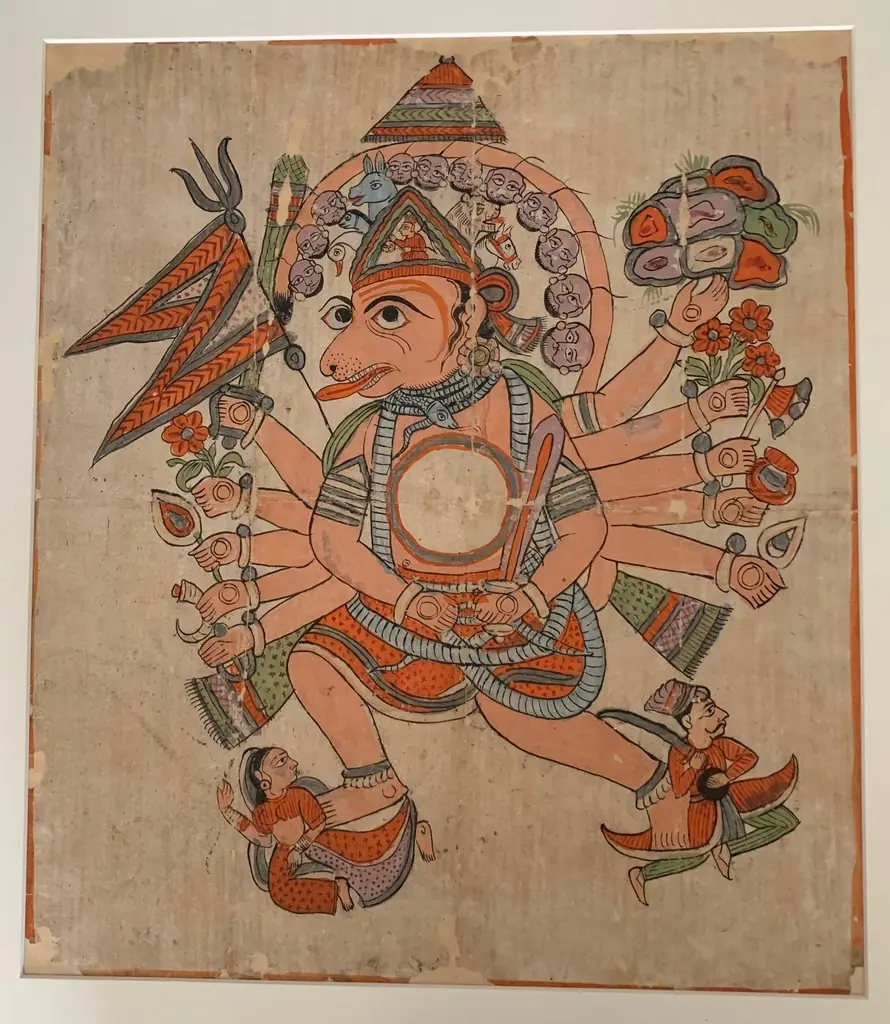 Hanuman in His Tantric Five-Headed Pancha Mukha Form
 Prajnaparamita flanked by a white female figure and a white bodhisattva, folio 90 (recto), from a Manuscript of the Perfection of Wisdom in Eight Thousand Lines (Ashtasahasrika Prajnaparamita-sutra)
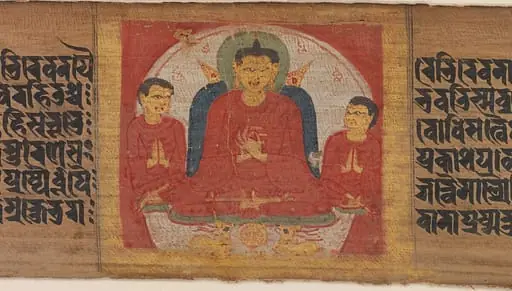 Untitled