Artwork
Untitled
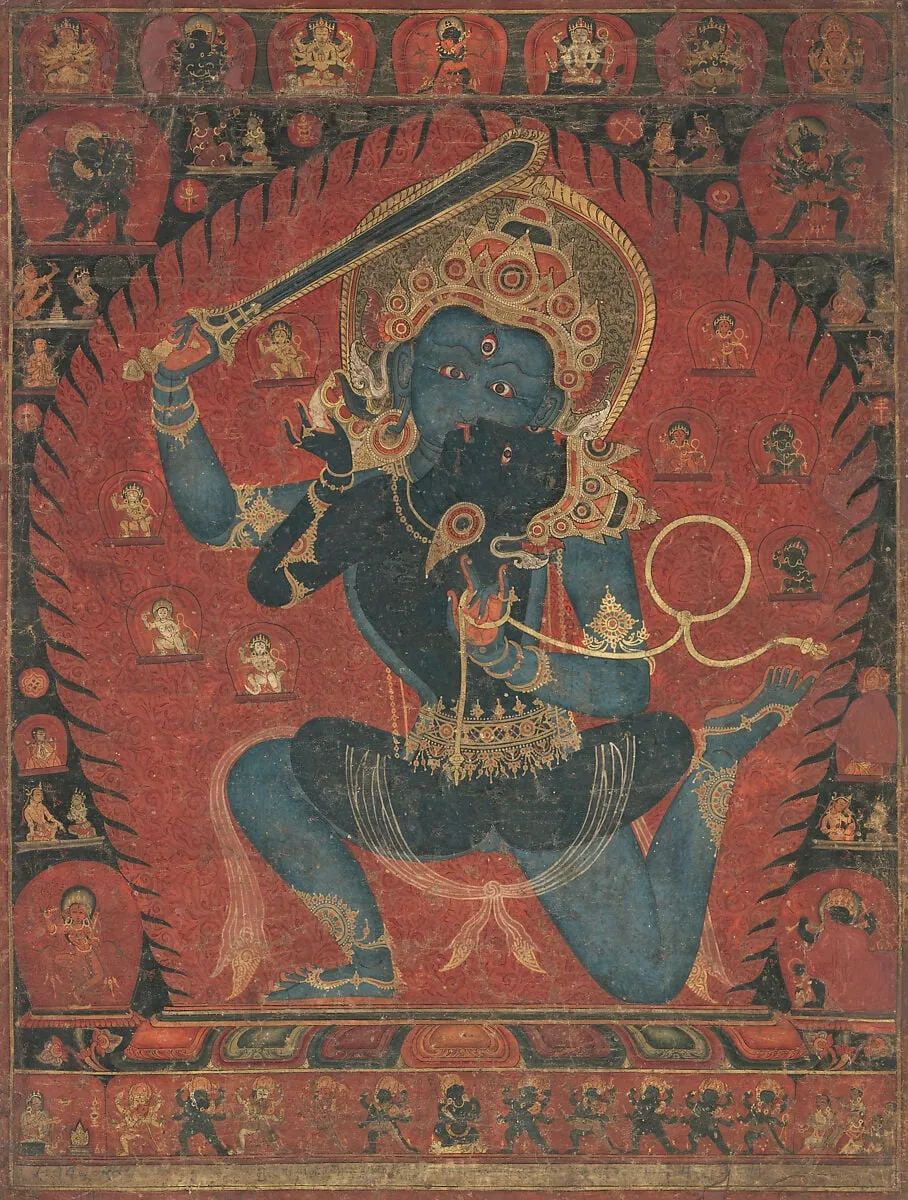
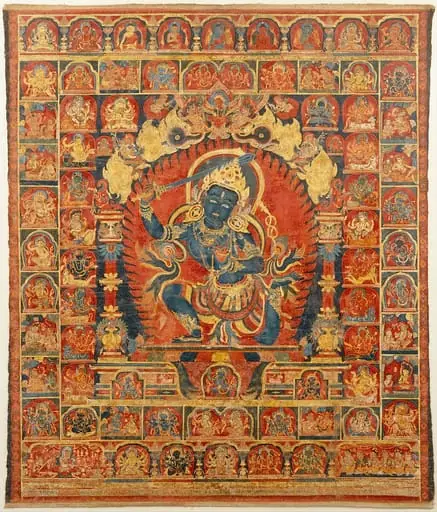
Untitled is a distemper painting. It dates from 1537 and is held in the collection of the Metropolitan Museum of Art.
About this work
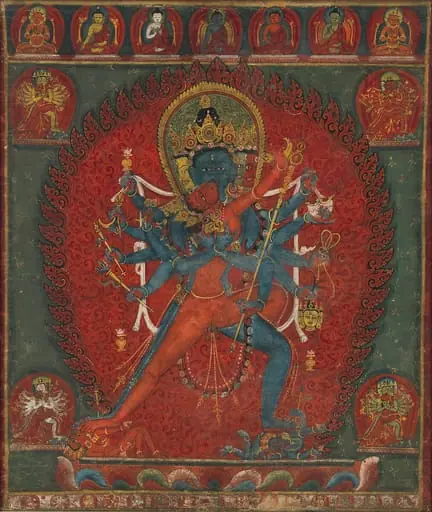
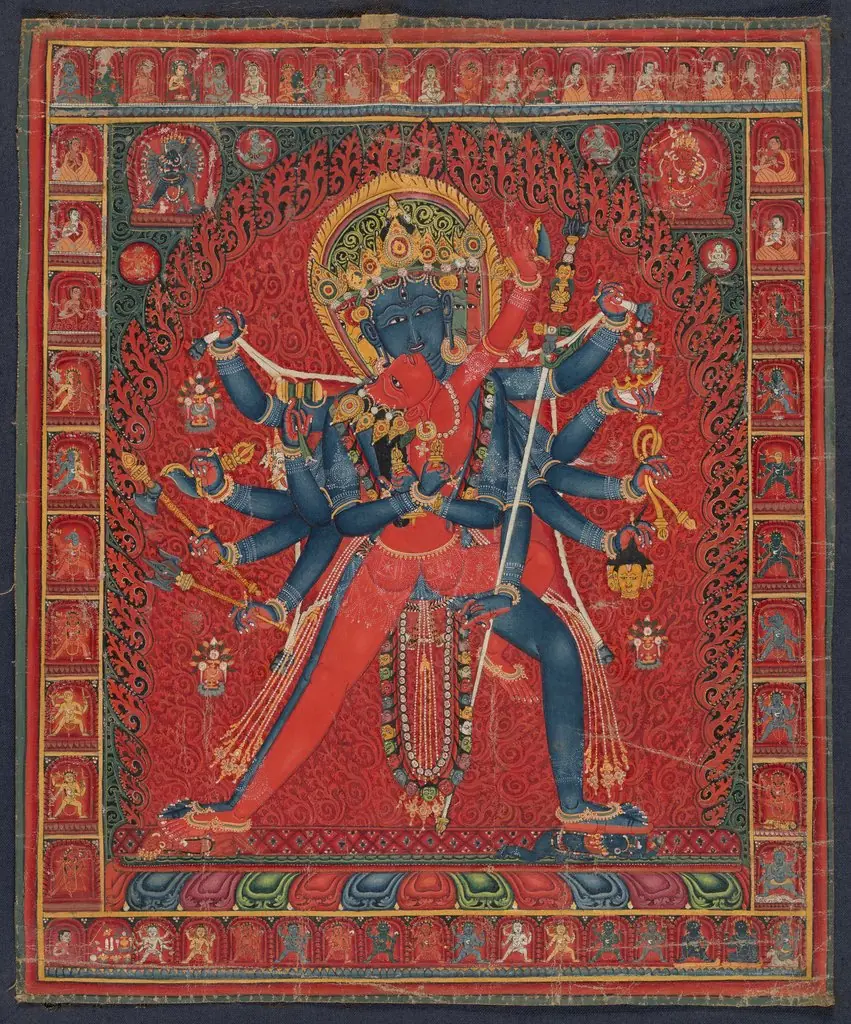
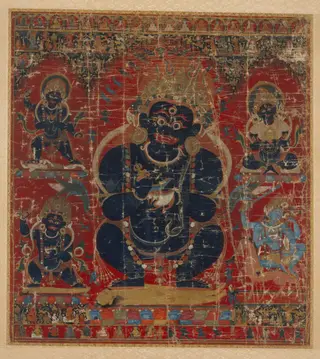
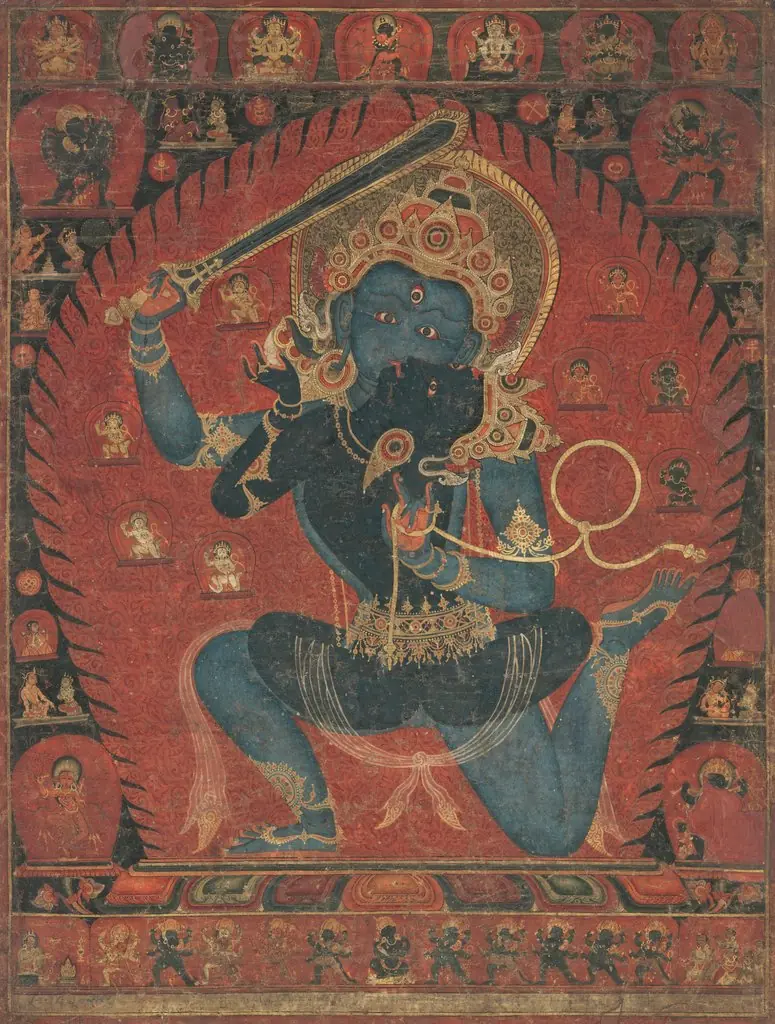
Crowned and jeweled, the wrathful deity holds a sword and a vajra-tipped noose, cutting through ignorance while catching the unenlightened.
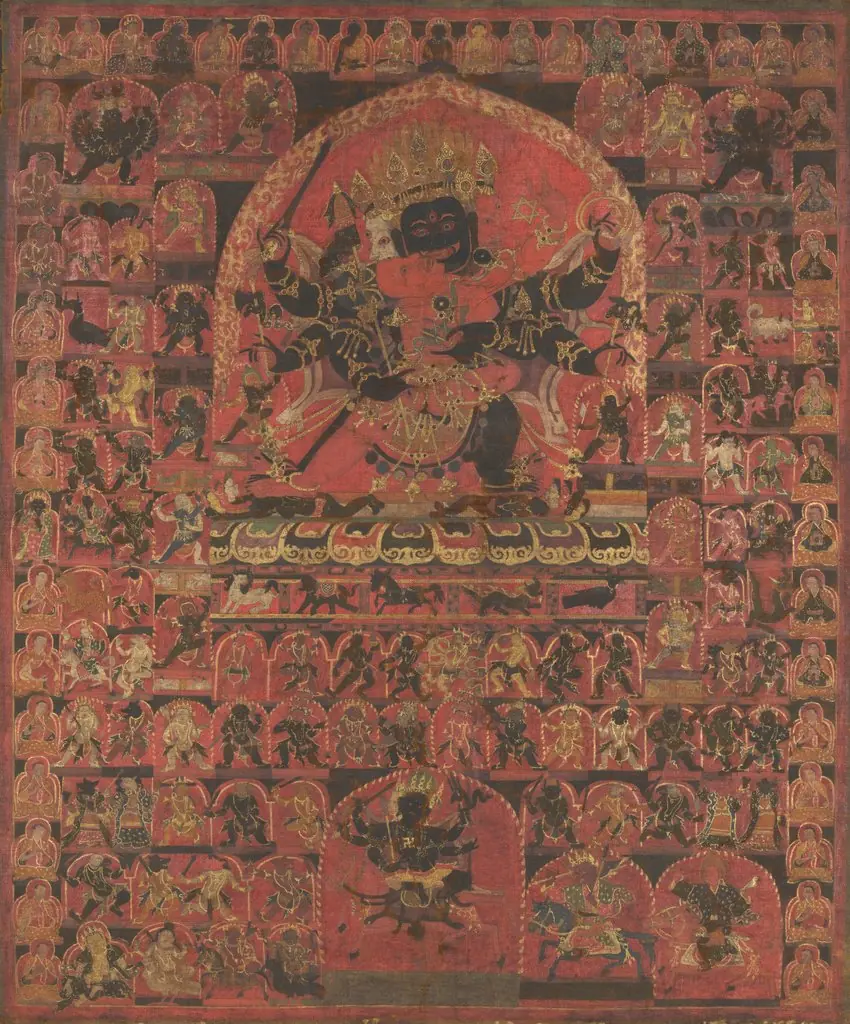
In the Kathmandu Valley during the Malla period, an unknown painter set down a visualization of the Chandamaharoshana Tantra, showing Acala, whose name means immovable, locked in embrace with his consort Vishvavajri. Crowned and jeweled, the wrathful deity holds a sword and a vajra-tipped noose, cutting through ignorance while catching the unenlightened. The Met acquired the Nepalese work in 2012 from the Zimmerman Family Collection.
Subject & Meaning
The painting, created in Nepal in 1537, depicts a religious subject centered on the bodhisattva Mañjuśrī, who is identifiable by the sword he holds, a symbol of wisdom cutting through ignorance. Also present are a couple and a woman, likely representing donors or participants in a narrative episode within Buddhist iconography. The composition and figures function as a devotional image, embodying spiritual ideals such as wisdom and compassion, consistent with the work's classification as a religious painting.
Technique & Style
The work is executed in distemper on cloth, a medium typical of Nepalese religious paintings from the 16th century. The support (cloth) and paint type (distemper) suggest a portable ritual object intended for display. Stylistically, the painting is religious in genre, depicting a Bodhisattva, specifically Mañjuśrī, accompanied by a sword, a couple, and a woman, elements that align with Buddhist iconographic traditions.
The composition and handling reflect the regional Nepalese manner of the period (1537), characterized by flat planes of color and delicate linework. Condition and handling details are not recorded in these sources, but the medium implies a matte, opaque surface with potential fragility over time.
Overview
This untitled tangka, created in Nepal's Kathmandu Valley during the Malla period (circa 1525–50), stands as a significant example of sixteenth-century Nepalese painting. Executed in distemper on cloth, the work serves as a visual interpretation of the Chandamaharoshana Tantra, a meditational text centered on the deity Acala. Its detailed imagery reflects the rich artistic and spiritual traditions of the region.
History & Provenance
Measuring approximately 34 1/8 by 25 7/8 inches, this tangka joined the collection of the Metropolitan Museum of Art in 2012. Its acquisition was made possible through a purchase from the Zimmerman Family Collection, with funding provided by the Lila Acheson Wallace Gift. This addition enriched the museum's holdings of South Asian art, bringing a significant example of Malla-period Nepalese painting to a wider audience.
Context
This tangka is rooted in the spiritual practices of Nepalese Buddhism, specifically visualizing the Chandamaharoshana Tantra. Such meditational texts provided the iconographic guidelines for artists, ensuring that the visual representation of deities like Acala conveyed precise theological meanings. These paintings served as aids for contemplation and ritual, facilitating a deeper engagement with the tantric teachings and the path to enlightenment.
Legacy
The artwork has been recognized for its cultural and artistic significance through its inclusion in major exhibitions. From December 2017 to December 2018, it was featured in "Crowns of the Vajra Masters: Ritual Art of Nepal" at the Metropolitan Museum of Art. This exhibition highlighted the rich tradition of Nepalese ritual art, showcasing the tangka as a key example of the region's devotional painting.
Artist & collection