Artwork
Untitled
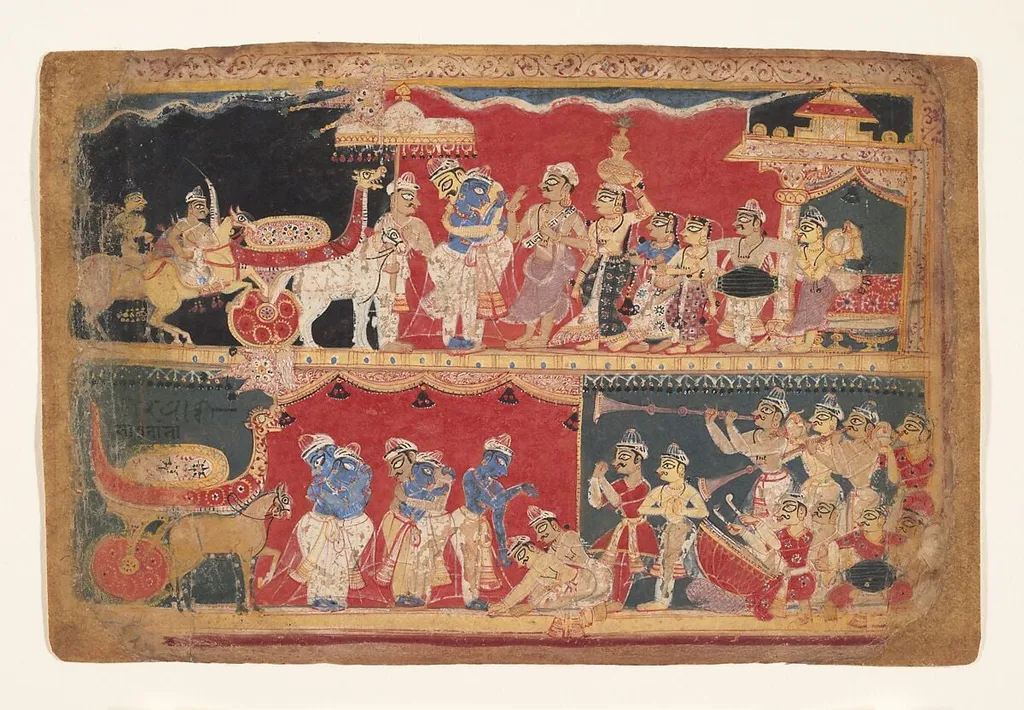
Untitled is a watercolor painting. It dates from 1530 and is held in the collection of the Metropolitan Museum of Art.
About this work
A blue-skinned man plays a flute while two women and a man lean in to listen, a horse and cow at the side, all in ink and bright watercolor on paper. Painted in India around 1530, the blue figure is Krishna, the Hindu god of music and love. The style is loose and lively, full of everyday warmth.
Subject & Meaning
The painting, dated to 1530 and executed in ink and opaque watercolor on paper, portrays the Hindu deity Krishna alongside a horse, a male figure, a woman, and a musical instrument. As a work of Indian miniature painting classified under mythology, the composition draws on narrative traditions in which Krishna's divine love and heroic deeds are illustrated. The presence of a horse and a stringed instrument evokes motifs of celestial travel and rasa, while the accompanying woman may represent a devotee or symbolic consort, together conveying themes of devotion and cosmic harmony.
Technique & Style
Created in 1530 in India, this anonymous work is executed in ink and opaque watercolor applied to a paper support. The painting measures 16.4 cm in height and 23.2 cm in width. The use of opaque watercolor produces solid, vibrant fields of color typical of the period's Indian manuscript traditions, while the ink defines the contours and details of the figures and setting.
History & Provenance
The artwork, dated to 1530, is held in the collection of the Metropolitan Museum of Art. It is attributed to an anonymous painter and originates from India. Executed in ink and opaque watercolor on paper, it measures 16.4 cm in height and 23.2 cm in width. No accession number, prior provenance details, or exhibition history are documented in the available sources.
Legacy
This 1530 ink and opaque watercolor painting, housed in the Metropolitan Museum of Art, exemplifies early Indian mythological art.
This 1530 ink and opaque watercolor painting, housed in the Metropolitan Museum of Art, exemplifies early Indian mythological art. Its depiction of Krishna alongside a horse, a man, a musical instrument, and a woman contributes to scholarly understanding of Krishna iconography in Indian miniature painting. Its inclusion in a major Western institution has highlighted the significance of Indian artistic traditions within the broader study of transnational mythological imagery.
Overview
This untitled Indian painting, created between approximately 1520 and 1540, depicts a blue-skinned figure playing a flute. Rendered in ink and opaque watercolor on paper, the scene captures a moment of musical performance. Two women and a man stand nearby, attentive to the melody, while a horse and a cow observe from the periphery. The composition conveys an intimate gathering centered around the musician.
Context
Created in India during the early 16th century, specifically between 1520 and 1540, this painting reflects artistic trends of its period and region. While the specific patron or school remains unstated, its subject matter and stylistic elements align with devotional art prevalent in various Indian courts and religious centers. Such works often served to illustrate sacred narratives or evoke spiritual contemplation.
Artist & collection

 Untitled
 Akrura and Krishna
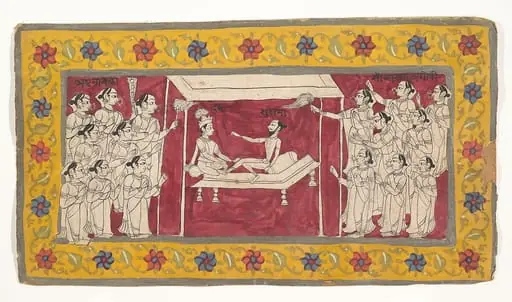
 Vasudeva and Devaki
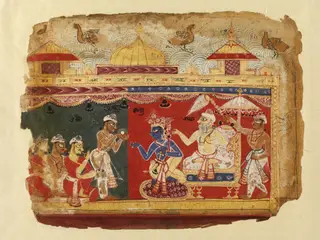
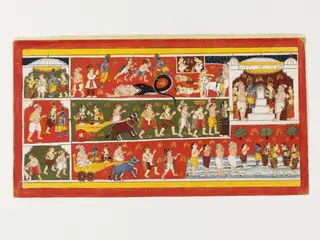 Krishna and Nanda
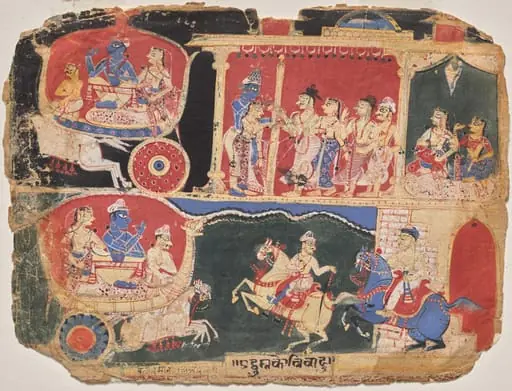
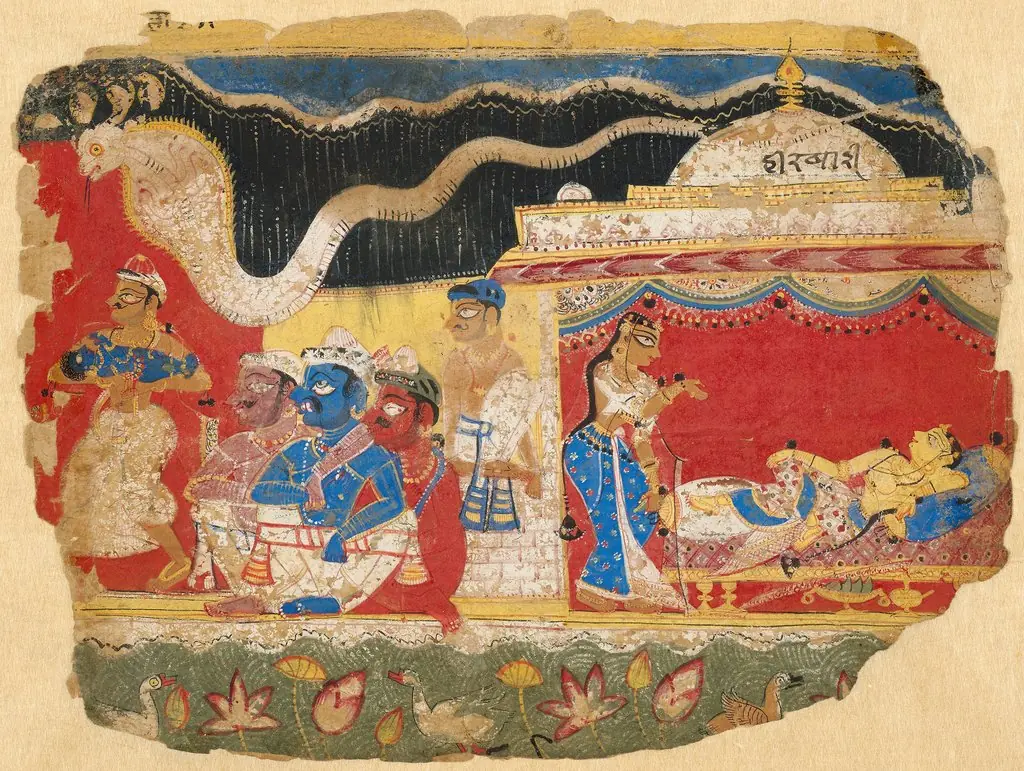 The Infant Krishna Spirited Away by Vasudev, page from the Dispersed Bhagavatapurana manuscript
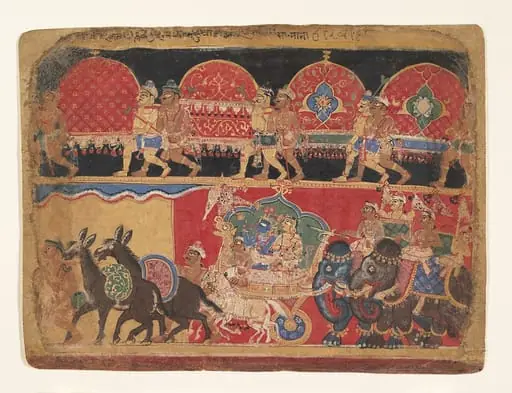
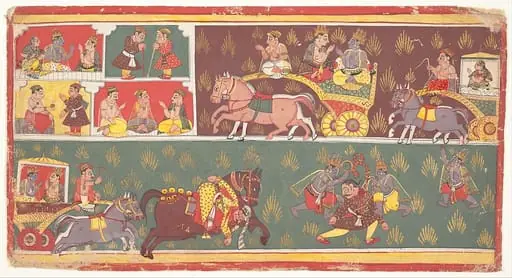
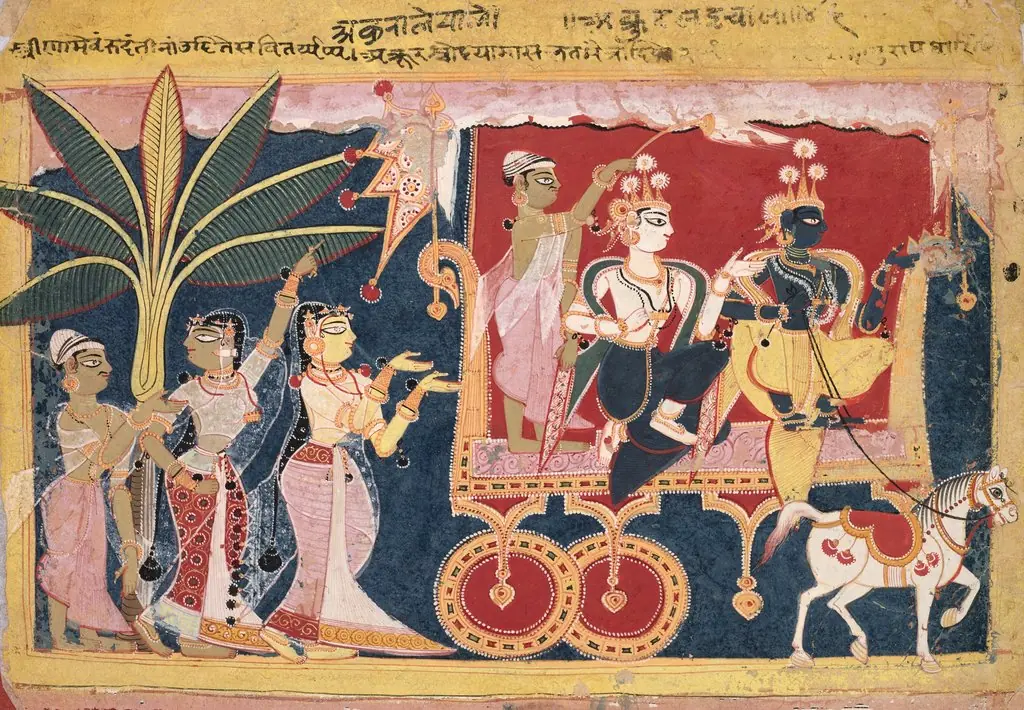 Akrura Drives Krishna and Balarama to Mathura, from the “Isarda Bhagavata Purana,”
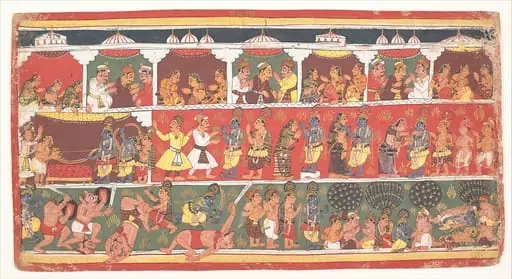
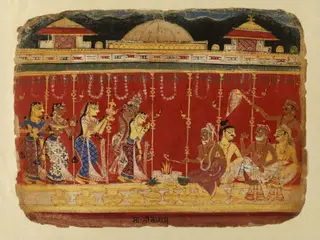
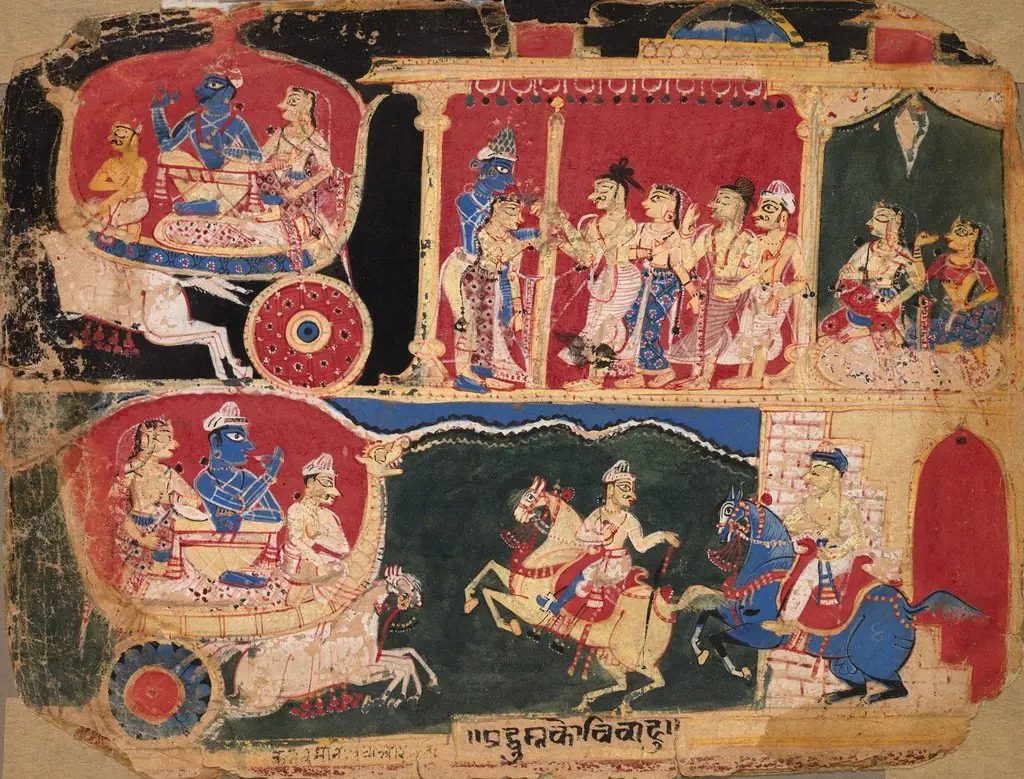 The Marriage of Pradyumna and Rukmavati, page from a Bhagavata Purana
 Krishna