Artwork
Untitled
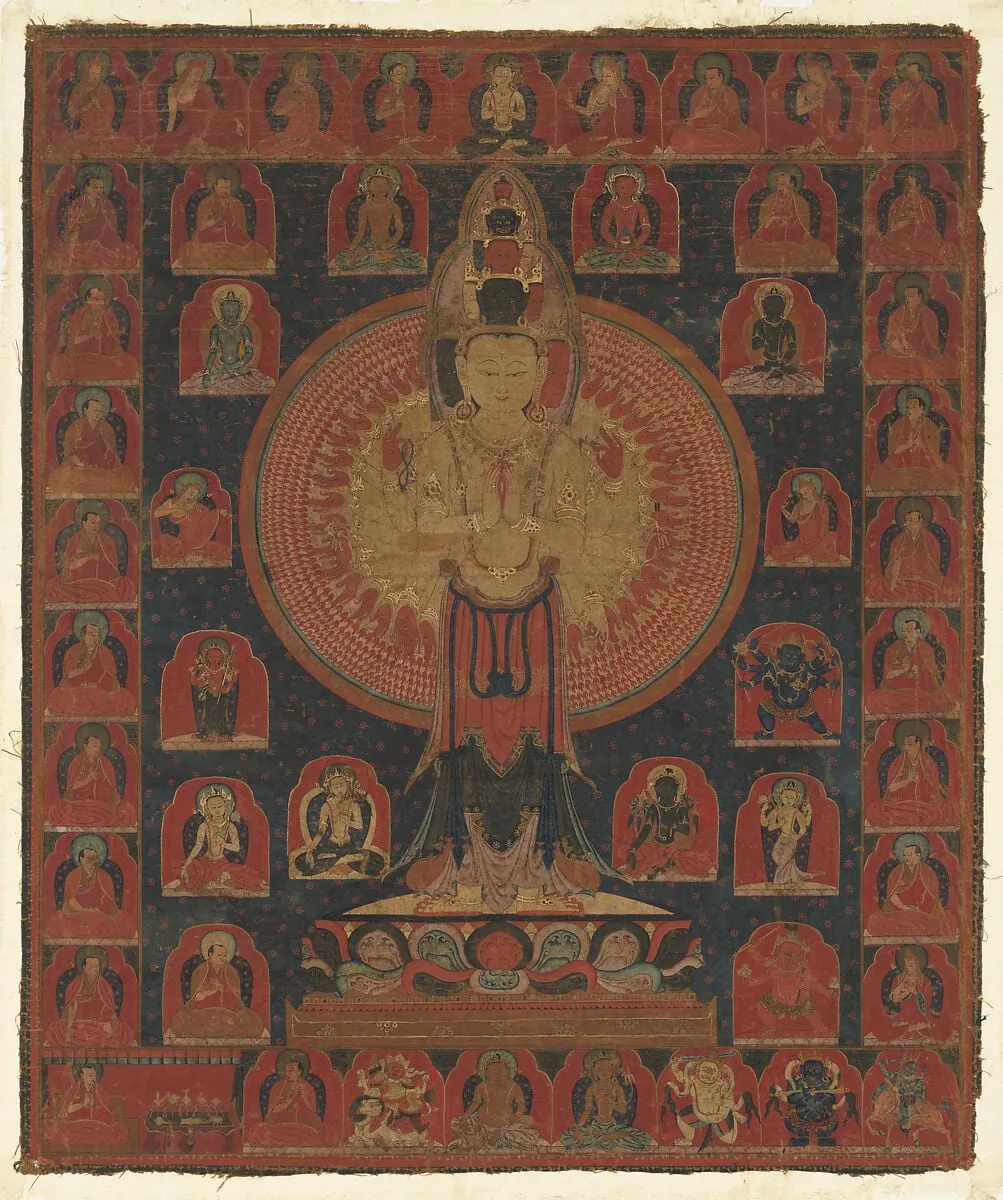
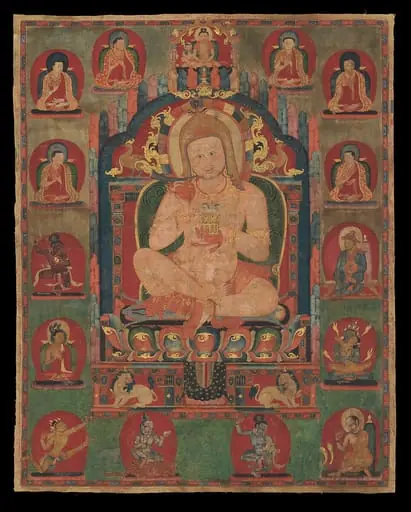
Untitled is a distemper painting. It dates from 1349 and is held in the collection of the Metropolitan Museum of Art.
About this work
Subject & Meaning
The painting's classification as a religious work and its presence in the Metropolitan Museum of Art's collection underscore its devotional function.
The work is an anonymous 14th-century religious painting executed in distemper with gold on cloth. Its iconography centers on the figure of Avalokiteśvara, a Bodhisattva and deity in Buddhist tradition. The depiction aligns with Buddhist traditions that portray Avalokiteśvara as the embodiment of compassion, a common subject in Asian religious art of the period.
The painting's classification as a religious work and its presence in the Metropolitan Museum of Art's collection underscore its devotional function.
Technique & Style
Created in 1349, this anonymous painting utilizes distemper and gold applied to a cloth support. The work measures 73 cm in height and 61 cm in width. Stylistically, it belongs to the religious genre, depicting the Bodhisattva Avalokiteśvara.
The application of gold alongside the distemper medium on cloth reflects specific technical choices characteristic of the period's devotional art. The piece is currently held in the collection of the Metropolitan Museum of Art.
History & Provenance
The work titled Untitled is a 14th-century religious painting executed in distemper with gold leaf on cloth, dated to 1349. It portrays the Bodhisattva Avalokiteśvara. The anonymous painter created the work as a devotional image.
It is catalogued in the collection of the Metropolitan Museum of Art with dimensions of 73 × 61 cm. Specific prior ownership prior to museum acquisition is not documented in the available sources.
Overview
This untitled painting, rendered in distemper and gold on cloth, depicts a multi-armed, blue-skinned figure. Each hand holds a distinct symbolic object, such as a lotus, a vase, or a string of beads. A radiant gold leaf halo encircles the figure's head, contrasting with the soft, aged texture of the fabric background. The artwork's visual elements suggest its devotional purpose and rich symbolic content.
Context
This painting was created for use in religious settings, likely intended for display within a temple or to be carried during sacred processions. Such artworks served as focal points for meditation and worship, facilitating spiritual connection for devotees. The figure of Avalokiteshvara exemplifies the broader concept of bodhisattvas, enlightened beings who embody altruism and serve as guides on the path to liberation within Buddhist philosophy.
Artist & collection

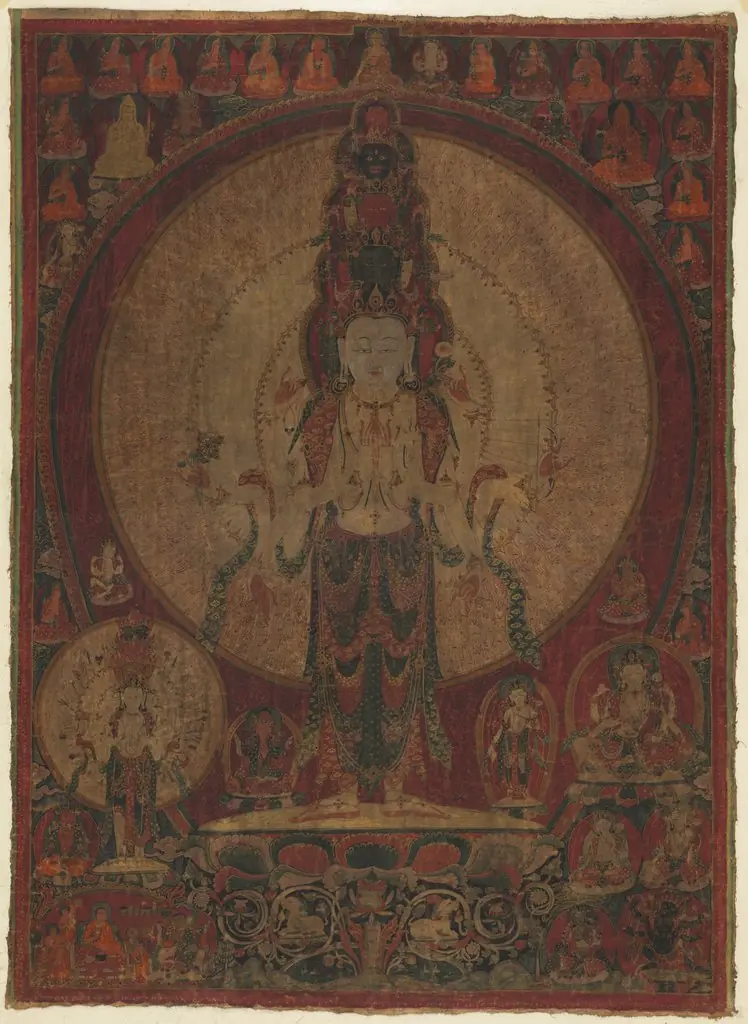
- Eleven-Headed, Thousand-Armed Bodhisattva of Compassion (Avalokiteshvara)
 Untitled
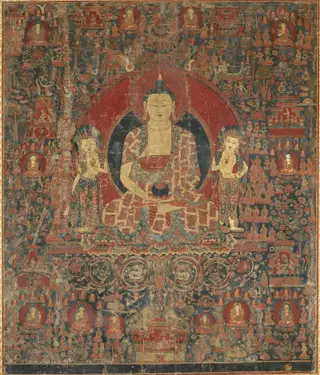 The Jina Buddha of Infinite Light (Amitabha) in His Pure Land Paradise (Sukhavati)
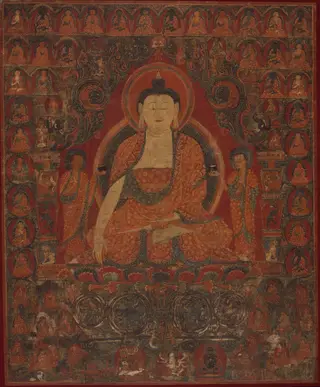 Shakyamuni with the Thirty-Five Buddhas of the Confession of Sins and the Eighteen Arhats
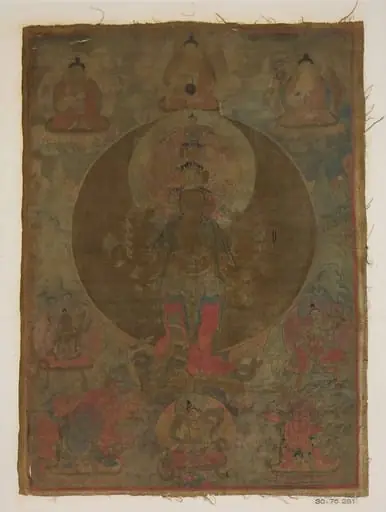 Untitled
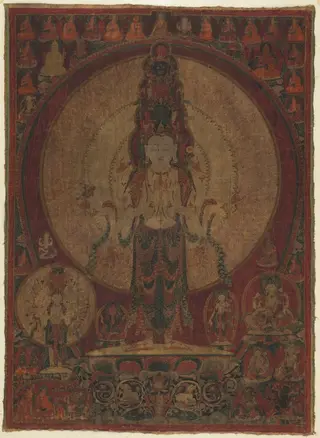 Eleven-Headed, Thousand-Armed Bodhisattva of Compassion (Avalokiteshvara)
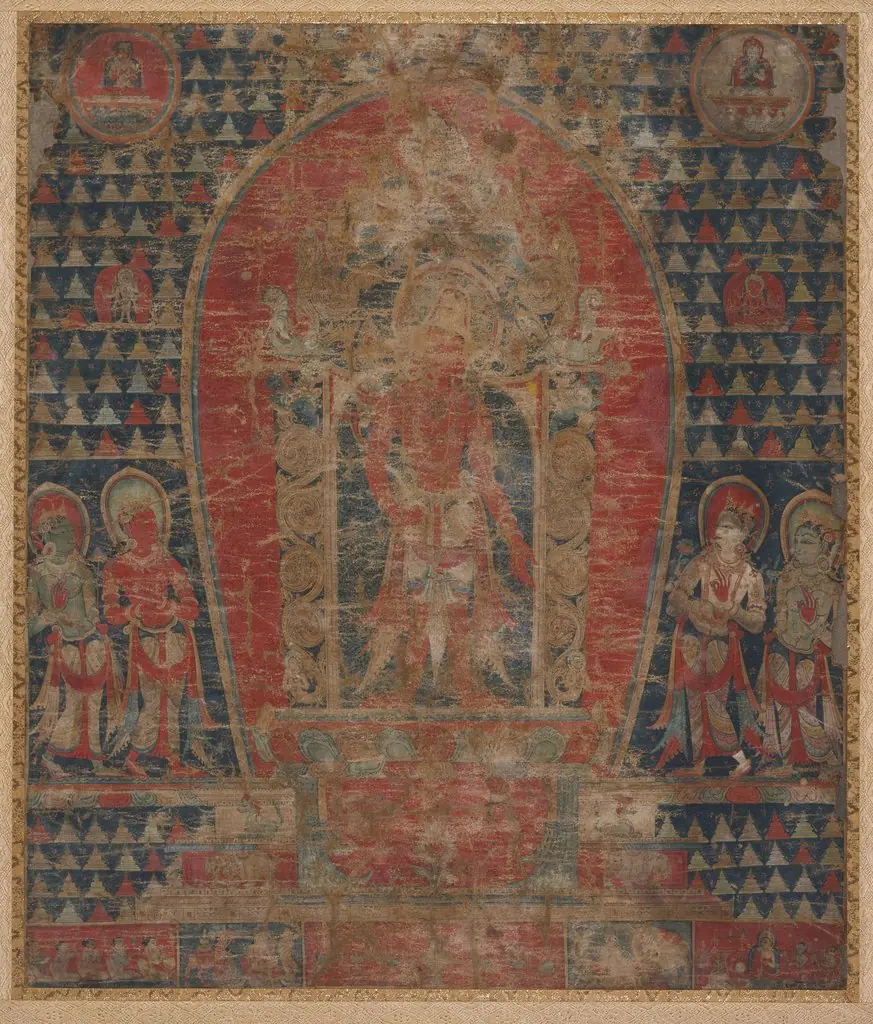 The Bodhisattva Avalokiteshvara and Four Taras
 Sarvavid Vairochana, From a Set of the Five Jina Buddhas, based on Complete Purification of All Evil Rebirths (Sarva Durgati Parishodana Tantra)
 Untitled
 Manjushri
 The Secret Five Bodhisattvas (Gohimitsu Bosatsu)
 Untitled