Artwork
Untitled
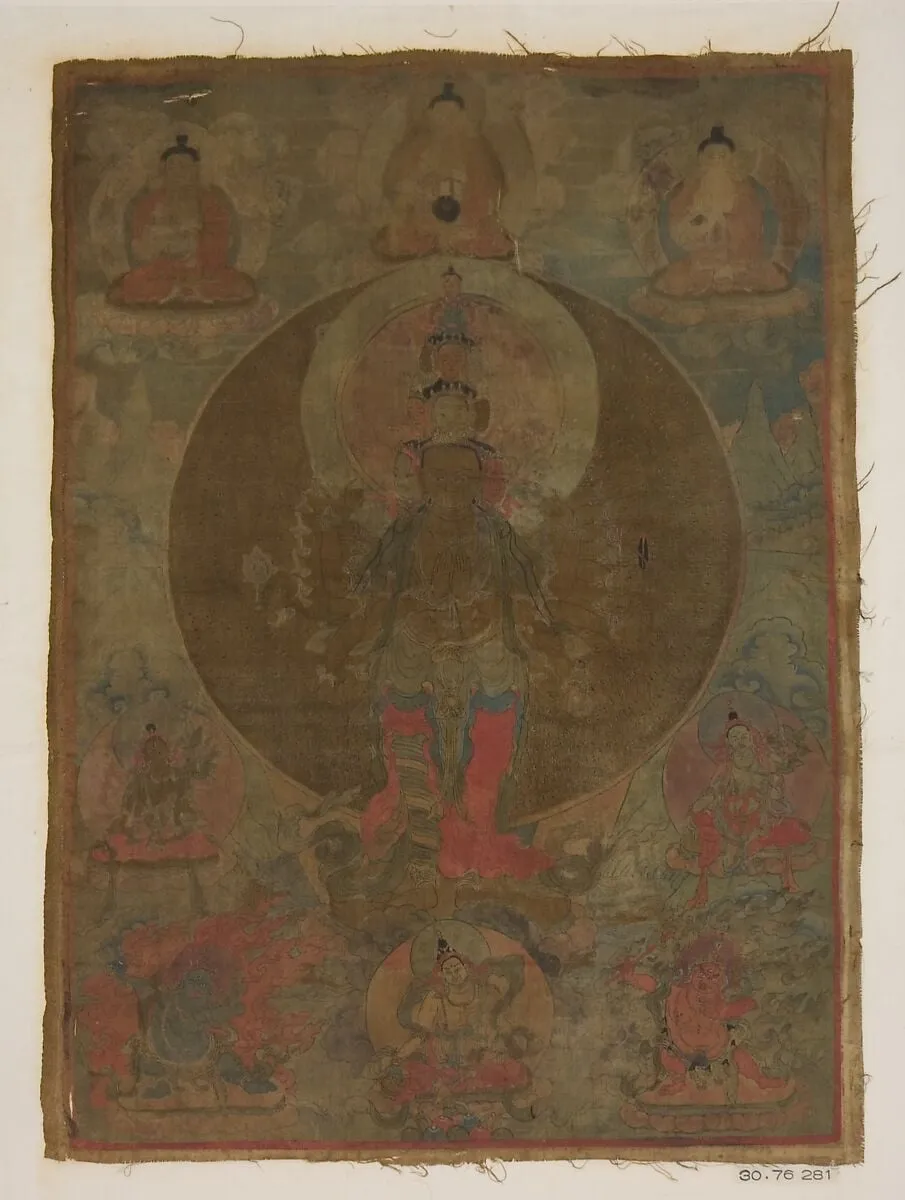
Untitled is a paint painting. It dates from 965 and is held in the collection of the Metropolitan Museum of Art.
About this work
Subject & Meaning
Executed in color on silk by an anonymous artist, the piece functions as a devotional image within the religious genre.
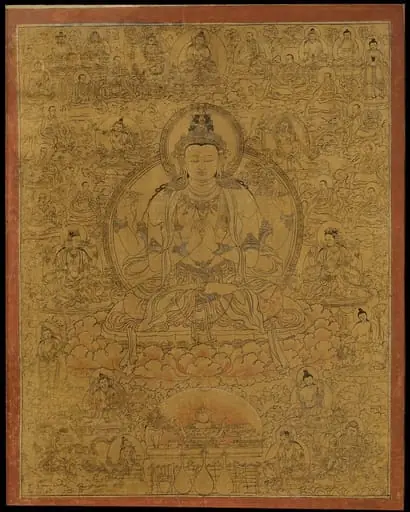
The work is a religious painting that depicts a Bodhisattva, a figure central to Buddhist iconography representing the path toward enlightenment while delaying nirvana to aid sentient beings. Executed in color on silk by an anonymous artist, the piece functions as a devotional image within the religious genre. The subject matter identifies the figure as a Bodhisattva, establishing the artwork's primary meaning as a spiritual representation rather than a secular portrait or landscape. This depiction aligns with traditional religious imagery found in silk paintings of this classification.
Technique & Style
The painting is executed in color on a silk support, measuring 48.3 × 34.3 cm, and is classified as a religious work within the broader category of paintings.
It portrays a Bodhisattva, a subject identified in both the internal corpus and the Metropolitan Museum of Art's catalogue.
The composition employs a muted palette and a calm iconography that reflects typical Buddhist devotional aesthetics, and the piece is part of the museum's collection in New York.
History & Provenance
The painting is held in the collection of the Metropolitan Museum of Art. Measuring 48.3 cm in height and 34.3 cm in width, the work depicts a Bodhisattva rendered in color on silk and is dated to 965. While the artist remains unknown, the piece is classified within the museum's holdings as a religious painting.
The provided sources do not list a specific inventory number or detail any past exhibitions for this object.
Overview
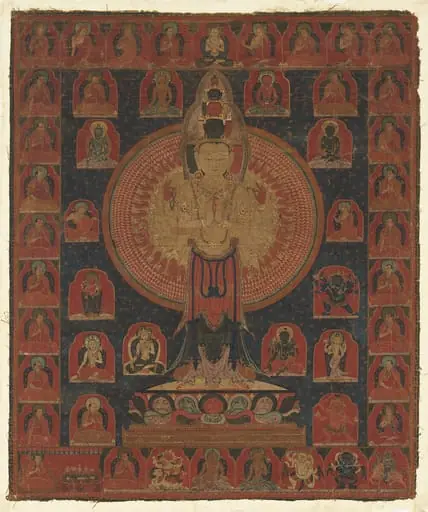
This untitled Tibetan painting, rendered in vibrant colors on silk, depicts a serene golden figure seated upon a lotus. The artwork, likely created for a temple, features symbolic elements such as a small jar and a branch, which convey core Buddhist principles. Its precise origins remain undocumented, with neither an artist's name nor an exact date of creation recorded.
Context
Originating from Tibet, this painting likely served a devotional function within a Buddhist temple setting. The figure's attributes and serene demeanor align with representations of enlightened beings. Viewers interested in similar iconographies may find parallels with bodhisattvas, figures who embody compassion and wisdom and delay their own nirvana to assist others.
Artist & collection

- Untitled
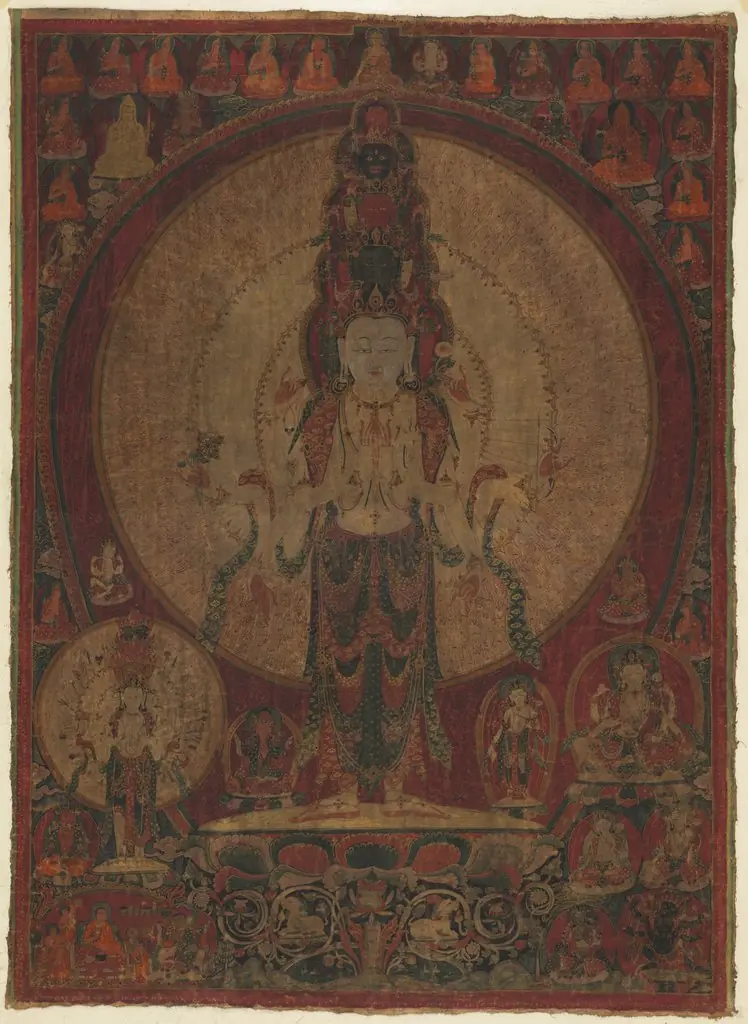 Eleven-Headed, Thousand-Armed Bodhisattva of Compassion (Avalokiteshvara)
 Untitled
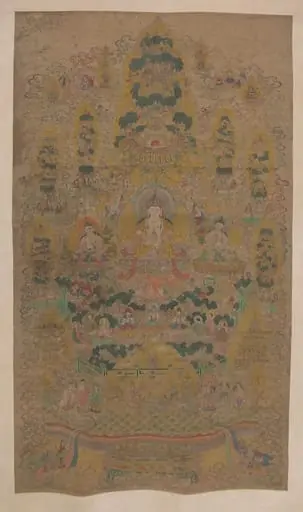 Untitled
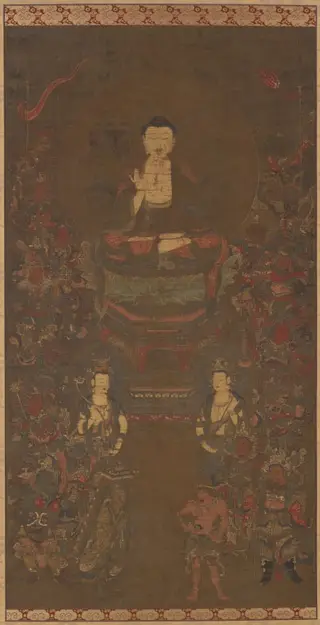 Shakyamuni with the Sixteen Benevolent Deities
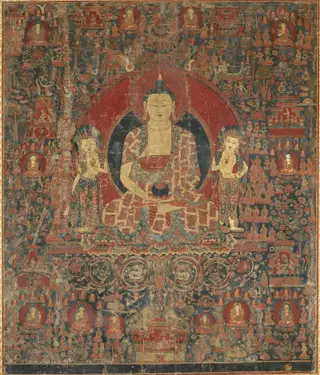 The Jina Buddha of Infinite Light (Amitabha) in His Pure Land Paradise (Sukhavati)
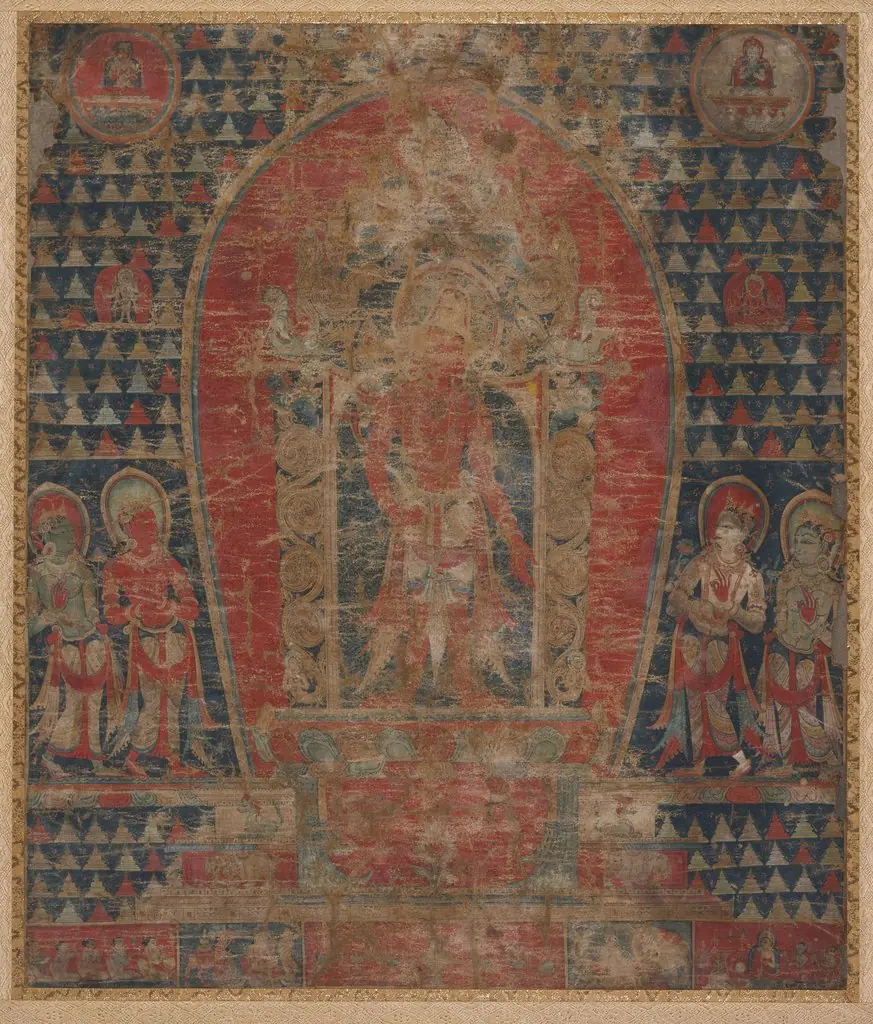 The Bodhisattva Avalokiteshvara and Four Taras
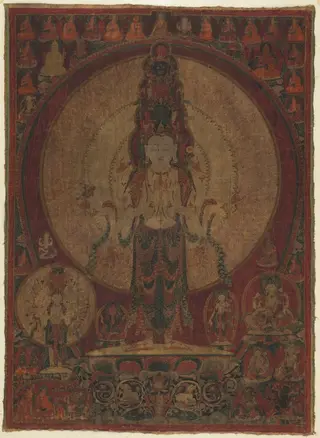 Eleven-Headed, Thousand-Armed Bodhisattva of Compassion (Avalokiteshvara)
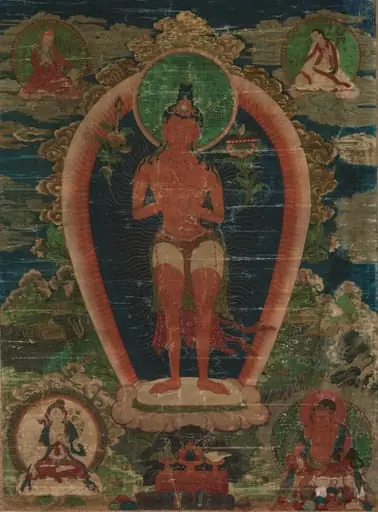 Bodhisattva Padmapani
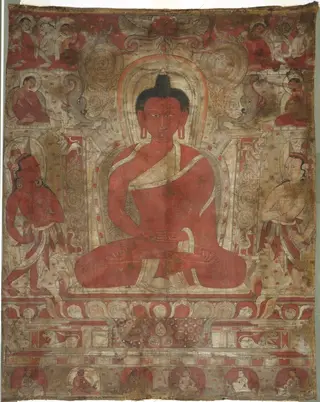 Seated Amitabha with Attendants
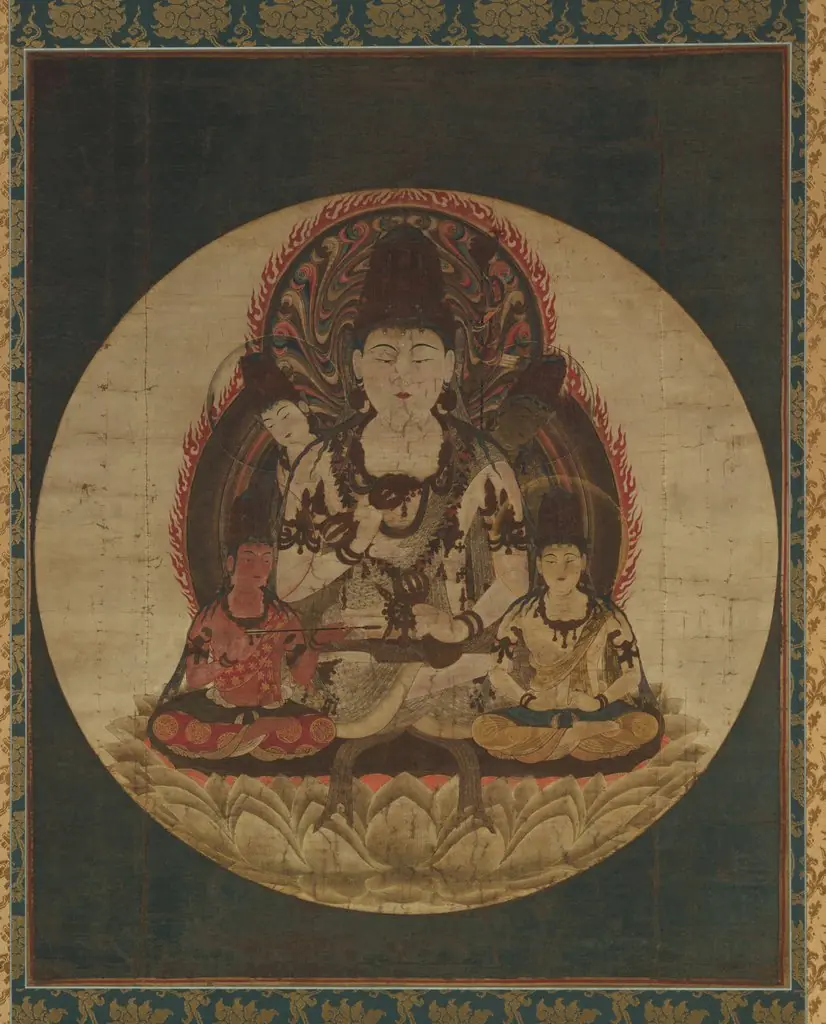 The Secret Five Bodhisattvas (Gohimitsu Bosatsu)
 Untitled