Artwork
Untitled
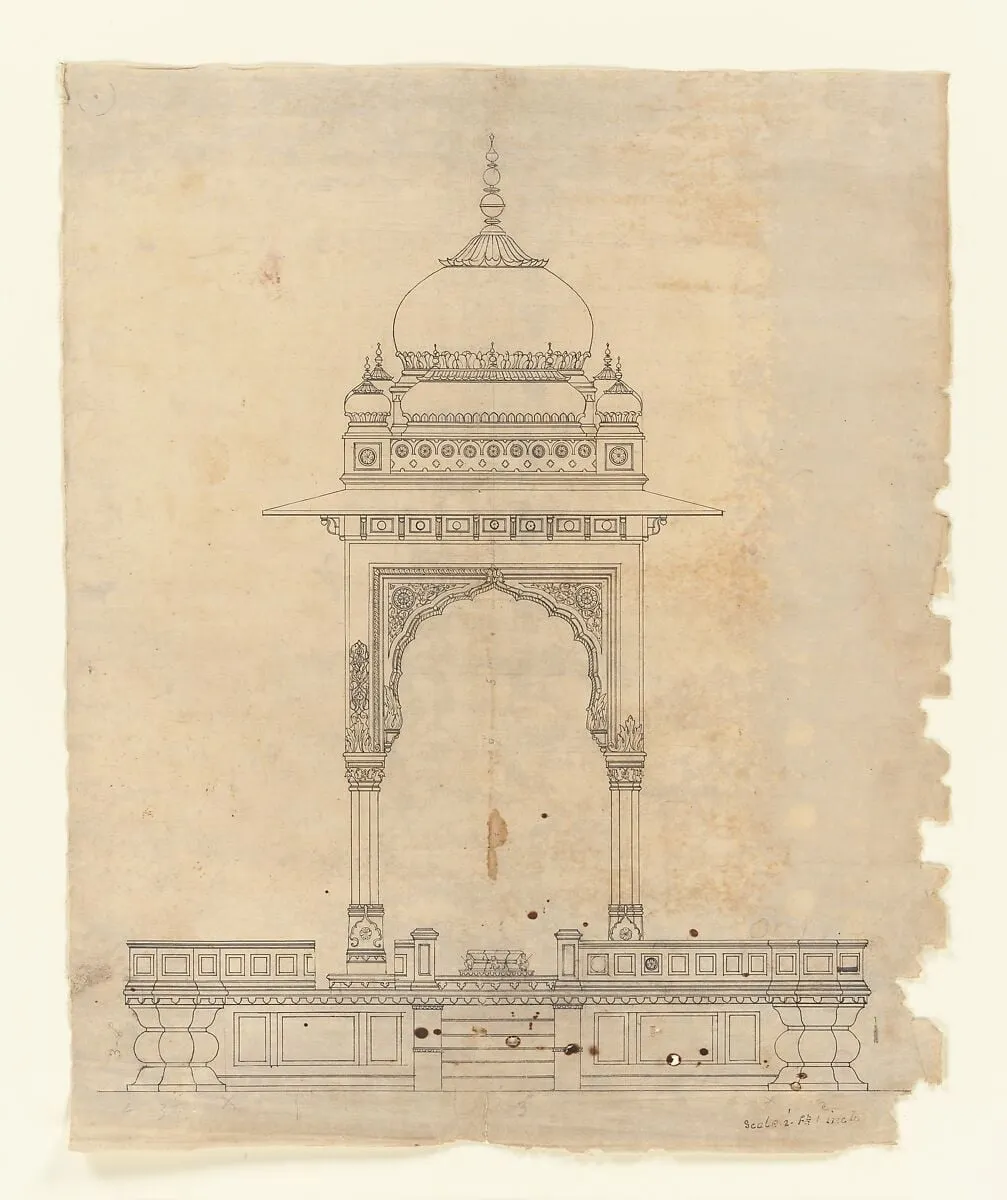
Untitled is an ink painting. It dates from 1830 and is held in the collection of the Metropolitan Museum of Art.
About this work
This sketch comes from India around 1830, made by local artists for British officials working for the East India Company.
A thin black line traces a grand building with domes and arches. The ink sits on fabric instead of paper, giving it a soft, uneven look.
This sketch comes from India around 1830, made by local artists for British officials working for the East India Company. They called these works the "Company School", quick, precise drawings meant to document what the British saw.
To see more of these quiet records, look up the subject company school.
Subject & Meaning
Created in 1830 by an anonymous artist in India, this ink-on-fabric work presents a landscape dominated by architectural forms. The composition focuses specifically on built structures, identifying architecture as the primary subject matter rather than natural scenery or human figures. As an untitled piece, the work functions as a direct visual record of the built environment, with its iconography rooted in the depiction of specific edifices.
The absence of a formal title or known creator limits deeper symbolic interpretation, positioning the painting primarily as a representational study of Indian architecture from the early nineteenth century.
Technique & Style
The work is executed in ink on fabric, a medium that situates it within the painting classification despite its drawing-like material. Dated to 1830 and produced in India, the piece depicts architecture within a landscape genre. The use of ink on fabric rather than paper or canvas suggests a specific regional practice, though the handling and condition are not specified in the available sources. The anonymous authorship and the choice of support indicate a work whose technique reflects local material traditions.
Overview
This untitled work, rendered in ink on fabric, is a painting from India dating to approximately 1830. It features a grand architectural structure outlined with a delicate black line. The choice of fabric as a ground imparts a distinctive soft and slightly irregular texture to the drawing, distinguishing it from works on paper. This piece exemplifies the aesthetic and documentary aims of its period.
Context
This drawing belongs to a category known as the "Company School," a style that emerged in India around 1830. These works were produced by local artists primarily for British officials employed by the East India Company. Their purpose was to create swift and accurate visual records of the Indian landscape, architecture, and people, serving as a form of visual documentation for the colonial administration.
Artist & collection

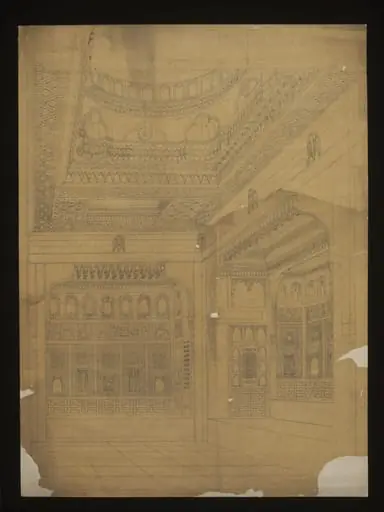
- Drawing of the House of Sheik Sadat, Cairo
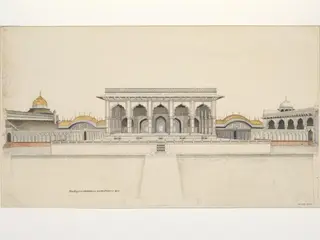 Elevation of the facade of the Khas Mahal, private apartments, Agra Fort, with the adjoining golden pavilions
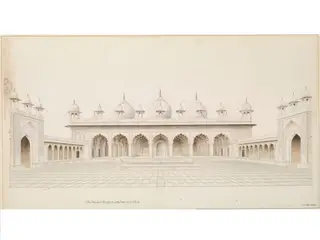 Elevation of the Moti Masjid (Pearl Mosque), Agra
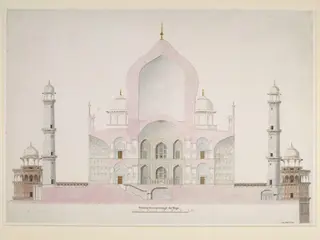 Vertical Section through the Tage
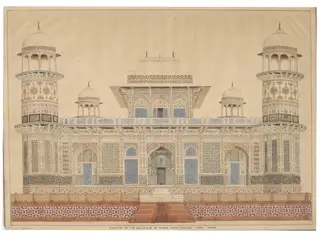 Mausoleum of Itimad ud-Daula.
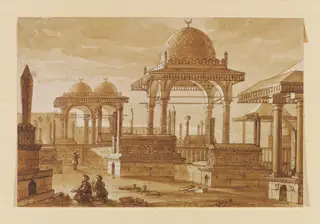 Part of the City of Tombs at Cairo
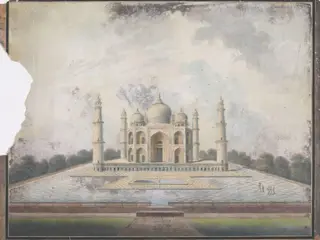 The Taj Mahal, Agra
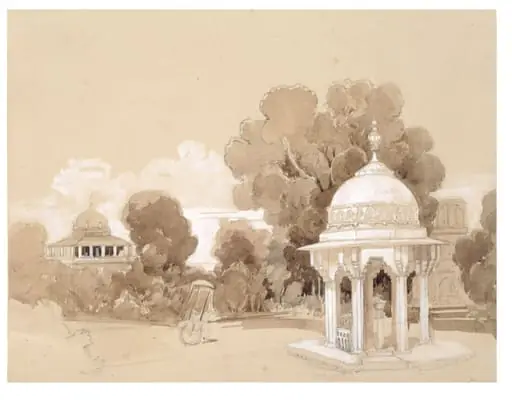 Album of topographical views in India
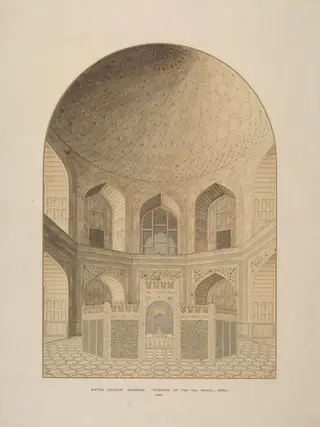 Interior of the Tomb Chamber, Taj Mahal, Agra
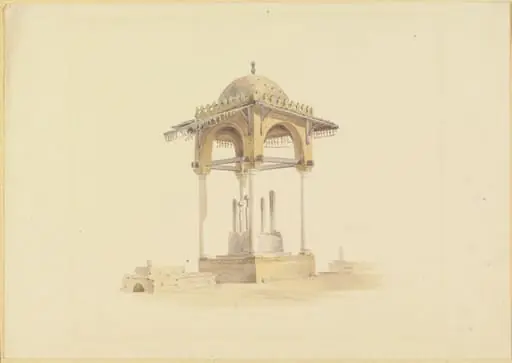 Tomb of a private family of wealth - Cairo -
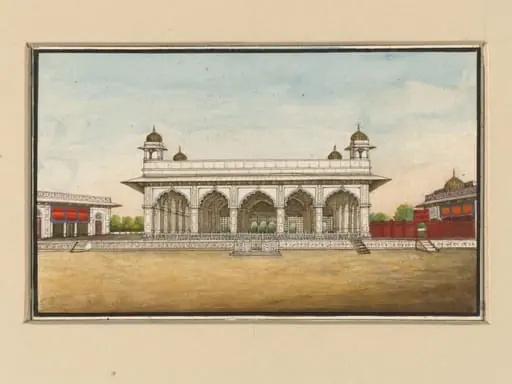 One of four drawings of Mughal architecture.
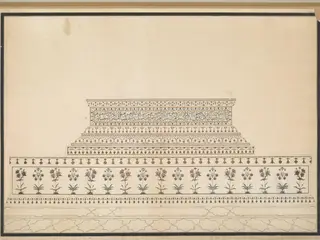 Cenotaph of Mumtaz Mahal, Taj Mahal, Agra