Artwork
Untitled
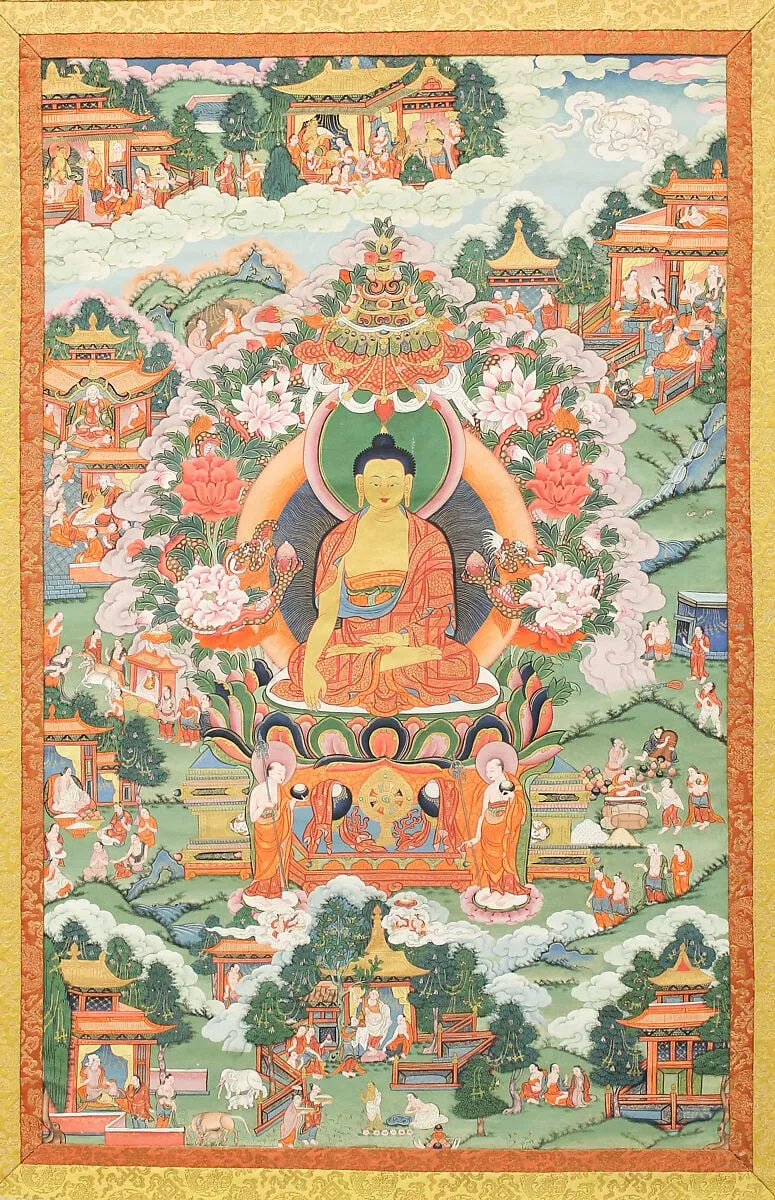
Untitled is a distemper painting. It dates from 1849 and is held in the collection of the Metropolitan Museum of Art.
About this work
Subject & Meaning
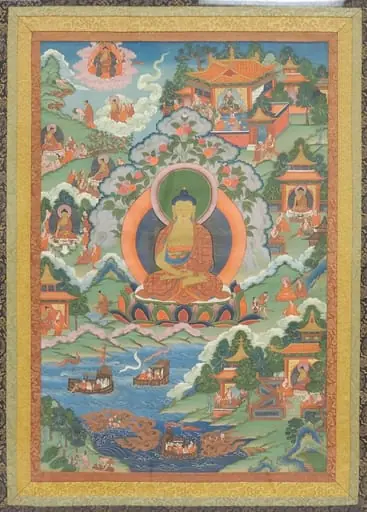
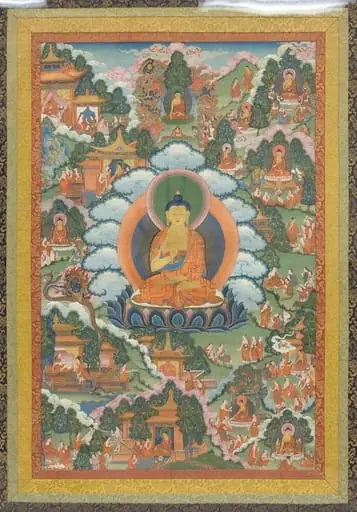
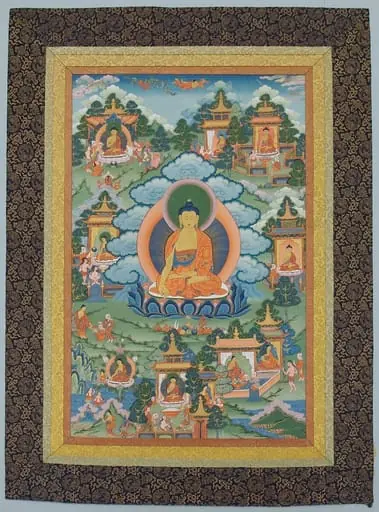
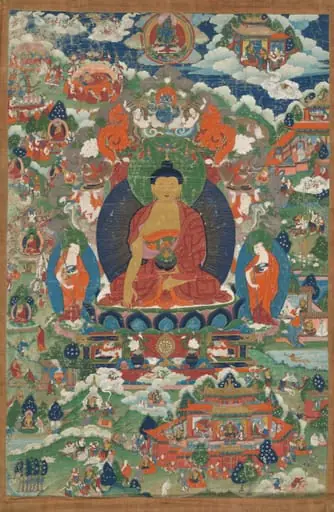
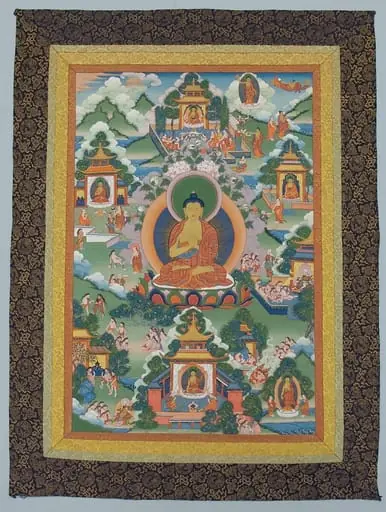
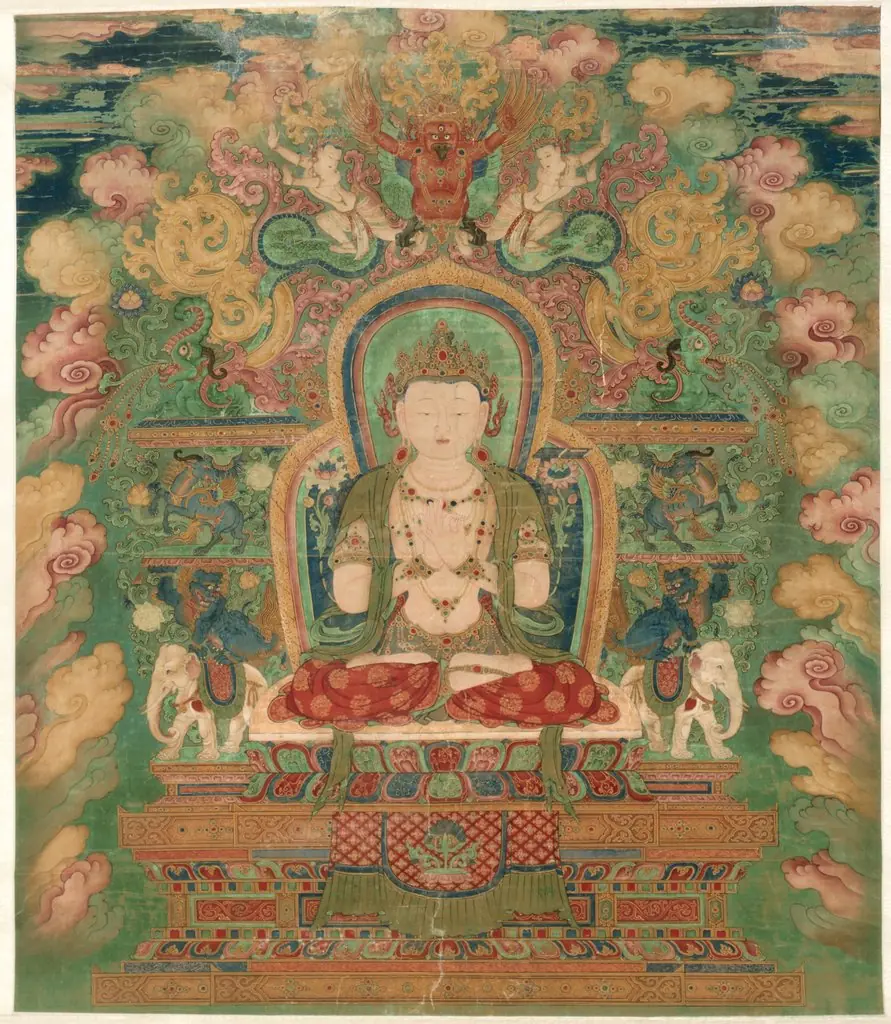
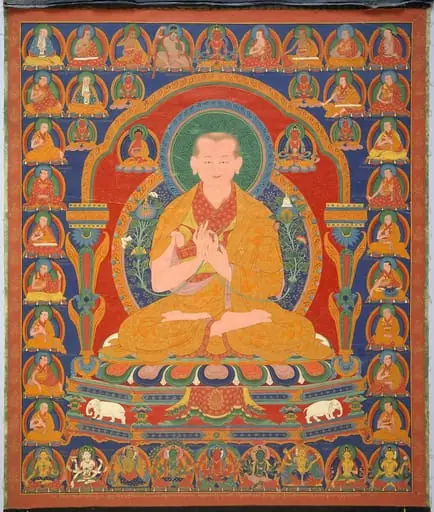
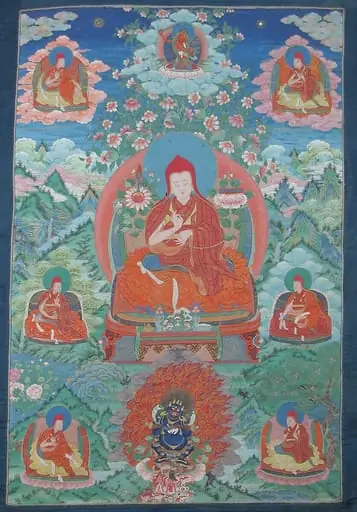
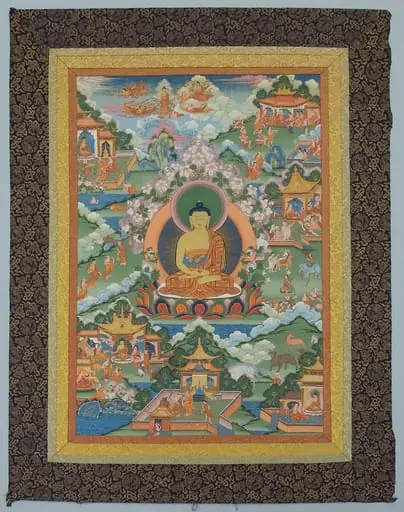
The artwork, created in 1849 by an anonymous painter, is a religious painting executed in distemper on cloth that depicts the Buddha alongside paeonies.
The artwork, created in 1849 by an anonymous painter, is a religious painting executed in distemper on cloth that depicts the Buddha alongside paeonies. This combination of figures and flora establishes the work's primary iconography, centering on the spiritual figure of the Buddha within a specific botanical context. The inclusion of paeonies, a flower often associated with prosperity and honor in various cultural traditions, suggests a symbolic layering where the natural world complements the religious subject.
As a piece classified within the religious genre, the painting serves as a devotional object or spiritual representation, utilizing these specific visual elements to convey themes of sanctity and perhaps the flourishing of the Dharma. The work's meaning is derived from this direct juxtaposition of the enlightened being with the blooming flowers, creating a unified visual statement on spiritual presence.
Technique & Style
Created in 1849 by an anonymous artist, this religious painting utilizes distemper as its primary medium, applied directly onto a cloth support. The work measures 84.1 cm in height and 53 cm in width. Stylistically, the composition focuses on specific iconography, depicting the Buddha alongside peonies (Paeonia).
The classification as a painting within the religious genre highlights its devotional function, while the choice of distemper on fabric suggests a specific regional or traditional approach to sacred imagery common to the period. No specific details regarding the current physical condition or unique handling characteristics of the surface are provided in the available records.
History & Provenance
The work titled Untitled was produced in 1849 by an anonymous painter working in the religious genre. Executed in distemper on cloth, the piece portrays the figures Buddha and Paeonia. Its creation is documented in contemporary records as dating to 1849, with dimensions of 84.1 cm by 53 cm. Since its execution, the painting has been part of the collection of the Metropolitan Museum of Art in New York, where it remains on view.
The museum’s records identify it simply as a painting by an unknown artist, reflecting the limited documentation of its early ownership.
The painting Untitled, created in 1849 by an anonymous artist, is part of the permanent collection of the Metropolitan Museum of Art. The work, executed in distemper on cloth, measures 84.1 cm in height and 53 cm in width. While the specific inventory or accession number is not detailed in the provided records, the museum currently houses the piece, which depicts religious imagery including Buddha and peonies.
No exhibition history or provenance details regarding previous owners or specific display dates are recorded in the available sources.
Overview
This untitled painting, rendered in distemper on cloth, presents a vibrant composition. A square of red fabric serves as the ground, adorned with numerous white peonies and figures of the Buddha, highlighted with gold leaf. Although the specific origin is not stated, similar works are associated with Tibetan artistic traditions. The piece offers insight into a particular style of devotional art.
Context
Given the ephemeral quality of distemper on cloth, this artwork was likely created for temporary installation, perhaps during a specific festival or religious ceremony. The absence of an individual artist's signature implies a collaborative or workshop approach to its creation, rather than the expression of a singular artistic identity. This collective production aligns with its probable ritualistic function.
Artist & collection