Artwork
Untitled
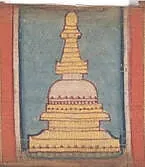
Untitled is an ink painting. It dates from 1149 and is held in the collection of the Metropolitan Museum of Art.
About this work
Subject & Meaning
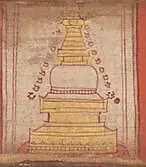
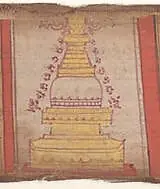
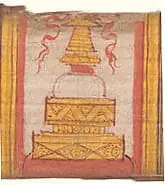
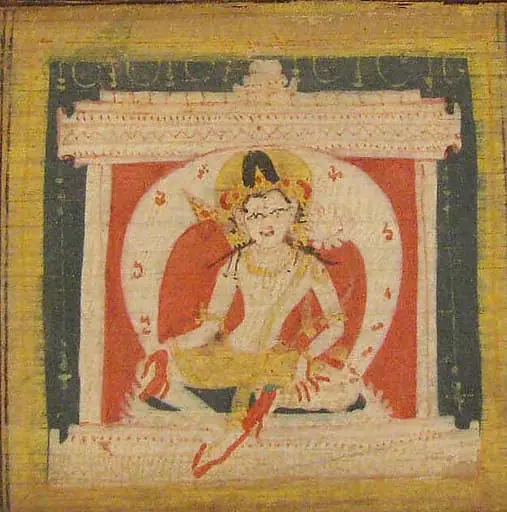
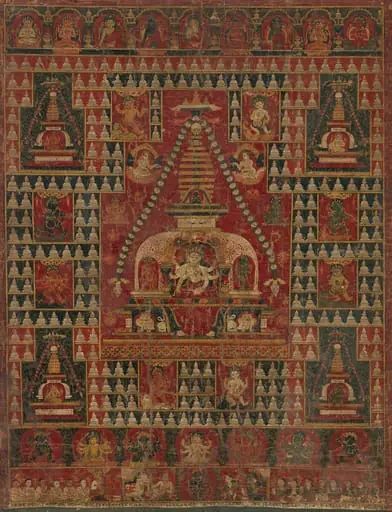
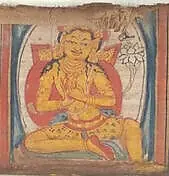
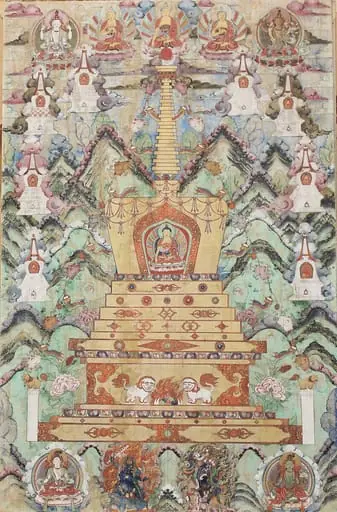
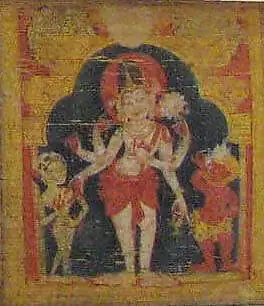
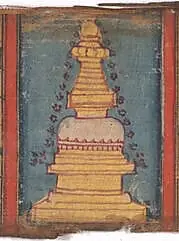
The work depicts a stupa, a Buddhist reliquary mound, rendered in ink and color on a palm-leaf support.
The work depicts a stupa, a Buddhist reliquary mound, rendered in ink and color on a palm-leaf support. Its iconography centers on the stupa’s hemispherical dome crowned by a harmikā and a finial, flanked by aniconic symbols such as the Bodhi tree and dharmachakra, indicating enlightenment and the Buddha’s teachings. The anonymous composition emphasizes the stupa as a focal point of veneration and pilgrimage, aligning with twelfth-century Pala-school conventions in eastern India, where such imagery functioned as portable devotional objects for monastic and lay audiences.
History & Provenance
The work, titled Untitled, was created in 1149 by an anonymous artist in India. Executed in ink and color on palm leaf, this religious painting depicts Buddhist themes, specifically a stupa. The piece is currently held in the collection of the Metropolitan Museum of Art, where it is cataloged under the accession number 1985.400.8.
While the specific commissioning patron and the detailed circumstances of its creation remain unrecorded due to the anonymity of the maker, the work's origin is firmly placed in 12th-century India. The painting entered the museum's holdings in 1985, marking its documented presence in a major public collection. Its survival on palm leaf, a fragile medium, underscores its historical significance as a preserved example of early Indian religious art.
The painting is held in the collection of the Metropolitan Museum of Art, where it is catalogued under the accession number 1985.400.8. According to the Wikidata record, the work is identified as an anonymous painting bearing that inventory designation and is located at the Metropolitan Museum of Art. No specific exhibition history is documented in the available sources, and details of its acquisition or prior display venues are not provided.
Context
The painting Untitled, dated 1149, is an ink and color work on palm leaf that belongs to the religious genre and portrays Buddhist stupa imagery. Its attribution to an anonymous Indian painter appears in the Metropolitan Museum of Art catalogue, which records the work in the museum’s collection and emphasizes its role within early Buddhist visual culture (1). Scholarship highlights the piece as an example of 12th‑century Indian manuscript painting, noting its stylistic ties to contemporary religious art and its significance for understanding the spread of Buddhist iconography across South Asia (2).
Overview
This untitled painting, rendered in ink and color on a palm leaf, presents a central, towering structure flanked by smaller, similar forms. Executed with delicate lines and muted hues on a narrow support, it represents one of the earliest known visual depictions of a Buddhist stupa. These sacred mounds are traditionally built to enshrine holy relics, making this artwork a significant historical document of religious architecture.
Technique & Style
Created using ink and color on a strip of palm leaf, the painting demonstrates remarkable precision. Despite the extremely narrow working surface, the artist maintained sharp, confident lines and applied soft colors with care. The meticulous execution, evident in every stroke, suggests a high level of technical skill and a profound understanding of the subject matter, even though the creator remains anonymous.
Artist & collection