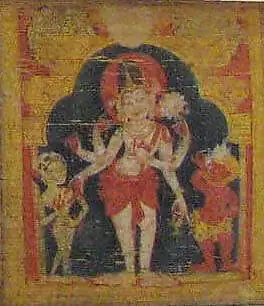
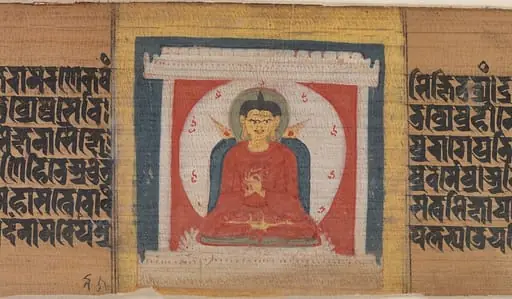
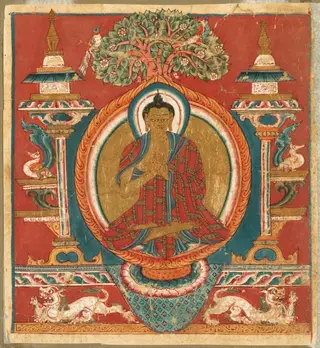
Artwork
Untitled
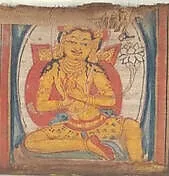
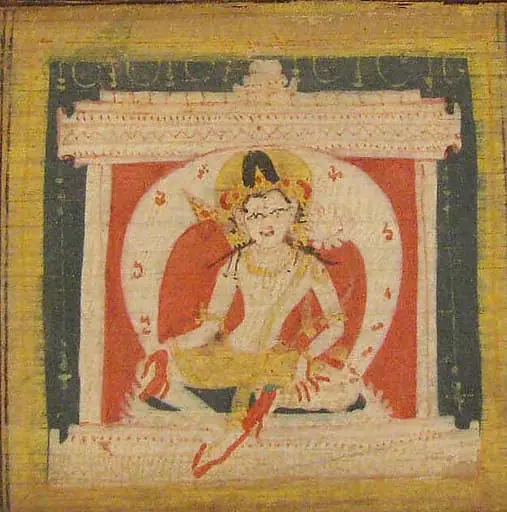
Untitled is an ink painting. It dates from 1149 and is held in the collection of the Metropolitan Museum of Art.
- Accession no.
- 1985.400.1
- Credit line
- Anonymous Gift, 1985
About this work
Subject & Meaning
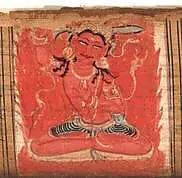
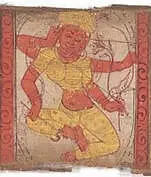
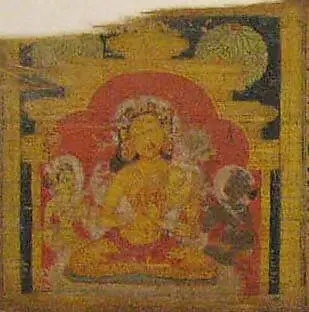
This untitled palm-leaf painting, executed in ink and colour and dated to 1149, belongs to the religious genre and is rooted in the Buddhist tradition.
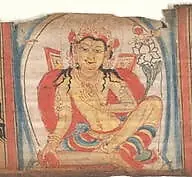
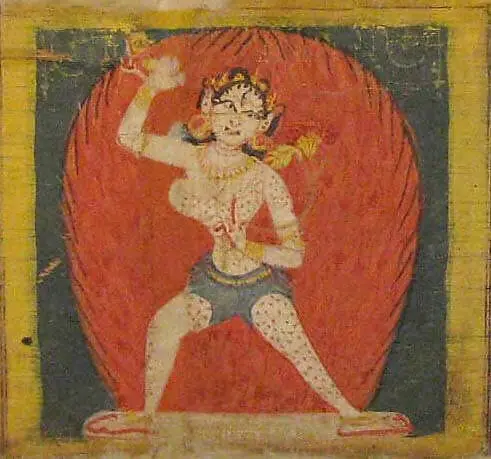
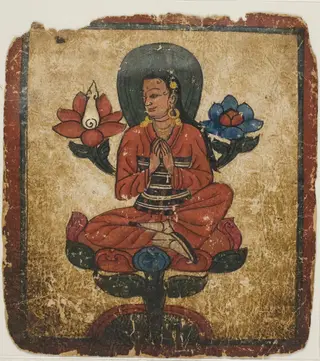
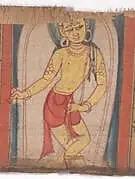
This untitled palm-leaf painting, executed in ink and colour and dated to 1149, belongs to the religious genre and is rooted in the Buddhist tradition. Its iconographic subject is the bodhisattva Mañjuśrī, a central Mahayana Buddhist figure associated with wisdom and learning, typically depicted as a youthful princely figure. The work's identification as a Buddhist devotional image situates it within the broader visual culture of medieval Indian religious art, where painted palm-leaf manuscripts served as both sacred objects and vehicles for transmitting doctrinal imagery.
As a representation of Mañjuśrī, the painting would have functioned within a Buddhist devotional or pedagogical context, embodying the bodhisattva's symbolic role as a guide toward enlightenment.
Technique & Style
Created in 1149, this religious painting utilises ink and colour applied directly onto a palm-leaf support. The work, attributed to an anonymous artist from India, exemplifies the technical constraints and aesthetic choices of its medium, where pigments are bound to the fibrous texture of the leaf. Stylistically, the piece adheres to traditional religious iconography, depicting the Bodhisattva Mañjuśrī within a Buddhist context.
The handling of the medium reflects the period's approach to sacred imagery, prioritising spiritual representation over naturalistic depth. As a surviving example of Indian painting from the twelfth century, the artwork's formal qualities are defined by the interplay of dark ink outlines and coloured areas on the organic substrate.
History & Provenance
Created in 1149 in India, this religious painting on palm leaf was executed by an anonymous artist. The work, which depicts the Bodhisattva Mañjuśrī within a Buddhist context, was produced using ink and colour. Its precise commission details and early ownership history are not recorded in available documentation.
The artwork eventually entered the collection of the Metropolitan Museum of Art, where it is currently located. As an anonymous production from the twelfth century, the piece reflects the religious artistic traditions of India during that period, though specific patronage or the circumstances of its initial creation remain unidentified.
Overview
This untitled painting, rendered in ink and color on a palm leaf, presents a small, vibrant depiction. It features a seated figure, distinguished by a halo, who holds both a book and a sword. Such works were typically created as part of larger manuscript collections, serving as visual aids or devotional images within a textual context. The delicate scale and rich palette characterize this example of traditional South Asian manuscript illumination.
Context
Before the widespread adoption of paper, palm leaves served as a primary medium for writing and illustrating texts across various regions of India. These durable leaves were carefully prepared and incised or painted upon to create books and individual folios. This particular work exemplifies the long-standing practice of creating portable, sacred imagery and texts on organic materials, reflecting the technological and artistic practices of its era.
Artist & collection