Artwork
Untitled
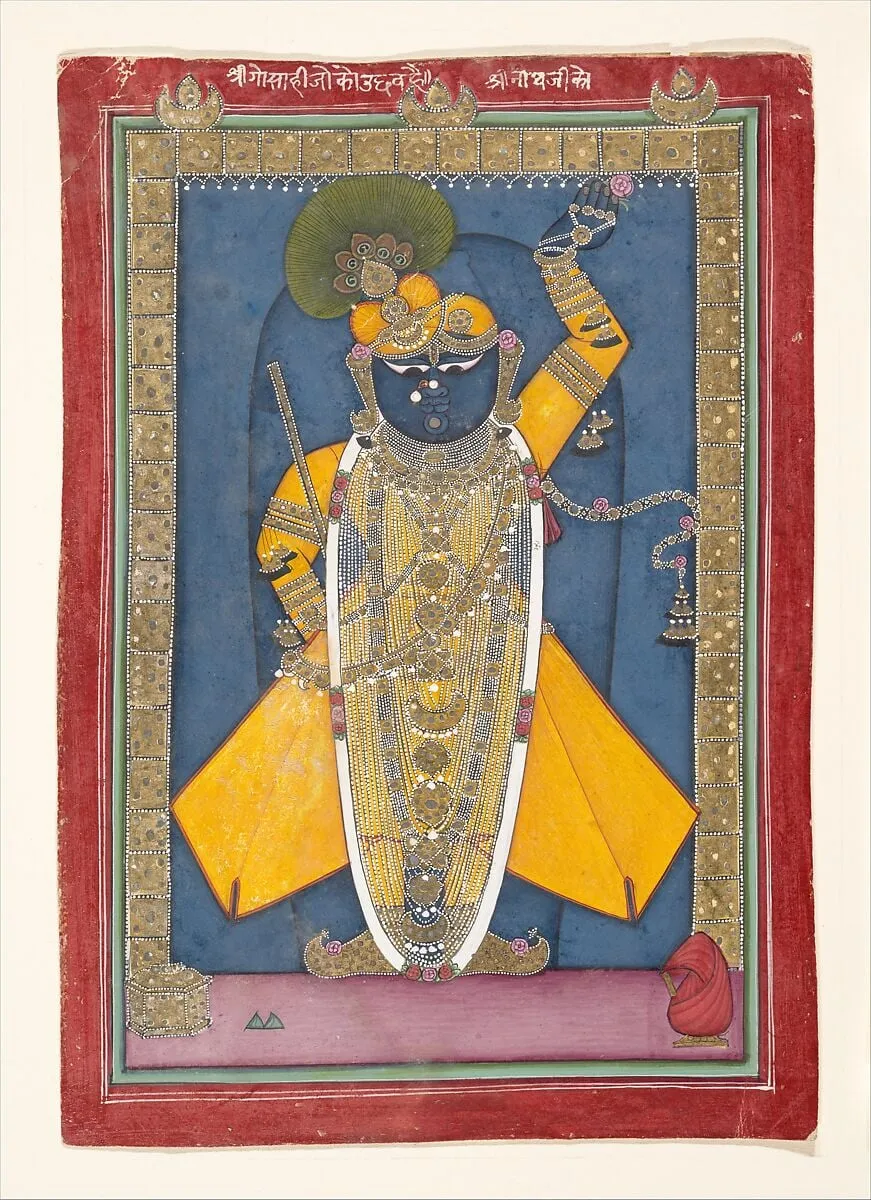
Untitled is a watercolor painting. It dates from 1840 and is held in the collection of the Metropolitan Museum of Art.
About this work
Subject & Meaning
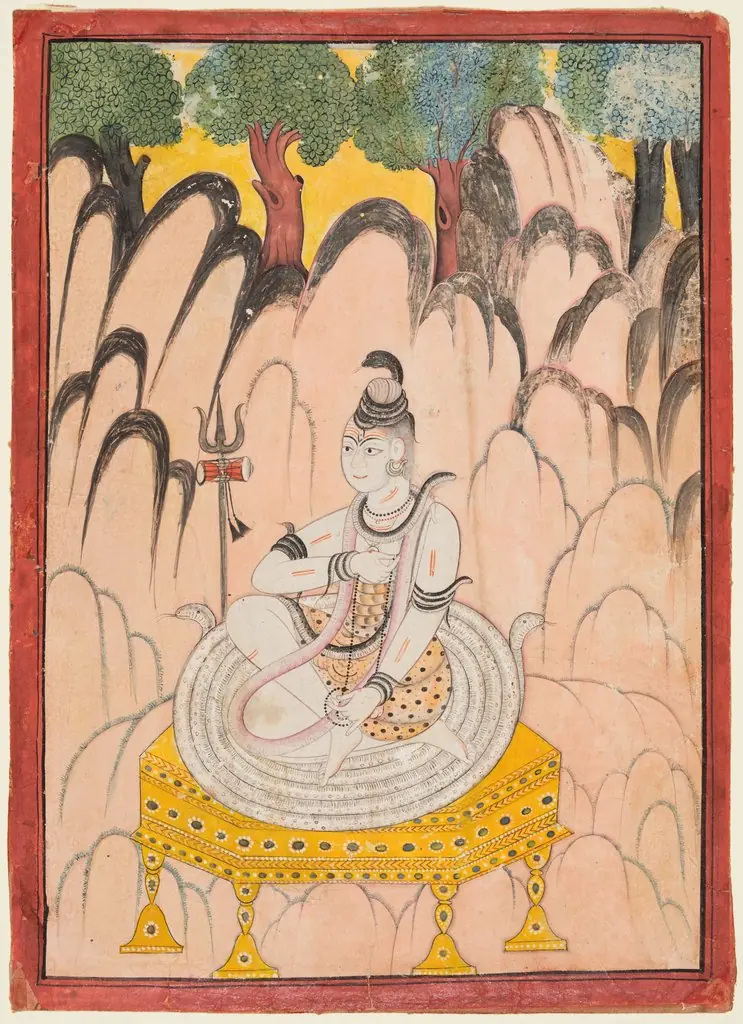
The painting presents Krishna, a principal figure of Hindu mythology, within a devotional visual program typical of 19th‑century Rajasthani art.
The painting presents Krishna, a principal figure of Hindu mythology, within a devotional visual program typical of 19th‑century Rajasthani art. Its depiction of the divine lover draws on Hindu iconography that emphasizes Krishna’s role as an embodiment of love and spiritual devotion, reflecting the religious milieu of the period. Executed in opaque watercolor with gold accents, the work’s composition and subject matter signal its function as a religious image intended for contemplative engagement. The identification of Krishna is confirmed by cataloguing records that annotate the piece as representing Hinduism.
Technique & Style
The painting employs opaque watercolor heightened with gold on paper, a technique common in nineteenth-century Rajasthani devotional works. The support’s fibrous structure is visible along the edges, indicating it is a sheet rather than a mounted board. The handling is linear and precise, with flat color fields delimited by fine outlines in black ink.
Figures are modeled minimally, relying on contour and pattern to suggest volume. Gold is used selectively for jewelry and halos, applied in delicate, burnished strokes. Stylistic features include the hieratic posture of the central figure, frontal symmetry, and the use of flat, unmodulated color typical of the period’s Hindu narrative painting.
History & Provenance
Created in 1840 in Rajasthan, India, this opaque watercolor and gold work on paper depicts the Hindu deity Krishna. The artist remains anonymous, and no specific commissioning details are recorded in the available documentation. The painting entered the collection of the Metropolitan Museum of Art, where it is currently housed.
While the precise circumstances of its acquisition by the museum are not detailed in the provided records, the work has been formally classified within the museum's paintings department since its inclusion. The piece measures 21.9 by 15.2 centimeters and represents a religious genre piece from nineteenth-century India.
Untitled (1840) is an opaque watercolor on paper depicting Krishna, held in the collection of the Metropolitan Museum of Art in New York. The work is catalogued as part of the museum’s Indian painting holdings, though no specific accession or inventory number is provided in the documentation. Its provenance is limited to the museum’s acquisition records, and no exhibition history is recorded in the sources examined.
The painting’s dimensions measure 21.9 × 15.2 cm, and it was produced in Rajasthan, India, reflecting nineteenth‑century Hindu religious imagery.
Overview
This untitled painting, rendered in opaque watercolor and gold on paper, depicts the blue-skinned deity Krishna. He is shown playing a flute beneath a tree, surrounded by birds and cows. The work originates from a workshop in Nathdwara, a significant center for devotional art in India, where such images were produced for religious pilgrims.
Context
This painting emerged from the prolific workshops of Nathdwara, a small town in Rajasthan, India, renowned for its production of religious art. These artistic centers specialized in creating numerous images of Krishna, catering to the spiritual needs of pilgrims visiting the region. The consistent output reflects a dedicated tradition focused on devotional imagery, deeply embedded within the cultural and religious practices of Mewar.
Artist & collection

- Untitled
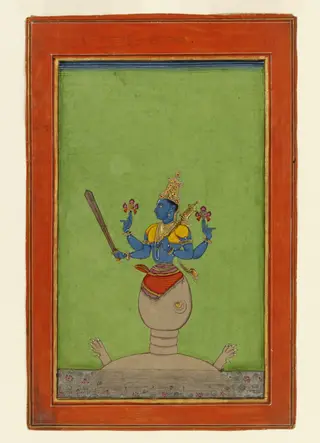 Kurma, the second avatar of Vishnu
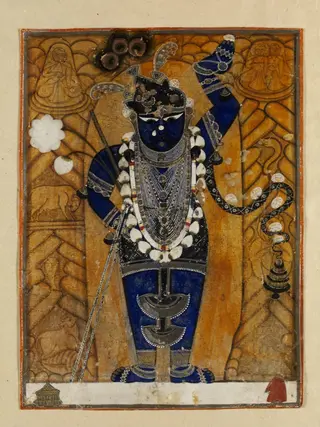 Krishna as Srinathji
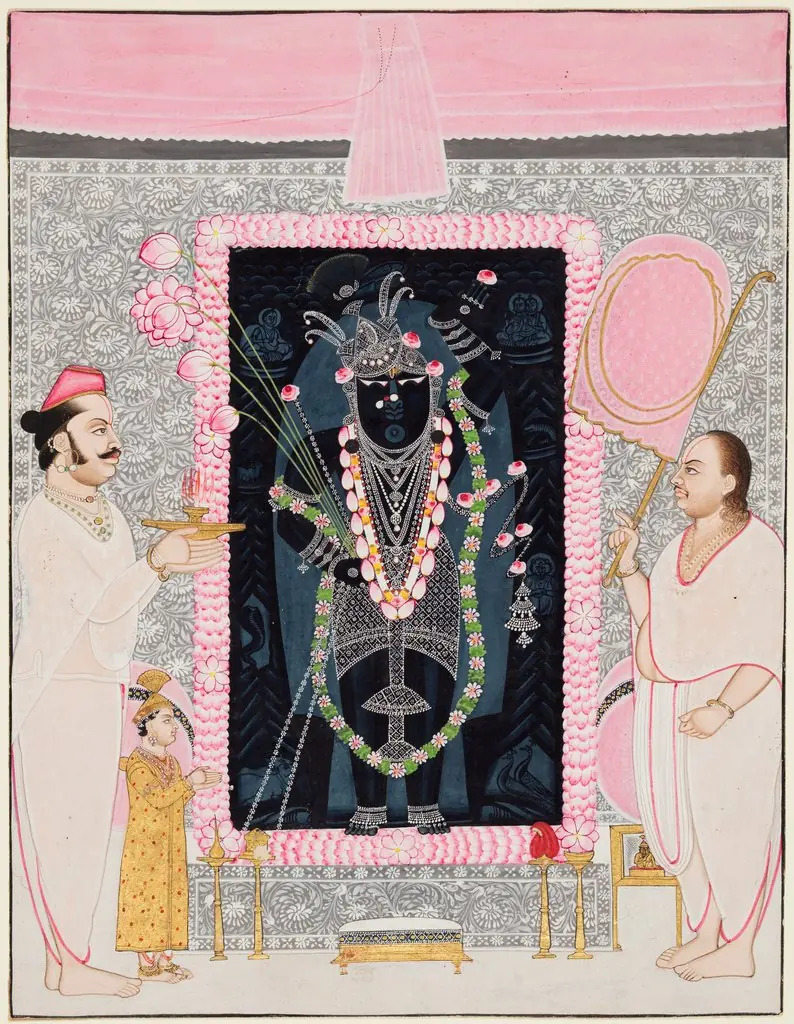 Head Priest Govardhan Lalji (1862–1934) Offers a Lamp to Shri Nathji in Celebration of the Spring Festival
 Raja Jai Singh III
 Raja Pratap Singh
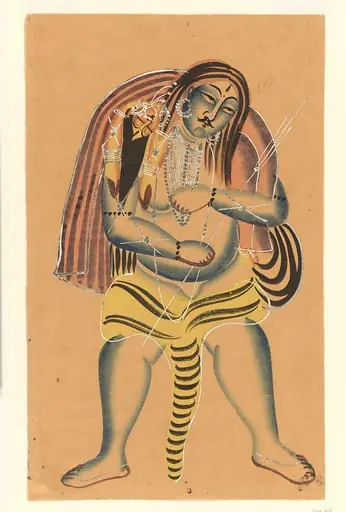 Untitled
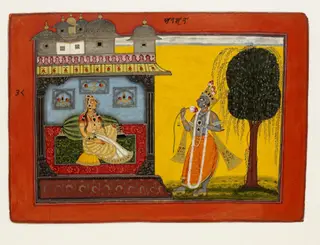 Krishna and Radha
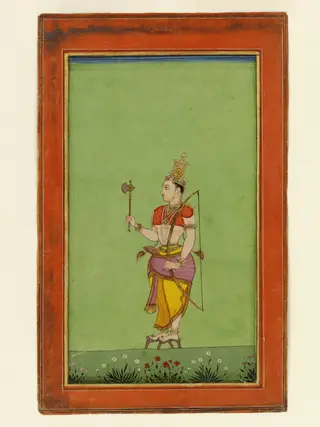 Parasurama, the sixth avatar of Vishnu
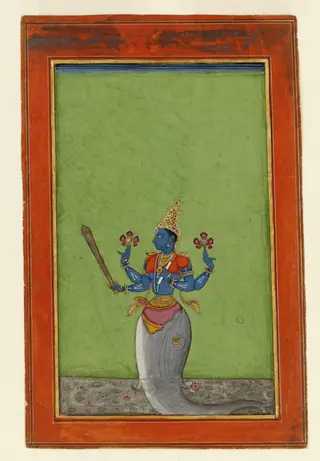 Matsya, the first avatar of Vishnu
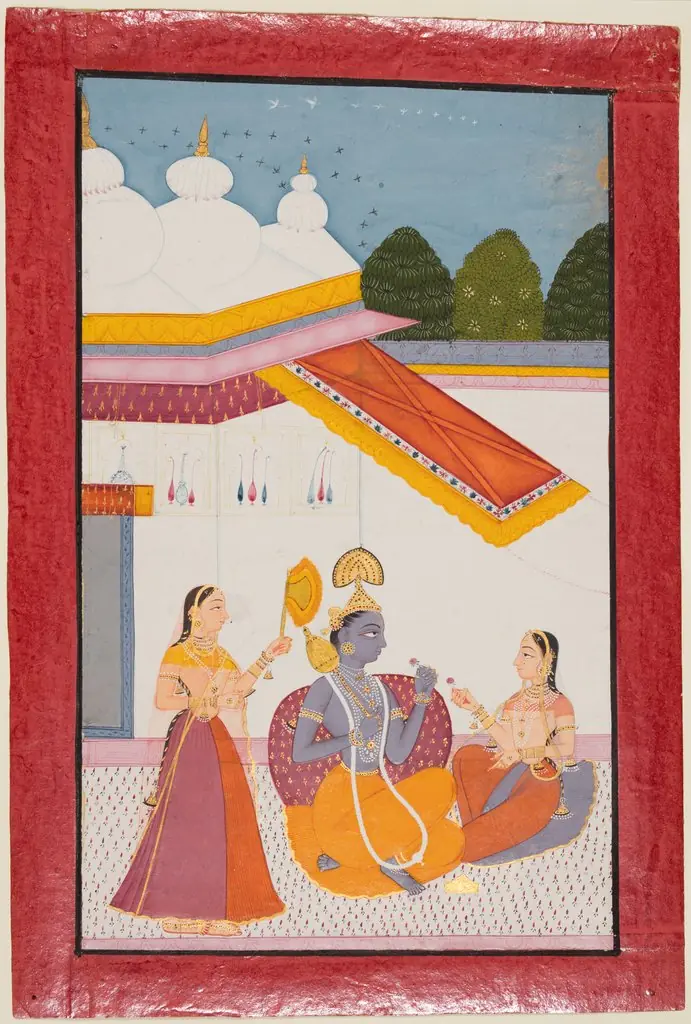 Krishna Under a Canopy
 Shiva Seated on a Throne in a Landscape