Artwork
Untitled
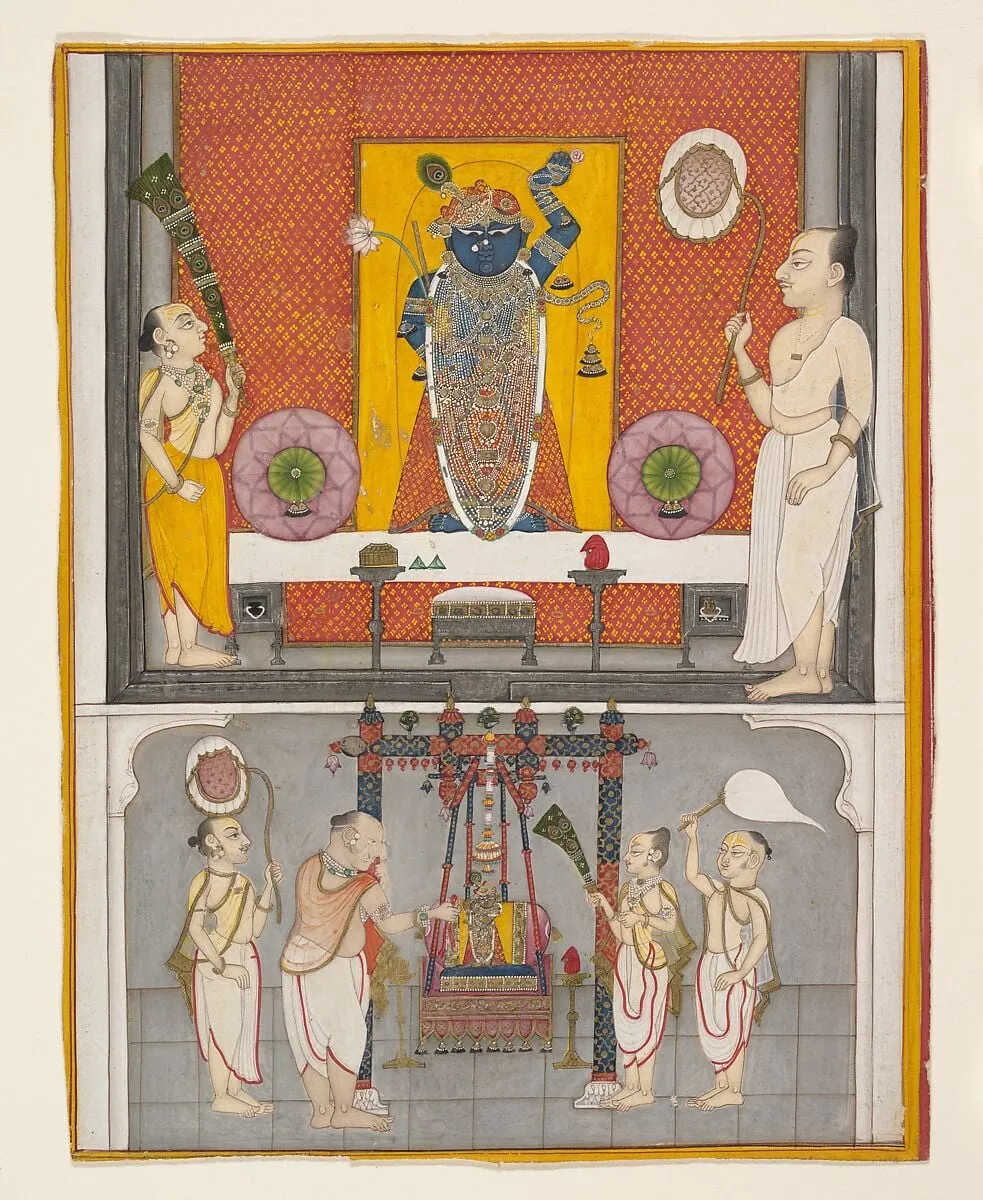
Untitled is a watercolor painting. It dates from 1820 and is held in the collection of the Metropolitan Museum of Art.
About this work
Subject & Meaning
The piece, housed in the Metropolitan Museum of Art, underscores the cultural and religious significance of Krishna imagery in early 19th‑century Indian art.
The painting portrays Krishna, a male figure identified as the Hindu deity, within a religious context typical of Indian devotional art. As an 1820 work rendered in ink, gold, and opaque watercolor, it belongs to the genre of religious paintings and reflects the iconographic tradition of representing Krishna’s divine presence. Its depiction functions symbolically, evoking spiritual narratives and the concept of divine love central to Hindu theology.
The piece, housed in the Metropolitan Museum of Art, underscores the cultural and religious significance of Krishna imagery in early 19th‑century Indian art.
Technique & Style
Created in 1820 in India, this work is executed in ink, gold, and opaque watercolor applied to a paper support. The piece measures 22.9 cm in height and 17.8 cm in width. Stylistically, it adheres to religious genre conventions, depicting the figure of Krishna alongside a man.
The application of gold alongside opaque watercolor suggests a traditional approach to illumination and figure rendering common in Indian painting practices of the period. The anonymous nature of the creator aligns with the classification of the work as a painting by an unknown artist housed in the Metropolitan Museum of Art collection.
History & Provenance
The work titled Untitled is an ink, gold and opaque watercolor on paper painting dated 1820, created in India and classified as a religious artwork depicting Krishna, a male figure. It belongs to the Paintings genre and was produced by an anonymous artist. The piece entered the collection of the Metropolitan Museum of Art, where it remains on view, and its documented inception aligns with the 1820 date recorded in the museum’s records. No further commission details or subsequent ownership transfers are noted in the available documentation.
The work is held by the Metropolitan Museum of Art, which houses it in its collection. According to available records, the painting was created in India in 1820 and entered the museum's holdings, where it is catalogued as an anonymous religious painting executed in ink, gold, and opaque watercolor on paper. No specific accession number, acquisition date, or documented exhibition history is recorded in the available sources.
Overview
This untitled painting, rendered in ink, gold, and opaque watercolor on paper, depicts a blue-skinned deity playing a flute beneath a tree. The central figure is encircled by several men adorned in vibrant robes and turbans. Originating from Kota, a small kingdom in the Rajasthan region of India, this work exemplifies the courtly painting traditions of the area.
Context
This painting emerged from the artistic environment of Kota, a princely state situated in Rajasthan, India. While the specific artist remains unidentified, the stylistic elements, such as precise draughtsmanship and the use of rich pigments, were prevalent in the royal courts of the region. This piece offers insight into the visual culture and religious patronage that flourished in these Indian kingdoms.
Artist & collection

- Sri Nathji
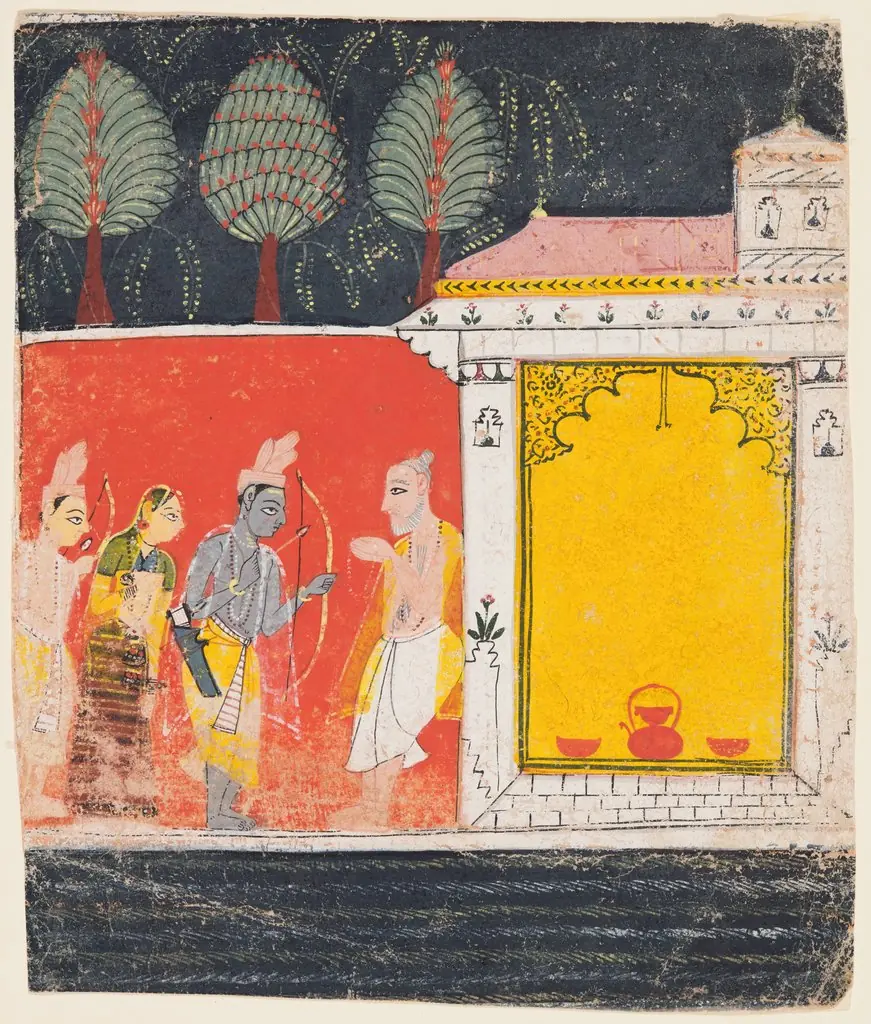 Rama, Sita, and Lakshmana visit the hermitage of the sage Bharadvaja at Prayaga, from Chapter 48 of the Ayodhya Kanda (Book of Ayodhya) of a Ramayana (Rama’s Journey)
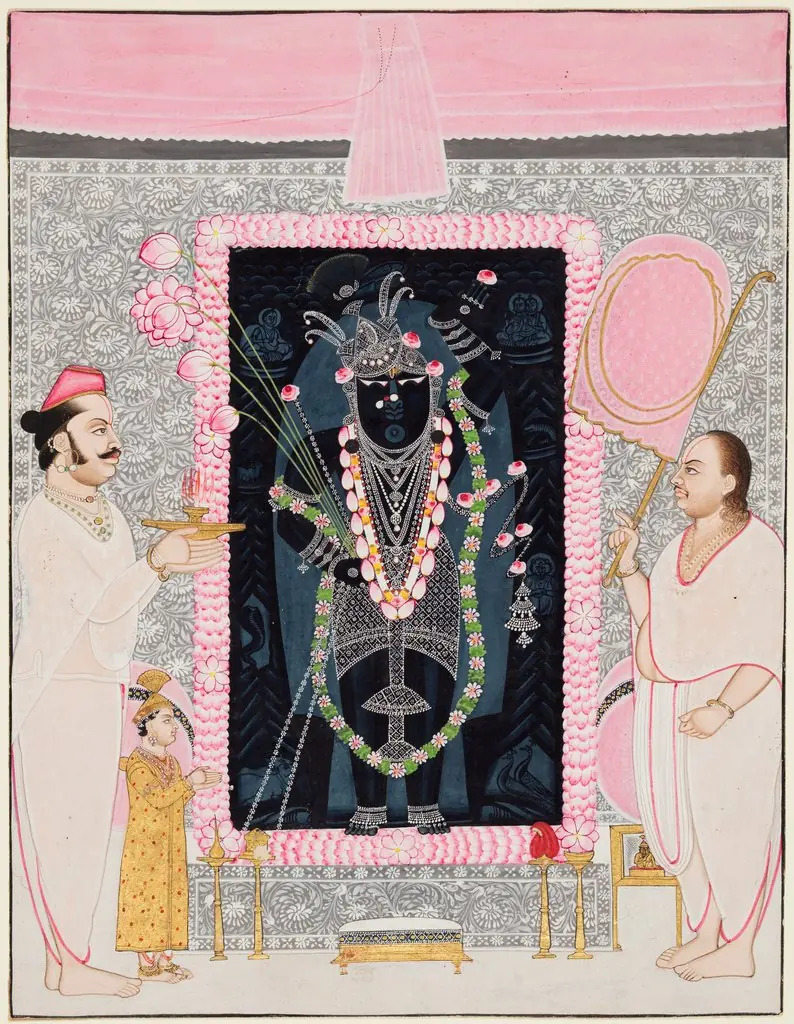 Head Priest Govardhan Lalji (1862–1934) Offers a Lamp to Shri Nathji in Celebration of the Spring Festival
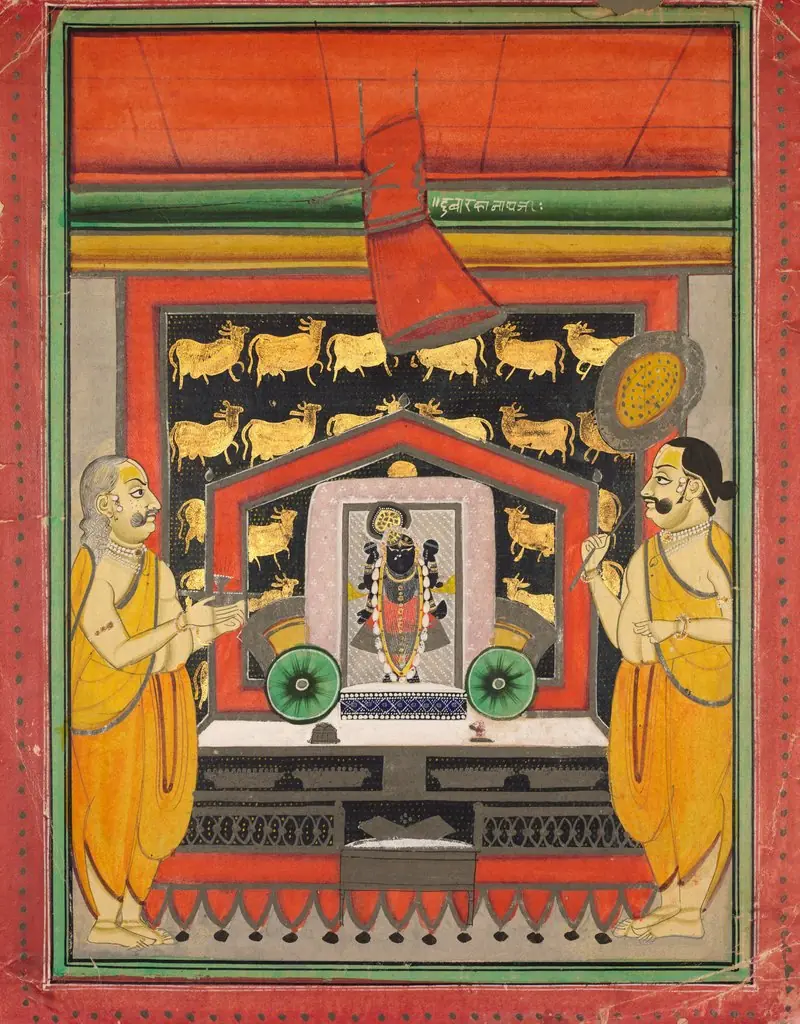 Worship of Dvaraka Nathji at Kankroli
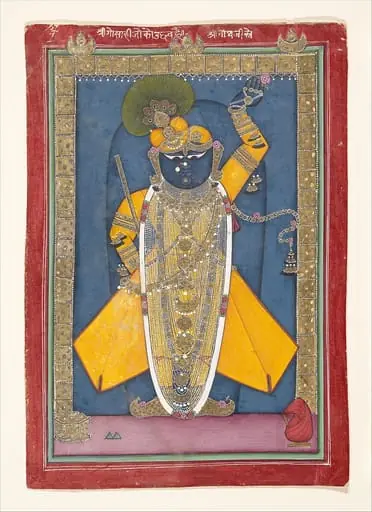 Untitled
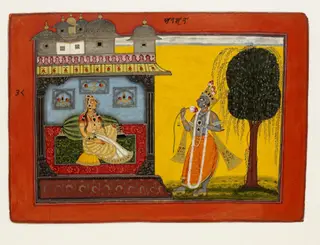 Krishna and Radha
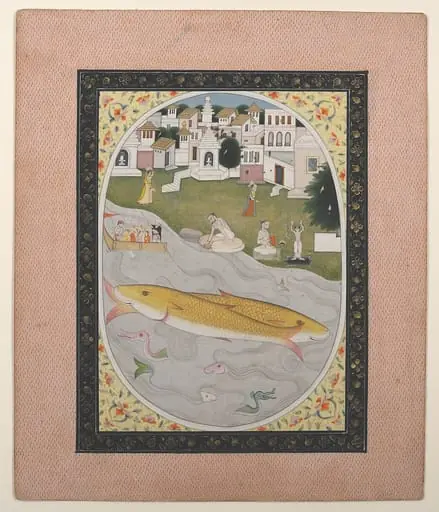 Untitled
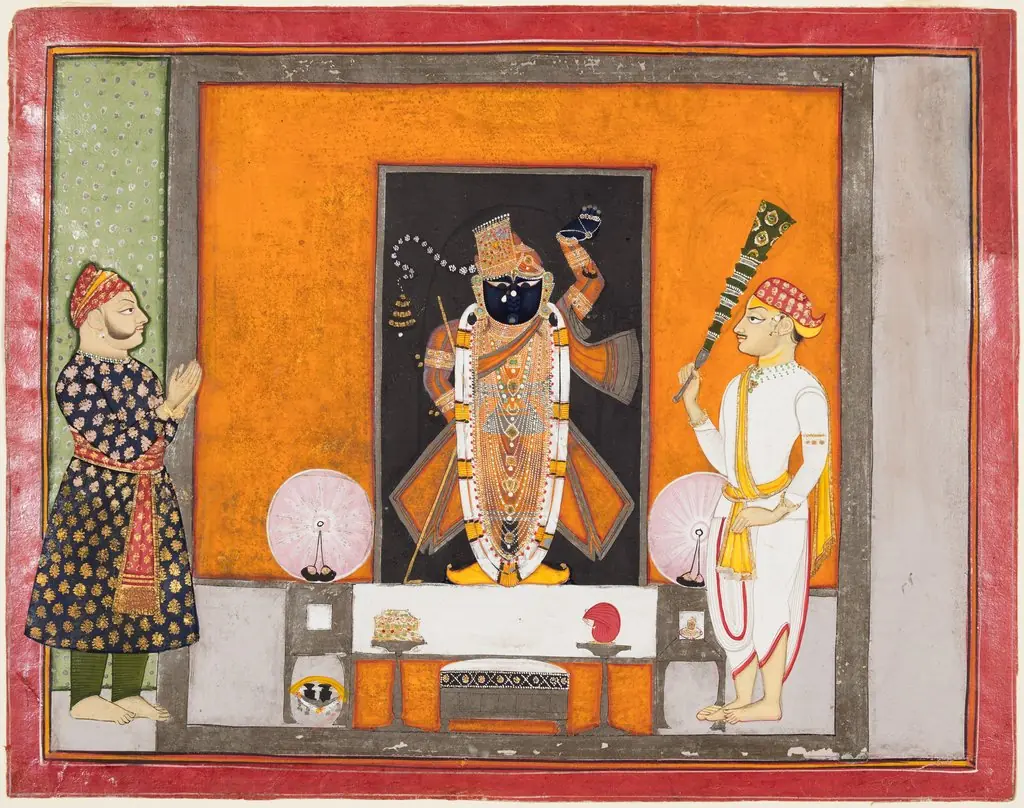 Maharao Ram Singh II of Kota (r. 1828–66) Worships Brij Nathji as the Bridegroom
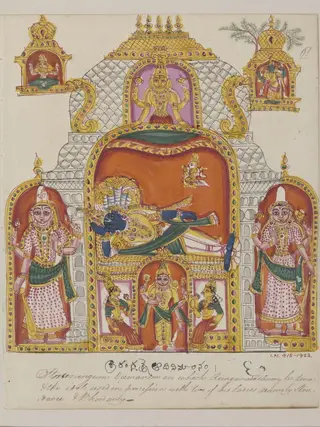 The temple of Shri Ranganatha
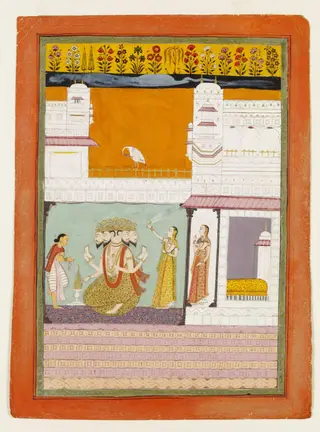 Brahma
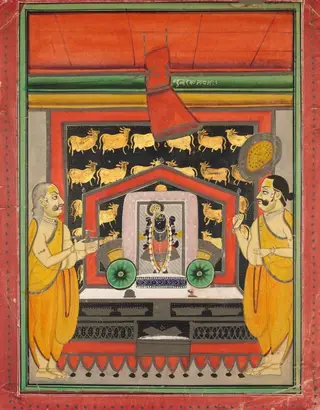 Worship of Dvaraka Nathji at Kankroli
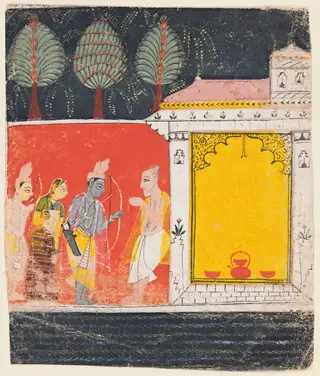 Rama, Sita, and Lakshmana visit the hermitage of the sage Bharadvaja at Prayaga, from Chapter 48 of the Ayodhya Kanda (Book of Ayodhya) of a Ramayana (Rama’s Journey)